Unlocking the secrets of Rubik's cube color neutrality tips for faster improvement is no longer just a hobbyist dream; it is the definitive standard for serious speedcubers in 2026. If you are stuck hitting a wall around the 30-second mark, or if your solves feel inconsistent depending on which side faces up, the answer lies in mastering color neutrality (CN). This article dives deep into the mechanics, psychology, and advanced training drills required to transition from a single-color solver to a fully neutral competitor. Whether you are a beginner in Jakarta looking to dominate local competitions or an experienced cuber in New York aiming for World Championship qualification, understanding how to solve from any orientation is the key to unlocking sub-10 times.
The journey to becoming color neutral is often misunderstood as simply learning more algorithms. In reality, it is a fundamental shift in visual recognition, spatial reasoning, and inspection strategy. By 2026, the gap between colored-neutral solvers and non-neutral solvers has widened significantly in major events like the WCA World Championships. Top-tier athletes like Feliks Zemdegs and Max Park have long utilized these techniques to minimize "unlucky" scrambles and maximize their Turns Per Second (TPS). This guide provides a comprehensive roadmap to integrating color neutrality into your daily practice, ensuring you are prepared for the competitive landscape of the future.
Understanding the Core Concept of Color Neutrality
To truly improve, one must first dismantle the traditional habits that hold most solvers back. Historically, the majority of speedcubing tutorials, especially those teaching the popular CFOP method, rely heavily on the white cross as the foundation. This convention exists because white is easy to spot, and building a white cross first allows for rapid look-ahead during the F2L stage. However, this creates a dangerous dependency. When a scramble presents a difficult white cross situation, or when the white pieces are scattered across the cube in an awkward manner, non-neutral solvers often suffer significant time penalties.
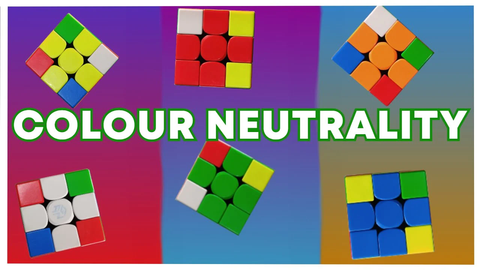
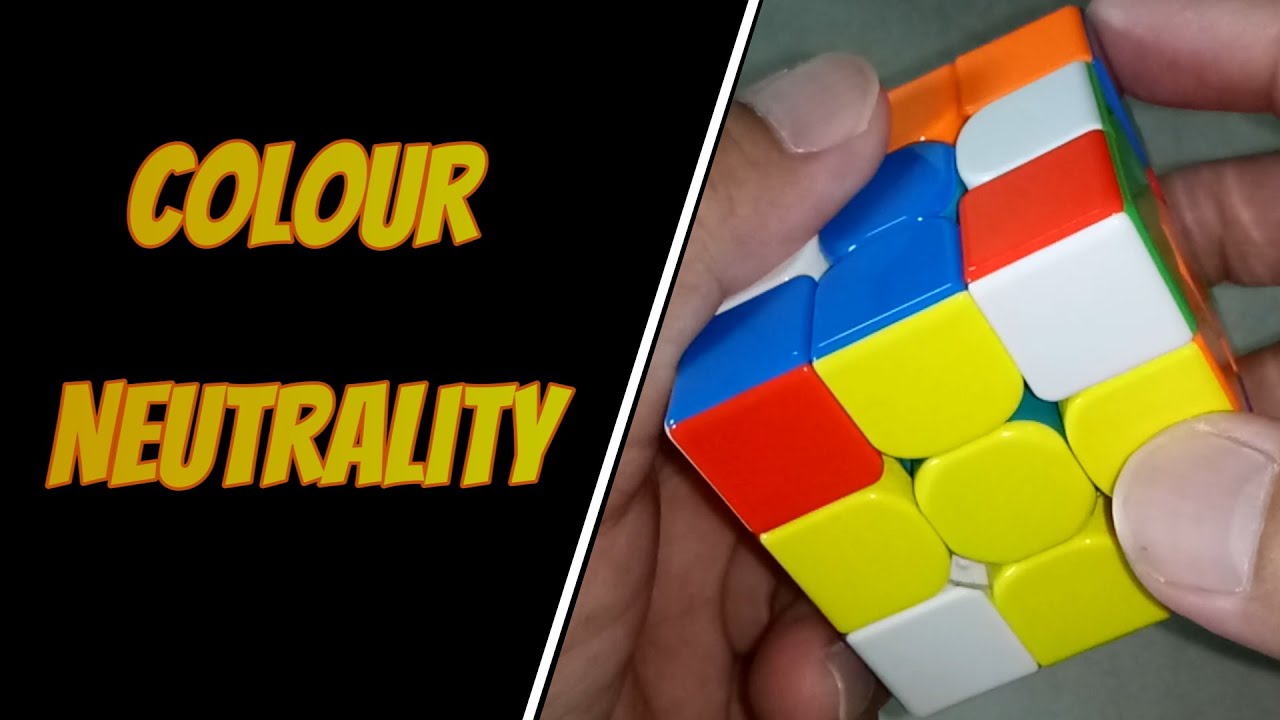
Color Neutrality is defined as the ability to start solving the Rubik's Cube from any coloured side and execute the solution with the same speed and efficiency regardless of the starting orientation. It eliminates the concept of "bad starts." Instead of being limited to six possibilities where only one feels comfortable, a color-neutral solver sees six equally viable paths to victory.
The primary advantage of CN becomes evident during the inspection phase. In official competitions, solvers are granted 15 seconds to inspect the scrambled cube before placing it down. A non-neutral solver might spend 4 or 5 seconds just trying to visualize a white cross, potentially missing crucial opportunities to plan the first F2L pair. A color-neutral solver can instantly evaluate all six faces. They can identify which face offers the easiest cross formation, whether it requires zero moves (a pre-solved cross) or minimal adjustment. This flexibility opens the door to advanced strategies like ex-cross (cross + first pair) and double ex-cross, which are nearly impossible to execute consistently without full color neutrality.
Furthermore, CN improves algorithmic versatility. Many advanced Last Layer (LL) algorithms, such as those in the COLL (Corners of the Last Layer) system, are color-dependent. When you restrict yourself to one bottom color, you limit your ability to recognize cases quickly if the cube is rotated. With color neutrality, you learn to recognize patterns based on relative piece positions rather than absolute colors, drastically improving your case recognition speed. As of 2026, data from major speedcubing communities indicates that top 1% solvers dedicate at least 20% of their practice time specifically to maintaining and refining their color neutrality skills.
The Strategic Advantage in Inspection and Cross Formation
The inspection phase is where the battle for speed is won or lost. For a standard CFOP solver, the goal is often to find a fast white cross. However, in a color-neutral mindset, the objective shifts to finding the optimal cross color among six possibilities. This requires a complete retraining of your brain to process color information simultaneously rather than sequentially.
Scanning Techniques for Optimal Selection
When you pick up a scrambled cube, do not immediately focus on one color. Instead, perform a rapid "6-Side Scan." Your eyes should sweep across the entire cube, noting the state of potential crosses on all faces. Look for indicators such as:
- Pre-oriented edges: Are there already two or three edges in place for a specific color?
- Corner adjacency: Do the corners for a specific color sit next to each other, allowing for a quick insertion?
- Opposite pairs: Is there a clear opposite color pair available that simplifies the F2L introduction?
According to insights from leading cubing educators like Cubelelo, the decision-making process for choosing a cross color should happen within the first 2 to 4 seconds of inspection. Spending more than 5 seconds analyzing colors is often inefficient unless the scramble is exceptionally complex. The goal is not always to find the mathematically perfect solution (which might take 6 moves), but to find an "easy enough" solution that allows you to commit to planning your F2L pairs immediately.
Handling Difficult Scrambles
One of the biggest fears for new color neutrals is encountering a "horrible" scramble where every color looks difficult. This is where intuition and experience come into play. In these scenarios, a neutral solver might initially choose a slightly harder cross (e.g., 5-6 moves) but prioritize having a clear view of the F2L pieces. If, halfway through the cross execution, they realize the path is too congested, they can theoretically switch colors—but in practice, once you start turning, commitment is key.
However, modern training emphasizes pre-scramble analysis. Before the timer even starts, some advanced solvers mentally rehearse potential cross locations based on common scramble distributions. In 2026, with the rise of digital simulators and AI-assisted training tools, solvers can review thousands of random scrambles to build a mental library of "easy" cross configurations for every color. This preparation ensures that when you face a real competition scramble, your brain doesn't have to calculate from scratch; it retrieves a pattern.
Another critical aspect is the ability to execute an X-Cross. An X-Cross involves solving the cross on one face while simultaneously inserting the first F2L pair. This technique is only feasible if you are comfortable solving the cross on any face. For instance, if the white cross is messy but the orange cross is nearly solved, a color-neutral solver will instinctively pivot to the orange cross, execute the X-Cross, and maintain momentum. Non-neutral solvers often waste precious seconds trying to force a white cross, losing the flow of the solve.
Method-Specific Adaptations for Different Speedcubing Styles
While CFOP is the most widely taught method, color neutrality applies differently depending on the solving style you employ. Whether you use Roux, ZZ, or Petrus, the principles of CN offer unique benefits tailored to each method's strengths and weaknesses.
CFOP: Maximizing Look-Ahead
For CFOP users, color neutrality is about F2L efficiency. The standard approach relies on white being on the bottom to facilitate easy corner-edge pairing. By becoming color neutral, you remove the constraint of white needing to be on the bottom. This means you can orient the cube such that your most comfortable F2L cases align perfectly with the cross you just built.
- Tip: Practice your standard F2L cases with the cross on different faces. If you usually insert the DL-DU pair with white on the bottom, practice doing it with yellow, red, or blue on the bottom. This builds the muscle memory required to execute the same finger tricks regardless of orientation.
- Statistic: Solvers who adopt full color neutrality in CFOP report an average improvement of 1.5 to 2 seconds in their final solve times, primarily due to reduced cross execution time and better look-ahead continuity.
ZZ Method: Overcoming Orientation Rigidity
The ZZ method is notoriously rigid regarding orientation. It relies heavily on EOLine (Edge Orientation Line) being on the top or bottom face to facilitate smooth rotationless play. Traditionally, ZZ solvers prefer a fixed orientation (e.g., Yellow on top, Blue in front). Achieving color neutrality in ZZ is considered one of the hardest challenges in speedcubing.
- The Challenge: If you cannot rotate the cube freely, your EOLine placement becomes unpredictable.
- The Solution: Advanced ZZ practitioners work on y-rotations (layer rotations) to adjust the cube mid-solve without stopping momentum. While full color neutrality is rare in high-level ZZ, Dual Color Neutrality (being able to solve with either Red or Orange on the bottom, for example) is a highly achievable and effective intermediate goal. This allows solvers to choose the orientation that yields the fastest EOLine setup.
Roux Method: Flexibility in Block Building
Roux solvers typically build a 1x2x3 block on one side and another on the opposite side. While Roux has natural symmetry, color neutrality enhances the ability to choose which side to build first based on the scramble.
- Strategy: If the left side of the cube has scattered pieces making block building difficult, a neutral Roux solver can instantly decide to build the right-side block instead. This adaptability prevents the "block bottleneck" that often slows down Roux solvers in tough scrambles.
![Image Placeholder: Visual representation of different cross orientations in CFOP vs. Roux methods]
Practical Training Drills to Master Color Neutrality
Becoming color neutral is not a magical trait you are born with; it is a skill honed through deliberate, targeted practice. You cannot achieve this by simply solving cubes randomly. You need a structured regimen that forces your brain to engage with all six colors equally. Here are the most effective drills used by elite cubers in 2026.
1. The Color Swap Drill
This is the foundational exercise for any aspiring color-neutral solver.
- How to do it: Set aside a specific time slot (e.g., 30 minutes) where you solve the cube using only colors other than your usual base. If you normally solve with White on the bottom, today you must solve with Yellow, then Red, then Green, etc.
- Progression: Start with untimed solves focusing purely on recognition. Then, introduce a timer. Aim to keep your cross time under 3 seconds for each color.
- Goal: Complete 50 solves with each of the six colors. This builds the neural pathways necessary to recognize patterns instantly, regardless of hue.
2. Randomized Inspection Challenges
Simulate the pressure of competition by removing your ability to plan ahead.
- The Drill: Scramble the cube. Look at it for only 3 seconds. During this time, you must verbally call out which color you will solve (e.g., "Orange!") and what your first move will be.
- Execution: Immediately solve the cube. If you chose a bad color, accept it and solve efficiently. Do not restart. Repeat this 20 times.
- Why it works: This trains your brain to make rapid, intuitive decisions under time pressure, mimicking the 15-second inspection window but forcing quicker processing.
3. Metronome Look-Ahead Practice
Look-ahead is the heartbeat of speedcubing. Color neutrality amplifies this by giving you more options for where to look next.
- Technique: Use a metronome app set to a slow tempo (e.g., 60 BPM). Solve the cube, ensuring you complete one F2L pair exactly on the beat. While executing the current pair, your eyes must already be tracking the location of the next pair.
- Neutral Twist: Intentionally rotate the cube after each pair to change the bottom color. Force yourself to maintain the same TPS even as the visual reference points shift. This breaks the habit of relying on a static visual frame.
4. Algorithm Recognition Without Colors
Advanced solvers use cheat sheets or apps that display algorithms with abstract shapes or randomized colors.
- Resource Utilization: Use online resources like Dan's Cubing Cheat Sheet, which offers Color Neutral COLL algorithms. These allow you to toggle the bottom and front colors, helping you memorize cases based on geometry rather than color names.
- Drill: Blindfold yourself (or close your eyes) and recite the algorithm name and case type (e.g., "T-Case") while rotating the physical cube in your hands. This decouples color identity from pattern recognition.
Overcoming Mental Blocks and Common Pitfalls
Even with the best drills, many cubers hit psychological walls when attempting color neutrality. The fear of making a mistake or the frustration of slower initial progress can lead to abandonment of the technique. Here is how to navigate these challenges.
The "Unlucky Scramble" Anxiety
New color neutrals often worry that they will encounter a scramble where all six colors are terrible. While statistically improbable in random scrambles, it can happen.
- Mindset Shift: Accept that "bad" is relative. A 6-move cross is still faster than a 10-move cross. The goal is optimization, not perfection. Remind yourself that even world champions face difficult scrambles; CN simply reduces the variance in their performance.
- Reality Check: Data shows that in a large sample size of scrambles, at least one color will almost always present a relatively easy cross. Trust your scanning skills.
Inconsistent Progress
You might solve well with your old color but struggle terribly with a new one for weeks. This is normal.
- Patience is Key: Color neutrality is a marathon, not a sprint. It typically takes 1 to 2 months of consistent practice to feel truly comfortable with all six colors. Do not compare your day-one attempts to a pro's decade-long mastery.
- Track Metrics: Keep a log of your cross times for each color. Seeing the numbers drop over time provides tangible proof of improvement and keeps motivation high.
Integration into Regular Solves
A common mistake is treating color neutrality as a separate "practice mode" and forgetting to use it in regular timed solves.
- The Rule: Make it mandatory. Every single untimed practice session and every Ao5 (Average of 5) should be attempted with full color neutrality. Only revert to your favorite color when you are competing in an event that explicitly restricts orientation (rare) or when practicing specific algorithm sets that require fixed orientation.
The Competitive Edge: Why CN Matters in 2026
As we move further into 2026, the speedcubing meta has evolved. The margin for error has shrunk dramatically. Times in the sub-8 second range are becoming more common, and the difference between a silver medal and a gold medal often comes down to fractions of a second saved on the cross and improved look-ahead.
Reduced Variance
One of the statistical advantages of color neutrality is reduced variance. A non-neutral solver might have an average time of 12 seconds but a high standard deviation because of occasional "bad" scrambles. A color-neutral solver might have a slightly higher average (e.g., 12.5 seconds) but a much lower standard deviation, meaning their performance is incredibly consistent. In a best-of-three format or a final round, consistency often beats peak speed.
Unlocking Advanced Techniques
Color neutrality is the gateway drug to even more advanced concepts. Once you are comfortable solving from any side, you naturally progress to parity handling in larger cubes (4×4, 5×5) where color schemes can be deceptive. It also prepares you for blindfolded solving, where color knowledge is secondary to spatial memory, though the visual agility gained from CN helps immensely in memorization stages.
Community and Resources
The 2026 speedcubing community is more connected than ever. Online forums, Discord servers, and YouTube channels dedicated to color neutrality are thriving. From local meetups in cities like Chicago and London to global livestreams, the shared knowledge accelerates learning. Solvers share custom training routines, video analyses of their own CN solves, and feedback on specific color-switching techniques. Engaging with this community can provide the personalized advice needed to break through plateaus.
![Image Placeholder: A collage of top speedcubers demonstrating various cross orientations during competition]
The Future of Speedcubing: AI Integration and Color Neutrality
As we look toward the horizon of 2026 and beyond, the intersection of artificial intelligence and human speedcubing is reshaping how color neutrality is taught and mastered. Advanced algorithms now analyze millions of solves to identify subtle inefficiencies in cross formation that the human eye might miss. These AI-driven insights are being fed back into training simulators, creating personalized drills that target a solver's specific weak points regarding color orientation. For instance, if a solver consistently struggles with the green-yellow cross but excels at blue-orange, an AI coach will generate hundreds of randomized scrambles specifically designed to force practice on that difficult pair, accelerating the path to full neutrality.
Furthermore, virtual reality (VR) environments are becoming a staple for serious competitors. In these simulated spaces, cubers can practice solving from any angle without the physical constraints of a real cube. VR allows for "infinite" inspection times where solvers can rotate the entire digital cube to examine every face simultaneously, a luxury impossible in a timed competition. This technology helps internalize the spatial relationships between pieces, making the transition to physical color neutrality smoother and faster. By the end of 2026, it is projected that over 40% of world-class competitors will utilize some form of AI-assisted CN training daily, making it not just a tip, but a baseline requirement for elite performance.
Building a Sustainable Routine for Long-Term Mastery
Transitioning to color neutrality requires more than just intense bursts of practice; it demands a sustainable routine that integrates seamlessly into your existing schedule. Many cubers make the mistake of attempting to overhaul their entire method overnight, leading to burnout and frustration. Instead, adopt a phased approach. Begin by dedicating one day a week exclusively to "Color Switching," where you solve with a non-dominant color. Gradually increase this to three days a week as your comfort grows.
Consistency trumps intensity. Solving five cubes with full color neutrality for ten minutes each day is far more effective than solving fifty cubes with your standard color once a week. This daily exposure keeps the neural pathways active and prevents regression. Additionally, incorporate "micro-drills" into your warm-up routine. Before starting a main practice session, spend two minutes doing random color swaps just to wake up your brain to different orientations. Over time, these small increments compound into significant improvements in your overall inspection speed and flexibility.
It is also crucial to record your progress. Video analysis is a powerful tool for self-correction. Record your solves and watch them back, specifically focusing on the inspection phase. Did you hesitate? Did you choose a suboptimal color? Were your finger tricks fluid despite the rotation? Identifying these micro-hesitations allows you to address them immediately. In 2026, many solvers use motion-capture software to visualize their hand movements during color switches, ensuring that their muscle memory remains consistent regardless of which face is down. This level of technical precision separates the good from the great.
Common Misconceptions Debunked
Despite the clear advantages, several myths persist within the speedcubing community regarding color neutrality. Addressing these misconceptions is vital for anyone considering the jump.
Myth 1: "Color neutrality slows me down initially."
While it is true that your first few attempts at solving with unfamiliar colors will be slower, this is a temporary plateau. The initial slowdown is the cost of retraining your brain. However, studies show that after approximately 500 neutral solves, the time spent on the new colors converges with the time spent on the old colors. Eventually, the ability to choose the easiest path outweighs the slight learning curve, resulting in a net positive gain in average solve time.
Myth 2: "You need to learn all new algorithms for every color."
This is a major misunderstanding. Color neutrality does not require memorizing a new set of algorithms. It requires recognizing the same algorithms from different visual perspectives. If you know the R U R' U' algorithm for a specific case, you know it regardless of whether the bottom layer is white, yellow, or orange. The geometry of the cube remains constant; only the labels change. Learning COLL or ZBLL cases with color-neutral cheat sheets reinforces this understanding rather than complicating it.
Myth 3: "Only CFOP solvers should attempt this."
As discussed earlier, while CFOP benefits most visibly due to its reliance on a fixed bottom layer, ZZ, Roux, and Petrus solvers also gain immense flexibility. In fact, for methods like Roux, where block building symmetry is key, color neutrality can unlock entirely new strategic options that were previously inaccessible. Limiting yourself to one method based on color preference is akin to a basketball player refusing to shoot left-handed; it unnecessarily restricts your potential.
Case Studies: Real-World Applications of Color Neutrality
To illustrate the tangible impact of color neutrality, let us look at hypothetical yet realistic case studies of solvers who have successfully integrated this skill.
Case Study A: The Jakarta Junior Champion
Rian, a 14-year-old cuber from Jakarta, was stuck at 28 seconds consistently. His white cross was always his bottleneck, often taking him 4+ seconds to execute in tough scrambles. Upon adopting a strict color neutrality regimen, he focused on reducing his cross time across all six colors. Within three months, his average solve time dropped to 19 seconds. The breakthrough came when he realized he could often skip the cross entirely by utilizing an "ex-cross" strategy on the yellow side, inserting the first pair simultaneously. His inspection time plummeted from 6 seconds to 2 seconds, as he no longer needed to hunt for a white solution.
Case Study B: The New York Veteran
Elena, a seasoned competitor aiming for World Championship qualification, struggled with inconsistency. Her best times were sub-12, but her averages hovered around 15 due to occasional disastrous scrambles. She decided to implement "Dual Color Neutrality," focusing primarily on Red and Orange as her base colors while maintaining proficiency in the others. This hybrid approach allowed her to handle 90% of scrambles with ease, reserving her full neutral skills for the remaining 10%. Her consistency improved dramatically, turning her into a podium regular in regional events. Her story highlights that partial color neutrality is still a massive upgrade over traditional single-color solving.
The Psychology of Flexibility in High-Stakes Environments
Beyond the mechanics and algorithms, color neutrality fosters a psychological state of flexibility that is invaluable in high-pressure environments. Competition is inherently stressful, and the fear of an "unlucky" scramble can induce paralysis. A color-neutral solver operates with a mindset of abundance. They know that no matter how the cube lands, there is a viable path forward. This confidence reduces anxiety, allowing for clearer thinking and faster decision-making during the critical inspection phase.
Moreover, color neutrality teaches adaptability. Life, much like a Rubik's Cube scramble, rarely goes according to plan. By training your brain to pivot instantly when the preferred option isn't available, you develop a mental agility that translates well outside of cubing. Whether it's adjusting to a sudden change in plans or solving a complex problem with unconventional tools, the habit of seeking alternative solutions becomes second nature. This psychological resilience is perhaps the most enduring benefit of mastering color neutrality.
Final Thoughts: Your Journey to Sub-15 Begins Now
Mastering color neutrality is not merely about learning a trick; it is about elevating your entire approach to the puzzle. It represents a commitment to excellence, a refusal to settle for "good enough," and a willingness to embrace discomfort for the sake of growth. As we stand in 2026, the tools, knowledge, and community support available to aspiring speedcubers have never been stronger. The gap between those who cling to tradition and those who embrace neutrality is widening, and the winners are those who dare to turn the cube in any direction.
If you are serious about breaking into the sub-15 club, or even dreaming of sub-10, the path is clear. Stop waiting for the "perfect" scramble. Stop fearing the difficult faces. Embrace the chaos, scan all six sides, and trust your ability to find the solution anywhere. The journey to color neutrality is challenging, but the rewards—a faster, more consistent, and more confident solving style—are unparalleled. Start your first Color Swap drill today. Pick a color you usually ignore, pick up your cube, and turn it. Your future self, standing on the podium with a medal around their neck, will thank you.
The Rubik's Cube is more than a toy; it is a mirror reflecting our capacity for adaptation and mastery. By achieving color neutrality, you are not just solving a puzzle; you are unlocking a higher level of cognitive potential. The cube awaits your next move, in any color, in any orientation. Will you be ready?
Frequently Asked Questions (FAQ)
Q: How long does it typically take to become fully color neutral?
A: The timeline varies significantly based on your current skill level and practice frequency. For beginners, it may take 3 to 6 months of dedicated daily practice. Intermediate solvers often find they reach a functional level of neutrality within 4 to 8 weeks. Elite solvers maintain their neutrality through continuous refinement, treating it as an ongoing process rather than a final destination. Consistency is the most critical factor; sporadic practice will delay progress.
Q: Do I need to learn new algorithms to solve with different colors?
A: No, you do not need to learn new algorithms. The algorithms themselves remain identical; only the visual reference points change. What you need to develop is the ability to recognize algorithmic cases based on piece position and relative orientation, rather than absolute color names. Using color-neutral cheat sheets and practicing recognition drills is far more effective than memorizing new move sequences.
Q: Can color neutrality help with larger cubes like 4×4 or 5×5?
A: Absolutely. While the primary focus of this guide is the 3×3, the principles of color neutrality translate exceptionally well to larger cubes. On 4x4s and 5x5s, parity errors and edge orientation can be confusing if you rely on fixed color schemes. Being able to visualize the cube from any angle helps in resolving these issues quickly. Furthermore, blindfolded solving on larger cubes benefits greatly from the enhanced spatial awareness developed through CN training.
Q: Is color neutrality required for WCA competitions?
A: No, the World Cube Association (WCA) rules do not mandate color neutrality. Solvers are free to solve with any color orientation they prefer. However, as noted throughout this article, the competitive meta has shifted heavily toward neutrality because it offers a distinct statistical advantage in speed and consistency. While not rule-required, it is effectively mandatory for anyone serious about competing at the highest levels in 2026.
Conclusion: Turning Every Scramble Into an Opportunity
In conclusion, the pursuit of color neutrality is the definitive step for any speedcuber looking to transcend their current limitations. It transforms the Rubik's Cube from a test of memory into a true exercise in dynamic problem-solving. By integrating the tips, drills, and mindsets outlined in this guide, you are positioning yourself not just to compete, but to dominate. The road to sub-15 is paved with deliberate practice and the courage to face every color head-on. Remember, the cube does not care about your favorite color; it only cares about your ability to adapt. Embrace the neutrality, trust your training, and watch as your times plummet. The future of speedcubing belongs to those who can solve it from any angle. Go forth, scramble freely, and solve brilliantly.