How long does it take to learn advanced cubing skills? This is the question that keeps millions of puzzle enthusiasts awake at night, staring at their scrambled cubes with a mix of frustration and determination. In 2026, the speedcubing landscape has evolved significantly. We are no longer just talking about solving a puzzle; we are talking about mastering a high-level cognitive sport where milliseconds define champions. If you have mastered the beginner's method and are ready to break into the world of advanced cubing, understanding the timeline is crucial. Many learners quit not because the cube is too hard, but because they underestimate the layered complexity required to reach sub-20 second averages or compete at the highest levels.
The short answer is: it typically takes 6 months to 2 years of dedicated, structured practice to transition from a casual solver to an advanced competitor. However, "advanced" is a relative term. Are you looking to solve efficiently without peeking, or are you aiming for World Championship qualification? The journey from your first full solve to sub-10 second times involves distinct phases, each with its own learning curve, plateaus, and psychological hurdles. In this comprehensive guide, we will dissect the exact timeline, the specific skills required, and the realistic expectations for 2026. Whether you are in New York, London, or Tokyo, the science of learning remains the same, even if your local competition scene varies.
The Myth of Linear Progression in Speedcubing
One of the most common misconceptions among aspiring speedcubers is that learning is a linear process. You learn Step A, then Step B, then Step C, and suddenly you are fast. In reality, speedcubing is a layered cognitive process. To understand why your progress might feel slow or erratic, you must understand how the brain processes algorithmic execution.
The Automation Barrier
You cannot develop lookahead—the ability to see the next pair of pieces while executing the current one—until your basic execution is fully automated. If you are still consciously thinking about which finger to use for a specific turn, your brain has zero cognitive resources left to plan ahead. This is why attempting advanced lookahead techniques before mastering basic efficiency leads to immediate frustration and stagnation.
In 2026, training platforms like LearnCube emphasize that skipping stages creates gaps in your foundation. A cuber who learns complex COLL (Corner Orientation Last Layer) algorithms before perfecting their F2L (First Two Layers) efficiency will struggle immensely. The advanced algorithms cannot compensate for inefficient mechanics. The learning sequence explains why some learners plateau at a 45-second average despite knowing hundreds of algorithms: they are trying to do two cognitive tasks at once when one should be automatic.
The Non-Linear Plateau
As you progress, the time required to master a single new skill increases exponentially. Early stages involve learning discrete skills that can be practiced independently. Later stages require integrating multiple automated skills. For example, improving your cross efficiency requires not just memorizing algorithms, but understanding geometry, edge orientation, and corner placement simultaneously. This integration is far more complex than learning individual moves, which is why the path to mastery feels slower as you get faster.

Phase 1: Foundation and Methodology (Weeks 1–8)
Before you can touch on "advanced" concepts, you must solidify your foundation. This phase is critical for building the muscle memory that will support everything else. According to recent data from 2026, the average learner spends about 4 to 6 weeks moving from a complete novice to a consistent sub-2-minute solver using the Beginner's Method.
Mastering the Basics
During these first eight weeks, your primary goal is consistency, not speed. You are learning to recognize patterns rather than memorizing rote moves.
- Days 1–2: Your first successful solve usually takes 1–3 hours. Remember, Erno Rubik himself took a month to solve his invention without tutorials. You are already faster than the inventor by having access to modern guides.
- Days 3–7: Most people need a week of casual practice (20–30 minutes daily) to solve without peeking. At this stage, solves might take 5–10 minutes. This is normal.
- Weeks 2–4: With daily practice, you should aim for a 2-to-3-minute average. This is the point where roughly 5.8% of the world's population lives; fewer than 6 out of every 100 people can actually solve the cube consistently.
Gear Upgrades: The Catalyst for Speed
While skill is paramount, gear plays a massive role in the 2026 ecosystem. Standard store-bought cubes have high friction and no magnets, leading to lock-ups that break your flow. To accelerate your progress from Week 1 onwards, upgrading to a high-quality magnetic speedcube is essential.
- Brands like GAN, MoYu, and YJ dominate the market in 2026.
- A cube like the GAN 356 M or the Tornado V5 provides tactile feedback and stability that allows for faster turning speeds.
- Proper lubrication (lube) is also non-negotiable. Using the right lube can reduce friction by up to 30%, directly impacting your solve time.
If you are waiting until you are "good enough" to buy a $30 cube, you are likely delaying your progress unnecessarily. The right equipment removes physical barriers, allowing your brain to focus entirely on pattern recognition.
Phase 2: The Transition to CFOP (Months 2–4)
Once you are comfortable solving in under 3 minutes, it is time to switch methods. The CFOP method (Cross, F2L, OLL, PLL) is the gold standard for speedcubing globally. This transition marks the beginning of your true "advanced" journey, though it starts with intermediate concepts.
Month 2: Cross Optimization and 4-Look LL
The first month of CFOP focuses on the Cross and reducing the number of algorithms you need to memorize.
- The Cross: Instead of solving the cross on top, you solve it on the bottom. This saves a rotation later in the solve. Practice solving the cross blindfolded or with limited inspection time to build intuition.
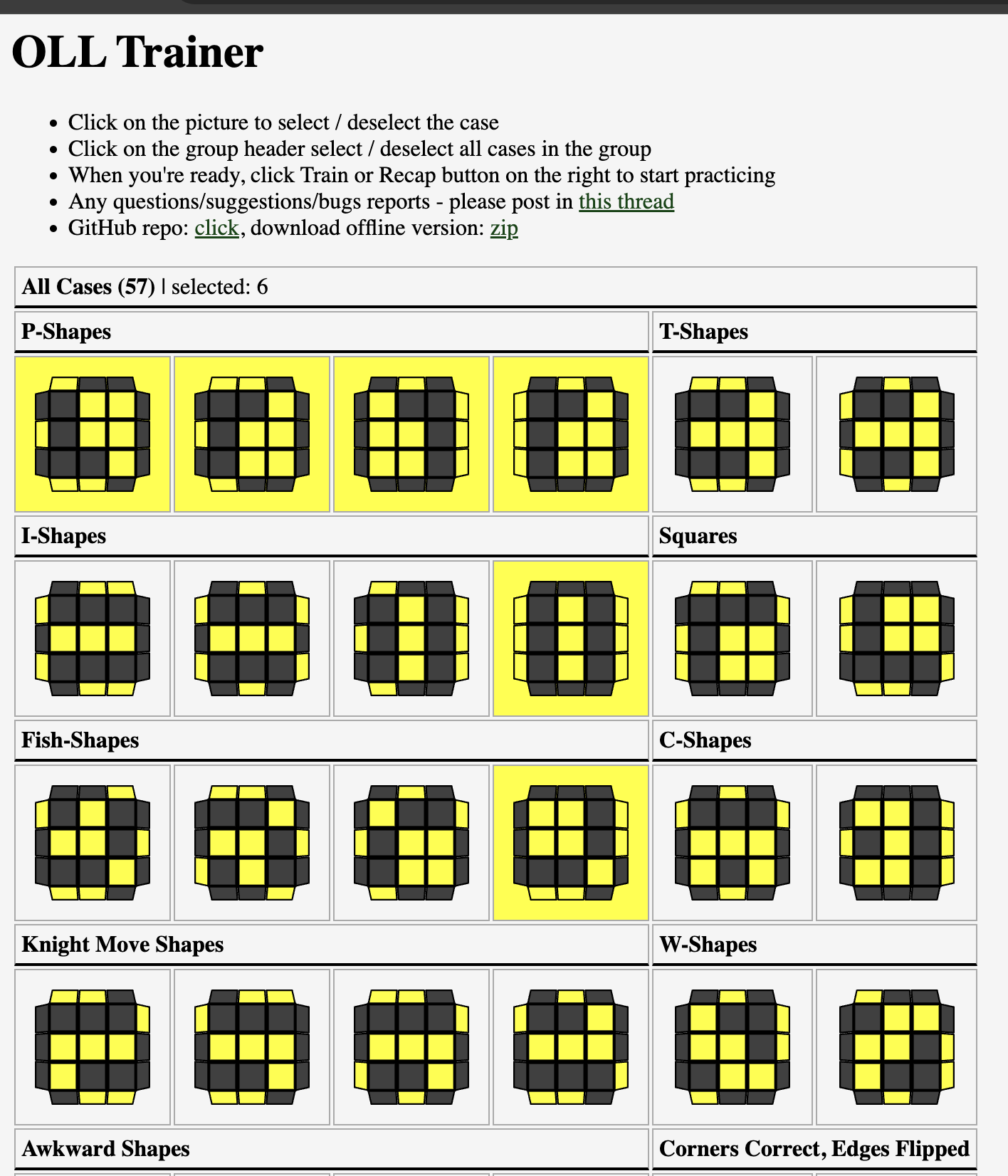
- 4-Look Last Layer: Rather than memorizing all 57 OLL (Orientation of Last Layer) and 21 PLL (Permutation of Last Layer) cases immediately, start with 2-look OLL and 2-look PLL. This reduces your algorithm load significantly while cutting down solve times. You only need 4 algorithms to solve the last layer this way, but mastering them quickly is key.
Month 3: The F2L Grind
Month three is widely considered the hardest part of the learning curve. You are introducing F2L (First Two Layers), where you solve corners and edges in pairs instead of separately.
- Lookahead is King: F2L requires you to find your next pair while executing the current one. This demands high-level cognitive multitasking.
- Ergonomics Matter: Since you will be spending hours practicing F2L, your setup matters. A cramped table leads to strain. Investing in an adjustable desk, such as an ARTIKEL Artidesk, ensures you can maintain good posture during long practice sessions.
- Algorithm Volume: You will begin memorizing specific F2L cases. While there are thousands of possibilities, focusing on the most efficient algorithms for common scenarios is the strategy used by top solvers.
Month 4: Last Layer Mastery
By the fourth month, you should be transitioning from 2-look to full OLL and PLL.
- Memorization Strategy: Learning all 57 OLL and 21 PLL cases takes time. J Perm, a renowned cuber, recommends learning OLL and PLL first before diving deep into F2L variations, as the last layer provides immediate visual feedback on your progress.
- Average Times: By the end of month 4, a dedicated student should be averaging between 30 to 45 seconds. This is a significant milestone that separates hobbyists from serious competitors.
Phase 3: Advanced Techniques and Sub-30 Seconds (Months 5–8)
This is where the term "advanced cubing skills" truly comes into play. Moving from a 40-second average to a sub-30-second average requires refining every micro-movement of your solve. This phase is often the most psychologically challenging due to the law of diminishing returns.
Refining Efficiency
At this stage, you aren't learning new big concepts; you are optimizing existing ones.
- Case Reduction: Advanced cubers use case reduction techniques to minimize the number of algorithms they need to know for specific situations.
- Trigger Recognition: Instead of seeing a whole case, you recognize small triggers within the scramble that dictate your solution path.
- Practice Volume: Sources indicate that breaking through the sub-30 barrier often requires upwards of one year of total practice for some, but for others with high aptitude, it happens in just a few months. Consistency is key. Aim for 30 minutes to 1 hour of deliberate practice daily.
The Role of Coaching and Community
In 2026, the accessibility of coaching has never been higher. Platforms like CubeSkills and Cubing.GG offer courses taught by world champions like Feliks Zemdegs.
- Watching example solves from advanced cubers can reveal nuances you missed on your own.
- Joining local clubs or online communities (like the SpeedSolving Puzzles Community) allows you to share tips and stay motivated.
- One notable cuber mentioned getting stuck trying to break the sub-11 barrier until they shifted their practice focus from quantity to deliberate practice, analyzing every mistake meticulously.
Specific Advanced Skills
To reach this level, you must master:
- Advanced F2L Algorithms: Knowing alternative algorithms for difficult slots to maintain flow.
- OLL Variations: Moving beyond standard OLL to handle parity issues or specific edge orientations efficiently.
- PLL Execution: Turning algorithms smoothly without losing momentum.
Phase 4: Elite Performance and Specialization (Year 1+)
Reaching elite status (sub-10 seconds or competing regionally/nationally) is the definition of "advanced" in the competitive sense. This phase is less about learning new methods and more about perfecting human potential.
Breaking the Sub-10 Barrier
Breaking into double digits is a major psychological hurdle. Many talented cubers stall here for months or even years.
- Neuroplasticity: Your brain needs time to rewire itself for ultra-fast decision-making.
- Physical Conditioning: Elite cubers treat their hands like athletes. Grip strength, finger dexterity, and wrist flexibility are trained specifically for cubing.
- Mental Fortitude: Competition introduces pressure. Learning to remain calm under the scrutiny of a judge and a timer is a skill in itself.
Specialization
Once you are fast, you might choose to specialize in specific events:
- Fewest Moves Challenge (FMC): Requires strategic thinking and pattern recognition rather than raw speed. Courses on Domino Reduction are becoming increasingly popular in 2026.
- One-Handed (OH) and Blindfolded (BLD): These events require different muscle memories and mental strategies.
- Big Cubes: Solving 4×4, 5×5, or even larger puzzles involves reduction methods that differ significantly from the 3×3 approach.
Real-World Timelines
It is important to manage expectations. While some prodigies claim to go from zero to pro in 6 months, the realistic average for reaching competitive advanced levels (sub-20 seconds) is closer to 12 to 18 months.
- High Dedication + Good Gear + Smart Practice: 6–12 months.
- Moderate Dedication: 12–24 months.
- Casual Practice: May never reach advanced competitive levels.
Overcoming Common Plateaus and Stagnation
Even with a perfect roadmap, many cubers hit walls. Understanding these common pitfalls can save you months of frustration.
The "Algorithm Fatigue" Trap
Learning hundreds of algorithms can feel overwhelming. You might spend weeks memorizing OLL cases but see no improvement in your solve time because your F2L is still slow.
- Solution: Shift focus back to fundamentals. Slow down your solves. Analyze your pauses. Fix your ergonomics. Often, solving slowly but correctly yields faster times than rushing through errors.
Lack of Deliberate Practice
Simply repeating solves is not enough. If you solve the same scramble 50 times without analyzing mistakes, you are reinforcing bad habits.
- Deliberate Practice: Focus on one specific weakness per session. If your cross is slow, spend 20 minutes only doing crosses. If your lookahead is poor, solve without looking at the last layer until you finish the F2L.
Burnout and Rest
Paradoxically, practicing too much can stop progress. Muscle memory and neural pathways need rest to consolidate.
- The Vacation Effect: Many cubers report sudden improvements after taking a break. When you return to cubing fresh, your brain makes connections it couldn't make while fatigued.
- Strategy: Take a day off every week or every other week. Use that time to watch tutorial videos or discuss strategies with other cubers without physically touching the cube.
Conclusion: Your Journey Starts Now
So, how long does it take to learn advanced cubing skills? The answer is a resounding: it depends entirely on your definition of "advanced" and your commitment to the process. If you want to solve efficiently and enjoy the puzzle, a few months of dedicated practice will suffice. If you dream of standing on a podium at a World Championship, prepare for a journey of 1 to 2 years of relentless refinement.
The landscape of cubing in 2026 is more accessible than ever. With AI-driven coaching tools, global online communities, and high-performance gear readily available, the barrier to entry is lower, but the ceiling is higher. The secret to success isn't natural talent; it's structured practice, the right algorithms, and the proper gear.
Remember the layered nature of learning. Do not rush to advanced algorithms before mastering your cross. Do not neglect ergonomics while grinding F2L. And most importantly, enjoy the process. Every twist and turn is a step toward unlocking the 43 quintillion possibilities hidden within that small plastic cube. Whether you are in a bustling city center or a quiet home office, the cube waits for no one, but it rewards patience and precision. Start today, practice deliberately, and watch your times drop. The sub-20 club is waiting for you.
Frequently Asked Questions (FAQ)
Q: Can I learn advanced cubing skills in just 3 months?
A: It is possible for highly dedicated individuals with prior experience in similar puzzles to reach an intermediate-advanced level (sub-40 seconds) in 3 months. However, reaching true competitive advanced status (sub-20 seconds) typically requires 6 to 12 months of consistent practice.
Q: Do I need expensive cubes to learn advanced skills?
A: While a high-quality magnetic cube (like those from GAN or MoYu) significantly improves turning speed and reduces frustration, you can technically learn advanced techniques on cheaper cubes. However, investing in good gear is highly recommended to maximize your practice efficiency and prevent physical strain.
Q: What is the most common mistake beginners make when advancing?
A: The most common mistake is skipping foundational stages. Learners often try to memorize complex Last Layer algorithms before their F2L is efficient. This creates a bottleneck where the brain is overwhelmed, leading to plateaus. Always ensure execution is automatic before adding lookahead.
Q: How many algorithms do I need to know for advanced cubing?
A: For full CFOP, you need to know all 57 OLL cases and all 21 PLL cases. Additionally, advanced cubers often learn dozens of specialized F2L algorithms and sometimes COLL (Corner Orientation Last Layer) cases to further reduce look-ahead time. However, quality of execution matters more than the sheer quantity of known algorithms.