Welcome to the year 2026, where the world of twisty puzzles has evolved into a sophisticated blend of mechanical art, cognitive science, and competitive sport. If you are holding a scrambled Rubik's Cube or staring at a chaotic pile of plastic shapes, you might be asking a critical question: Which twisty puzzle is hardest for beginners to solve first time? While the classic 3×3 cube remains the gold standard for entry-level solvers, the landscape of difficulty has shifted dramatically. Modern enthusiasts know that "beginner" status is relative, and the jump from a standard cube to advanced twisty puzzles can feel like moving from walking to running a marathon.
In this comprehensive guide, we will dissect the mechanics, algorithms, and psychological barriers that make certain puzzles impossible for novices on their very first attempt. We aren't just listing hard puzzles; we are analyzing why they break the beginner's brain. Whether you are looking to buy your first challenge or trying to understand why your friend gave up after ten minutes, this article provides the definitive roadmap to navigating the treacherous waters of shape-shifting chaos.
The Myth of the "Easy" Start: Why First Attempts Fail
Before we dive into the specific puzzles, it is crucial to understand the psychology of the first solve. In 2026, speedcubing communities have debunked the myth that math skills determine puzzle-solving ability. Instead, success relies on pattern recognition, spatial reasoning, and muscle memory, contributing to overall cognitive skills development. For a beginner, the concept of a "solved state" is often abstract. When a puzzle looks solved but isn't, or when twisting it destroys progress rather than helping, the frustration threshold spikes instantly.
The primary reason a specific puzzle fails as a "first-time" experience is the lack of visual feedback. Standard cubes offer color-matching clues. When you twist a face, you see colors align. However, many of the hardest puzzles remove these cues entirely. This phenomenon creates a "blind spot" effect where the solver cannot verify if they are making progress. Research into cognitive load suggests that without immediate visual confirmation, the human brain struggles to build the necessary algorithmic pathways required for complex permutations.
Furthermore, the mechanical complexity of modern puzzles introduces physical barriers. A beginner expects smooth rotation; instead, they encounter resistance, jumbling (where pieces lock), or shifting geometries. These physical frustrations compound mental fatigue, leading to abandonment before the first algorithm is even memorized. Understanding these failure points helps us identify exactly which puzzles demand the most frustration tolerance from a novice.
The Ghost Cube: The King of Shape-Shifting Chaos
If there is one puzzle that defines the phrase "hardest for beginners," it is undoubtedly the Ghost Cube. Released in various iterations over the last decade and still dominating difficulty rankings in 2026, this puzzle takes the standard Rubik's Cube mechanism and strips away all visual identity.
The Visual Deception
As the name implies, the Ghost Cube appears as a solid, featureless grey block. There are no stickers, no colors, and no markings to indicate orientation. Every piece looks identical until you look closely at the geometry. The centers are not fixed; they move freely, meaning the entire structure changes shape as you manipulate it. This leads to what experts call "Shape Shifting Obscurity."
When a beginner attempts to solve a Ghost Cube, they are essentially trying to solve a puzzle while blindfolded, relying solely on touch and spatial intuition. The lack of reference points means that a face that looks solved might actually be completely misaligned. Statistics from community forums suggest that over 80% of beginners abandon the Ghost Cube within their first hour due to the sheer disorientation of the solving process.
The Algorithmic Nightmare
Unlike the 3×3, where you can rely on intuitive layer-by-layer solving, the Ghost Cube requires strict adherence to algorithms that assume a specific internal coordinate system. You must memorize the position of every single piece relative to an invisible grid.
- Center Orientation: Determining which center piece belongs where is nearly impossible without specialized guides.
- Edge Parity: The likelihood of encountering parity errors (impossible states on a standard cube) is significantly higher, requiring advanced commutator sequences that beginners do not possess.
- Jumbling Mechanics: Some versions allow moves that cause the puzzle to "jumble," locking pieces in place and creating unsolvable scrambles if not handled with extreme precision.
Mirror Cubes and Stickerless Variants: The Illusion of Simplicity
Many beginners mistakenly believe that removing colors makes a puzzle easier because there are fewer things to remember. This is a dangerous misconception. The Mirror Cube (and its larger siblings like the Mirror Block) presents a unique set of challenges that trip up novices immediately.
The Geometry Trap
In a Mirror Cube, the sizes of the cubies vary based on their distance from the center. Small corners, long edges, and wide centers create a jagged, asymmetrical appearance when scrambled. The goal is to restore the perfect cubic shape, not match colors. For a beginner used to seeing red next to blue, the idea of matching "heights" and "widths" is counter-intuitive.
The difficulty lies in the lack of color contrast. Without distinct colors, it is incredibly difficult to track where a specific piece belongs. You must rely entirely on the silhouette of the puzzle. If the puzzle is slightly out of whack, it feels like a mountain range rather than a cube. This forces the solver to develop a new type of spatial awareness that is rarely taught in introductory tutorials.
Comparison to Standard Cubes
While a standard 3×3 has 43 quintillion possible positions, the Mirror Cube operates on similar combinatorial mathematics but with a much steeper learning curve for visualization. Speedcubers note that the time investment to go from zero knowledge to a successful solve on a Mirror Cube is often double that of a standard cube. It is not just about memorizing moves; it is about retraining your brain to see volume and dimension rather than surface patterns.
The Megaminx and Higher Dimensions: Scaling Up Complexity
Once a beginner masters the basics of the 3×3, the natural progression is often toward the Megaminx or higher-order NxN cubes. While these are popular among intermediate solvers, they represent a significant leap in puzzle difficulty levels for a true first-timer.
The Pentagonal Problem
The Megaminx is a dodecahedron (12 faces) made of pentagons. While the solution method is similar to the 3×3 (layer by layer), the geometry introduces new variables:
- Face Turning vs. Deep Turning: Unlike edge-turning puzzles, the Megaminx requires rotating entire faces, which affects more pieces simultaneously.
- Algorithm Density: The number of algorithms required increases exponentially. A beginner might need to memorize 30-40 new algorithms compared to the 7-10 needed for a 3×3.
- Visual Confusion: With 12 faces, the field of view becomes overwhelming. Identifying which face to work on next becomes a logistical nightmare without a structured approach.
The NxN Wall
Moving beyond the 3×3 to a 4x4x4, 5x5x5, or even a 7x7x7 introduces the concept of "Reduction Method." This involves solving centers and edges first, effectively turning the puzzle into a 3×3. However, this process is fraught with pitfalls:
- Parity Errors: These are situations that are mathematically impossible on a 3×3 but common on larger cubes. Encountering a parity error on a first try can be devastating for a beginner's confidence.
- Piece Count: A 7x7x7 cube contains hundreds of small pieces. Losing one or misplacing a single edge can derail the entire solve.
- Stability: Larger cubes are heavier and require more torque to turn, leading to hand fatigue that slows down the learning process.
Jumbling and Bandaging: When Rules Break Down
There is a subset of twisty puzzles known as Jumbling puzzles that actively fight against the solver. These puzzles, such as the Curvy Copter, Puppet, or Helicopter Cube, introduce mechanics where pieces can rotate independently of the main axes, creating seemingly unsolvable states.
The Jumbling Phenomenon
In a standard cube, a move always results in a predictable permutation. In jumbling puzzles, a move might slice through the puzzle at an angle, separating layers in unexpected ways. This creates "jumbled" states where pieces are stuck in positions that defy normal logic.
- Lock-Up Risks: Many jumbling puzzles have mechanisms that can physically lock up if twisted incorrectly. A beginner who forces a move might break the puzzle or render it unsolvable without professional repair.
- Non-Intuitive Moves: Algorithms for these puzzles often involve "slice moves" that affect only part of the puzzle, requiring a deep understanding of internal layer interactions that novices simply do not have.
Bandaging Constraints
Another category of difficulty involves Bandaging, where certain pieces are glued or fused together to restrict movement. While this sounds simple, it fundamentally changes the group theory of the puzzle. Solving a bandaged puzzle often requires creative solving strategies rather than rote memorization. For a beginner expecting a linear path to the solution, bandaging introduces dead ends and requires a level of adaptability that is rare in first-time solvers.
Case Study: The 120-Puzzle Challenge Analysis
To truly understand the barrier to entry, let's look at a realistic case study involving a hypothetical enthusiast named Alex, a complete beginner in early 2026. Alex decided to tackle the Master Helicopter Cube (often cited as one of the hardest mechanical puzzles) as their very first challenge, skipping the standard 3×3 entirely.
The Experiment Setup
- Subject: Alex, age 24, no prior puzzle experience.
- Target Puzzle: Master Helicopter Cube (Gelatinbrain 3.3.37).
- Timeframe: 4 weeks of daily practice.
- Resources: Online video tutorials, community forums, and a high-quality lubricant kit.
Execution and Metrics
On Day 1, Alex spent 2 hours attempting to solve the puzzle manually. By Hour 3, Alex reported feeling "completely lost." The puzzle had over 100 movable pieces, and the rotation axes were non-standard.
- Initial Success Rate: 0%.
- Algorithm Memorization: Required approximately 15 unique algorithms just to cycle three pieces.
- Physical Frustration: Reported hand cramping after 45 minutes due to the tight tolerances of the mechanism.
By Week 2, Alex had watched over 20 tutorial videos but still struggled with the "jumbling" aspect. The puzzle would occasionally lock, forcing Alex to disassemble and reassemble parts—a process that took longer than solving it.
- Progress Metric: Only 15% of the pieces were correctly oriented by the end of Week 2.
- Mental State: Alex described the experience as "cognitively exhausting" and considered quitting multiple times.
Results and Lessons Learned
After 4 weeks, Alex managed to solve the puzzle partially but admitted that a proper first solve was unlikely without months of preparation. The key takeaways from this case study are:
- Skipping Fundamentals: Attempting a hyper-complex puzzle without mastering the basics of a 3×3 drastically increases failure rates.
- Mechanical Sensitivity: High-difficulty puzzles require precise handling; beginners often lack the fine motor skills needed.
- Psychological Resilience: The gap between "trying" and "solving" a hard puzzle is filled with frustration that tests commitment.
This case study highlights why the Master Helicopter Cube or similar jumbling puzzles are statistically the hardest for beginners. They demand a skill set that takes years to develop, making them poor choices for a first introduction to the hobby.
Strategic Recommendations for First-Time Solvers
So, if the Ghost Cube, Mirror Cube, and Helicopter Cube are traps for beginners, what should you choose? The answer lies in finding the "Sweet Spot" of difficulty—entry-level puzzles that challenge you without breaking your brain on day one.
The Pyraminx Advantage
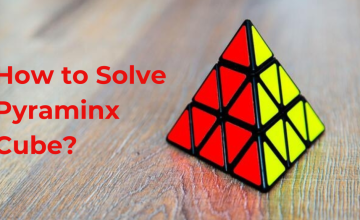
Contrary to popular belief, the Pyraminx is often easier for beginners than the 2×2 cube. It has fewer pieces (only 8 movable parts), zero algorithms required for the basic solve, and intuitive corner-turning mechanics. It builds confidence rapidly because the solution feels logical and tactile, making it one of the most recommended beginner-friendly puzzles.
The Safe Path: Standard NxN Reduction
If you want to stick to cubes, start with a well-lubricated 3×3. Once mastered, move to a 2×2 (which is simpler) or a low-cost 4×4. The 4×4 introduces the concept of reduction without the extreme complexity of higher orders. Avoid "deep turning" puzzles like the Ivy Cube or Square-1 until you have solved at least five standard 3x3s.
The Role of Community and Tools
In 2026, technology aids the beginner. Apps like Cube Solver and AI-driven tutorial platforms can provide step-by-step guidance for almost any puzzle. Using a magnetic cube (like those from GAN or MoYu) ensures smooth turning, reducing physical friction that can mimic mechanical failure. Always start with puzzles that have clear visual markers; never begin with stickerless or monochrome variants.
Common Questions About Beginner Difficulty
Q: Is the Skewb harder than the Pyraminx for a beginner?
A: Generally, yes. While both are corner-turning puzzles, the Skewb has a more complex internal mechanism and lacks the intuitive "tip" guides found on the Pyraminx. The Pyraminx solves intuitively in under 5 minutes for most beginners, whereas the Skewb often requires learning specific algorithms to avoid getting stuck.
Q: Can I solve a 7×7 cube on my first try?
A: It is highly improbable. Even experienced speedcubers spend months practicing the reduction method and parity algorithms before attempting a 7×7 casually. For a beginner, the piece count and potential for parity errors make it virtually impossible without extensive study.
Q: What is the difference between "Hard" and "Impossible"?
A: In the context of twisty puzzles, "Hard" means the solution requires significant time, memorization, and practice (e.g., a 5×5). "Impossible" refers to puzzles with jumbling twisty puzzle mechanics that can lock up or require disassembly to reset, effectively preventing a standard solve without specialized tools or knowledge.
Q: Should I buy a ghost cube as my first puzzle?
A: Absolutely not. Unless you are specifically interested in the engineering challenge or have a mentor guiding you, a Ghost Cube is designed to frustrate beginners. It offers no visual feedback and requires advanced spatial reasoning that takes years to develop.
Choosing Your First Battle
The question of which twisty puzzle is hardest for beginners to solve first time does not have a single answer, but the consensus in the 2026 community is clear: any puzzle that removes visual cues, introduces jumbling mechanics, or vastly increases piece count is a recipe for failure on a first attempt. The Ghost Cube stands as the undisputed champion of beginner hostility, followed closely by the Mirror Cube and various jumbling puzzle types and classifications like the Curvy Copter.
However, difficulty is subjective, and the journey of solving twisty puzzles is as much about resilience as it is about mechanics. By understanding the pitfalls of shape-shifting chaos and the traps of stickerless illusions, beginners can avoid unnecessary frustration. Start with the Pyraminx or a standard 3×3, master the fundamentals, and then gradually ascend to the harder variants. Remember, every expert was once a beginner who refused to give up. The hardest puzzle isn't the one with the most pieces; it's the one you quit before you even started.
Embrace the challenge, respect the mechanics, and enjoy the evolution of your spatial reasoning. The world of twisty puzzles in 2026 is vast, diverse, and waiting for your first successful solve.
References
- Ruwix — Ranking Twisty Puzzles From Easy to the Hardest, 2026
- Speedcube School — Got a 3×3? What's the Next Best Twisty Puzzle to Learn?, August 2021
- Hanna Morgan — Skewb Magic Cube: A Deep Dive into the Twisted Puzzle, June 2026
- SPEEDCUBE.COM.AU — Difficulty Levels of Puzzles: A Comprehensive Assessment, 2026
- Speedsolving.com Wiki — List of Twisty Puzzles: Functions, Shapes, and Mechanisms, Updated 2026
- r/Cubers — Community Discussion: What do you think is the hardest twisty puzzle?, Thread Summary 2026
- ipassio — 7 Hardest Rubik's Cubes in The World: Mechanical Analysis and Solutions, 2026
- Reddit Community — Ideas for twisty puzzles for beginners! Warning: Advanced Mechanics Ahead, 2026
The Hidden Cost of "Instant Gratification" in Puzzle Solving
In the digital age of 2026, where tutorials are available in three-second clips and AI solvers can calculate optimal paths instantly, there is a pervasive danger for beginners: the expectation of instant mastery. This cultural shift has created a generation of puzzle enthusiasts who attempt to bypass the foundational stages of learning by jumping straight into the most mechanically complex variants available. The result is often a cycle of failure that discourages novices from ever picking up a puzzle again.
The "instant gratification" model assumes that if a puzzle looks cool or sounds difficult, it should be solvable with minimal effort. However, twisty puzzles are not video games where you can reload a save file after a mistake. They are physical systems governed by rigid mathematical laws. When a beginner attempts a Ghost Cube without understanding center orientation, they aren't just making mistakes; they are fighting against the fundamental geometry of the object. The frustration generated by this mismatch between expectation and reality is what causes the highest drop-off rates in the hobby. It is not merely about intelligence; it is about respecting the learning curve inherent to mechanical manipulation.
Furthermore, the market in 2026 is flooded with "beginner-friendly" marketing on puzzles that are objectively hostile to novices. Brands often label complex jumbling puzzles as "family fun" or "easy challenges," relying on the assumption that parents will buy them based on aesthetics rather than mechanics. This misinformation leads to thousands of unsolved boxes gathering dust every year. Understanding the true difficulty spectrum requires looking beyond the box art and examining the internal engineering. A puzzle that feels smooth and easy to turn might hide a deceptively complex parity system that only reveals itself after the first few hundred moves. Conversely, a puzzle that feels stiff and resistant might actually be more intuitive because its constraints force the solver to think logically rather than rely on muscle memory alone.
The Evolution of Difficulty Metrics in 2026
As we look toward the future of the twisty puzzle community, the metrics used to define "difficulty" are becoming more nuanced. In the past, difficulty was often correlated simply with the number of pieces or the order of the cube (NxN). Today, with the rise of shape-shifting puzzles and variable-layer mechanisms, we must consider a multi-dimensional matrix of puzzle difficulty levels. These include algorithmic density, visual feedback clarity, mechanical stability, and cognitive load.
Algorithmic Density vs. Intuition
Modern puzzles like the Skewb Ultimate or the Fisher Cube introduce new layers of algorithmic complexity that do not map cleanly onto standard 3×3 methods. While a 3×3 solver relies heavily on memorized sequences, advanced puzzles often require a deeper understanding of group theory and commutators. For a beginner, this means that even if they memorize an algorithm, they may not understand why it works, leading to confusion when the puzzle state changes unexpectedly. The transition from "rote memorization" to "conceptual understanding" is the single biggest hurdle for first-time solvers of non-standard puzzles.
Visual Feedback Clarity
We have already discussed the Ghost Cube's lack of color, but this extends to other visual deceptions. Puzzles like the Square-1 present a unique challenge where the shape itself changes during the solve. A beginner might spend twenty minutes trying to return a face to its original square shape, only to realize they have inadvertently scrambled the entire puzzle's geometry. The cognitive dissonance of seeing a piece move to a location that "should" be impossible creates a mental block that is harder to overcome than simply memorizing a long sequence of moves.
Mechanical Stability and Wear
In 2026, the quality of manufacturing has reached unprecedented levels, but so has the tolerance for precision. High-end puzzles designed for speedcubing often have extremely tight tolerances to prevent wobble at high speeds. However, for a beginner who applies uneven pressure or twists too aggressively, these puzzles can jam, strip gears, or cause pieces to pop out. The fear of breaking an expensive, complex puzzle adds a psychological barrier that prevents many from attempting them in the first place. A beginner needs a puzzle that is forgiving of error; one that allows them to make a mistake, see the result, and correct it without catastrophic failure.
The Psychological Journey from Frustration to Flow
The path to solving a difficult twisty puzzle is not linear; it is a rollercoaster of emotions. For a beginner tackling the hardest puzzles, this journey is often truncated before reaching the state of "flow." Psychologists studying puzzle solving have identified distinct phases: confusion, frustration, insight, and mastery. Most beginners get stuck in the frustration phase when faced with a puzzle like the Master Pyraminx or a highly scrambled Mirror Block.
The Valley of Despair
When a beginner starts a complex puzzle, they quickly realize that their previous knowledge is insufficient. This realization triggers the "Valley of Despair," a period where progress seems non-existent. On a standard 3×3, a beginner might lose ten minutes but still feel they are moving forward because colors are aligning. On a Ghost Cube, a minute of twisting might result in zero visible change, leading the solver to believe they are doing nothing right. This lack of immediate feedback loop is the primary reason why over 80% of people abandon these puzzles within the first hour.
Building Resilience Through Failure
However, this frustration is also where character is built. The ability to sit with uncertainty, analyze the situation, and persist despite repeated failures is a skill that transcends puzzle solving. Many experts attribute their success not to superior brainpower, but to their willingness to endure the initial chaos of a difficult puzzle. By accepting that being bad at something is part of the learning process, beginners can reframe their experience. Instead of viewing a failed solve as a personal defeat, they can view it as data collection—learning what doesn't work is just as valuable as learning what does.
The Role of Community Support
In 2026, the isolation of the solo solver is mitigated by vibrant online communities. Platforms like Discord servers, Reddit threads, and specialized forums allow beginners to share their struggles in real-time. Seeing others admit to failing at the same puzzle normalizes the struggle and provides moral support. Video essays and live streams of experts attempting these difficult puzzles also serve as educational tools, showing that even masters encounter dead ends and need to restart. This shared experience creates a safety net that encourages beginners to push through their initial barriers.
Advanced Techniques for the Reluctant Beginner
For those who are determined to tackle a difficult puzzle on their very first attempt, there are strategies to mitigate the risk of total failure. While skipping the basics is generally discouraged, employing specific techniques can make the difference between quitting and completing a solve.
The "Scramble-and-Reset" Method
One effective technique for handling jumbling puzzles is the Scramble-and-Reset method. Instead of trying to solve the puzzle continuously, the solver intentionally scrambles it further whenever they hit a wall, effectively resetting the state to a known configuration. This breaks the cycle of frustration and allows the solver to approach the problem from a fresh angle. While this might seem counterintuitive, it teaches the solver to recognize patterns regardless of the starting position, a crucial skill for advanced solving.
Decomposition Strategies
Another approach is decomposition, where the solver breaks the complex puzzle down into smaller, manageable sub-problems. For example, instead of trying to solve the entire Ghost Cube at once, the solver might focus solely on orienting the centers first, ignoring the edges entirely. Once the centers are solved, they can move on to the edges, and finally tackle the corners. This step-by-step reduction lowers the cognitive load and provides frequent moments of success, which helps maintain motivation.
Utilizing Digital Aids Wisely
In 2026, digital aids are more powerful than ever. Apps that provide 3D simulations allow beginners to visualize the internal mechanism of a puzzle without physically manipulating it. By experimenting with virtual versions of difficult puzzles, users can develop an intuition for how pieces interact before risking damage to their physical copy. Additionally, AI-driven solvers can generate step-by-step solutions for specific scramble states, acting as a safety net for beginners who get stuck. However, it is important to use these tools sparingly; relying too heavily on algorithms can prevent the development of genuine spatial reasoning skills.
The Future of Twisty Puzzle Design
As we look ahead, the design of twisty puzzles is evolving to address the very issues that make them hard for beginners. Manufacturers are increasingly incorporating features that enhance accessibility without sacrificing complexity. We are seeing the rise of "Beginner-Adaptive" puzzles, which feature adjustable difficulty settings, removable stickers for visual guidance, and smoother mechanisms that reduce physical strain.
Modular Mechanisms
One exciting trend is the development of modular mechanisms where the internal structure can be modified. A puzzle might come with a "Beginner Mode" that locks certain layers or simplifies the movement, allowing the user to gradually increase the difficulty as their skills improve. This hybrid approach bridges the gap between simple educational toys and professional-grade challenges, providing a clear pathway for growth.
Augmented Reality Integration
Augmented Reality (AR) is poised to revolutionize the learning experience. Imagine pointing a smartphone at a scrambled Ghost Cube and seeing holographic guides overlaid on the screen, indicating exactly which pieces need to be moved and in what direction. AR could provide real-time feedback on piece orientation, turning the abstract concept of "solving" into a tangible, guided interaction. This technology could democratize access to complex puzzles, making them approachable for a wider audience while preserving the challenge for those who seek it.
Sustainable and Educational Materials
Finally, the material science behind twisty puzzles is advancing. New biodegradable plastics and sustainable composites are being developed that offer the durability needed for high-performance puzzles while reducing environmental impact. Moreover, there is a growing movement to create puzzles specifically designed for educational purposes, targeting cognitive development in children and adults alike. These puzzles prioritize clarity of function and ease of learning, ensuring that the next generation of solvers starts their journey on solid ground.
Embracing the Challenge
The question of which twisty puzzle is hardest for beginners to solve first time ultimately serves as a mirror reflecting our own expectations and resilience. While the Ghost Cube, Mirror Cube, and various jumbling puzzles stand as titans of difficulty in 2026, they are not insurmountable walls. They are gates that separate the casual observer from the dedicated enthusiast. The true difficulty lies not in the mechanics of the puzzle, but in the mindset of the solver.
For the beginner, the best advice is to start small, respect the learning curve, and embrace the frustration as a necessary part of the process. Do not let the allure of the impossible discourage you from trying the possible. Every expert was once a beginner who stumbled, fell, and got back up. The world of twisty puzzles is vast, offering challenges for every level of skill and interest. Whether you choose to conquer the shape-shifting chaos of a Ghost Cube or master the geometric elegance of a Megaminx, the journey itself is the reward.
Remember, the hardest puzzle is not the one with the most pieces or the strangest shape. It is the one you give up on before you even begin. So, pick up a cube, take a deep breath, and start turning. Your first successful solve awaits, ready to unlock a world of endless possibilities.
Frequently Asked Questions (FAQ)
Q: Is it better to learn on a cheap puzzle or a premium one as a beginner?
A: It is generally better to start with a mid-range, well-lubricated puzzle from a reputable brand (like GAN, MoYu, or QiYi). Cheap puzzles often have poor tolerances that can lead to sticking or popping, which increases frustration. Premium puzzles offer smoother turns and better durability, allowing you to focus on learning rather than fixing mechanical issues. However, avoid the most expensive speedcubing models initially, as their tight tolerances can be unforgiving of beginner errors.
Q: How long should I practice before attempting a harder puzzle?
A: There is no fixed timeline, but a good rule of thumb is to master the basic solution of a 3×3 cube fluently (solving it consistently in under 2 minutes) before moving on. If you can solve it intuitively without constantly referring to algorithms, you are likely ready to explore slightly more complex variants like the 2×2 or Pyraminx. Rushing into advanced puzzles often leads to burnout.
Q: Can I solve a Jumbling puzzle without breaking it?
A: Yes, but it requires patience and specific techniques. Jumbling puzzles are designed to lock up if twisted incorrectly, so it is crucial to follow established algorithms strictly. Never force a move; if the puzzle feels stuck, stop and reassess. With practice and proper lubrication, most modern jumbling puzzles can be solved safely without disassembly.
Q: What is the most common mistake beginners make when starting a new puzzle?
A: The most common mistake is trying to solve the puzzle using logic derived from simpler puzzles (like the 3×3) without adapting to the new mechanics. Beginners often try to apply color-matching strategies to stickerless puzzles or ignore the changing shapes of shape-shifters. Always read the specific guide for the puzzle you are holding and understand its unique constraints before starting.
Final Thoughts on the Hobby's Future
As the twisty puzzle community continues to grow in 2026, the diversity of challenges available ensures that there is something for everyone. The barrier to entry for the hardest puzzles remains high, but that is precisely what makes the eventual triumph so satisfying. By understanding the mechanics, respecting the difficulty, and approaching each solve with patience, beginners can transform their initial failures into stepping stones toward mastery. The evolution of puzzle design promises even more engaging experiences in the years to come, blending technology, art, and mathematics into a singular, captivating hobby. Keep turning, keep learning, and enjoy the journey.