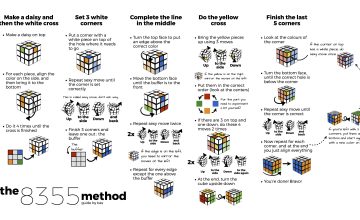
Are you tired of your Rubik's Cube locking up mid-solve or leaving you with a frustratingly twisted corner that refuses to align? You are not alone. In the vibrant speedcubing community, from the bustling markets of Tokyo to the tech hubs of San Francisco, thousands of enthusiasts face these exact hardware and mathematical hurdles every single day. As we move deeper into 2026, the gap between beginner frustration and professional mastery often comes down to one thing: understanding the physics of your puzzle. Whether you are a casual solver in London trying to beat your personal best or an aspiring competitor in Mumbai preparing for regional championships, mastering the art of cube maintenance is non-negotiable. This comprehensive guide dives deep into the mechanics of how to fix frequent lockups and corner twists on cube, offering actionable, proven strategies to transform your solving experience from chaotic to fluid.
Understanding the Two Major Enemies: Lockups and Twisted Corners
To solve the problem, we must first diagnose it. In the world of cubing, two distinct issues dominate the troubleshooting landscape: mechanical lockups and mathematical parity errors (twisted corners). While they feel similar in their frustration—stopping your momentum dead in their tracks—they require completely different solutions. Confusing the two is the most common mistake solvers make, leading to wasted hours of algorithm searching when the real issue is simply a dirty bearing or overtightened tension.
The Mechanics of Lockup: When Physics Fights Back
A lockup occurs when the internal mechanism of the cube creates too much friction, causing the layers to stick or stop rotating entirely during a fast turn. This is almost exclusively a hardware issue. Imagine trying to run through thick mud; no amount of running technique will help if the terrain is impossible. Similarly, if your cube is locked up, no amount of finger trick practice will save you.
In 2026, modern speed cubes utilize complex core designs and high-quality plastics to minimize this, but wear and tear still happen. Lockups are frequently caused by:
- Excessive Tension: If the screws holding the core together are tightened too much, the plastic pieces press against each other with too much force.
- Lack of Lubrication: Over time, factory grease dries out, or cheap lubricants evaporate, increasing static friction.
- Debris Accumulation: Dust, lint, and tiny plastic shavings can accumulate in the grooves, acting as grinding paste.
- Worn Internal Parts: In older or heavily used DIY cubes, the plastic may warp, creating uneven surfaces that catch on neighbors.
The Math Behind the Twist: Why One Corner Refuses to Cooperate
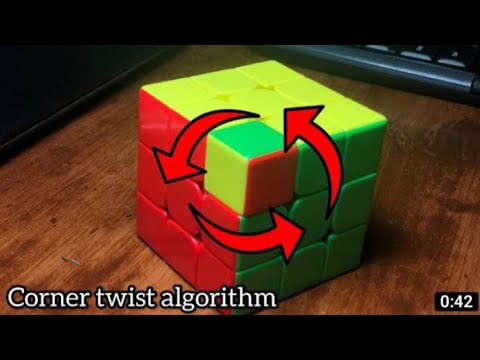
On the other hand, a twisted corner is a "parity error." This is a mathematical impossibility within the rules of normal gameplay. If you have spent hours solving a cube only to find one corner rotated 90 or 180 degrees while everything else is perfect, do not panic and do not try to force it with algorithms. You cannot solve a twisted corner using standard moves.
The reason lies in the Orientation Rule. A Rubik's Cube operates on strict modular arithmetic. For every clockwise twist of a corner, there must be a counter-clockwise twist somewhere else on the cube to balance the equation. The total twist value of all corners must always equal zero (or a multiple of three). A single twisted corner breaks this law, leaving the cube in a state that is mathematically unsolvable without physically manipulating the piece.
This usually happens due to a "pop" (a piece flying off) followed by incorrect reassembly, or more commonly, a piece catching on a fingernail or the edge of another piece during a fast turn, forcing it to rotate inside its socket. Recognizing this distinction is the first step toward fixing your cube.
Mastering the Art of Unlocking Your Cube: Solving Lockup Issues
Fixing frequent lockups requires a systematic approach to tuning your equipment. Think of your cube like a high-performance sports car; it needs the right oil, the correct tire pressure, and a well-tuned engine to reach top speeds. Here is how to diagnose and eliminate lockups in 2026.
Step 1: The Disassembly and Deep Clean
Before adjusting anything, you must see what is happening inside. Take your cube apart completely. Remove the center caps, then unscrew the core until all pieces are loose.
- Remove Old Grease: Use a soft cloth and isopropyl alcohol to wipe away dried, gummy factory grease. Old grease attracts dust and becomes abrasive.
- Inspect for Damage: Look at the inner faces of every cubie. Are there nicks, burrs, or warping? Even a microscopic imperfection can cause a lockup at high speeds. If a piece is visibly damaged, it may need to be replaced.
- Clean the Core: Wipe down the central plastic core thoroughly. Ensure the screw holes are free of debris.
Step 2: Strategic Lubrication
Lubrication is the lifeblood of a smooth cube. In 2026, the market offers superior options like water-based lubes (e.g., Goo Gone, Cubiclean) which do not attract dust as quickly as silicone oils, and premium silicone greases for long-term stability.
- Apply Sparingly: Apply a thin layer to the contact points of every piece. Do not drown the cube; excess lube creates drag.
- Target Areas: Focus on the ridges where pieces slide against each other. Avoid getting lube on the stickers or the outer shell, as this can make the cube slippery and hard to grip.
- Reassemble and Test: Put the cube back together and test the turns. It should feel fluid but not loose.
Step 3: Tuning the Tension Screws
This is the most critical adjustment for preventing lockups. The tension screws control how tightly the core holds the internal structure.
- The Loosen Test: Try turning the screws counter-clockwise (loosening) in small increments (quarter-turns). After each adjustment, test the cube.
- Find the Sweet Spot: You want a cube that feels stable but allows layers to snap freely into place. If you hear a loud clack when turning, it might be too loose. If you feel resistance or hear scraping, it is too tight.
- Balance Matters: Ensure all eight screws are tightened equally. If one side is tighter than the others, the cube will warp slightly, causing specific angles to lock up consistently.
Step 4: Addressing Wear and Tear
If you have cleaned, lubed, and tuned your cube, yet lockups persist, your hardware may be failing.
- Pillowing Effect: Some modern cubes use "pillowed" plastic (slightly convex shapes) to allow pieces to flex and avoid binding. If your cube has flat plastic pieces, they are more prone to locking under stress. Consider upgrading to a cube with advanced engineering like magnetic stabilization or pillowed cores.
- DIY Cube Limitations: Many DIY cubes from brands like C4Y or generic unbranded options lack the precision molding of official brands (like MoYu, GAN, or QiYi). If your cube is several years old and made of lower-grade plastic, the material may have degraded. In this case, replacement is often faster and more cost-effective than endless repairs.
Decoding the Paradox: How to Identify and Fix Twisted Corners
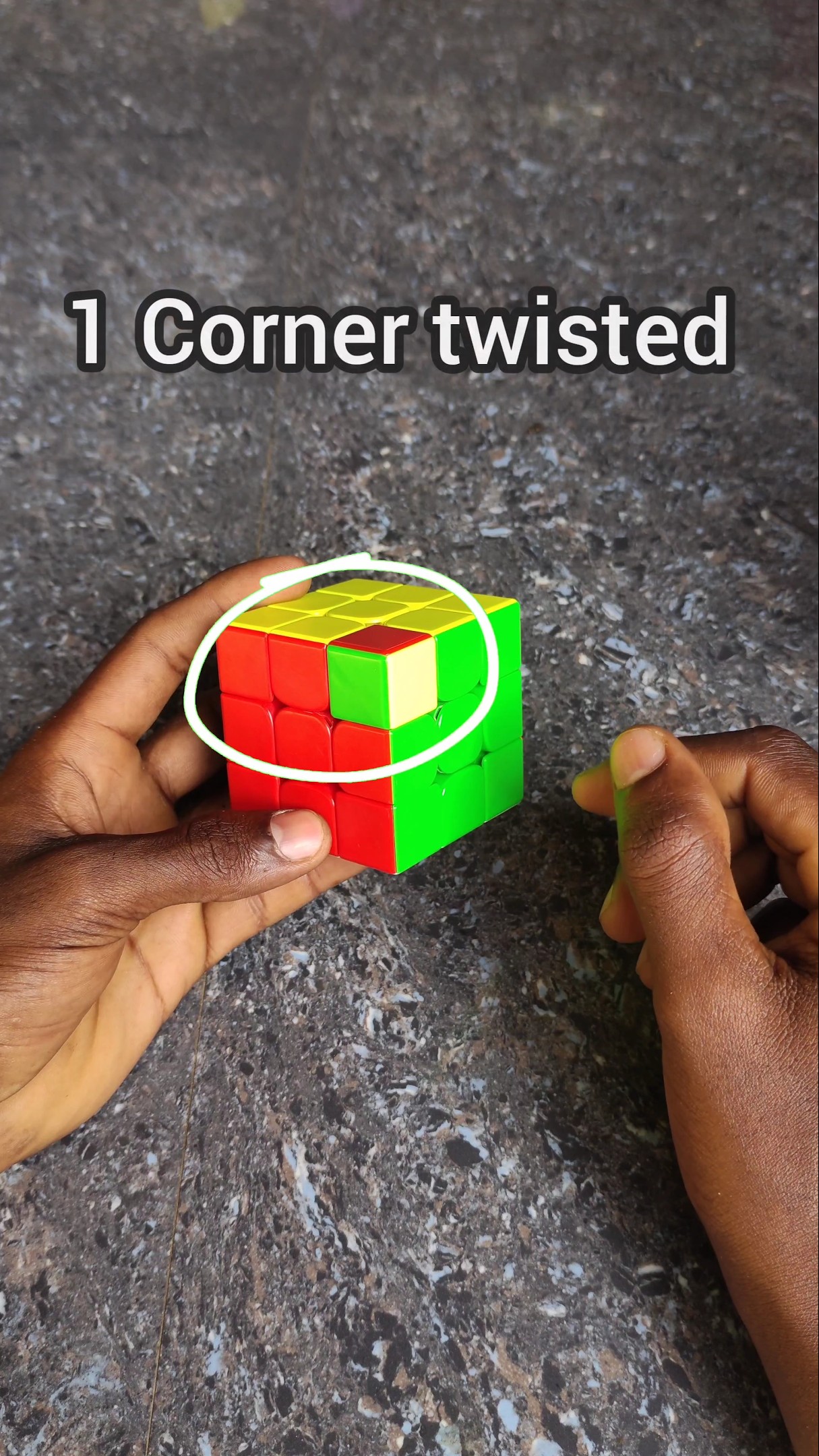
Once you have eliminated mechanical issues, you must address the twisted corner. As established, you cannot algorithmically solve a single twisted corner. However, you can fix it physically, provided you understand the consequences.
Identifying the Culprit
Before touching the cube, you must identify exactly which corner is wrong.
- Visual Inspection: Look at the last layer (usually yellow). Three colors should meet at a point matching the three adjacent centers. If one corner has the yellow sticker facing sideways instead of up, that is your offender.
- The Scanner Method: For those who struggle with visualization, tools like CubeUnstuck or online solvers can scan your cube (via photo) and tell you exactly which piece is misoriented. These tools are invaluable for diagnosing parity errors quickly.
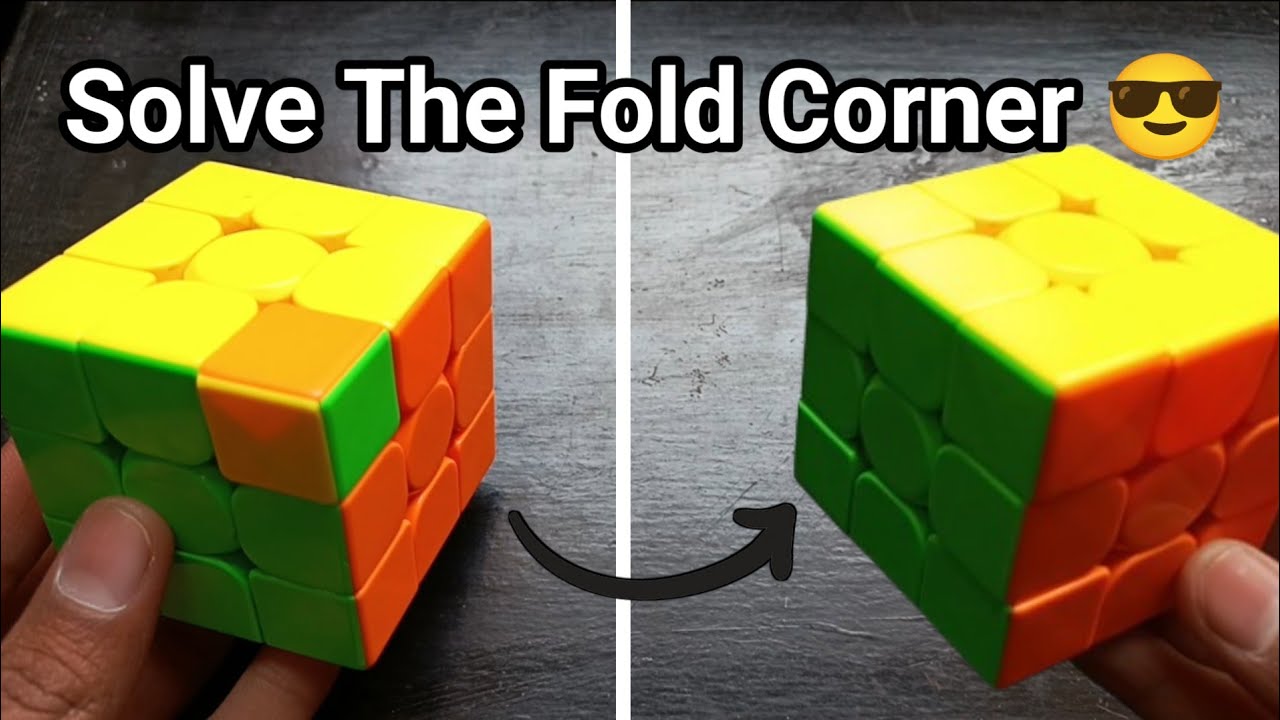
The Physical Fix: Forcing the Piece Back
Since the cube is mathematically broken in its current state, you must break the rules temporarily to restore it to a solvable state.
- Isolate the Corner: Hold the cube so the twisted corner is accessible.
- Pinch and Twist: Use your thumb and index finger to firmly grip the offending corner piece.
- Rotate 90 or 180 Degrees: Apply torque to twist the piece back into alignment. You should feel a slight click when it snaps back into the correct orientation relative to the other pieces.
- Verify: Check that the colors now match the adjacent centers. The cube should now be mathematically valid and solvable.
Why Did This Happen? Prevention Strategies
Understanding the cause helps prevent recurrence.
- Avoid Pops: A "pop" is when a piece flies out of the cube. If this happens, reassembling the cube incorrectly is the primary cause of twists. Always double-check that every piece is inserted in the correct slot before continuing.
- Safe Turning Techniques: During fast solves, fingers can slip. Practice keeping your fingers centered on the stickers rather than pushing on the edges of the plastic, which increases the leverage needed to pop a piece or twist it unintentionally.
- Regular Maintenance: Just as cars need oil changes, cubes need periodic checks. Every few months, take the cube apart, clean it, and re-lube it. This prevents the plastic from becoming brittle and prone to accidental rotation.
Advanced Tuning for 2026: Optimizing Performance Beyond Basics
For serious cubers in 2026, the goal is not just a working cube, but a perfect cube. Optimization involves fine-tuning settings to match your specific playing style and environment.
Customizing Spring Tension and Stickers
Many modern speed cubes come with interchangeable springs and tension screws.
- Spring Swaps: If your cube still feels inconsistent after adjusting screws, try swapping the springs. Softer springs provide a looser, faster feel, while stiffer springs offer more control. Brands like MoYu and GAN sell spring kits specifically designed for this purpose.
- Stickerless vs. Stickers: Some solvers prefer stickerless (dye-sublimated) cubes for better grip and durability, while others prefer traditional stickers for easier color identification. Ensure your chosen type suits your visual processing speed.
The Role of Magnets in Modern Cubing
In 2026, magnetic cubes are the standard for competitive play. Magnetic alignment provides tactile feedback, helping you know exactly when a layer is aligned, which reduces hesitation and improves flow.
- Magnet Strength: If you find your cube feels "mushy" or layers drift, you may need stronger magnets. Conversely, if the cube fights you to turn, the magnets might be too strong for your turning style.
- Placement: Ensure magnets are placed symmetrically. Uneven magnetic pull can cause subtle locking sensations during rapid rotations.
Local Community Insights: Tips from the Ground Up
Learning from local cubing communities can provide unique insights. In cities like New York, Berlin, and Seoul, regular meetups allow solvers to swap advice on specific cube models.
- Share Experiences: Ask locals what tension settings work best for their specific cube model. A setting that works for a GAN 11 M Pro in Tokyo might need adjustment for a Moyu Aochuang in New York due to humidity differences affecting plastic flexibility.
- Workshops: Many local puzzle shops host workshops on cube maintenance. Attending these sessions can save you time and money compared to trial-and-error at home.
Troubleshooting Common Scenarios and Edge Cases
Even with perfect maintenance, you may encounter specific scenarios that require targeted solutions.
Scenario A: The Cube Locks Up Only During Fast Turns
If your cube is fine at slow speeds but locks up when you try to execute a speed solve:
- Cause: This is often due to inertia and air resistance within the tight gaps of the core.
- Solution: You may need to slightly loosen the tension further. Additionally, ensure your lubricant viscosity is appropriate for your climate. In cold weather, lubes thicken; in hot weather, they thin out. Adjust accordingly.
Scenario B: Multiple Corners are Twisted
While rare, having more than one twisted corner indicates a deeper issue.
- Two Twisted Corners: This is actually solvable! Two corners twisted in opposite directions can be fixed using commutators (algorithms). You do not need to disassemble the cube here.
- Three or More Twisted Corners: If you have three or more, you likely assembled the cube incorrectly after a pop. You must disassemble and reassemble, ensuring every corner is oriented correctly relative to the centers.
Scenario C: The Cube Feels "Grindy" Despite Lubrication
- Cause: The lube may have mixed with dried dirt to form an abrasive paste, or the plastic pieces may be warped.
- Solution: Disassemble again. Use a toothbrush with alcohol to scrub the grooves meticulously. If warping is present, the piece may need to be sanded down very carefully or replaced.
Frequently Asked Questions (FAQ)
Q: Can I solve a Rubik's Cube with two twisted corners?
A: Yes, absolutely. Unlike a single twisted corner, two corners twisted in opposite directions (one clockwise, one counter-clockwise) maintain the mathematical balance required by the Mod-3 rule. You can solve this using specific algorithms like the Sune variation or dedicated corner-twisting commutators found in advanced CFOP or Roux methods.
Q: My cube keeps popping pieces off. Is this normal?
A: Frequent popping usually indicates the tension is too loose or the plastic is worn. Tighten the core screws incrementally. If the problem persists, your cube may be old or low-quality, and the plastic may have lost its structural integrity. Consider upgrading to a cube with better engineering and magnetization.
Q: How often should I lube my cube?
A: For daily solvers, a quick lube every 1-2 months is sufficient. For competitive speedcubers who practice multiple hours a day, monthly disassembly and full re-lubing is recommended to prevent grit buildup and maintain peak performance.
Q: Is it okay to use household oil on my Rubik's Cube?
A: No. Household oils (like WD-40 or cooking oil) are not designed for plastic friction and can degrade the plastic over time, causing it to become brittle or sticky. Always use lubricants specifically formulated for puzzles, such as silicone-based greases or water-based cleaners.
Q: Why does my new cube lock up immediately?
A: New cubes often come with factory grease that is overly thick, or the tension screws may be cranked down tight for shipping safety. Unscrew the core slightly and apply a light coat of proper puzzle lube to break in the cube properly.
Conclusion: From Frustration to Fluidity
Mastering the Rubik's Cube is as much about understanding the tool as it is about mastering the algorithms. By distinguishing between mechanical failures like lockups and mathematical impossibilities like twisted corners, you empower yourself to troubleshoot effectively. Remember, in 2026, the technology available to us—from advanced magnetic systems to smart diagnostic apps—makes achieving sub-10 second solves more accessible than ever, provided your hardware supports it.
Don't let a stuck layer or a twisted corner derail your progress. Take the time to disassemble, clean, and tune your cube. Treat your puzzle with the same care you would a musical instrument, and it will reward you with smooth, fluid turns and satisfying solves. Whether you are solving in a quiet room at home or competing on a global stage, a well-maintained cube is your greatest ally. Start today, tweak those screws, apply that lube, and watch your times plummet. Happy cubing!
References
- CubeUnstuck — Twisted Corner on a Rubik's Cube: Why It's Unsolvable, 2026
- SpeedSolving.com Community — Lockup fixes? Thread discussion, December 2010
- Cubelelo — Speedcubing Problems & Solutions: Overcome Challenges, March 2025
- Rubik's Cube Official Support — Rubik's Cube Troubleshooting FAQ: Solutions to Common Problems
- Innovatives.blog — Cube Corner Conundrums: Why You're Stuck & How to Solve It, September 2025
- WikiHow — How to Make a Rubik's Cube Turn Better, Updated Guidelines
- Reddit r/Cubers — How to prevent lock ups: Community consensus and tips, 2024-2025
- Ryan Heise — Corner twists | Rubik's Cube commutators, Mathematical analysis of parity