In the ever-evolving landscape of 2026, the Rubik's Cube remains a timeless icon of intellectual challenge. While it began as a simple mechanical toy in 1974, its underlying logic has grown into a sophisticated field intersecting advanced mathematics, artificial intelligence, and cognitive science. When enthusiasts ask, "what is the logic behind complex rubik cube puzzles," they are often looking for more than just a set of instructions; they seek to understand the mathematical universe contained within a 3x3x3 block of plastic.
The logic governing these puzzles is not random chaos but a rigid, elegant system governed by Group Theory. Every twist, turn, and slice follows strict algebraic rules that ensure the cube's integrity while allowing for infinite permutations. In 2026, with the advent of high-speed computing and neural networks, we can analyze these puzzles with unprecedented depth, revealing how human intuition mirrors machine optimization. Whether you are a speedcuber in Chicago mastering the CFOP method or a researcher in Tokyo simulating algorithms on supercomputers, understanding this logic is the key to unlocking the cube's secrets.
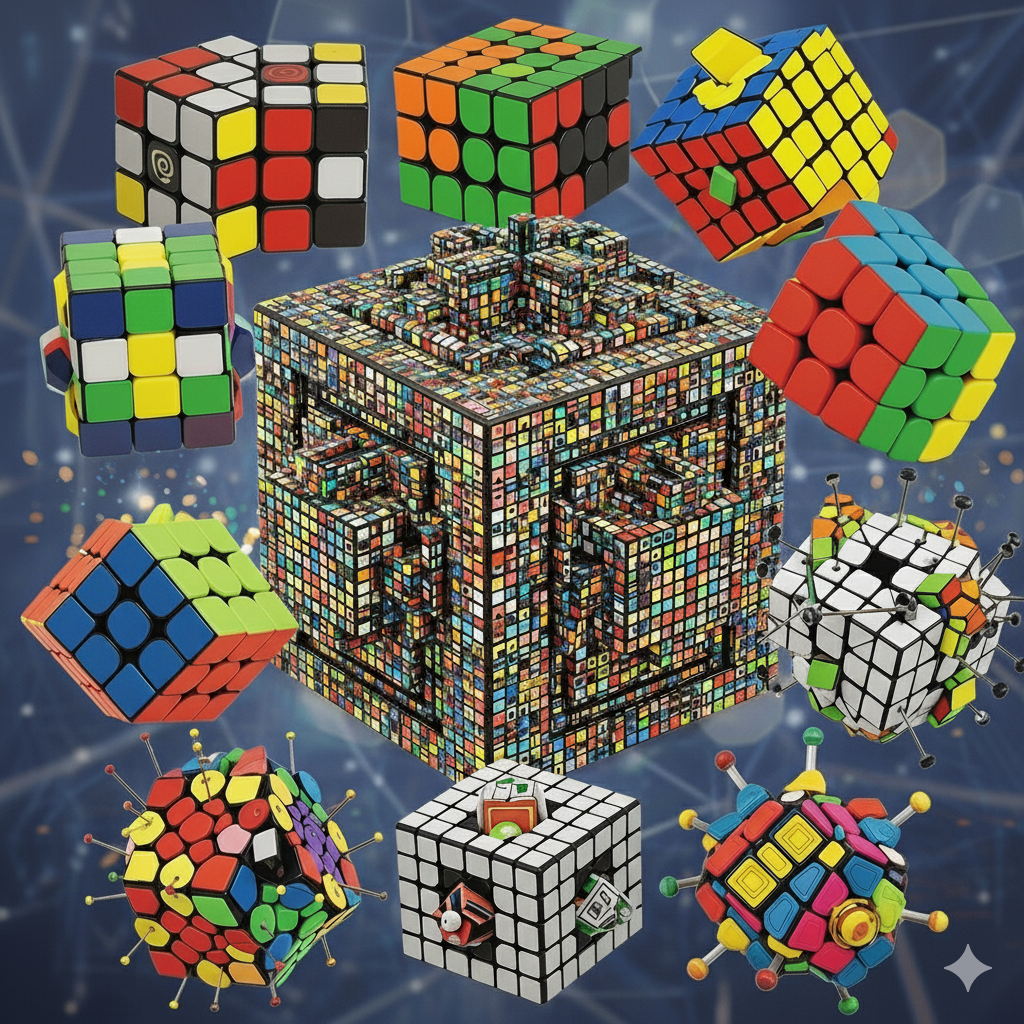
The Mathematical Foundation: Group Theory and Permutations
To truly grasp what is the logic behind complex rubik cube puzzles, one must first dismantle the illusion of randomness. At its core, the Rubik's Cube is a physical manifestation of abstract algebra, specifically a branch known as Group Theory. This mathematical framework describes sets of elements combined with an operation—in this case, rotating faces—that satisfies four specific properties: closure, associativity, identity, and invertibility.
The Illusion of Chaos vs. Structured Order
When a cube is scrambled, it appears to be a chaotic mess of colors. However, the internal mechanism ensures that every move is deterministic. The cube operates on a precise set of rules where the total number of possible configurations is exactly 43 quintillion (43,252,003,274,489,856,000). Despite this staggering number, the cube is solvable because all reachable states belong to a single mathematical group. You cannot reach a state where a center piece is twisted or an edge piece is flipped in isolation; the mechanics of the core prevent such "illegal" states.
The Role of Center Pieces as Anchors
A critical insight into the logic of the cube is the role of the center pieces. There are six centers, one for each face, and they are fixed relative to one another. In a standard color scheme, white is always opposite yellow, blue opposite green, and red opposite orange. These centers do not move around the cube; they only rotate in place. Consequently, they define the color of each face. If you see a white center, you know that any white stickers you manipulate must eventually end up on that specific face. This fixed reference point is the anchor upon which all logical solving strategies are built.
Permutations and Orientation
The complexity arises from the interaction between the movable pieces: the edge pieces (12 total, two colors) and the corner pieces (8 total, three colors). The logic involves two distinct types of changes:
- Permutation: Moving a piece from one location to another. For example, swapping two edges.
- Orientation: Rotating a piece so its colors face the correct direction without changing its location.
The mathematics dictates that while there are $8!$ ways to arrange the corners and $12!$ ways to arrange the edges, physical constraints limit these possibilities. For instance, you cannot flip a single corner in isolation; corners must be rotated in pairs or triplets to maintain the cube's balance. This interplay creates the "logic" that solvers exploit: by understanding these constraints, they can predict the outcome of their moves before executing them.
Deconstructing the Layer-by-Layer Methodology
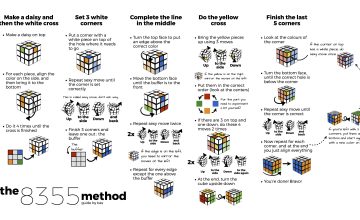
For beginners and intermediate solvers alike, the most accessible entry point into the logic of the cube is the Layer-by-Layer (LBL) method. This approach breaks down the massive problem of solving 54 stickers into three manageable, sequential stages. It is a prime example of problem decomposition, a fundamental concept in computer science and logic.
Stage 1: Solving the First Layer (The Cross and Corners)
The journey begins at the bottom. Typically, solvers start with the white face. The first logical step is creating the White Cross. This involves aligning the four edge pieces so that their second color matches the center of the adjacent side. This requires spatial reasoning to visualize where an edge piece needs to go without disturbing the already placed pieces.
Once the cross is formed, the next logical step is inserting the four white corner pieces. Each corner has three colors, so the solver must find the piece that belongs in a specific slot and orient it correctly. Algorithms are used here to cycle pieces into place without disrupting the cross below. The logic here is about building a solid foundation; if the first layer is not solved perfectly, the subsequent layers become exponentially harder.
Stage 2: Solving the Middle Layer
With the first layer complete, the focus shifts to the middle layer. The goal is to insert the four edge pieces that belong between the centers of the top and bottom faces. Unlike the first layer, this stage does not involve moving pieces out of the solved layer once they are in.
The logic here relies on identifying "edge cases." A solver looks at an edge piece in the top layer and determines which middle-layer slot it belongs to. If the piece is oriented correctly but in the wrong spot, a specific algorithm swaps it. If it is in the right spot but wrong orientation, it is moved out and re-inserted. This phase teaches the solver to think two steps ahead, anticipating how a move will affect the final layer.
Stage 3: The Final Layer (OLL and PLL)
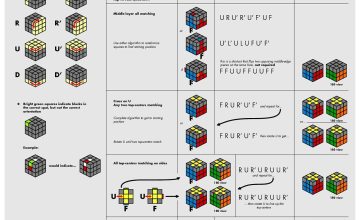
The final stage is where the true complexity shines. It is divided into two sub-steps: Orientation of the Last Layer (OLL) and Permutation of the Last Layer (PLL).
- OLL: The goal is to make the entire top face a single color. There are 57 different scenarios (algorithms) to achieve this, ranging from simple crosses to complex patterns like the "fish" shape.
- PLL: Once the top face is solid color, the edges and corners must be swapped to their correct positions to solve the cube completely. There are 21 PLL algorithms.
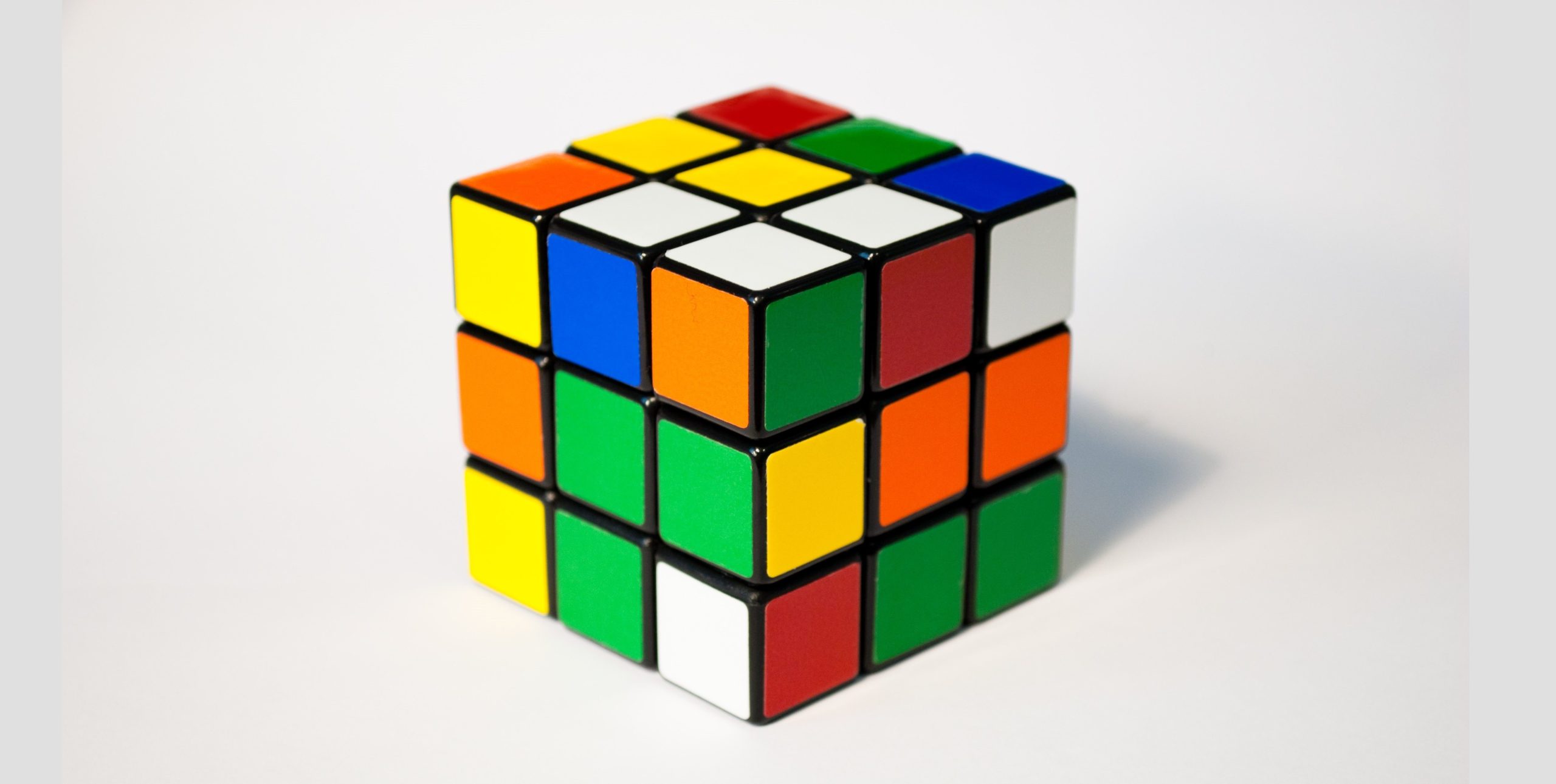
The logic of OLL and PLL is purely algorithmic. Solvers memorize sequences of moves that manipulate specific pieces while leaving others untouched. This is analogous to programming functions: input a scramble pattern, output a solved state. Mastery of these algorithms transforms the cube from a puzzle of intuition into a system of predictable outcomes.
Advanced Algorithms and Competitive Speedcubing Strategies
As solvers progress beyond the basics, the logic evolves from simple memorization to optimization and efficiency. In the competitive world of speedcubing, particularly in 2026, the margin for error is measured in hundredths of a second. This has led to the development of advanced methods that prioritize minimizing move count and maximizing flow.
The CFOP Method: The Gold Standard
CFOP (Cross, F2L, OLL, PLL) remains the dominant method for competitive cubers worldwide. Developed by Jessica Fridrich, it is renowned for its blend of intuitive first two steps (F2L) and extensive algorithm library for the last two steps.
- F2L (First Two Layers): Instead of solving layers sequentially, F2L pairs up edge and corner pieces and inserts them simultaneously. This reduces the number of moves significantly compared to LBL.
- ** lookahead**: Elite solvers use "lookahead," where they solve one pair while visually scanning for the next pair, eliminating pauses between moves. This cognitive load management is a key part of the logic behind sub-10-second solves.
The Roux Method: Constraint-Based Thinking
While CFOP builds upwards, the Roux method builds from the sides. Developed by Gilles Roux, this method focuses on solving a 2x3x3 block on the left, then another on the right, and finally finishing with CMLL (Corner Last Layer) and EOLR (Edge Orientation Last Layer).
The logic of Roux is rooted in constraint satisfaction. By solving blocks early, the solver restricts the movement of remaining pieces, making the final steps more predictable. This method is often favored by European competitors and is increasingly popular among those who prefer spatial block-building over algorithm memorization.
The ZZ Method: Rotationless Efficiency
Perhaps the most unique logical approach is the ZZ method, pioneered by Zbigniew Zborowski. Its defining feature is Edge Orientation (EO) done in the very first step. By orienting all edges so they run parallel to a specific axis, the solver eliminates the need for cube rotations during the rest of the solve.
This creates a "rotationless" solve, which allows for incredibly fast finger tricks and continuous motion. The logic here is akin to data preprocessing in AI; by cleaning and organizing the data (the cube state) upfront, the subsequent processing (solving) becomes faster and more consistent.
Artificial Intelligence and the Computational Mindset
In 2026, the logic of the Rubik's Cube has transcended human cognition and entered the realm of Artificial Intelligence. Modern AI systems do not "think" like humans; they calculate probabilities and search vast trees of possibilities using heuristics derived from Group Theory.
Kociemba's Algorithm: The Bridge Between Human and Machine
One of the most influential algorithms in this domain is Kociemba's Algorithm. It utilizes a two-phase approach based on group theory to solve any scrambled cube in 20 moves or fewer (God's Number).
- Phase 1: Reduces the cube state to a subgroup where certain constraints are met.
- Phase 2: Solves the reduced state to the final solution.
This algorithm powers many online solvers and smartphone apps. It demonstrates that the "logic" of the cube can be encoded into software that guarantees an optimal solution instantly, regardless of the scramble complexity.
Neural Networks and Pattern Recognition
Recent advancements in 2026 have seen the application of Deep Learning and Convolutional Neural Networks (CNNs) to cube solving. Systems like Google's AlphaGo-inspired models analyze the visual state of the cube, recognizing patterns similar to how a human solver sees a "T-perm" or an "Sune."
These AI models excel at visual-spatial reasoning. They can look at a scrambled cube, process the image, and output the optimal sequence of moves. This mirrors the human brain's ability to visualize transformations, but with the computational power to calculate millions of variations per second. The intersection of competitive cubing algorithms and AI research continues to drive innovation in both fields, influencing robotics and autonomous navigation.
Cognitive Benefits and Neurological Insights
Beyond the math and code, the logic of the Rubik's Cube offers profound benefits to the human brain. Studies published in recent years, including research from 2024 and 2025, suggest that solving complex puzzles like the cube engages multiple regions of the brain simultaneously.
Visual-Spatial Reasoning and Mental Rotation
Solving a cube requires intense visual-spatial reasoning. Solvers must mentally rotate sections of the cube to predict the outcome of a move. This strengthens the parietal lobe, the area responsible for processing spatial relationships. Elite solvers report being able to "see" the result of an algorithm before they even touch the cube, a phenomenon known as mental rotation.
Memory and Pattern Recognition
The sheer volume of algorithms required for advanced methods tests working memory. Solvers must recall sequences of moves under pressure, engaging the hippocampus and prefrontal cortex. Furthermore, the constant identification of patterns trains the brain to recognize structures quickly, a skill that translates well to other domains like coding and engineering.
Flow State and Stress Reduction
Many solvers in cities like Austin, Berlin, and Seoul describe entering a flow state while solving. This psychological state, characterized by deep focus and loss of self-consciousness, is facilitated by the clear goals and immediate feedback loops provided by the puzzle. The repetitive yet challenging nature of the logic helps reduce anxiety and improve concentration, making the cube a popular tool for mindfulness and cognitive training.
Future Trends: Smart Cubes and Global Communities
Looking toward the future of puzzle-solving in 2026 and beyond, the logic of the Rubik's Cube is expanding into new technological frontiers. The line between physical toys and smart devices is blurring.
IoT and Smart Cubes
Modern cubes now come equipped with IoT (Internet of Things) capabilities. Sensors embedded in the cubies can track every move, analyze solving times, and provide real-time feedback on technique. Apps connected to these cubes can offer personalized training drills, highlighting weak spots in a solver's algorithm execution. This data-driven approach allows for hyper-personalized improvement plans, turning the solitary act of solving into a guided learning experience.
Community and Local Events
Despite the digital age, the local community aspect remains vital. Cities around the world host weekly meetups where enthusiasts gather to share strategies, compete, and learn. These events foster a sense of belonging and allow for the transmission of tacit knowledge—tips and tricks that aren't found in textbooks but are passed down through hand-to-hand mentorship. The logic of the cube is not just mathematical; it is social, connecting people across borders through a shared love of problem-solving.
Conclusion: The Endless Logic of a Simple Toy
The question "what is the logic behind complex rubik cube puzzles" reveals a universe far richer than a simple children's game. From the rigid constraints of Group Theory to the dynamic optimizations of AI algorithms, the Rubik's Cube serves as a microcosm of mathematical beauty and computational power.
Whether you are a student in London learning your first algorithm, a professional in San Francisco optimizing a robotic arm's pathfinding, or a casual enthusiast in Toronto enjoying a quiet afternoon, the logic of the cube applies. It teaches us that complexity can be broken down into manageable parts, that patterns exist within chaos, and that with the right tools—be they human neurons or silicon processors—any seemingly impossible problem can be solved. As we move further into 2026, the Rubik's Cube stands not just as a puzzle, but as a testament to the enduring power of logic and creativity.
FAQ: Understanding the Logic of the Rubik's Cube
Q: Is the Rubik's Cube solvable by anyone, or does it require genius-level intelligence?
A: Absolutely anyone can solve the Rubik's Cube. It does not require genius-level intelligence but rather patience, logical thinking, and the willingness to learn specific algorithms. With the right resources and practice, most people can learn the basic layer-by-layer method within a few hours.
Q: What is the significance of the 43 quintillion combinations?
A: The 43 quintillion figure represents the total number of unique ways the cube can be scrambled. While this number is astronomical, it is finite. This finiteness is crucial because it means a solution exists for every possible state, and theoretically, a computer could solve every configuration by brute force.
Q: How do AI algorithms differ from human solving methods?
A: AI algorithms like Kociemba's rely on mathematical shortcuts and exhaustive search trees to find the shortest path (God's Number) instantly. Humans, conversely, rely on pattern recognition, muscle memory, and intuition. While AI is faster and more accurate, human solving involves a cognitive journey that AI currently cannot replicate emotionally or creatively.
Q: Can I solve a cube without memorizing algorithms?
A: You can solve a cube intuitively at a very basic level, but reaching advanced speeds or solving complex variants efficiently requires memorization. Algorithms are essentially "functions" that perform specific tasks reliably. Without them, the process becomes slow and prone to error as the cube gets more scrambled.