Speedcubing has evolved from a niche hobby into a global competitive sport, with communities thriving in major hubs like New York, London, Tokyo, and emerging scenes in cities like Bangalore and São Paulo. Whether you are practicing in a local library in Chicago or competing at a national championship in Berlin, the barrier between an average solver and a sub-10-second speedcuber often comes down to one critical skill: algorithm memorization. In 2026, the standard for competitive solving is higher than ever, demanding not just knowledge of moves, but instant, fluid execution under pressure.
Many aspiring cubers hit a frustrating plateau. They understand the logic of the CFOP method, they have a fast magnetic cube, yet their solve times stagnate because they cannot recall the necessary algorithms quickly enough during a timed attempt. The secret isn't raw intelligence or a photographic memory; it is a systematic approach to learning that leverages muscle memory, pattern recognition, and cognitive chunking. This comprehensive guide will walk you through proven strategies used by elite competitors to master hundreds of algorithms efficiently, ensuring you are ready for any competition scene in 2026.
The Science Behind Algorithm Retention
Before diving into specific techniques, it is crucial to understand how the human brain processes speedcubing algorithms. Most beginners make the mistake of treating algorithms as a list of letters to be recited, similar to memorizing a phone number. However, elite speedcubing relies on three distinct types of memory working in unison: Declarative Memory, Procedural Memory, and Recognition Memory.
Understanding Declarative vs. Procedural Memory
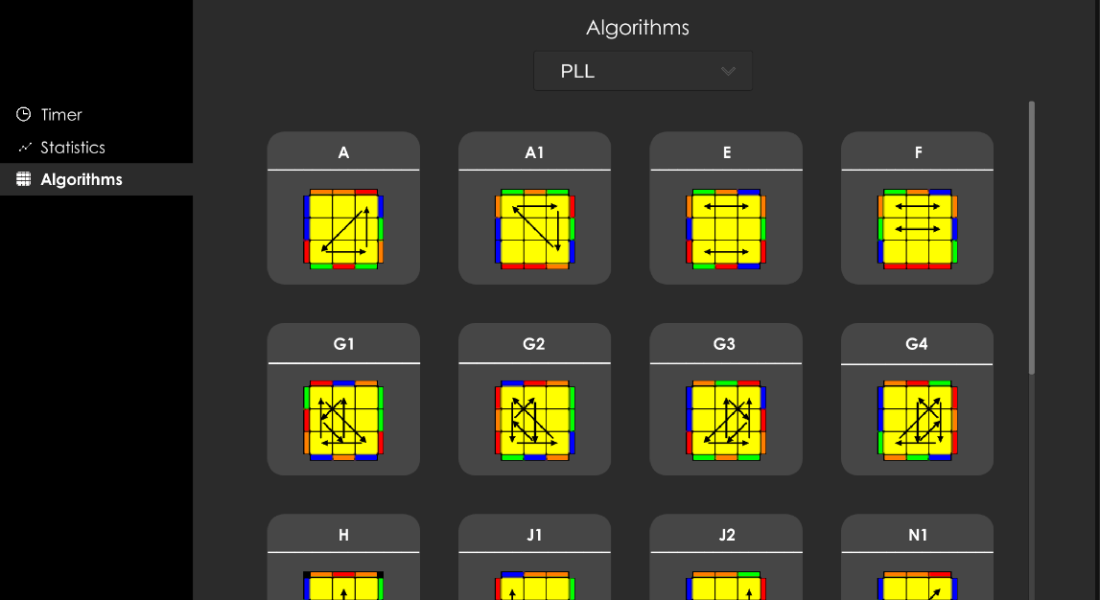
Declarative memory is your intellectual understanding of an algorithm. It is the ability to say, "The T-Perm is R U R' U' R' F R2 U' R' U' R U R' F'." You can write it down, explain it to a friend, and recite it while sitting on a bus in Paris. While this is the first step, stopping here is a common pitfall. Many cubers believe that because they can recite the notation, they "know" the algorithm. In reality, declarative knowledge alone results in slow, hesitant execution because your brain is still translating symbols into physical movements during the solve.
Procedural memory, on the other hand, is the domain of muscle memory. This is the physical ability to execute the sequence without conscious thought. When a top-tier speedcuber in Seoul executes a complex ZBLL case, their fingers move automatically. Their brain is not thinking about "R prime"; their hands simply know the trajectory. Building procedural memory requires high-volume repetition where the focus shifts from what the move is to how it feels. This transition from thinking to doing is what separates memorization from true mastery.
The Role of Recognition Memory
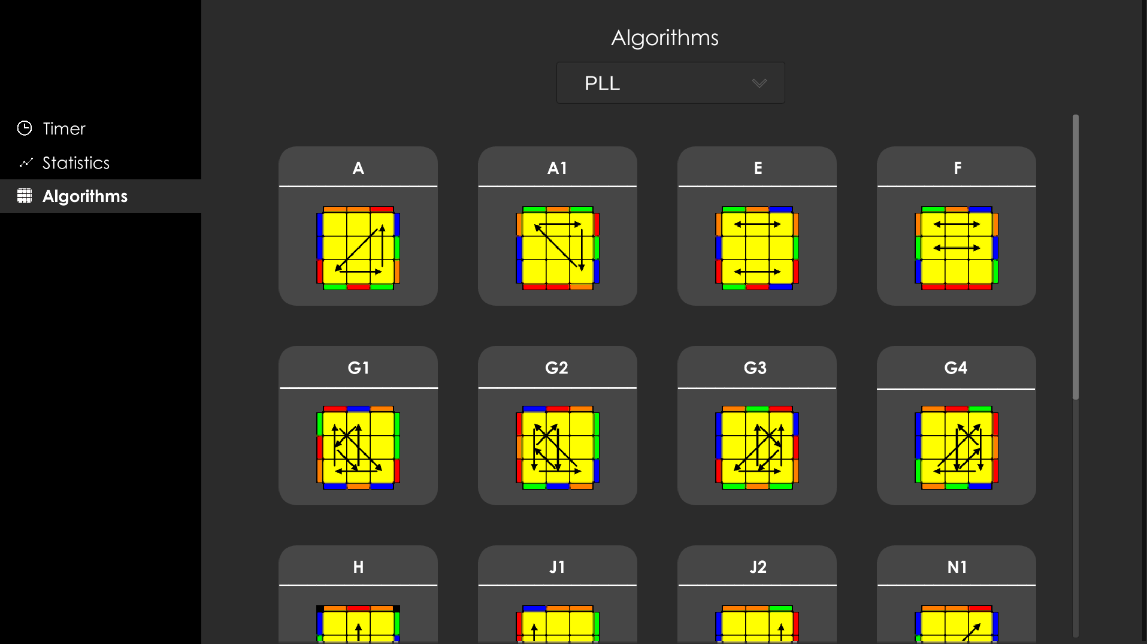
The third pillar is recognition memory. This is the instantaneous link between seeing a pattern on the cube and triggering the correct motor program. In a high-pressure environment, such as a regional competition in Toronto, you do not have time to analyze the cube layer by layer. You must recognize the OLL or PLL case within milliseconds. Effective training involves drilling this visual association until the pattern on the stickers instantly triggers the finger tricks, bypassing the need for verbal internal monologue.
Strategic Breakdown: Chunking and Pattern Recognition
One of the most effective ways to accelerate algorithm learning is to stop viewing them as long strings of moves and start seeing them as collections of smaller, meaningful units. This technique, known as chunking, reduces cognitive load and makes retention significantly easier.
Breaking Algorithms into Manageable Chunks
Complex algorithms, especially those found in advanced sets like ZBLL or CLL, can look intimidating at first glance. A 20-move algorithm seems impossible to memorize as a single unit. However, if you break it down, the task becomes manageable. Look for repeating sequences or familiar triggers within the larger algorithm.
For example, many algorithms contain the "Sexy Move" (R U R' U') or the "Sledgehammer" (R' F R F'). Instead of memorizing each individual turn, identify these chunks. If an algorithm starts with a Sledgehammer, followed by a U2, and ends with a variation of a T-Perm trigger, you only need to memorize three concepts rather than twenty letters. By isolating these components, you can practice them individually before stitching them together. This method is particularly effective for intermediate cubers transitioning from 2-look OLL to full OLL.
Identifying Visual and Structural Patterns
Beyond simple chunking, successful memorization relies on identifying structural patterns. Does the algorithm alternate between Right and Left moves? Do the U-moves follow a specific rhythm? In 2026, modern teaching methods emphasize visual flow over rote notation.
- Alternating Moves: Notice if an algorithm switches hands frequently (e.g., R, L, R, L). These are often ergonomic and easier to learn because they utilize natural hand alternation.
- Symmetry: Some algorithms are symmetrical or anti-symmetrical. Recognizing that the second half of an algorithm is the mirror image of the first half cuts your memorization time in half.
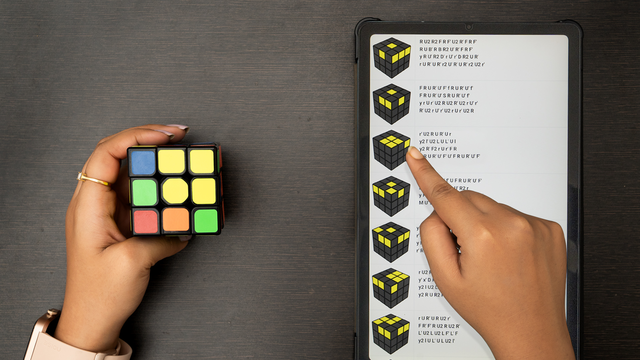
- Piece Tracking: For OLL algorithms specifically, try to watch a specific piece (like a corner or edge) throughout the sequence. Understand where it goes and how it returns to its solved state. This "watching pieces" technique creates a narrative for the algorithm, making it stickier in your memory than abstract notation.
Leveraging Mnemonics and Storytelling Techniques
While muscle memory is the end goal, getting there often requires a mental bridge. Mnemonics and storytelling are powerful tools to encode algorithms into your long-term memory, especially for cases that lack obvious patterns or feel awkward to execute.
Creating Narrative Associations
The human brain is wired to remember stories far better than random data. When learning a difficult PLL case, try to create a short story or phrase where each word or syllable corresponds to a move or a group of moves. For instance, an algorithm might remind you of "Running Up That Hill," where the rhythm of the lyrics matches the rhythm of the turns.
In local cubing communities, from meetups in Austin to clubs in Melbourne, experienced solvers often share their personal mnemonics. You might hear someone describe a specific OLL case as "The Snake Eating the Apple." These vivid images create strong neural pathways. When you see the case on the cube, you don't recall the letters; you recall the snake, and your hands automatically perform the associated moves. This technique is invaluable for breaking through plateaus when an algorithm simply refuses to stick.
Using Audio and Rhythm
Another layer of mnemonic learning involves rhythm. Algorithms have a natural tempo. Some are staccato and quick, while others are flowing and smooth. Clapping out the rhythm of an algorithm or saying the moves out loud with a specific cadence can help embed the timing into your brain.
Try recording yourself saying the algorithm with a beat, then listen to it while commuting or exercising. This passive reinforcement helps solidify the sequence without requiring active cube time. In 2026, with the rise of audio-based learning apps and podcasts for cubers, leveraging auditory learning has become more accessible than ever. Combining the sound of the cube turning with a rhythmic chant creates a multi-sensory memory experience that is highly resistant to forgetting.
The Power of Deliberate Practice and Muscle Memory
Knowing an algorithm intellectually is useless if you cannot execute it at high speed. The transition from slow, thoughtful turning to blistering speed requires deliberate practice. This is not just about solving the cube repeatedly; it is about targeted drills designed to build specific neural pathways.
Slow is Smooth, Smooth is Fast
A common misconception among beginners is that they should practice algorithms as fast as possible from day one. This often leads to bad habits, lock-ups, and poor finger trick usage. The most efficient path to speed is to start slowly. Perform the algorithm at a pace where you make zero mistakes and use optimal finger tricks.
Focus on the ergonomics of every turn. Are you using your ring finger for that F' move? Is your wrist position comfortable? By perfecting the movement slowly, you ensure that the muscle memory being built is clean and efficient. As you repeat the algorithm correctly thousands of times, your speed will naturally increase without sacrificing accuracy. This principle holds true whether you are training in a quiet room in Kyoto or a bustling cube shop in New York City.
High-Volume Repetition Drills
To truly internalize an algorithm, you need volume. Elite cubers often dedicate specific sessions to "alg drilling," where they perform a single algorithm 50 to 100 times in a row. This repetition forces the brain to shift from declarative processing to procedural automation.
- Blindfolded Drilling: Once you feel comfortable with an algorithm, try performing it with your eyes closed. This forces you to rely entirely on proprioception (the sense of your body's position) and tactile feedback, strengthening the muscle memory connection.
- Scramble-and-Solve Drills: Instead of just repeating the moves on a solved cube, scramble the cube into the specific case you are learning, recognize it, and then execute the algorithm. This adds the crucial element of recognition to the physical execution.
- Interleaved Practice: Rather than drilling one algorithm for an hour, mix several new algorithms together in a single session. This "interleaving" technique challenges your brain to constantly retrieve different patterns, leading to stronger long-term retention compared to blocked practice.
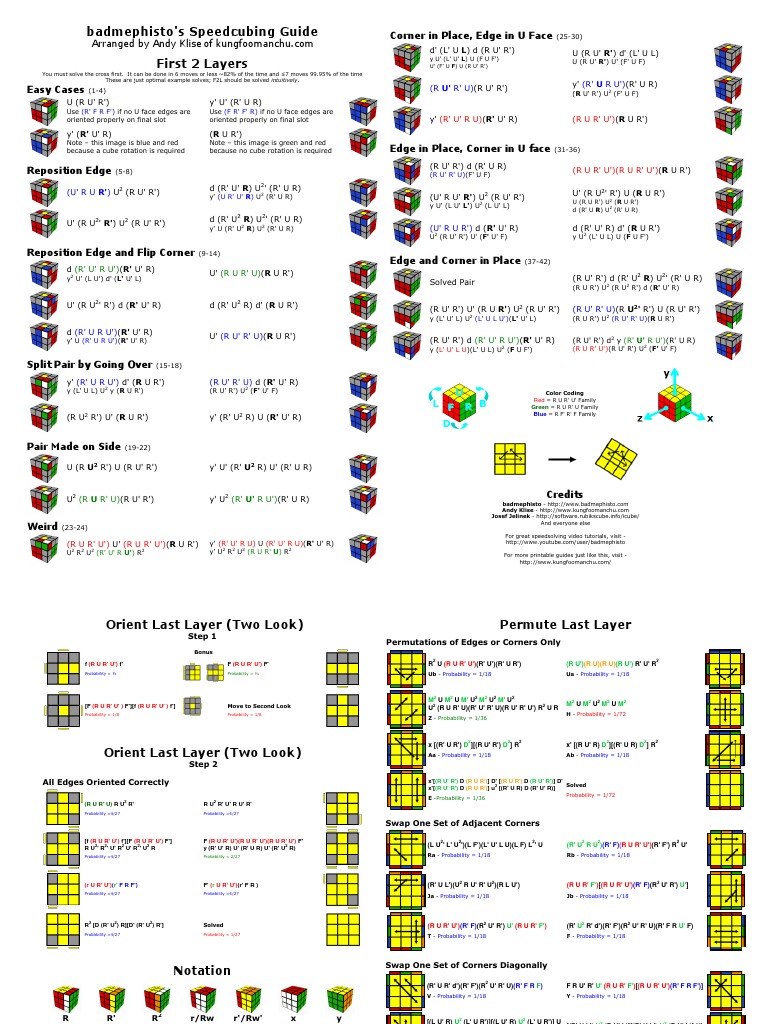
Optimizing Your Hardware and Environment for Learning
In 2026, the hardware available to speedcubers is more advanced than ever. While a good cube won't memorize algorithms for you, the right equipment can significantly reduce friction, allowing you to focus purely on learning and execution.
Choosing the Right Magnetic Speedcube
The era of non-magnetic cubes is long gone. For algorithm learning, a magnetic speedcube is essential. Magnets provide tactile feedback at every turn, helping your fingers register when a move is complete. This feedback loop accelerates the development of muscle memory.
Popular models in 2026, such as the latest iterations of the GAN series or MoYu's WeiLong line, offer adjustable magnet strength and tension. When learning new algorithms, consider setting your cube to a slightly heavier tension. This prevents overshooting and forces you to be more precise with your finger tricks. As you master the algorithm, you can loosen the tension for faster turning. Additionally, ensure your cube is well-lubricated; a crunchy or sticky cube can disrupt the flow of an algorithm and create negative associations in your memory.
Creating a Conducive Learning Environment
Your physical environment plays a subtle but important role in memorization. Distractions are the enemy of deep focus. Whether you are a student in London or a professional in San Francisco, designate a specific space for cubing practice.
- Minimize Distractions: Turn off notifications on your phone. Use a dedicated timer like the sCube or a physical stackmat timer to simulate competition conditions.
- Lighting: Ensure your practice area is well-lit. Good lighting helps with pattern recognition, reducing eye strain during long drilling sessions.
- Community Engagement: Join local cubing groups or online forums. Discussing algorithms with peers in cities like Berlin or Mumbai can provide new perspectives and mnemonics you hadn't considered. Teaching an algorithm to someone else is also one of the best ways to solidify your own understanding.
Advanced Strategies for Elite Performance
Once you have mastered the basics of CFOP and are looking to push into the sub-8 or sub-6 second range, you may need to adopt advanced strategies. These techniques are used by world-class competitors to manage the massive algorithm counts required by methods like ZBLL or One-Look F2L.
The Two-Step System for Complex Sets
For enormous algorithm sets, trying to learn everything at once is a recipe for burnout. Adopt a two-step system:
- Recognition Phase: Spend time solely recognizing the cases without executing the full algorithm. Use flashcards or digital trainers to flash a case and name the algorithm. Do this until recognition is instant.
- Execution Phase: Once recognition is automatic, focus entirely on the physical execution. Drill the finger tricks until they are flawless.
By separating these two skills, you prevent cognitive overload. You aren't trying to recognize the pattern and figure out the moves simultaneously, which slows down the learning process.
Utilizing Digital Tools and AI Analysis
In 2026, technology offers unprecedented support for algorithm learning. Apps and software can analyze your solves, identify which algorithms cause you the most hesitation, and generate custom drill sets targeting those weaknesses. Some platforms even use AI to suggest alternative algorithms that might be more ergonomic for your specific hand size and turning style.
Leverage these tools to track your progress. Keep a log of which algorithms you have learned, when you learned them, and your current execution speed. This data-driven approach allows you to optimize your study schedule, focusing your energy on the areas that yield the biggest time improvements.
Frequently Asked Questions (FAQ)
How long does it take to memorize full OLL and PLL?
The time varies significantly based on your practice frequency and prior experience. For a dedicated practitioner spending 30-60 minutes daily on drills, mastering the 57 OLL algorithms can take 2-4 weeks, while the 21 PLL algorithms can be learned in 1-2 weeks. However, reaching a point of instant recognition and fluid execution often takes several months of consistent practice.
Is it better to learn algorithms by notation or by shape?
You should prioritize learning by shape and pattern recognition. Relying solely on notation (e.g., "R U R'") creates a bottleneck where you have to translate letters to moves in your head. Top speedcubers see a pattern on the cube and their hands react instantly. Notation is useful for initial learning, but the goal is to transcend it.
What if I keep forgetting algorithms I learned last week?
This is a normal part of the learning curve known as the "forgetting curve." To combat this, you must use spaced repetition. Review older algorithms regularly, even after you think you know them. Incorporate them into your daily solves rather than just drilling them in isolation. If an algorithm consistently slips away, try creating a new mnemonic or finding a different, more ergonomic variation of that algorithm.
Can I learn algorithms effectively without a physical cube?
While visualization is a powerful tool, it cannot fully replace physical practice. Muscle memory requires actual tactile feedback and finger movement. You can study notation and visualize moves on a bus or in bed, but to truly master an algorithm, you must perform it on a physical cube thousands of times.
Should I learn 2-look OLL before full OLL?
Yes, for most beginners, starting with 2-look OLL is recommended. It breaks the last layer orientation into two simpler steps (edges then corners), requiring only about 10 algorithms instead of 57. This allows you to get faster quickly while you gradually learn the full set. However, if your goal is ultimate speed, transitioning to full OLL is inevitable.
Conclusion
Mastering the art of algorithm memorization is the gateway to unlocking your full potential in speedcubing. By understanding the science behind memory, utilizing techniques like chunking and mnemonics, and committing to deliberate, high-volume practice, you can transform your solving ability. The journey from a struggling beginner to a confident speedcuber is not about innate talent; it is about strategy and persistence.
As we move further into 2026, the resources available to cubers are better than ever. From advanced magnetic cubes to AI-driven training apps, the tools for success are at your fingertips. Whether you are aiming to win your local club competition in Seattle or dreaming of the world stage, remember that every expert was once a beginner who refused to give up. Start applying these strategies today, break those algorithms down, and watch your times drop. The cube is waiting, and so is your next personal best.
References
- SpeedCubeShop — How to Remember Speed Cubing Algorithms, 2025
- Cubelelo — How to Remember Algorithms in Cubing, 2023
- SpeedSolving Puzzles Community — How to Memorize Algorithms Quicker, 2020
- Cubelelo — How to Memorize Speedcube Algorithms Faster, 2022
- Mangalls — How to Memorize Speed Cube Algorithms: Easy Methods for All Levels, 2026
- LearnCube.org — How Top Speedcubers Learn Algorithms: Strategies and Techniques, 2024
- J Perm — CFOP Speedsolving Method, 2025
- Cubelelo — Mastering the Seconds: Essential Daily Practice Tips for Speedcubers, 2024