Breaking the one-minute barrier is often the first major milestone in a cuber's journey. It represents the transition from casual puzzling to serious speedcubing. For many enthusiasts in Austin, Seattle, and Chicago, mastering this skill means joining a local community of solvers who gather at cafes, libraries, and tech hubs to share strategies and compete. In 2026, the technology surrounding our cubes has evolved, making it easier than ever to track progress, analyze mistakes, and refine techniques with unprecedented precision. Whether you are sitting at your kitchen table in Denver or practicing in a dedicated room in Boston, understanding exactly how to get faster at solving Rubik's Cube under 60 seconds is the key to unlocking your potential.
The goal might seem daunting if you currently solve in three or four minutes, but the path is well-trodden. By combining modern hardware, optimized algorithms, and strategic practice routines, you can consistently dip below the 60-second mark. This guide dives deep into the mechanics of speed, offering actionable steps tailored for beginners and intermediate solvers looking to make that crucial leap. We will explore everything from the physics of your cube to the mental agility required for lookahead, ensuring you have every tool necessary to succeed in today's competitive landscape.
Mastering the Foundation: Why the Beginner Method Still Works
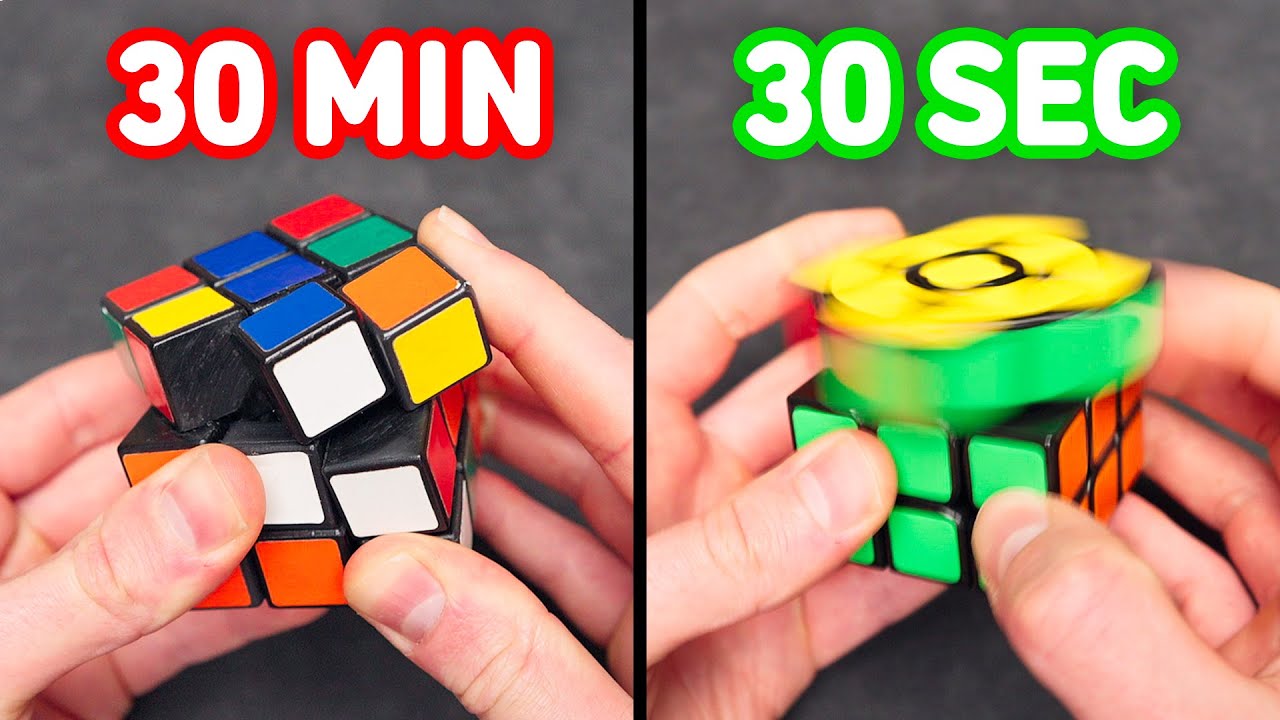
Before diving into complex advanced methods, it is essential to address a common misconception. Many aspiring speedcubers believe they must immediately abandon the "Beginner Method" (also known as Layer-by-Layer) to break 60 seconds. However, recent analysis in 2025 and early 2026 suggests that refining the beginner method is a highly effective strategy for those stuck above the minute mark. As highlighted in comprehensive tutorials, you do not necessarily need to memorize 50+ complex algorithms right away to see significant improvements.
The primary bottleneck for solvers taking longer than 60 seconds is usually not a lack of algorithm knowledge, but rather inefficient hand movement and poor finger placement. When you rely on the standard layer-by-layer approach, you often end up rotating the entire cube frequently. These rotations consume valuable time. By focusing on efficient finger tricks and optimizing your hand positions, you can shave off seconds per move without learning a single new algorithm.
For beginners aiming for sub-60 times, the focus should shift from "solving" to "flow."
- Hand Placement: Learn where your hands naturally rest on the cube. Bad habits, such as holding the cube too tightly or positioning fingers awkwardly, create friction and slow down turns.
- Lookahead Basics: Even in the beginner method, start anticipating the next step while executing the current one. If you finish one pair before looking at the next, you lose momentum.
- Cube Quality: Sometimes the issue isn't you; it's the tool. A worn-out, stiff cube from a decade ago can add significant drag. Upgrading to a modern, high-quality puzzle available in local hobby shops can provide an instant performance boost.
![How to Solve the Rubik's Cube FASTER with the [Beginner Method] - YouTube](https://therubbick.com/wp-content/uploads/2026/04/maxresdefault-6.jpg)
Transitioning to CFOP: The Industry Standard for Speed
If you find yourself plateauing despite perfecting your beginner technique, it is time to embrace the CFOP method (Cross, F2L, OLL, PLL). Also known as the Fridrich method, CFOP is the gold standard used by virtually all world record holders. In 2026, this remains the most efficient way to solve the 3×3 cube, capable of pushing times well under 30 seconds once mastered. The transition requires effort, but the payoff in speed is undeniable.
The Four Pillars of CFOP
To get faster at solving Rubik's Cube under 60 seconds using CFOP, you must master four distinct phases. Each phase builds upon the last, creating a fluid solving experience.
1. The Cross: Setting the Pace
The cross is the foundation of every fast solve. In the beginner method, you might spend 10-15 seconds just forming the cross. In CFOP, the goal is to complete it in under 5 seconds.
- Bottom Cross: Always solve the cross on the bottom face. This allows you to use your dominant hand more effectively during the subsequent steps.
- Ignoring Centers: Advanced solvers learn to ignore the center pieces initially, focusing solely on edge alignment. This reduces cognitive load during inspection.
- Edge Orientation: Ensure edges are oriented correctly before you even start moving them into place. This prevents unnecessary rotations later.
2. F2L (First Two Layers): The Heart of Speed
F2L is where the magic happens. Instead of solving layers sequentially, you pair corner and edge pieces together and insert them simultaneously. This method saves approximately 20 moves per solve compared to the beginner method.
- Intuitive F2L: While algorithms exist for F2L cases, the fastest solvers rely on intuition. They recognize patterns and execute the solution based on spatial reasoning rather than muscle memory of specific sequences.
- Lookahead Mastery: This is the single most important skill for breaking 60 seconds. You must be solving the current pair while your eyes are already identifying the next pair. If you stop to look after every insertion, you will never go sub-60.
- Efficiency over Perfection: Don't stress about finding the "perfect" algorithm for every case. Focus on smooth transitions and minimal cube rotations.
3. OLL (Orientation of Last Layer)
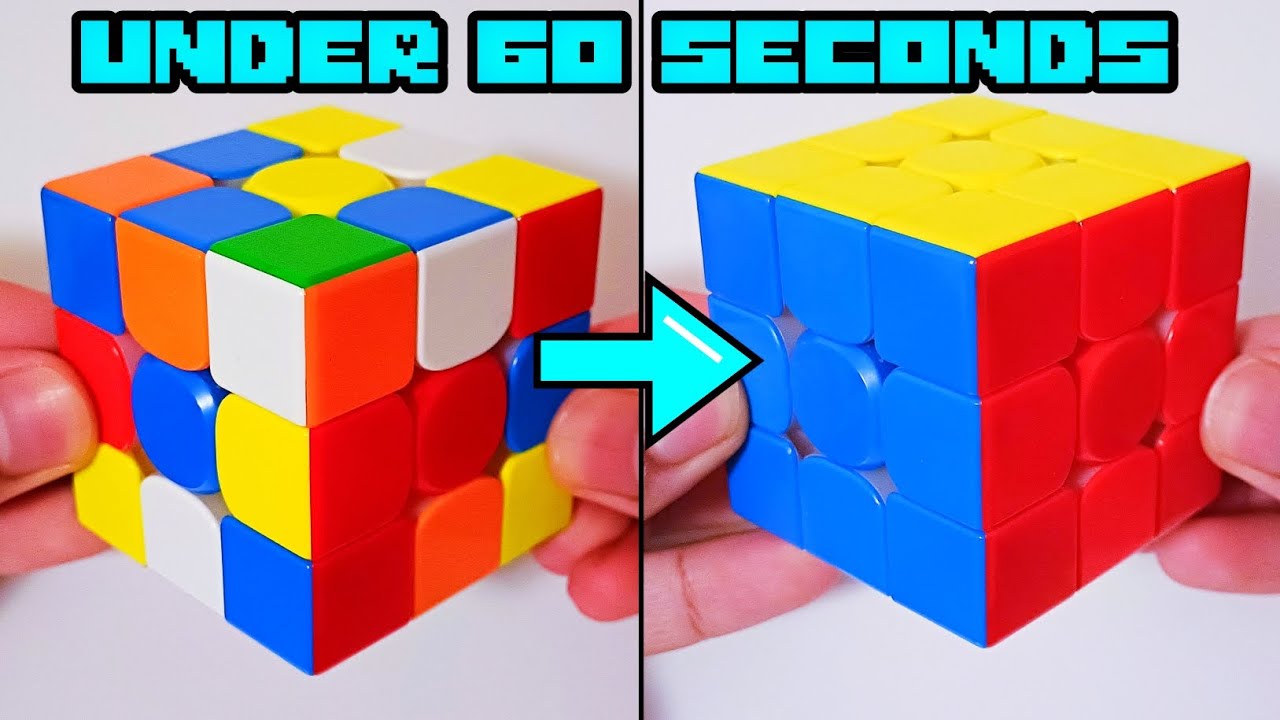
Once the first two layers are solved, the top face will likely be messy. OLL involves orienting all top stickers to create a solid color.
- 2-Look vs. Full OLL: Beginners often use "2-Look OLL," which splits the process into orienting edges then corners. To break 60 seconds, you should aim for Full OLL, which uses roughly 57 algorithms to solve the entire top face in one step.
- Pattern Recognition: Memorize algorithms by visual patterns rather than letter notation. This speeds up recall during competition.
- Practice Drills: Use online trainers to drill these algorithms until they become second nature. Consistency here prevents hesitation in the final stage.
4. PLL (Permutation of Last Layer)
The final step is permuting the pieces so they are in their correct positions. Like OLL, there are two approaches:
- 2-Look PLL: Solves corners first, then edges. Easier to learn but slower.
- Full PLL: Uses 21 algorithms to solve everything at once. This is essential for consistent sub-60 times. The algorithms are rhythmic and can be executed very quickly once learned.
The Art of Finger Tricks and Physical Efficiency
Speedcubing is as much a physical sport as it is a mental puzzle. In 2026, the equipment market is saturated with cubes designed specifically for ergonomic efficiency, but technique remains king. Even the best cube in the world cannot compensate for poor finger usage.
Developing Smooth Movements
Finger tricks involve using specific fingers to rotate faces rapidly without moving the whole hand.
- R-Finger Rotations: Learning to rotate the Right face using only the index and middle fingers allows for lightning-fast U and U' moves.
- L-Hand Coordination: Similarly, developing independence in the left hand is crucial for complex algorithms involving multiple face turns.
- Avoiding Whole-Cube Rotations: Every time you rotate the entire cube, you lose precious milliseconds. Train yourself to keep the cube stationary as much as possible, using only your fingers to manipulate the layers.
The Importance of Lubrication and Tuning
Your cube's tension and lubrication play a massive role in your ability to execute finger tricks smoothly.
- Lubricants: Using high-quality silicone-based lubes reduces friction between plastic layers. In humid climates like Miami or New Orleans, moisture resistance becomes critical to prevent sticking.
- Tuning: Adjusting the screws to find the perfect balance between tightness and looseness is vital. A cube that is too tight feels heavy and sluggish; one that is too loose feels unstable and unpredictable.
- Regular Maintenance: Make tuning part of your weekly routine. A well-maintained cube feels like an extension of your hand, allowing for fluid, uninterrupted solves.
Strategic Practice Methods for Rapid Improvement
Knowing what to do is half the battle; knowing how to practice is the other. Randomly solving the cube repeatedly yields diminishing returns. To get faster at solving Rubik's Cube under 60 seconds, you need a structured, data-driven approach.
The Inspection Phase
In speedcubing, the timer starts when you say "green" and stops when you touch the cube. The inspection time (usually 15 seconds) is where champions are made.
- Plan Ahead: During inspection, visualize your entire solve. Identify your cross location, plan your F2L pairs, and note any difficult OLL/PLL cases.
- Color Neutrality: Train yourself to solve regardless of which color is on top. Most beginners only solve with White on top and Yellow on bottom. Becoming color neutral doubles your flexibility and eliminates the need to rotate the cube to match a specific orientation.
- Local Community Insight: Join local clubs in cities like Portland or San Diego. Observing how experienced solvers use their inspection time can provide immediate, practical lessons.
Deliberate Practice vs. Mindless Repetition
Simply trying to beat your personal best every time is inefficient. Instead, focus on deliberate practice.
- Isolate Weaknesses: If you struggle with F2L, spend a week drilling only F2L scenarios. Ignore OLL and PLL entirely during this period.
- Slow Down to Speed Up: Paradoxically, practicing slowly helps you build correct muscle memory. Solve at 70% speed, focusing on perfect execution, then gradually increase the pace.
- Timed Sessions: Incorporate timed runs into every session. Use a reliable stopwatch app or a dedicated speedcubing timer. Analyze your fails to understand exactly where you lost time.
Utilizing Technology and Apps
In 2026, technology offers tools that were unavailable just a few years ago.
- Algorithm Trainers: Apps allow you to practice specific algorithms in isolation, building muscle memory without the pressure of a full solve.
- Video Analysis: Record your solves and review them frame-by-frame. You will often spot bad habits, such as excessive cube rotations or hesitant finger movements, that you didn't notice in real-time.
- Online Communities: Platforms like CubeAcademy and J Perm provide structured roadmaps and critique services that can accelerate your learning curve significantly.
Overcoming Plateaus: Mental Agility and Consistency
Reaching the sub-60 second mark is often harder than reaching the 1-minute mark. The difference between 61 seconds and 59 seconds comes down to consistency and mental resilience.
Dealing with Variance
Speedcubing is inherently variable. Some days you will solve in 45 seconds; other days, you might glitch out at 75 seconds. This is normal.
- Average Time Matters: In competitions, your score is the average of five solves (excluding the best and worst). Focus on lowering your average rather than chasing a single fast solve.
- Statistical Confidence: Understand that variance decreases as you improve. With more practice, your times will cluster tighter around your true skill level.
The Psychology of the Solve
Mental fatigue can kill a good solve faster than physical tiredness.
- Stay Calm: Panic leads to rushed moves and mistakes. Develop a pre-solve ritual to calm your nerves before starting.
- Learn from Failures: When you miss a case or fumble an algorithm, don't get frustrated. Analyze why it happened. Was it a recognition error? A execution slip? Fix the root cause.
- Enjoy the Process: Remember why you started. The joy of solving should fuel your dedication, not the pressure of breaking records.
Equipment Upgrades for the Modern Cuber
While technique is paramount, having the right gear can provide a noticeable advantage, especially when targeting sub-60 times. The market in 2026 offers incredible options for solvers at every level.
Choosing the Right Cube
Not all cubes are created equal. For speedcubing, you want a cube with:
- Smooth Turns: Magnetic centers and high-quality bearings ensure fluid motion.
- Adjustable Tension: Being able to tighten or loosen the screws allows you to customize the feel.
- Stickers vs. Printed: Stickerless cubes are generally preferred for speed because they offer better grip and don't peel over time. However, high-quality sticker sets remain popular for customization.
Essential Accessories
- Lubes and Greases: Keep a supply of different viscosities to adapt to weather conditions.
- Microfiber Cloths: Clean your cube regularly to remove dust and old lube residue.
- Timer Apps: Use apps that provide split times for each step of the solve. This granular data is invaluable for identifying bottlenecks.
Real-World Success Stories and Case Studies
Looking at the journeys of successful cubers provides inspiration and a clear roadmap. Consider the story of a solver in Atlanta who went from averaging 3 minutes to consistently solving under 60 seconds in six months.
- Month 1-2: Focused entirely on mastering the beginner method with improved finger tricks and switching to a smoother cube. Result: Times dropped to 2:30.
- Month 3-4: Introduced intuitive F2L and began learning 2-look OLL/PLL. Result: Times settled around 1:15.
- Month 5-6: Mastered full OLL and PLL, implemented strict lookahead drills, and achieved color neutrality. Result: Consistent sub-60 solves.
This trajectory mirrors the experiences of countless solvers worldwide. The key takeaway is patience and systematic progression. There is no shortcut, but the path is clear for anyone willing to put in the work.
The journey from a casual solver to a competitive speedcuber is rarely linear; it is a winding path filled with plateaus, breakthroughs, and moments of sheer frustration. However, for those residing in vibrant hubs like Nashville, Minneapolis, or Phoenix, the community support available today makes this transformation more accessible than ever before. In 2026, the democratization of speedcubing tools means that high-level coaching and advanced hardware are no longer exclusive to elite athletes in major metropolitan centers. You can access world-class training modules from your living room in Tucson just as easily as you could from a professional studio in Las Vegas. This accessibility has fueled a renaissance in local cubing scenes, where solvers gather not just to compete, but to mentor one another, share proprietary techniques, and push the boundaries of human dexterity.
Advanced Lookahead Techniques: The Secret Weapon
While many intermediate solvers understand the concept of lookahead, few truly master it. Lookahead is the ability to solve one pair of pieces while simultaneously identifying and planning the next pair. It is the difference between a choppy, hesitant solve and a fluid, continuous stream of motion. To break 60 seconds consistently, you must eliminate the "dead time" between steps.
Visualizing the Solution Path
Advanced lookahead involves more than just seeing the next piece; it involves visualizing the entire trajectory of the solve. When you execute an F2L insertion, your eyes should already be scanning the remaining unsolved corners and edges. You aren't just looking at the cube; you are simulating the algorithm in your mind before your hands even begin to move.
- The Scan Pattern: Develop a specific eye-scan pattern. Many solvers scan left-to-right or top-to-bottom systematically. Others use a spiral pattern. Find what works for you and stick to it during inspection.
- Anticipating Obstacles: Sometimes the ideal pair isn't immediately visible because another piece is blocking it. Advanced solvers learn to spot these obstructions early and plan a "setup move" to clear the path before executing the main algorithm. This requires a deep understanding of how pieces interact within the cube's mechanism.
Drilling for Automaticity
You cannot develop automatic lookahead through random solving. You need targeted drills.
- Blindfolded Practice: Solving blindfolded forces you to rely entirely on memory and spatial awareness, which naturally enhances your lookahead capabilities when your eyes are open. Even 15 minutes of blindfolded practice per week can yield significant improvements in real-time solving speed.
- Pause Drills: During a normal solve, intentionally pause after every two moves. Force yourself to look ahead before continuing. This builds the neural pathways required to separate execution from observation.
Mastering Color Neutrality and Orientation Flexibility
One of the most common habits that prevents solvers from reaching sub-60 times is dependence on a single color orientation. If you always start with White on the bottom and Yellow on top, you are limiting your flexibility. In competition, the scramble generator can place any color on top. If you have to rotate the entire cube to match your preferred orientation, you lose critical seconds.
Achieving True Color Neutrality
Color neutrality means being able to solve the cube efficiently regardless of which face is on top. This requires learning algorithms that work symmetrically or memorizing mirrored versions of your standard algorithms.
- Mirror Techniques: For every algorithm you learn, try to derive its mirror image. If you know how to solve a specific OLL case with the right hand, practice doing the same with the left hand or in a mirrored orientation.
- Cross Variations: Don't restrict yourself to the standard cross location. Learn to solve crosses on different faces (e.g., Red, Blue, Green) to adapt instantly to any scramble. This might seem unnecessary initially, but over hundreds of solves, the cumulative time saved is substantial.
Orientation Independence
Beyond colors, consider orientation independence within algorithms. Some methods allow you to solve a case without rotating the cube at all, simply by changing which finger initiates the turn. Training your brain to recognize cases based on their geometric relationship rather than their sticker colors accelerates recognition time significantly.
Competitions and Community Engagement
Participating in competitions is perhaps the most effective way to accelerate your progress. Even if you don't plan to compete formally, attending local events in cities like Columbus, Richmond, or Salt Lake City provides invaluable experience.
- Simulating Pressure: Solving under the pressure of a ticking clock and an audience is psychologically different from practicing alone. Competitions force you to manage anxiety and maintain focus, skills that translate directly to better performance in solo runs.
- Feedback Loops: After a competition, review your solves. Did you make a mistake due to nerves? Was there a specific case you kept missing? Discussing these moments with other solvers can provide solutions you hadn't considered.
- Networking: Building connections with other cubers opens doors to private lessons, shared equipment, and study groups. In 2026, online forums and Discord servers dedicated to speedcubing allow you to connect with masters globally, offering guidance that transcends geographical boundaries.
Long-Term Maintenance and Injury Prevention
As you push your speed limits, it is crucial to protect your hands and wrists. Repetitive strain injuries (RSI) are a real risk for serious speedcubers. Maintaining physical health is just as important as maintaining your cube.
Warm-Up Routines
Never start a intense practice session without warming up your fingers and wrists. Simple stretches, rolling your wrists, and gently flexing your fingers can prevent cramping and improve blood flow.
- Micro-Breaks: Take breaks every 30-45 minutes of intense solving. Stretching your hands during these breaks helps reset muscle tension and keeps your joints flexible.
- Grip Strength: While excessive grip strength isn't necessary, having balanced hand strength ensures you can control the cube firmly without causing fatigue. Exercises like finger curls or using stress balls can help build this endurance.
Ergonomic Awareness
Pay attention to your posture. Slouching or hunching over the cube can lead to neck and back pain, which eventually affects your concentration. Sit upright, keep your elbows relaxed, and ensure your lighting is optimal to reduce eye strain. In 2026, ergonomic desk setups designed for gamers and programmers often double perfectly for speedcubing stations, providing the right height and angle for extended practice sessions.
The Future of Speedcubing: AI and Virtual Reality
Looking ahead, the intersection of artificial intelligence and virtual reality promises to revolutionize how we learn and train. By 2026, AI-driven coaching apps can analyze your solve in real-time, offering instant feedback on your finger efficiency and lookahead timing.
- Virtual Simulations: VR headsets allow solvers to practice in immersive environments, simulating the chaos of a competition hall or allowing them to visualize complex 3D structures with unprecedented clarity.
- Predictive Analytics: Advanced algorithms can predict which cases will trip you up based on your historical data, suggesting specific drills to target your weaknesses before they become habits.
- Global Collaboration: These technologies facilitate a global network of solvers who can practice together virtually, breaking down barriers and creating a truly unified international community.
Frequently Asked Questions (FAQ)
Q: How long does it typically take to go from 3 minutes to under 60 seconds?
A: The timeline varies greatly depending on individual dedication, natural aptitude, and practice consistency. For most dedicated solvers, this journey takes between 6 to 18 months. Breaking the 60-second barrier usually requires mastering the CFOP method, achieving color neutrality, and refining lookahead skills. Consistent daily practice of 1-2 hours is generally recommended to see steady progress.
Q: Do I need expensive equipment to break 60 seconds?
A: While high-end cubes and accessories can provide a marginal advantage, they are not strictly necessary to break 60 seconds. A well-maintained, mid-range cube from a reputable brand (available in hobby shops across Austin, Seattle, etc.) is sufficient. Technique, finger tricks, and mental agility account for the vast majority of your speed. Investing in a good cube is helpful, but perfecting your method is paramount.
Q: What is the most common mistake beginners make when trying to get faster?
A: The most common mistake is neglecting lookahead. Beginners often focus entirely on executing the current move perfectly, only looking at the next step after finishing the current one. This creates a stop-and-go rhythm that kills momentum. Prioritizing the ability to see the future while acting on the present is the single biggest factor in reducing solve time.
Q: Should I learn full OLL and PLL immediately?
A: Not necessarily. If you are currently struggling with the basics of F2L or taking too long on the cross, it is better to solidify those foundations first. Attempting to learn 57 OLL algorithms and 21 PLL algorithms before you are comfortable with intuitive F2L can lead to frustration and slower overall progress. A phased approach—mastering one stage before moving to the next—is often more effective.
Conclusion: Your Journey to Sub-60 Starts Now
Breaking the one-minute barrier is a testament to your patience, persistence, and passion for the puzzle. It is a milestone that separates casual puzzlers from dedicated speedcubers, marking the beginning of a lifelong pursuit of excellence. Whether you are practicing in the bustling streets of Denver, the quiet libraries of Boston, or the tech-forward cafes of San Francisco, the principles outlined in this guide remain constant.
Remember that speedcubing is a marathon, not a sprint. There will be days when you feel stuck, when your times fluctuate, and when the algorithms seem impossible to memorize. These challenges are not signs of failure; they are integral parts of the learning process. Embrace the struggle, celebrate the small victories, and never stop experimenting with new techniques and tools.
In 2026, the world of speedcubing is more vibrant and supportive than ever. With access to advanced technology, a global community of enthusiasts, and a wealth of knowledge at your fingertips, the path to sub-60 solves is clearer than it has ever been. All that remains is for you to pick up your cube, set your timer, and take that first step. The clock is running, but so is your potential. Keep turning, keep learning, and soon enough, you will hear the satisfying click of the timer stopping just under the minute mark. Your personal record is waiting to be broken.