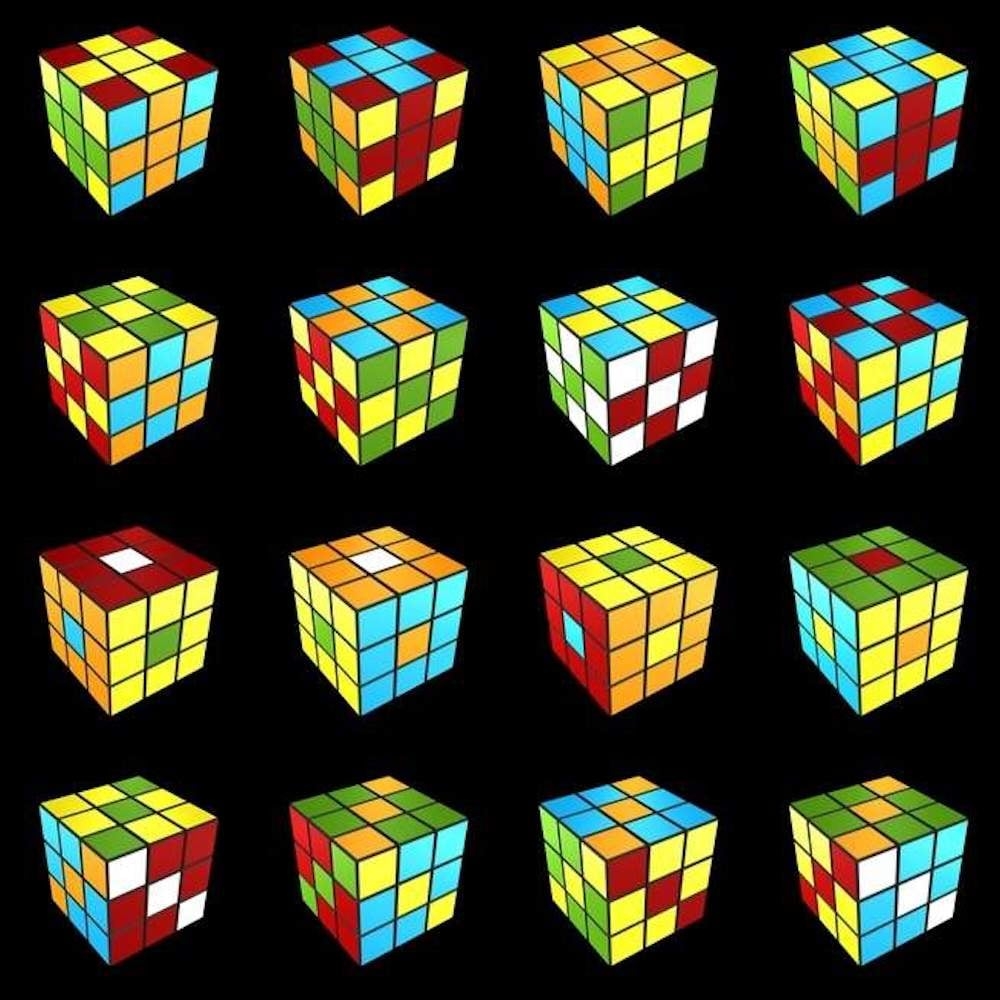
Are you tired of the same old scramble? Do you want to turn your puzzle into a piece of art that stops people in their tracks? Welcome to the world of Rubik's cube patterns that look amazing and simple. In 2026, the speedcubing community isn't just about solving the fastest; it's about creating beauty. Whether you are a beginner in Chicago looking for weekend hobbies or an expert in London seeking new challenges, these designs offer the perfect bridge between complexity and visual impact.
You do not need to be a master to create stunning visuals. In fact, some of the most impressive patterns require fewer moves than a standard layer solve. We are diving deep into the algorithms that transform a chaotic mess of colors into geometric perfection. From the classic Checkerboard to the mind-bending Cube in a Cube, we will explore how to make your 3×3 cube look like magic.
Why Simple Patterns Are the New Trend in 2026
The landscape of twisty puzzles has evolved significantly over the last few years. While high-order cubes like the 7×7 and 11×11 dominate competitive records, there is a resurgence of interest in the classic 3×3 Rubik's Cube. Why? Because simplicity allows for creativity. When you have limited pieces to work with, every algorithm counts more.
In 2026, social media platforms like TikTok and YouTube Shorts are flooded with videos of people performing "pattern tricks." These aren't just random twists; they are calculated sequences designed to create specific aesthetic outcomes. The appeal lies in the contrast. You start with a solved cube, perform a short series of moves, and suddenly, the cube displays a complex design that looks impossible to achieve without advanced tools.
The Psychology of Visual Satisfaction
Psychologists argue that humans have an innate desire for order within chaos. A scrambled cube represents disorder, which can be stressful. A solved cube represents order, which is satisfying but perhaps mundane. Pretty patterns sit in the sweet spot: they introduce a new type of order that is visually striking without being as rigid as the solved state. This makes them perfect for stress relief and creative expression.
Accessibility for Beginners
One of the biggest barriers to entry for cubing is the fear of memorizing long algorithms. However, many of the coolest patterns rely on short, repetitive sequences. For instance, the Checkerboard pattern can be created with just one sequence of moves repeated twice. This accessibility means that anyone, anywhere from Tokyo to Toronto, can impress their friends in under a minute.
Mastering the Classics: Essential Algorithms for Stunning Results
Let's get our hands dirty with the mechanics. To create these patterns, you need to understand basic notation. In standard notation, U stands for Up, D for Down, F for Front, B for Back, L for Left, and R for Right. A prime symbol (') indicates a counter-clockwise turn, while a '2' indicates a 180-degree turn.
Here are the foundational patterns that serve as the backbone of any cuber's portfolio.
The Checkerboard: The Gateway to Pattern Solving
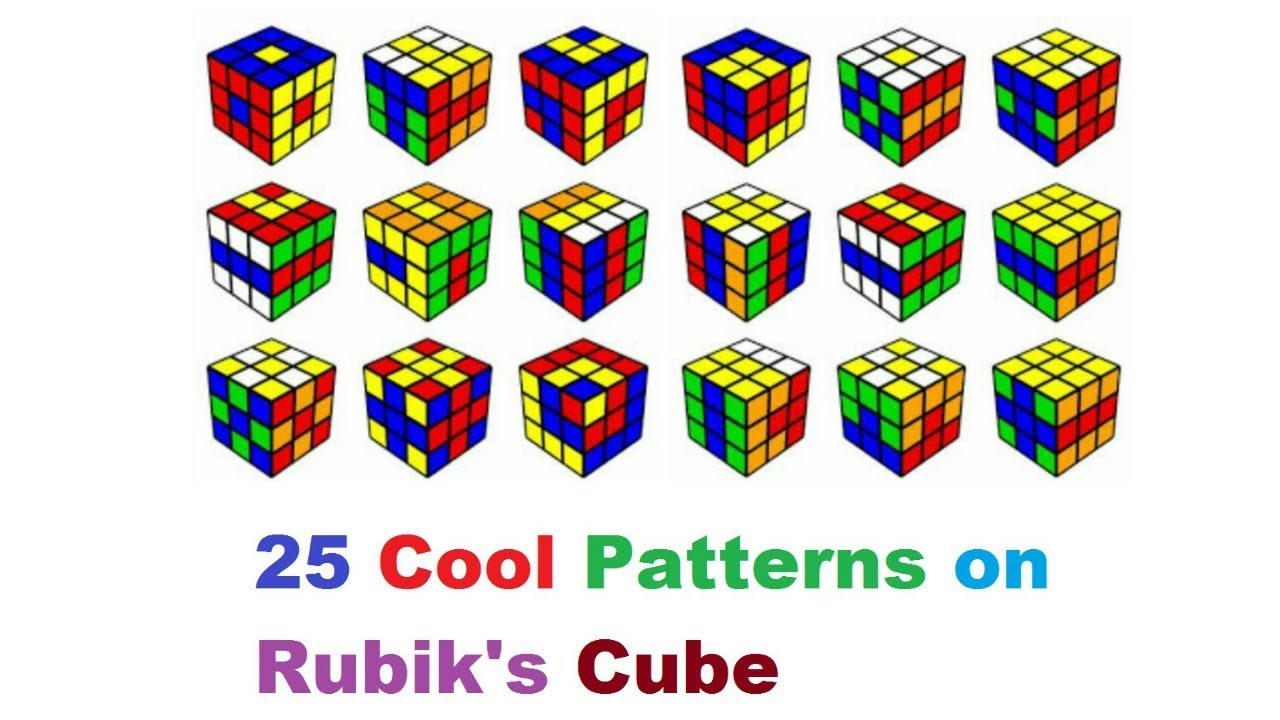
If you only learn one pattern, make it this one. The Checkerboard is arguably the most famous pattern in existence. It turns every face of the cube into a grid of alternating colors, resembling a chessboard or a checkerboard game.
- Why it works: It effectively swaps pairs of edges and corners simultaneously across all faces.
- The Algorithm:
F B2 R' D2 B R U D' R L' D' F' R2 D F2 B' - Visual Impact: High. It looks completely different from a solved cube but requires very little execution time once mastered.
The Superflip: The Ultimate Edge Flipper
For those who want to feel like a true wizard, the Superflip is the gold standard. In this pattern, every single edge piece on the cube is flipped, while the centers and corners remain in their correct positions. It is often considered the hardest position to reach because it requires a very specific sequence of moves.
- Significance: Reaching the Superflip was a major milestone in speedcubing history. It proves that even a solved cube can hold hidden complexities.
- The Algorithm:
U R2 F B R B2 R U2 L B2 R U' D' R2 F R' L B2 U2 F2 - Pro Tip: Once you master the Superflip, try doing it on a 4×4 or 5×5 cube. The symmetry holds, but the execution becomes even more mesmerizing.
The Cross and Plus Patterns
Sometimes, less is more. The Cross pattern, also known as the "Plus" sign, creates a cross shape on every face of the cube. It is deceptively simple but looks incredibly clean.
- Algorithm:
U F B' L2 U2 L2 F' B U2 L2 U - Application: This pattern is excellent for beginners because it involves fewer unique move types compared to the Superflip. It teaches you how to manipulate the center slices effectively.
Advanced Illusions: Cubes Within Cubes and More
Once you have mastered the basics, it is time to dive into patterns that play with perspective and depth. These designs create optical illusions that make the cube appear to be multiple objects stacked inside one another.
Cube in a Cube: The Nested Illusion
This is widely regarded as one of the most visually striking patterns on a 3×3 cube. It creates the illusion that a smaller, perfectly solved cube exists inside a larger, scrambled shell. The effect is so convincing that spectators often think the cube has been physically altered.
- How it feels: Like peeling back layers of reality.
- The Algorithm:
F L F U' R U F2 L2 U' L' B D' B' L2 U - Variation: You can repeat this algorithm to create a "Cube in a Cube in a Cube" effect, where three nested cubes appear. This requires a longer sequence but yields an almost hypnotic result.
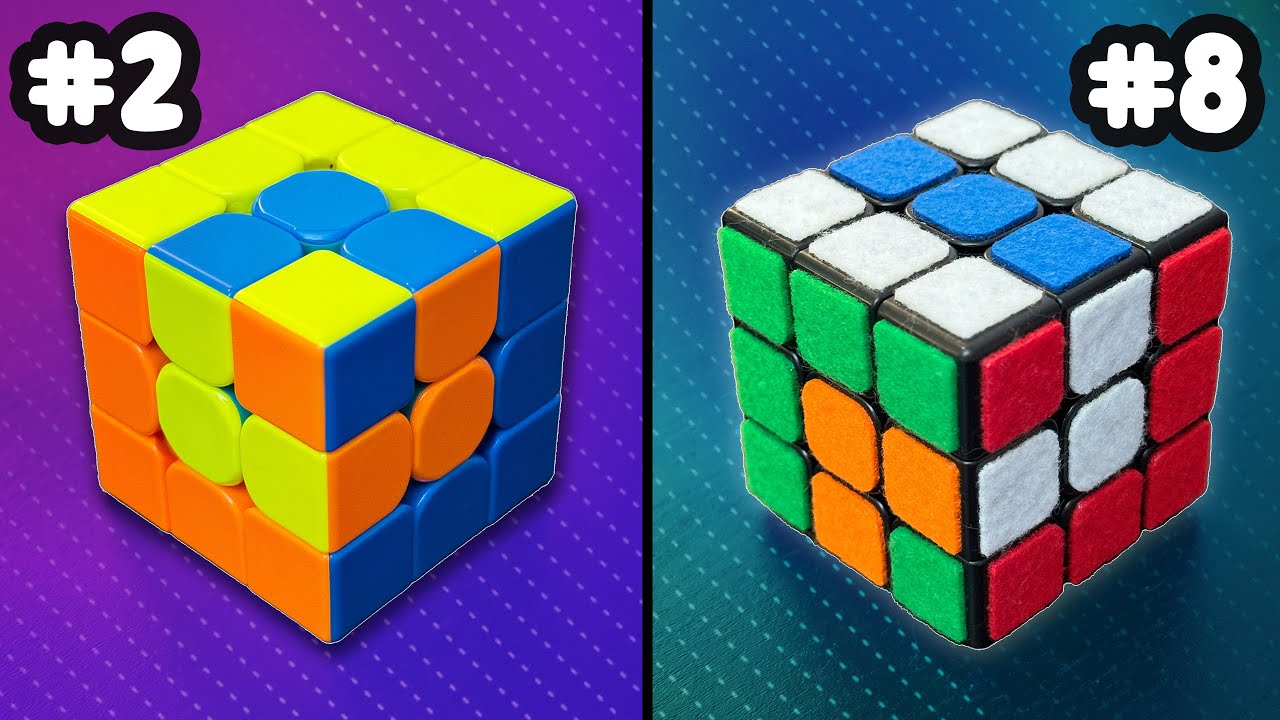
The Snake and Anaconda Patterns
Geometric shapes that wind through the cube are always a hit. The Snake pattern involves moving pieces to create a continuous line or spiral across the surface. The Anaconda is a specific variation that looks like a serpent coiled around the puzzle.
- Snake Algorithm:
R2 F2 U' D' B2 L2 F2 L2 U D R2 F2 U2 F2 U2 F2 B2 U2 F2 D2 - Anaconda Algorithm:
L U B' U' R L' B R' F B' D R D' F' - Local Connection: If you visit puzzle shops in Seattle or Austin, you will often see these patterns displayed on demo cubes to attract customers interested in learning advanced techniques.
The Flower and Fruit Bowl
Nature-inspired patterns bring a softness to the rigid geometry of the cube. The Flower pattern places four center pieces in a cross formation around a central corner, creating a petal-like design. The Fruit Bowl is similar but arranges the pieces to look like fruit floating in a bowl.
- Flower Algorithm:
F F B B U D' L L R R U D' - Aesthetic Value: These patterns are particularly popular during spring and summer months when vibrant colors and organic shapes resonate with audiences online.
Local Community Hubs and Where to Learn
Creating these patterns is a social activity. In 2026, local communities play a massive role in skill acquisition. Whether you live in New York City, Los Angeles, or Manchester, there are likely groups dedicated to this hobby.
Meetup Groups and Clubs
Many cities now have weekly "Puzzle Nights" at local coffee shops or libraries. These events are perfect for sharing algorithms and showing off your latest pattern creations. Look for groups named after local landmarks, such as the "Chicago Cube Collective" or the "Denver Speedsolving Society."
Online Forums and Discord Servers
While physical meetups are great, the digital realm offers instant access to global knowledge. Platforms like Reddit's r/Cubing and various Discord servers allow you to post photos of your patterns and get instant feedback from experts worldwide. These communities often host monthly challenges where members attempt to recreate viral patterns within a set time limit.
Retail Stores as Learning Centers
Major retailers like Cubelelo in India or specialized stores in Europe often host workshops. These sessions usually cover everything from basic solving to advanced pattern creation. Visiting a local store can connect you with mentors who can demonstrate the Snake or Superflip algorithms in person, making the learning process much faster.
Troubleshooting Common Challenges
Even with simple algorithms, beginners often face hurdles. Understanding these common issues can help you refine your technique and achieve cleaner results.
Misaligned Centers
On a 3×3 cube, the center pieces never move relative to each other. However, when creating patterns, it is easy to accidentally rotate the entire cube incorrectly, making the pattern look skewed.
- Solution: Always establish a fixed reference point. Decide that White is Up and Green is Front before starting any algorithm. Stick to this orientation throughout the sequence.
Incomplete Symmetry
Sometimes, a pattern looks almost perfect but has one or two pieces out of place. This usually happens if an algorithm was interrupted or if the cube was rotated mid-sequence.
- Solution: Practice the algorithms slowly. Muscle memory takes time to develop. Use a timer to ensure you aren't rushing through the moves.
The "Undo" Problem
A frequent question is how to return the cube to its solved state after creating a pattern.
- The Rule: Every move has an inverse. If you performed
U, undo it withU'. If you didR2, doingR2again undoes it. By reversing the entire algorithm step-by-step, you will always return to the solved state.
The Future of Pattern Creation in 2026
As we look toward the future of the hobby, technology is playing an increasingly significant role. AI-driven apps and online simulators are making it easier than ever to visualize and practice these patterns without owning a physical cube.
Virtual Simulators
Online cube simulators allow users to apply rotations virtually. This is invaluable for testing new algorithms before attempting them on a physical puzzle. Many enthusiasts use these tools to invent new patterns that haven't been documented yet, pushing the boundaries of what is possible on a 3×3 grid.
Viral Trends and Social Media
The rise of short-form video content has accelerated the spread of new patterns. A pattern created in a bedroom in Seoul can become a global trend in Los Angeles within days. This rapid dissemination encourages innovation, as creators strive to outdo each other with more complex or visually stunning designs.
Sustainability and DIY Culture
There is also a growing movement towards sustainable cubing. Many hobbyists are building their own cubes using recycled materials or 3D printing parts. This DIY ethos extends to pattern creation, where individuals share blueprints for custom stickers or modified cubes that enhance the visual impact of specific patterns.
The integration of augmented reality (AR) into the cubing experience is another frontier that 2026 enthusiasts are eagerly exploring. Imagine pointing your smartphone at a solved cube, and suddenly, holographic guides overlay the physical puzzle, highlighting exactly which faces to turn to achieve a "Neon Snake" or a "Galaxy Spiral." These digital overlays do more than just teach; they inspire. By visualizing the end state before the first move is made, solvers can develop a deeper intuitive understanding of how pieces interact in three-dimensional space. This blend of physical manipulation and digital augmentation creates a hybrid learning environment where the barrier to entry for complex patterns drops significantly. You no longer need to memorize twenty moves blindly; you can watch the algorithm play out in real-time on your screen while your fingers follow along, building muscle memory with unprecedented speed.
Furthermore, the artistic community surrounding the Rubik's Cube has expanded beyond simple geometric shapes. Artists are now using the cube as a canvas for pixel art, where each sticker represents a single pixel in a larger image. When the cube is scrambled, it looks like static noise; when aligned into a specific pattern, it reveals a recognizable portrait or landscape. This evolution turns the puzzle from a mechanical challenge into a medium for storytelling. In 2026, we are seeing exhibitions dedicated entirely to "Cube Art," where creators display cubes that tell historical narratives or depict futuristic cityscapes through strategic color placement. These installations challenge the perception of the 3×3 cube, proving that its potential for expression is limited only by the creator's imagination.
The Economics of the Pattern Hobby
The popularity of these patterns has also spawned a robust economy within the twisty puzzle niche. Specialized sticker sets, often called "pattern skins," have become highly sought after. Unlike standard solid-colored stickers, these feature gradient designs, iridescent foils, and custom graphics that enhance the visibility of specific patterns. For instance, a checkerboard pattern looks drastically different with matte black and glossy white stickers compared to traditional red and white. Collectors hunt for these limited-edition sets, creating a secondary market where rare sticker packs can command high prices. Additionally, the demand for high-quality cubes designed specifically for pattern solving has surged. Manufacturers are now releasing cubes with smoother turning mechanisms and tighter tolerances, allowing for faster execution of intricate algorithms without the risk of pieces popping out during rapid sequences.
This economic shift has also encouraged innovation in cube design itself. We are seeing the rise of "modular" cubes, where the core mechanism can be easily adjusted to accommodate different sticker layouts or even interchangeable face plates. This modularity allows a single cube to transform from a standard solver into a specialized tool for pattern creation in seconds. It democratizes access to high-end customization, ensuring that hobbyists don't need to buy multiple expensive devices to explore every visual possibility. The intersection of commerce and creativity has thus accelerated the pace of pattern development, with new designs emerging weekly and shared instantly across global networks.
Mental Discipline and Flow State
Beyond the visual allure and economic incentives, engaging with Rubik's cube patterns offers profound psychological benefits. Entering a "flow state" while executing these algorithms is a common experience among practitioners. The repetitive nature of the moves, combined with the immediate visual feedback of the changing colors, induces a meditative focus. In a world filled with digital distractions, the tactile sensation of twisting plastic layers provides a grounding anchor. Many users report that spending just ten minutes manipulating a cube into a perfect symmetry clears their mind of stress and anxiety.
This mental discipline extends to problem-solving skills in other areas of life. The logical deduction required to anticipate the outcome of an algorithm fosters a structured way of thinking. When you learn that a specific sequence of turns will flip all edges, you are essentially learning a conditional logic statement: If I perform X, then Y happens. This binary reasoning strengthens neural pathways associated with planning and execution. Moreover, the patience required to master a difficult pattern like the Superflip teaches resilience. There are moments of frustration when a piece refuses to align, but pushing through these obstacles builds character and reinforces the value of persistence.
Global Competitions and Showcases
In 2026, the competitive landscape for pattern solving has formalized into distinct events separate from speedcubing records. Organizations like the World Cube Association (WCA) have introduced special categories for "Pattern Solving," where judges evaluate not just the speed of completion, but the aesthetic precision and symmetry of the final result. These competitions attract participants from every corner of the globe, fostering a sense of international camaraderie. Winners are awarded unique trophies and featured prominently in annual yearbooks, cementing their status as masters of visual manipulation.
Local qualifiers often serve as stepping stones to these global stages. Cities host monthly "Pattern Paloozas," where enthusiasts gather to attempt record-breaking feats, such as creating the most complex pattern in the shortest time or solving a cube blindfolded while displaying a specific design. These events are heavily covered by local news outlets and streamed globally, inspiring younger generations to pick up a cube. The visibility of these competitions highlights that cubing is not just a solitary pastime but a vibrant cultural movement with its own rituals, heroes, and traditions.
Educational Applications in Schools
Recognizing the cognitive benefits, educators in 2026 are increasingly incorporating Rubik's cube patterns into STEM curricula. Schools are using pattern solving as a practical application of geometry, algebra, and computer science. Students learn about rotational symmetry by analyzing checkerboards and crosses, calculating permutations to understand the vast number of possible cube states, and even writing basic code to simulate cube algorithms. Some universities offer courses specifically dedicated to "Puzzle Theory," where students research the mathematical underpinnings of pattern creation.
This educational integration helps demystify complex mathematical concepts. Instead of abstract equations on a chalkboard, students see tangible results in their hands. A student struggling with the concept of groups in abstract algebra might finally grasp it by realizing that the set of all possible cube moves forms a mathematical group. By making math visible and interactive, Rubik's cube patterns serve as a powerful teaching tool that bridges the gap between theoretical knowledge and practical application.
Frequently Asked Questions (FAQ)
Q: How long does it take to learn the basics of Rubik's cube patterns?
A: For most beginners, mastering the fundamental patterns like the Checkerboard and Cross can take anywhere from a few hours to a couple of days of practice. The key is consistent repetition. Once you understand the notation and the basic mechanics of moving slices, the algorithms become second nature. Advanced patterns like the Cube in a Cube may require a week or two of dedicated practice to execute smoothly without looking at your hands constantly.
Q: Do I need a special type of Rubik's cube to create these patterns?
A: No, any standard 3×3 Rubik's cube will work perfectly fine for creating amazing patterns. However, high-quality cubes with smooth turning mechanisms and tight tolerances can make the execution of complex algorithms much easier and more precise. If you plan to compete or perform frequently, investing in a tournament-grade cube is recommended, but for casual learning, a budget-friendly model is entirely sufficient.
Q: Can I create my own unique patterns?
A: Absolutely! While many popular patterns have established algorithms, the beauty of the Rubik's cube lies in its infinite possibilities. You can combine existing algorithms, modify sequences, or experiment with different move orders to discover entirely new designs. Many top creators in 2026 are known for inventing original patterns that haven't been seen before, contributing to the ever-evolving library of cube art.
Q: What is the best way to practice without getting frustrated?
A: Start slow. Focus on accuracy rather than speed. Break down complex algorithms into smaller chunks and master each segment before linking them together. Using a timer can help, but don't let it pressure you. Remember that making mistakes is part of the learning process. If you get stuck, take a break, scramble the cube, and try again later. Consistency over intensity yields the best results.
Conclusion: The Endless Twist
As we wrap up this guide to Rubik's cube patterns that look amazing and simple, it becomes clear that the journey is far from over. The world of twisty puzzles in 2026 is a dynamic ecosystem where tradition meets innovation, where mathematics dances with art, and where a small plastic cube holds limitless potential for discovery. Whether you are drawn to the hypnotic rhythm of the Checkerboard, the cerebral challenge of the Superflip, or the illusionary depth of the Cube in a Cube, there is a pattern waiting for you to unlock.
The simplicity of these designs belies their complexity. They invite us to slow down, observe closely, and appreciate the beauty hidden within structured chaos. In a rapidly changing world, the Rubik's cube remains a constant companion, a tool for mindfulness, and a testament to human ingenuity. So, grab your cube, find a quiet corner, and start twisting. Who knows what amazing pattern you will create next? The only limit is your imagination.
Remember, every great cuber started with a single scramble. Your path to mastery begins with that first turn. Embrace the process, enjoy the visuals, and share your creations with the global community. The cube is waiting for your signature.