
Jigsaw puzzles have evolved from a simple rainy-day pastime into a cornerstone of modern mental wellness and digital detox strategies. As we navigate through 2026, the global jigsaw puzzle market continues its impressive trajectory, projected to reach $3.5 billion by 2033. With this surge in popularity comes a significant challenge for enthusiasts: how to manage a growing library of cardboard boxes without sacrificing valuable living space. Whether you are a casual solver in a cozy apartment in Seattle or a serious collector with thousands of pieces in a suburban home outside of Austin, the need for efficient organization is paramount.
The era of stacking bulky, flimsy boxes horizontally until they collapse under their own weight is officially over. In 2026, the focus has shifted toward sustainable materials, multifunctional furniture, and climate-controlled preservation techniques. Proper storage is no longer just about tidiness; it is about protecting your investment, preserving the cognitive benefits of the hobby, and creating a serene environment where you can immediately start solving. This comprehensive guide explores the best storage solutions for large puzzle collections, blending expert insights from cognitive neuroscientists with practical, tested products that define the current market.
The Psychology and Physics of Puzzle Organization
Before diving into specific products, it is essential to understand why traditional storage methods fail and why a dedicated system is crucial for large collections. Dr. Hiroshi Tanaka, a leading cognitive neuroscientist, emphasizes that the physical environment directly impacts the "mental well-being" derived from puzzling. When a collection becomes a source of clutter rather than joy, the psychological benefits diminish.
The Problem with "Box Crush"
One of the most common issues faced by collectors is what experts call "box crush." When puzzle boxes are stacked horizontally, the weight of the upper boxes exerts immense pressure on the lids of the lower ones. Over time, this causes the cardboard to cave in, often splitting the seams and spilling pieces onto the floor. In humid climates like Miami or New Orleans, this damage is accelerated, leading to warped boards and ruined artwork.
Furthermore, original puzzle boxes are designed for retail display, not long-term archival storage. They are filled with air, taking up unnecessary shelf space, and their spines rarely offer clear identification of the piece count or theme without pulling the box out. For a collection exceeding fifty puzzles, this inefficiency can consume an entire closet or wall unit.
The Benefits of a Dedicated System
Transitioning to a specialized storage system offers immediate advantages:
- Space Reclamation: By eliminating bulky air-filled boxes, you can reduce your collection's footprint by up to 60%.
- Piece Protection: Secure closures prevent lost pieces, while acid-free materials protect against yellowing and fading.
- Accessibility: A well-organized system allows you to find your next project in seconds, maintaining the flow state essential for relaxation.
- Preservation: Proper ventilation and climate control prevent moisture damage, ensuring your premium wooden or cardboard puzzles last for generations.
Vertical Storage Strategies: The Library Method
For collectors who wish to keep their original boxes but need to maximize space, the "Library Method" is the gold standard for 2026. This approach involves storing puzzles vertically, much like books on a bookshelf, rather than stacking them horizontally.
Implementing the Library Method
To execute this strategy effectively, you need sturdy shelving units that can accommodate the height of standard puzzle boxes (usually around 2 to 3 inches). By standing boxes upright, you eliminate the vertical weight load that causes crushing. This method also allows you to see the spine of every box at a glance.
However, a common issue is that many puzzle boxes lack informative spines. To solve this, invest in a high-quality label maker. Create uniform labels that include the puzzle title, brand, and piece count, and affix them to the spine. This small step transforms a chaotic pile into a searchable library. For those living in dense urban areas like New York City or San Francisco, where square footage is at a premium, custom-built shelving that fits into alcoves or under staircases can house hundreds of puzzles vertically without encroaching on living areas.
Custom Shelving Solutions
In 2026, the trend for local craftsmanship has surged. Many enthusiasts in cities like Portland and Denver are opting for locally sourced wood shelving units designed specifically for puzzle dimensions. These units often feature adjustable shelves to accommodate different box sizes, from travel-sized 300-piece sets to massive 5,000-piece epics. Using sustainable woods like bamboo or reclaimed oak not only supports local economies but also aligns with the eco-conscious values of the modern puzzling community.
Space-Saving Alternatives: Ditching the Box
For truly large collections, keeping every original box may simply be impractical. Many advanced hobbyists are transitioning to slim, stiff pouches and binders, a method that drastically reduces storage volume while maintaining organization.
Clear Zippered Pouches and Mesh Bags
Clear zippered pouches are arguably the most versatile storage solution for completed puzzles. These durable containers allow you to see the contents immediately and keep all pieces secure.
- Visibility: Transparent fronts let you identify the puzzle without opening the bag.
- Stackability: Their flat profile allows them to be stacked neatly in baskets or on shelves, similar to filing cabinets.
- Breathability: For those in humid regions, mesh bags are an excellent alternative. They allow air to circulate around the pieces, preventing mold and mildew growth, which is a critical consideration for collectors in coastal areas.
To retain the visual appeal of the artwork, simply cut out the front image of the original box and slide it into the pouch alongside the pieces. This preserves the aesthetic of your collection while shedding the bulk of the cardboard.
Accordion Folders and Document Cases
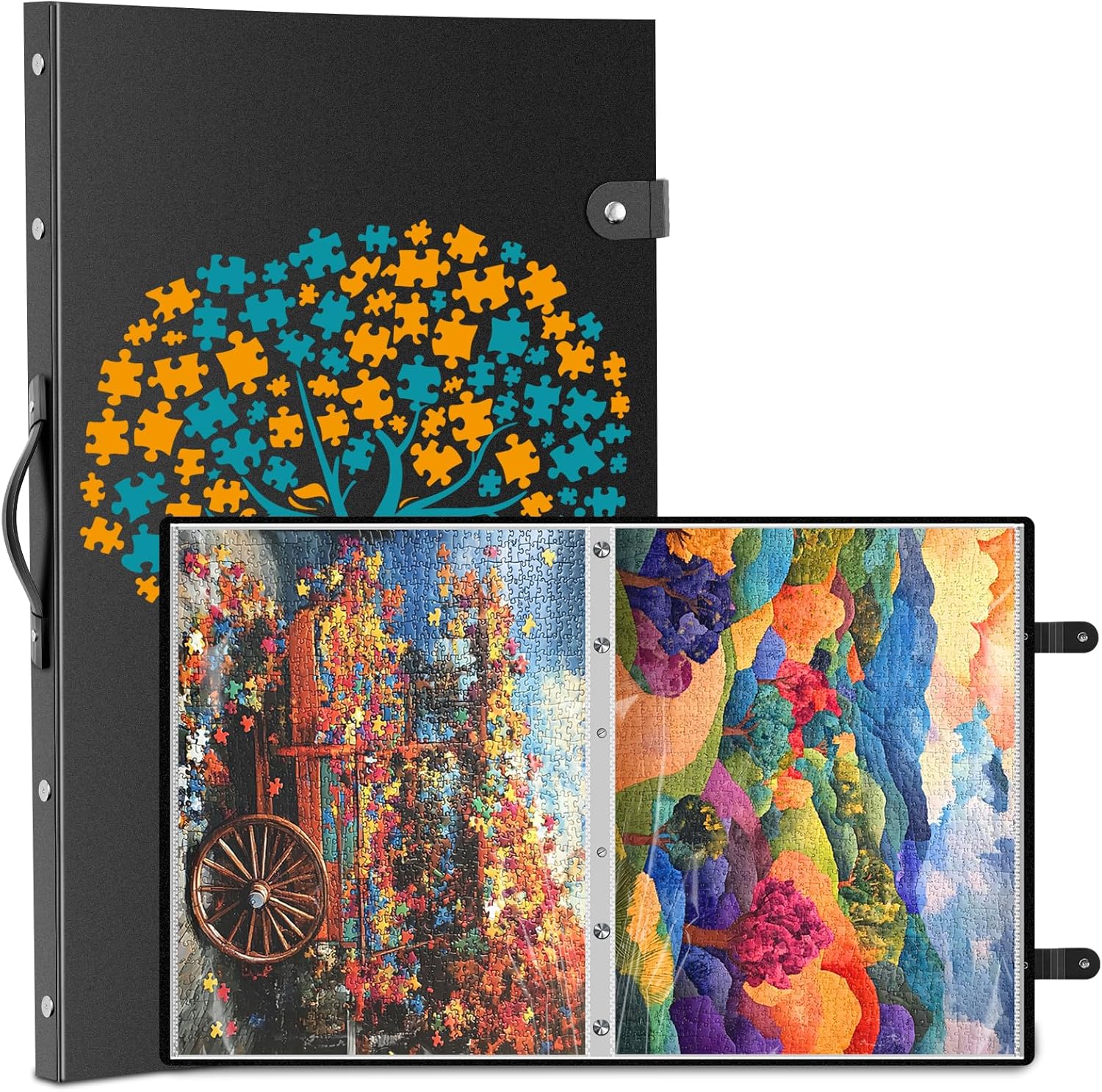
For smaller puzzles or those with fewer than 1,000 pieces, accordion folders and acid-free document cases provide a stylish and compact solution. These function similarly to file folders, allowing you to categorize puzzles by theme, difficulty, or brand.
- Portability: These folders are lightweight and easy to transport, making them ideal for taking puzzles to community centers in Chicago or coffee shops in Boston.
- Protection: Acid-free materials ensure that the cardboard pieces do not degrade over time, preserving the integrity of vintage or limited-edition puzzles.
This method is particularly effective for organizing "work-in-progress" sections if you prefer to sort pieces by color or edge type before starting a build. By separating these sorted piles into labeled envelopes within the folder, you can resume your project exactly where you left off without the mess of loose trays.
Premium Workstation Solutions for In-Progress Puzzles
Managing a large collection isn't just about storing completed puzzles; it's also about handling the ones you are currently building. In 2026, the market for premium puzzle boards and rolling mats has reached new heights of innovation, offering features that cater to both comfort and functionality.
Rotating Puzzle Boards with Drawers
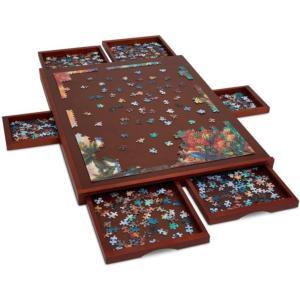
The standout product category of 2026 is the rotating puzzle board. Brands like Playboda and ALL4JIG have dominated the market with designs that feature 360-degree rotation and integrated sorting drawers.
- Ergonomics: The ability to rotate the board means you don't have to crawl around the table or stretch uncomfortably to reach distant pieces. This is a game-changer for seniors or those with mobility issues.
- Integrated Sorting: Built-in drawers allow you to sort edge pieces, sky pieces, or specific colors directly on the board, eliminating the need for separate bowls or trays that clutter the workspace.
- Security: Most premium boards come with fitted covers or felt tops that hold pieces in place, allowing you to move the entire setup to a closet or under a bed when not in use.
For example, the Playboda 1500 Piece Rotating Puzzle Board has become a favorite among collectors for its sturdy ABS plastic construction and waterproof cover, making it resilient against accidental spills. Similarly, the ALL4JIG 2000 Piece Rotating Board, crafted from New Zealand pine, offers a luxurious feel and robust durability for heavier, larger puzzles.
Roll-Up Mats and Portable Caddies
For those who need maximum portability or have very limited table space, roll-up puzzle mats remain an essential tool. Modern iterations, such as the Becko US Puzzle Mat, feature high-quality felt surfaces that prevent pieces from sliding and come with drawstring closures for secure transport.
- Under-Bed Storage: Once rolled, these mats can be stored vertically in a corner or slid under a bed, instantly freeing up dining tables for meals or other activities.
- Travel Friendly: They are perfect for puzzlers who travel frequently or visit family members in different states, allowing them to bring their hobby along without the hassle of a rigid board.
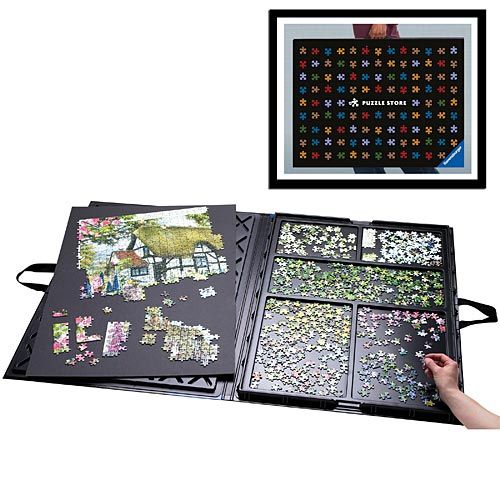
Additionally, puzzle caddies like the Lavievert 1500 Piece Puzzle Caddy combine the stability of a board with the portability of a tote. Featuring multiple sorting trays and a detachable work surface, these caddies allow you to organize, build, and store your puzzle in a single unit.
Climate Control and Long-Term Preservation
As we move further into 2026, the conversation around puzzle storage has increasingly focused on preservation science. Just as art collectors worry about humidity and light, puzzle enthusiasts must consider the environmental factors that can degrade their collections over time.
Humidity and Temperature Management
Cardboard and wood are hygroscopic materials, meaning they absorb and release moisture from the air. In areas with high humidity, such as the Southeastern United States, improper storage can lead to warping, mold, and piece swelling. Conversely, extremely dry environments can make cardboard brittle and prone to cracking.
- Ideal Conditions: Aim for a relative humidity between 40% and 50% and a stable temperature around 68°F to 72°F (20°C to 22°C).
- Dehumidifiers and Silica Gel: For closets or storage rooms, using a small dehumidifier or placing silica gel packets inside storage bins can significantly extend the life of your puzzles.
- Avoid Direct Sunlight: UV rays can fade the vibrant colors of puzzle images over time. Store your collection away from direct sunlight or use UV-filtering glass on display cabinets.
Sustainable and Eco-Friendly Options
The 2026 market reflects a strong consumer demand for sustainability. Many top-rated storage solutions now utilize recycled plastics, bamboo, and FSC-certified woods.
- Eco-Friendly Materials: Brands are moving away from virgin plastics, opting instead for durable, recycled composites that reduce environmental impact without sacrificing strength.
- Longevity: Investing in high-quality, sustainable storage is not just an ethical choice; it is a practical one. These materials are often more resistant to wear and tear, ensuring your storage system lasts as long as your puzzle collection.
For wooden puzzle enthusiasts, specific care is required. Wooden pieces are more susceptible to temperature fluctuations than cardboard. Storing them in solid wood boxes with tight seals, rather than plastic bags which can trap moisture, is often recommended by experts to maintain the natural finish and fit of the pieces.
Localized Storage Trends and Community Insights
The way people store puzzles often reflects their local lifestyle and housing constraints. Across the United States, distinct regional trends have emerged in 2026, driven by geography and community culture.
Urban Density vs. Suburban Space
In major metropolitan hubs like New York City, San Francisco, and Boston, space is the ultimate luxury. Residents here heavily favor vertical storage systems and multi-functional furniture. It is common to see puzzle collections integrated into wall units that double as room dividers or hidden behind sliding panels in studio apartments. The "Library Method" is nearly universal in these areas, as floor space is too valuable for horizontal stacking.
Conversely, in sprawling suburbs of Texas, Florida, and the Midwest, homeowners often have dedicated hobby rooms or large basements. Here, the trend leans towards large-scale shelving units and display cabinets where completed puzzles can be showcased as art. In cities like Austin and Denver, there is a booming market for custom-built puzzle tables that fit perfectly into spare bedrooms or converted garages, allowing for multiple large-scale projects to be worked on simultaneously.
Community and Shared Spaces
The rise of community puzzle clubs in cities like Seattle and Portland has also influenced storage needs. Many of these groups meet in local libraries or community centers, necessitating highly portable and durable storage solutions. Roll-up mats and stackable plastic bins with handles are the preferred choice for these mobile groups, allowing members to easily transport hundreds of pieces between meetings without loss or damage.
Furthermore, local craft fairs and markets in 2026 have seen a surge in artisans selling handmade wooden puzzle storage boxes. These items, often crafted from local timber, support the regional economy and provide unique, aesthetically pleasing storage options that mass-produced plastic bins cannot match.
Expert Tips for Maintaining a Massive Collection
Managing a collection of hundreds or thousands of puzzles requires discipline and a systematic approach. Based on insights from top organizers and long-time enthusiasts, here are the most effective strategies for 2026.
Categorization and Inventory
Don't just throw puzzles into bins; create a logical system.
- By Piece Count: Group puzzles by difficulty (e.g., 500, 1000, 2000+ pieces). This helps you choose a puzzle that matches your available time and energy levels.
- By Theme: Separate landscapes, animals, abstract art, and maps. This makes it easier to find a specific mood or subject matter.
- By Brand: If you have a preference for specific manufacturers like Ravensburger, Cobble Hill, or Galison, keeping them together can help you identify quality patterns or missing piece policies.
Consider creating a digital inventory using a simple spreadsheet or a dedicated app. Record the title, piece count, completion status, and storage location. This prevents duplicate purchases and helps you track loans to friends or family.
Regular Decluttering
Just as with any collection, it is important to regularly assess your holdings.
- Donate or Swap: If you have completed a puzzle and know you will never do it again, consider donating it to a local library, school, or senior center. Puzzle swaps are also becoming popular in many communities, allowing you to trade old favorites for new challenges.
- Recycle Damaged Boxes: If a box is too crushed to be useful, recycle the cardboard and transfer the pieces to a more durable container. Keeping damaged boxes only adds to the visual clutter.
Lighting and Workspace Setup
Proper lighting is often overlooked but is critical for both solving and storing. Ensure your storage area is well-lit to prevent eye strain when searching for specific puzzles. LED strip lights installed under shelves can provide ample illumination without generating excess heat, which could damage the puzzles. When setting up a workspace, position it near a natural light source but avoid direct sun exposure to protect the colors.
Frequently Asked Questions
Q: What is the absolute best way to store puzzles to save the most space?
A: The most space-efficient method is to discard the original boxes and transfer pieces into slim, clear zippered pouches or accordion folders. This "flat-file" approach allows you to store puzzles vertically in a bin or on a shelf, reducing the overall volume of your collection by up to 60% compared to keeping bulky boxes.
Q: How can I prevent my puzzle pieces from getting lost during storage?
A: Use storage solutions with secure closures, such as zippers, snap buttons, or tight-fitting lids. For in-progress puzzles, invest in a puzzle board with a cover or a roll-up mat with a drawstring. Additionally, always store puzzles in a dedicated area away from high-traffic zones and pets to minimize the risk of accidental spills.
Q: Is it safe to store puzzles in plastic bins in a garage or attic?
A: Generally, no. Attics and garages are subject to extreme temperature fluctuations and humidity changes, which can warp cardboard and wood. It is best to store your collection in a climate-controlled interior space like a closet, bedroom, or living room. If you must use a garage, ensure the bins are sealed tightly and consider using desiccants to control moisture.
Q: How do I organize a collection with mixed puzzle sizes?
A: Use adjustable shelving or a combination of storage types. Store larger puzzles (2000+ pieces) in wide, shallow bins or on dedicated rotating boards. Smaller puzzles (under 1000 pieces) can be grouped together in accordion folders or smaller stackable bins. Labeling each container clearly with the piece count and theme is essential for quick retrieval.
Q: Are there eco-friendly storage options available in 2026?
A: Yes, the 2026 market offers numerous sustainable storage solutions. Look for products made from recycled plastics, bamboo, or FSC-certified wood. Many brands now prioritize eco-friendly manufacturing processes and packaging, allowing you to organize your collection responsibly.
Conclusion
As we embrace the rest of 2026, the way we store our jigsaw puzzles reflects a deeper appreciation for the hobby itself. No longer an afterthought, storage has become an integral part of the puzzling experience, enhancing both the longevity of the pieces and the joy of the solver. From the Library Method for box lovers to the sleek efficiency of zippered pouches and the ergonomic brilliance of rotating boards, there is a solution for every collector, regardless of space or budget.
By implementing these strategies, you transform your collection from a potential source of clutter into a curated library of mental wellness tools. Whether you are navigating the compact living spaces of a bustling city or organizing a sprawling collection in a suburban home, the right storage system ensures that every piece has a home and every puzzle is ready to be enjoyed. Remember, the goal is not just to store puzzles, but to preserve the peace of mind and cognitive benefits they bring. So, take the time to assess your current setup, invest in quality solutions, and let your collection thrive in an organized, protected, and inspiring environment.
References
- Casolia — 18+ Clever Ideas for Storing Puzzles at Home, 2025
- JSPuzzles — 11 Clever Jigsaw Puzzle Storage Ideas to Save Space & Get Organized, 2025
- Puzzle Merchant — Puzzle Storage Solutions: How to Organize Your Puzzle Collection, 2025
- Backyard Corner — 10 Best Jigsaw Puzzle Storage Solutions for 2026, 2026
- Live Neat — 15 Puzzle Storage Ideas to Keep Every Piece Organized, 2025
- Peggy O'Mara — 15 Best Premium Puzzle Storage Solutions (June 2026) Complete Buying Guide, 2026
- Free To Play Puzzles Blog — Mastering Puzzle Storage: Top Solutions for 2025 and 2026, 2026
- Bright Stuffs — 15 Clever Puzzle Storage Ideas, 2023
