Welcome to the definitive guide on how to improve solving speed for hard Rubik cubes fast in 2026. If you are tired of hitting a wall at the 45-second mark or struggling with "hard" puzzles that feel impossible to manipulate, you have come to the right place. The world of speedcubing has evolved dramatically over the last few years, introducing new technologies, refined methodologies, and deeper community insights. Whether you are competing in local meets in Chicago, practicing in your home office in London, or training virtually from Tokyo, the principles of rapid improvement remain consistent yet require modern adaptation.
In this comprehensive article, we will dissect the exact strategies used by top-tier solvers today. We move beyond the basics to explore advanced finger tricks, intuitive F2L lookahead, and the critical role of cube maintenance. By the end of this read, you will possess a actionable roadmap to shave seconds off your times, turning those frustratingly slow solves into lightning-fast performances. Let's dive into the mechanics of becoming a faster solver in the current year.
Mastering the Foundation: Why Technique Trumps Muscle Memory
Many cubers make the mistake of thinking that speed is purely about how fast their fingers can move. While dexterity is important, it is secondary to efficient technique. In 2026, the gap between a casual solver and a competitive one is rarely just physical; it is almost entirely cognitive and mechanical. To improve solving speed for hard Rubik cubes fast, you must first eliminate inefficiencies in your fundamental approach.
The Myth of "Just Practice More"
Simply repeating the same slow solves will not make you faster. This is known as "muscle memory of bad habits." If you practice a cross that takes 10 rotations, you are reinforcing a slow habit. As noted in recent analyses by top communities like SpeedSolving Puzzles, quality over quantity is the golden rule. You need to practice with intent, focusing on smooth transitions rather than just completing the puzzle.
The Importance of Color Neutrality
One of the most powerful, yet often overlooked, techniques for increasing speed is achieving color neutrality. Most beginners solve the white cross on the bottom and yellow on top. However, this limits your options. A color-neutral solver can choose the best face to start the cross based on the scramble, potentially saving 2-3 moves immediately.
- Beginner Tip: Start by ignoring colors. Just ensure the cross edges match the adjacent centers.
- Advanced Application: Once comfortable, learn to orient the cube so the easiest cross is always available. This small shift in mindset can drop your average time significantly within weeks.
Ergonomics and Hand Placement
Your hands are the interface between you and the puzzle. Poor hand placement leads to fatigue and hesitation. Top solvers utilize specific hand positions that allow for maximum rotation with minimal wrist strain.
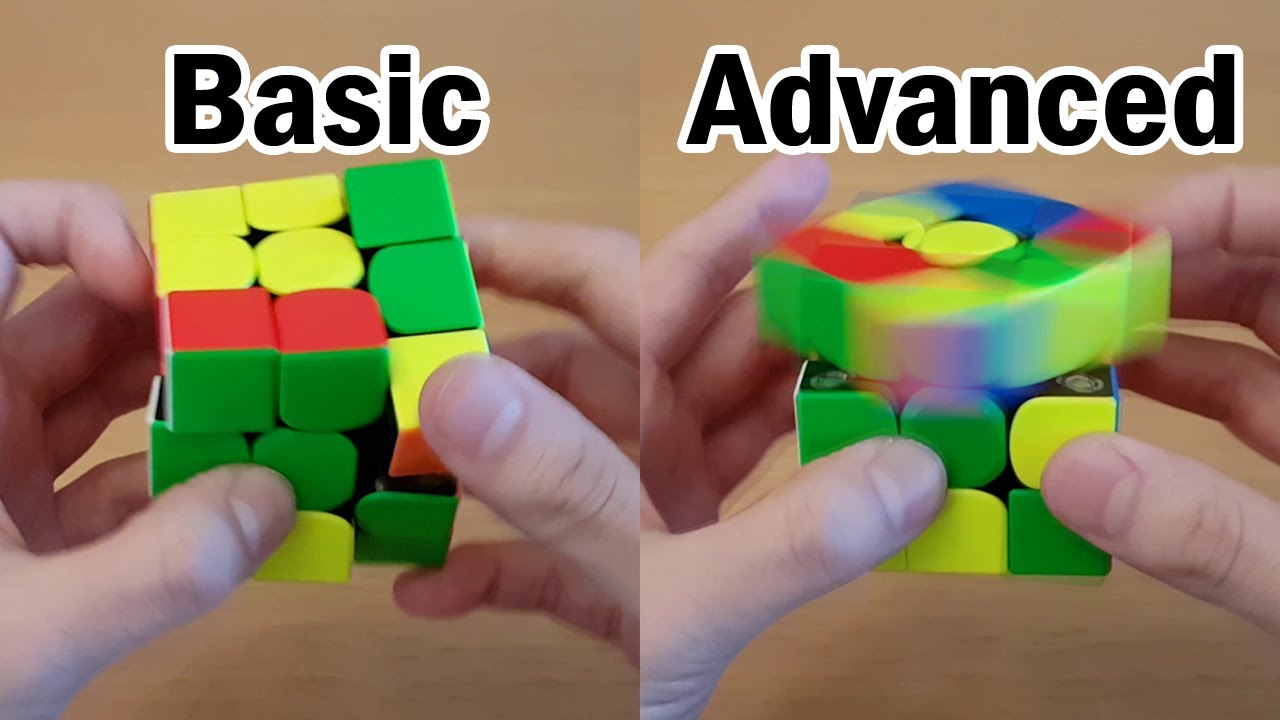
- The Claw Grip: Popularized by Feliks Zemdegs, this grip allows for rapid layer turns using only the index, middle, and ring fingers.
- Wrist Rotation: Avoid twisting your entire wrist. Instead, use subtle finger flicks. This reduces the distance your fingers travel and increases turn speed.
The CFOP Revolution: Optimizing Every Step for 2026 Standards
The CFOP method (Cross, F2L, OLL, PLL), also known as the Fridrich method, remains the undisputed king of speedcubing. It is the methodology used by every single 3×3 world record holder in the last decade. To improve solving speed for hard Rubik cubes fast, mastering CFOP is non-negotiable. However, "mastering" in 2026 means something slightly different than it did five years ago.
Step 1: The Modern Cross – Bottom Up and Efficient
The traditional beginner cross is solved on the top face, requiring a full 180-degree cube rotation before starting the next step. This is a massive time sink.
- Solve on the Bottom: Always aim to solve the cross on the bottom layer. This allows you to look ahead for the First Two Layers (F2L) while finishing the cross.
- Ignore Centers Initially: Don't worry about matching the center colors perfectly during the initial cross formation if it saves a move. Focus on getting four edges connected.
- Target Time: With dedicated practice, a modern cross should take less than 5 seconds. Any longer indicates a lack of planning or inefficient algorithms.
Step 2: F2L – The Engine of Speed
First Two Layers (F2L) is where the magic happens. Instead of solving layers sequentially, F2L pairs corner and edge pieces and inserts them simultaneously. This saves approximately 20 moves per solve compared to the beginner method.
- Intuitive F2L: While algorithms exist for every case, relying solely on them slows you down. The goal is intuitive F2L, where you recognize patterns and execute logical sequences without memorizing long strings of notation.
- Lookahead Mastery: This is the single most important skill for advanced solvers. Lookahead means finishing the current pair while your eyes are already finding the next pair. If you stop to think about where the next piece is, you lose momentum.
- Practice Drill: Use a timer and try to solve F2L without looking at the cube until you have identified the next pair. This forces your brain to anticipate movements.
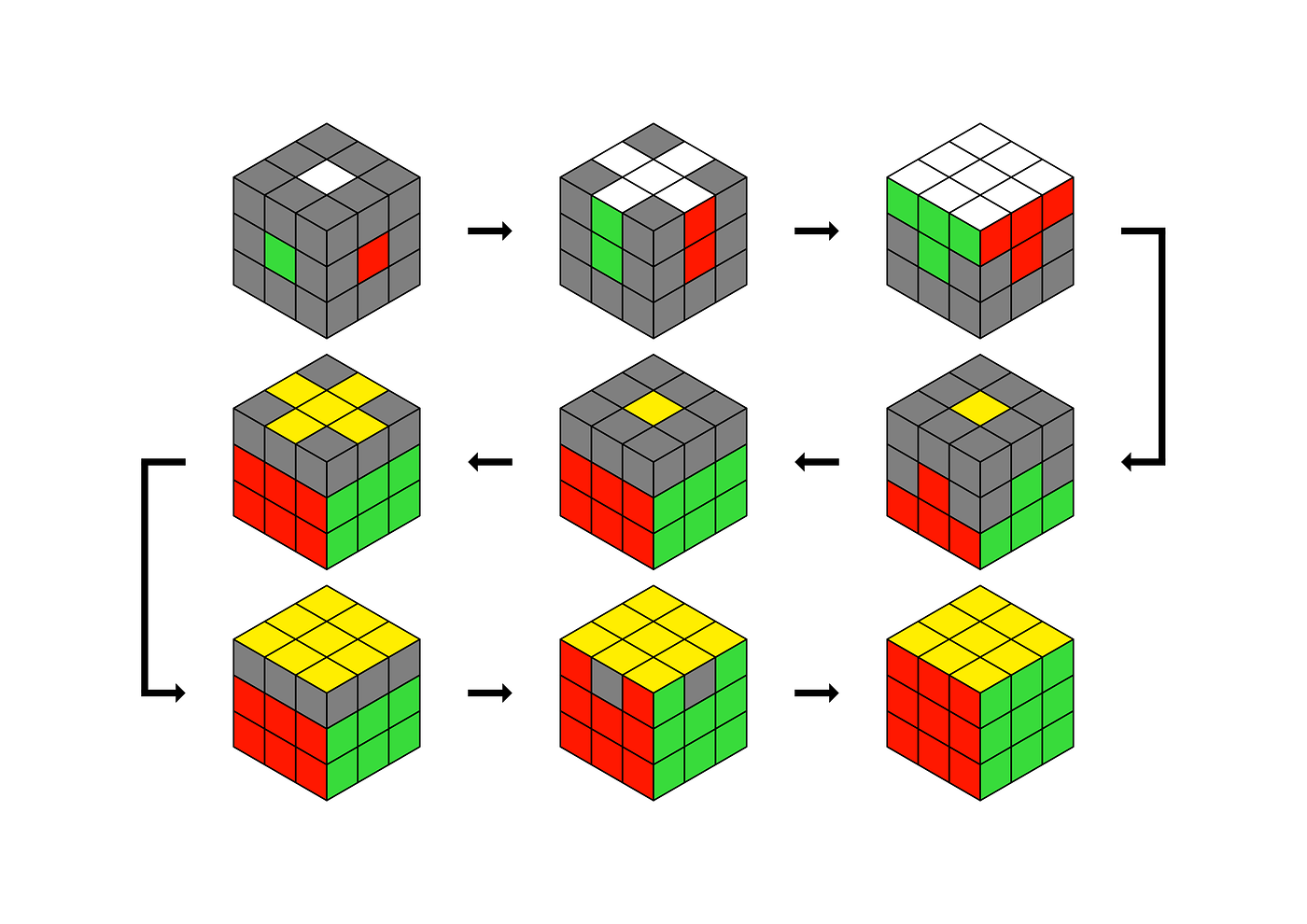
Step 3 & 4: OLL and PLL – The Algorithmic Wall
Once the first two layers are done, you face the Last Layer. This consists of Orientation of the Last Layer (OLL) and Permutation of the Last Layer (PLL).
- Moving Beyond 2-Look: Beginners often use "2-look" methods (orienting edges then corners). To go fast, you must learn the full set of 49 OLL algorithms and 21 PLL algorithms.
- Pattern Recognition: Don't just memorize the letter notation (e.g., R U R' U'). Memorize the visual pattern. When you see a specific shape of stickers, your hand should automatically know the algorithm to perform.
- Algorithm Efficiency: Not all algorithms are created equal. Some require many finger turns; others are compact. Learn the "one-handed" versions of algorithms where possible, as they often require fewer moves and are smoother to execute.
Advanced Techniques for Harder Puzzles and Higher Speeds
When dealing with "hard" Rubik cubes—whether they are larger sizes like 4×4, 5×5, or even specialized shape mods—the standard CFOP approach needs augmentation. The physics change, and the margin for error shrinks. Here is how elite solvers tackle these challenges in 2026.
Specialized Methods for Non-Standard Cubes
For puzzles larger than 3×3, the concepts of pairing and reduction apply, but the execution differs.
- Reduction Method (4×4+): Similar to CFOP, you reduce the larger cube to a virtual 3×3 by pairing edges. However, you must master parity algorithms which appear only on even-layered cubes. These are unique cases that break the standard logic.
- Blindfolded Integration: Many speedcubers train blindfolded to improve memory and spatial awareness. Even if you don't compete blind, this practice enhances your ability to visualize the cube state, directly improving your normal solve speed.
One-Handed and Blindfolded Training
Training outside your comfort zone builds incredible resilience.
- One-Handed Solving: Practicing with one hand forces you to develop superior finger independence and strength. It highlights weak points in your technique that two-handed solving might hide.
- Mental Visualization: For hard cubes, the ability to rotate the cube mentally is crucial. Spend 5 minutes a day visualizing a scramble and predicting the solution path without touching the cube.
Adapting to Shape Mods and Stickers
Hard cubes often feature irregular shapes or difficult sticker layouts.
- Grip Adjustment: Standard grips may fail on skewb-like shapes or deep-cut cubes. Experiment with holding the cube differently to maintain control during complex rotations.
- Stickerless vs. Stickered: In 2026, many pros prefer stickerless cubes for their durability and consistent friction, but some still swear by high-quality stickers for better visual contrast. Choose what helps you see the pieces fastest.
The Hardware Advantage: Choosing the Right Cube for Speed
You cannot run a marathon in heavy boots. Similarly, you cannot achieve sub-10-second times with a stiff, cheap puzzle. The hardware you use is just as critical as your technique. Investing in the right gear is the fastest way to improve solving speed for hard Rubik cubes fast.
Understanding Lubrication and Tension
A cube's performance relies heavily on its internal setup.
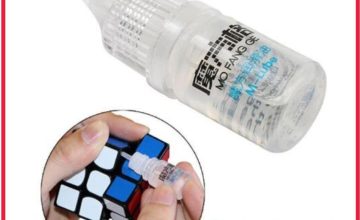
- Lubrication: Using high-quality silicone-based lubricants is essential. Dry plastic creates friction, causing jumps and hesitations. Re-lubricating every 3-6 months keeps the cube gliding smoothly.
- Tuning: Adjust the tension screws on the core. Too tight, and the cube feels locked; too loose, and pieces fall out. Find the "sweet spot" where turns are snappy but stable.
- Spring Systems: Modern speed cubes often feature spring systems that allow for customizable tension. Brands like GAN and MoYu offer models specifically tuned for different skill levels.
Top 2026 Cube Recommendations
Selecting a cube depends on your budget and preferred playstyle.
- For Beginners: The MoYu WeiLong WRM M offers excellent value, smoothness, and durability. It is perfect for learning proper finger tricks without breaking the bank.
- For Intermediates: The GAN 356 XS is a staple. Its magnetic system provides satisfying feedback, helping you execute algorithms with precision.
- For Pros: The MoYu MF3RS V3 or the Gan 11 M Pro represent the pinnacle of engineering, offering ultra-fast turning speeds and minimal lock-up for record-breaking attempts.
![Image Placeholder: High-end speed cubes comparison chart showing GAN, MoYu, and QiYi models side-by-side.]
Strategic Practice Regimens: From Beginner to Pro
Knowing what to do is half the battle; knowing when to do it is the other half. A structured practice plan is vital for steady improvement. Here is a roadmap tailored for 2026 solvers.
The 6-Month Roadmap to Improvement
Transforming from a casual solver to a competitive athlete takes time. Here is a suggested timeline:
- Month 1: Consistency. Focus on learning the full CFOP method. Your goal is to solve without stopping, aiming for under 90 seconds. Do not worry about speed yet.
- Month 2: Finger Tricks. Dedicate 15 minutes daily to practicing specific finger motions. Use apps or videos to learn the most efficient ways to turn layers.
- Month 3: Lookahead. Start integrating lookahead into your F2L. Practice identifying the next pair while executing the current one.
- Month 4: Algorithms. Begin memorizing OLL and PLL. Start with the most common cases and gradually work your way to the full set.
- Month 5: Timing. Use a timer religiously. Solve 50 times, discard the worst 5, and calculate your average. Identify your biggest time wasters.
- Month 6: Competition Simulation. Simulate competition conditions. Set up scrambles randomly, give yourself 15 seconds to inspect, and solve under pressure.
Effective Drills for Daily Practice
- The 100-Solve Drill: Set a timer for 30 minutes and try to complete 100 solves. This builds endurance and mental stamina.
- Case Isolation: Pick one specific F2L case (e.g., the "T-perm" situation) and solve the cube repeatedly until you can do it in under 2 seconds. Repeat for other difficult cases.
- Random Scramble Sessions: Do not pre-solve cubes. Use a randomizer app to generate fresh scrambles every time. This forces your brain to adapt quickly.
Overcoming Plateaus: Mental Toughness and Community
Even the best solvers hit walls. You might find yourself stuck at a 20-second average for months despite practicing daily. This is normal. Breaking through requires a shift in mindset and community engagement.
Dealing with Frustration
Speedcubing is a game of margins. A 0.5-second slip can ruin a solve. It is easy to get frustrated when things don't click.
- Take Breaks: If you feel angry or anxious, stop. Solving while frustrated leads to bad habits. Take a walk, listen to music, and return with a fresh mind.
- Focus on Process, Not Results: Celebrate small wins, like finally executing a tricky algorithm smoothly, rather than obsessing over the final time.
Leveraging the Community
You are never alone in this journey. The speedcubing community is vibrant and supportive.
- Watch Competitions: Watching World Cube Association (WCA) events inspires you. See how top solvers handle pressure and execute complex maneuvers.
- Join Local Clubs: If you live in a city with a active scene (like New York, Berlin, or Sydney), attend local meetups. Solving face-to-face with others provides motivation and immediate feedback.
- Online Forums: Platforms like Reddit's r/Cubers or Discord servers are invaluable for asking specific questions about techniques or hardware.
Frequently Asked Questions (FAQ)
Q: What is the fastest way to learn algorithms?
A: The most effective method is pattern recognition. Instead of memorizing "R U R' U'", visualize the shape the cube makes when the algorithm is applied. Use online trainers that show animations of the algorithms to build this visual muscle memory. Repetition combined with visualization is key.
Q: My cube keeps jumping out of my hands. Is it broken?
A: It is likely a tuning issue, not a defect. Check your tension screws. If they are too loose, tighten them slightly. Also, ensure you are using enough lubricant. Dry plastic causes high friction, leading to unpredictable jumps. A well-tuned cube should feel fluid, not sticky.
Q: Can I improve my speed without buying a new cube?
A: Absolutely. While a good cube helps, technique accounts for about 80% of your potential speed. You can improve your finger tricks, lookahead, and algorithm efficiency with a $10 cube. Upgrade your hardware only after you have maximized your technique with your current gear.
Q: How much time should I practice daily?
A: Quality matters more than quantity. 20 to 30 minutes of focused, deliberate practice per day is more effective than 2 hours of mindless solving. Consistency is crucial; practicing every day yields better results than one long session once a week.
Conclusion: Your Journey to Sub-10 Starts Now
Improving solving speed for hard Rubik cubes fast is a marathon, not a sprint. It requires a blend of technical mastery, strategic practice, and the right equipment. By embracing the CFOP method, mastering lookahead, optimizing your finger tricks, and selecting a high-quality cube, you unlock the door to sub-10-second solves.
Remember, the journey from a slow solver to a speedcuber is defined by patience and persistence. There will be days when progress feels invisible, but trust the process. Utilize the resources available in 2026, from advanced video tutorials to community forums, and stay committed to your goals. Whether you are aiming to beat your personal best or compete on the global stage, the path is clear. Start practicing today, focus on the details, and watch your times plummet. The cube is waiting for you to conquer it.
References
- J Perm — Comprehensive CFOP Speedsolving Methodology and Tutorial Series, 2025
- Cubelelo — How to Get Faster in Rubik's Cube [Beginners to Pro], July 2025
- Cubelelo — 10 Most Effective Exercises for Cube Solvers to Become Fast, May 2024
- Kelsey Geller (CubeSolver) — Solve Your Rubik's Cube in Seconds: Fastest Techniques in 2026, June 2026
- wikiHow — 5 Ways to Become a Rubik's Cube Speed Solver, Updated March 2025
- SolveTheCube — Speedcubing Guide: Going Slow to Go Fast, Undated
- Pocket Guides — 5 Rubik's Cube Tips for a Lightning Fast Solving!, Undated
- YouTube Official Channel — Rubik's Cube Tricks: How to Solve a Cube FASTER, Recent Upload
- SolvingRubiksCube.com — Tips & Tricks: Expert Advice for Improving Solve Times, Undated
- SpeedSolving Puzzles Community — How to actually improve in cubing, Community Discussion Thread, 2025
- YouTube Official Channel — 5 Speed Hacks That Actually Work In 2026!, Recent Upload
- Community Blog — New Year, Faster Solves: How to Improve Cubing Speed in 2026, January 2026
- Speedcubing Blog — Advanced Solving Methods: Unlocking Speedcubing Secrets, 2025
- Training Portal — 6 Months to Pro: The Ultimate Speedcubing Roadmap, 2025