Solving a Rubik's Cube is a journey that transcends simple mechanical manipulation; it is a test of spatial reasoning, memory, and pattern recognition. However, for many enthusiasts, the path to mastery is often blocked by one confusing variable: color schemes. While the mechanics of the puzzle remain constant regardless of aesthetics, the visual language used to communicate moves can vary significantly depending on whether you are holding a vintage Japanese cube or a modern Western model. In 2026, the global cubing community continues to thrive, with millions of solvers navigating everything from standard fluorescent sets to custom neon "radioactive" palettes. This guide will equip you with the knowledge to solve any Rubik's Cube configuration, ensuring that no matter how unique your color arrangement, you can achieve the solved state with confidence.
Whether you are a beginner in Chicago trying to impress friends at a local coffee shop or an experienced speedcuber in Tokyo refining their technique for upcoming WCA events, understanding the relationship between colors and algorithms is crucial. The fundamental truth remains: the logic never changes, only the visual cues do. By mastering the distinction between color opposites and learning to adapt your mental map, you unlock the ability to solve cubes of any design. Let's dive deep into the world of twisty puzzles and demystify the art of solving with different color schemes.

Understanding the Two Dominant Color Alignments
To solve a Rubik's Cube effectively, you must first understand the two primary standards that dominate the market today: the Western Color Scheme and the Japanese Color Scheme. While both utilize the exact same six colors—white, yellow, orange, red, green, and blue—their geometric alignment differs, creating distinct challenges for solvers who switch between them frequently.
The Western Standard (BOY)
The Western scheme, often referred to as BOY (Blue-Orange-Yellow), is the industry standard for the vast majority of cubes sold globally in 2026. If you walk into a toy store in New York, London, or Sydney, the cube you pick up will almost certainly follow this layout.
- Opposite Colors: In this scheme, White is opposite Yellow, Red is opposite Orange, and Green is opposite Blue.
- Solving Flow: Most beginners and advanced solvers alike adopt the "White First" method. You start by forming a cross on the white face and proceed layer-by-layer until the yellow face is completed last.
- Visual Cues: This scheme is designed for maximum visibility. The use of bright, high-contrast stickers ensures that pieces are easily distinguishable even under the harsh lighting of competition arenas like those found in Los Angeles or Shanghai.
The Japanese Tradition
Originating from the earliest mass-produced cubes, the Japanese scheme retains a nostalgic appeal and is still favored by a dedicated niche of speedcubers, particularly in Japan.
- Opposite Colors: Similar to the West, but the orientation of specific faces relative to each other creates a different starting point.
- Solving Flow: A unique characteristic of this scheme is the preference for starting with the Blue Cross. Solvers using this method often finish with the white layer, reversing the typical Western progression.
- Aesthetic Choice: Some Japanese cubes feature black plastic bodies with colored stickers, while others maintain white plastic with black markings. This contrast was originally chosen to make the logo visible when the cube is held in specific orientations.
The Critical Role of Opposite Colors in Algorithm Adaptation
One of the most common mistakes new solvers make is assuming that because a cube looks scrambled, the solution is complex. In reality, the opposite color pairs are the secret key to adapting algorithms across different schemes. Erno Rubik, the inventor, famously stated that he chose these six colors because they are basic and universally recognized, noting that "if the cube wouldn't be colored there would be no objective."
When you encounter a cube with a non-standard color scheme, your brain must instantly recalculate which face is opposite which.
- Why It Matters: Algorithms rely on moving pieces from one specific location to another based on their color relationships. If you confuse Red with Orange because your cube uses a custom scheme, your entire solve will fail.
- The Minus Yellow Concept: In the Western scheme, Yellow is often called "Minus Yellow" because adding or subtracting it from any side results in its opposite color logic. Understanding this helps in visualizing where pieces should go before you physically move them.
- Low Light Visibility: A sophisticated aspect of good color schemes, highlighted by experts like Rob Nienburg, is the ability to distinguish opposite colors in low light. High-quality cubes used in 2026 competitions often feature matte finishes or specific saturation levels to prevent glare, ensuring that a solver in a dimly lit room in Berlin can still identify the Green face opposite the Blue face.
If you have a cube where the colors seem "wrong," do not panic. Check the center pieces. The center piece of a 3×3 cube never moves relative to the core; it defines the color of that entire face. If your White center is next to your Blue center, but you expect them to be opposite, you likely have a mixed-up sticker set or a very rare custom variant. Always verify the centers first.
Mastering the Layer-by-Layer Method Across Variations
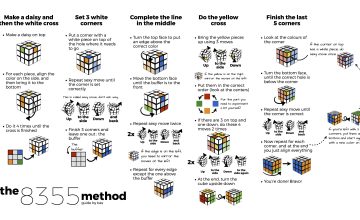
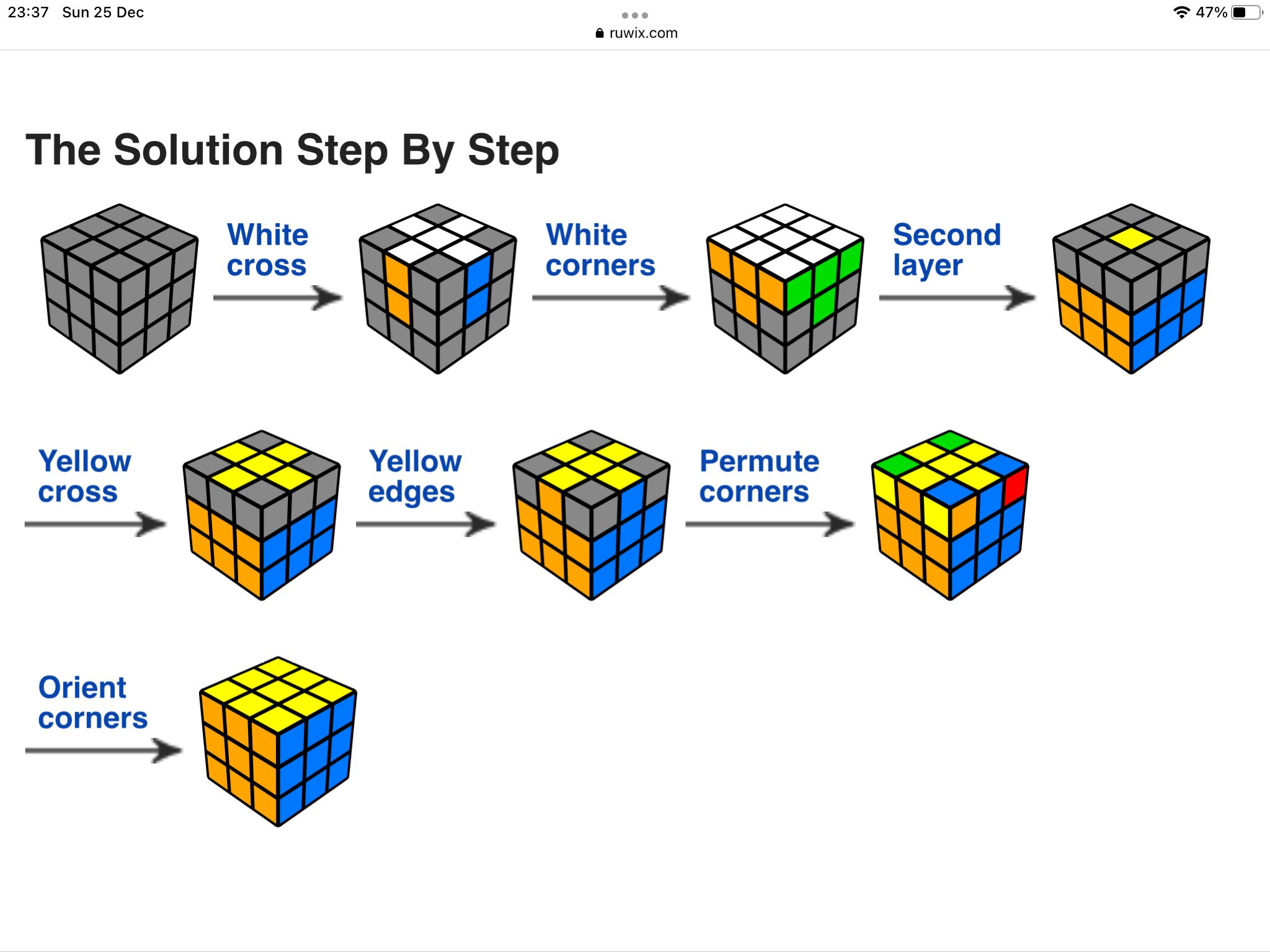
The Layer-by-Layer (LBL) method remains the gold standard for beginners and a foundational step for speedcubers, regardless of the color scheme involved. This method breaks the complex puzzle down into three manageable phases: the bottom layer, the middle layer, and the top layer.
Phase 1: The Bottom Cross and Corners
In the Western scheme, this means building a white cross. In the Japanese scheme, you might build a blue cross.
- Identify Your Start Face: Look at the center piece of the face you intend to solve first. If it is White, find the edge pieces with White and their matching side color (e.g., White-Red).
- Form the Cross: Move these edges so they form a cross on the start face, ensuring the side colors align with the adjacent center pieces.
- Insert Corners: Find the corner pieces containing your start color and two others. Use simple algorithms to slot them into place beneath their correct positions.
- Adaptation Tip: If your cube starts with Blue, simply treat "Blue" as "White" in your mental algorithm. The sequence of moves remains identical; only the label changes.
Phase 2: Solving the Middle Layer
Once the bottom layer is complete, you must insert the four edge pieces of the middle layer.
- The Logic: You look for an edge piece in the top layer that does not contain the color of the top face (Yellow).
- The Algorithm: Depending on whether the piece needs to go to the left or right, you apply a specific sequence of turns (R U' R' U' F' U F).
- Color Consistency: Even if your middle layer centers are Green and Orange instead of the standard Red and Blue, the algorithm works perfectly because it relies on the relative position of the pieces, not their absolute names. As long as you know which color belongs to which center, the math holds true.
Phase 3: The Top Layer Orientation and Permutation
This is where most confusion arises with different color schemes.
- The Yellow Cross: In the Western scheme, you create a yellow cross on the top. In some custom schemes, the top color might be Red or Green. The algorithm to create the cross (F R U R' U' F') remains exactly the same. You just watch for your specific top color instead of Yellow.
- Corner Orientation: You must rotate the corners so the top color faces up. Again, the algorithm is universal.
- Edge Permutation: Finally, you cycle the top edges to match the side centers.
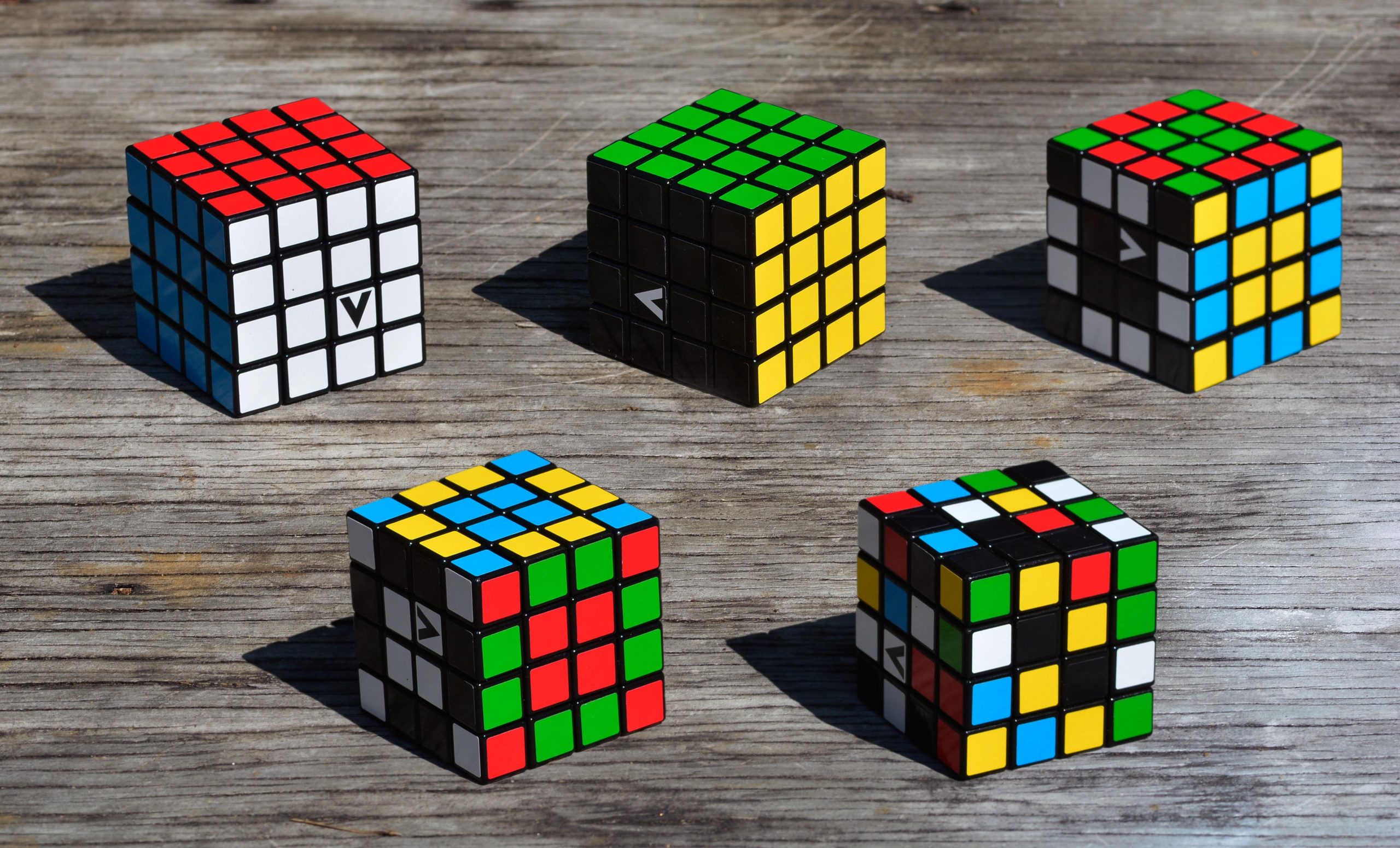
Navigating Custom and Fluorescent Color Palettes
In 2026, the customization of twisty puzzles has reached an unprecedented level. From fluorescent greens that glow under blacklight to "radioactive" full-bright sticker sets, solvers are increasingly opting for personalized aesthetics. While these custom schemes add flair, they introduce unique challenges for those trying to learn the basics.
The Challenge of Non-Standard Hue
Professional cubers care deeply about the shade of the color. A "Sky Blue" might be confused with a "Deep Blue" if the saturation is off. When you buy a cube with a custom scheme:
- Verify Opposites Immediately: Before attempting to solve, ensure that your opposite pairs are consistent. For example, if you have a Neon Pink and Neon Cyan, confirm they are opposites. If they are adjacent, your cube is either mis-stickered or follows a chaotic "don't give a f#@%" scheme where every cube is different.
- Lighting Conditions: Fluorescent colors are excellent for bad lighting conditions but can cause eye strain during long practice sessions. Ensure your workspace in your local area (whether it's a study in Boston or a den in Austin) has balanced lighting to avoid color distortion.
The "Don't Give a F#@%" Scheme
There is a humorous but real phenomenon where ordering bulk cubes from manufacturers results in inconsistent color alignments. One cube might have Red opposite Orange, while another has Red opposite Green.
- Solution: Do not try to memorize the pattern of a random cube. Instead, treat every face as unique. Identify the six distinct colors, pair them up manually, and assign them mental tags (e.g., "Face A is my North," "Face B is my South").
- Tool Assistance: Utilize online Rubik's Cube Solvers like Grubiks or Rubikverse. These tools allow you to input your specific color configuration. You can paint the virtual cube with your custom colors, and the AI will generate a step-by-step solution tailored specifically to your scramble. This is invaluable for troubleshooting confusing setups.
Advanced Techniques for Speedcubing with Unique Schemes
For those aiming to break personal records or compete in local tournaments, relying solely on the basic Layer-by-Layer method may not be fast enough. Advanced methods like the Fridrich Method (CFOP) require rapid recognition of patterns. When combined with non-standard color schemes, this recognition process becomes a critical skill.
Pattern Recognition Over Color Naming
Expert solvers do not say "I need to move the Red piece"; they visualize geometry.
- Spatial Mapping: Train your brain to ignore the color name and focus on the shape and position. Is the piece in the "Top-Right-Front" quadrant? Does it need to move to the "Bottom-Left-Back"?
- Algorithm Fluidity: Once you master the algorithms, you should be able to execute them blindfolded or with eyes closed. At this stage, the color scheme is irrelevant to the muscle memory. However, for sighted solving, practicing with different schemes improves your flexibility. Try solving a standard cube, then immediately switch to a Japanese-colored one, and vice versa. This forces your brain to decouple the physical movement from the visual label.
Local Competition Preparation
If you live in a city with a vibrant cubing community, such as Seattle, Denver, or Atlanta, you will likely encounter various cube styles at meetups.
- Adaptability is Key: Being able to solve a cube with a strange color scheme demonstrates a high level of proficiency. Judges at WCA events do not penalize you for using a non-standard cube, provided it meets safety regulations (Rule 3a3: one unique color per face).
- Community Resources: Join local Facebook groups or Discord servers dedicated to your city's cubing scene. Members often share tips on where to find specific sticker sets or how to troubleshoot odd color alignments encountered during casual play.
Troubleshooting Common Confusion Points
Even with the best guides, solvers often hit roadblocks when dealing with unfamiliar color arrangements. Here are the most frequent issues and their solutions.
Issue 1: The "Wrong" Center Piece Movement
Beginners often think center pieces move. They do not.
- Fix: Rotate the whole cube in your hands to bring the scrambled face to the front. The center stays fixed relative to the core. If your White center is currently facing Up, it will always be opposite the Yellow center, regardless of how much you turn the layers.
Issue 2: Misaligned Edges After Cross Formation
You formed a cross, but the edge colors don't match the side centers.
- Fix: This usually happens if you started with the wrong face or if the cube has been taken apart and reassembled incorrectly. Disassemble the cube, ensure the centers are snapped onto the core in the correct relative order (White opposite Yellow, etc.), and reassemble.
Issue 3: Confusing Left and Right Algorithms
With different color schemes, the "Right Hand" algorithm might feel counter-intuitive if your color mapping is flipped.
- Fix: Stick to the notation. R always means the Right face clockwise. L always means the Left face clockwise. Do not let the color trick you into thinking a move is "left" when it is technically "right." Trust the letter notation over the color perception.
The Future of Cubing: AI and Customization
As we look toward 2026 and beyond, the intersection of technology and puzzle solving continues to evolve. Artificial Intelligence is no longer just for generating solutions; it is becoming a tutor for custom configurations.
- Smart Solvers: Modern apps can analyze a photo of your cube, detect the specific color scheme, and provide audio-guided instructions. This democratizes solving, making it accessible to anyone regardless of their visual memory capabilities.
- Educational Tools: Schools and libraries in major cities are increasingly using customizable cubes as STEM tools. Teachers can order cubes with specific educational color codes to teach geometry, symmetry, and logic to students.
- Sustainability: The future also holds eco-friendly materials. While color schemes remain iconic, the substrates of the cubes are becoming greener, without compromising the vibrant aesthetics that keep the hobby alive.
Conclusion
Solving a Rubik's Cube with different color schemes is not a barrier to entry; it is an invitation to deepen your understanding of the puzzle. Whether you prefer the classic Western BOY layout, the traditional Japanese alignment, or a wild fluorescent custom set, the underlying mathematics and algorithms remain immutable. By focusing on opposite color pairs, trusting the center pieces, and utilizing modern AI solvers, you can conquer any variation.
Remember, the goal is not just to return the cube to a solved state, but to enjoy the intellectual challenge it presents. So, grab your uniquely colored cube, find your local community, and start turning those layers. The world of twisty puzzles awaits your unique solution.
FAQ: Solving Rubik's Cubes with Varied Colors
Q: Can I use standard algorithms on a cube with reversed colors?
A: Yes, absolutely. Algorithms are based on the physical rotation of faces (R, L, U, D, F, B), not the color names. As long as you correctly identify which face is which based on the centers, the algorithms work identically.
Q: What if my cube has black plastic instead of white?
A: This is common in Japanese-style cubes. Treat the black plastic as your "White" face if that is the intended starting color, or simply identify the contrasting color as your base. The mechanics of solving do not change.
Q: Are there any official rules against non-standard color schemes in competitions?
A: No. The WCA regulations state that puzzles must have one unique color per face in the solved state. There is no restriction on which colors must be used or their arrangement, provided they are distinct.
Q: How do I know which color is opposite which on a custom cube?
A: Inspect the solved state. On a standard 3×3, opposite faces never touch. If you see Red touching Orange, they are adjacent, not opposite. The two faces that never share an edge when the cube is solved are your opposites.