Welcome to the definitive guide for 2026 on mastering the most frustrating yet rewarding aspect of advanced cubing: Rubik's cube parity fix for even layered cubes. If you have ever stared at a solved-looking 4×4, 6×6, or even a massive 12×12 puzzle, only to find two edges swapped or flipped in a way that defies standard 3×3 logic, you are not alone. This phenomenon, known as parity, is the silent killer of speedcubing dreams for millions of enthusiasts worldwide. Whether you are a beginner in Chicago trying to solve your first 4×4 or a veteran solver in London refining your OLL/PLL parity algorithms, understanding the deep theory and efficient execution of these fixes is non-negotiable.
In this comprehensive article, we will dismantle the mystery of even-layered cube parity. We will explore why it happens, how to recognize the specific cases, and the most effective algorithms to resolve them quickly. By the end of this guide, you will possess the knowledge to turn those dreaded "impossible" states into simple stepping stones toward faster times. Let's dive into the mechanics of the even-layered cube and unlock your full solving potential.
Understanding the Mystery of Even-Layered Cube Parity
To truly master the rubiks cube parity fix for even layered cubes, you must first understand the fundamental difference between odd and even layer puzzles. On a standard 3×3 Rubik's Cube, every piece has a fixed position relative to the center pieces. The centers never move, acting as the anchor for the entire puzzle. However, on even-layered cubes like the 4×4, 6×6, or 8×8, there are no fixed centers. This lack of a reference point introduces a level of freedom—and complexity—that simply does not exist on odd-layered cubes.
The Reduction Method and Its Pitfalls
Most solvers tackle larger even-layered cubes using the Reduction Method. This strategy involves three main stages:
- Solving all the center pieces to create solid 2×2 (for 4×4) or larger blocks of color.
- Pairing up the edge pieces to form single "super-edges," effectively turning the puzzle into a virtual 3×3.
- Solving the resulting cube using standard 3×3 methods.
It is during the second stage, Edge Pairing, that parity strikes. Because you are manually pairing wing edges from different parts of the cube, you can inadvertently create an odd permutation of the edges. In the world of group theory, a 3×3 cube always maintains an even parity state. You cannot have just one edge flipped or two edges swapped on a real 3×3; it is mathematically impossible. However, on a 4×4, because the centers are movable, you can accidentally isolate a state where the edges are in an odd configuration.
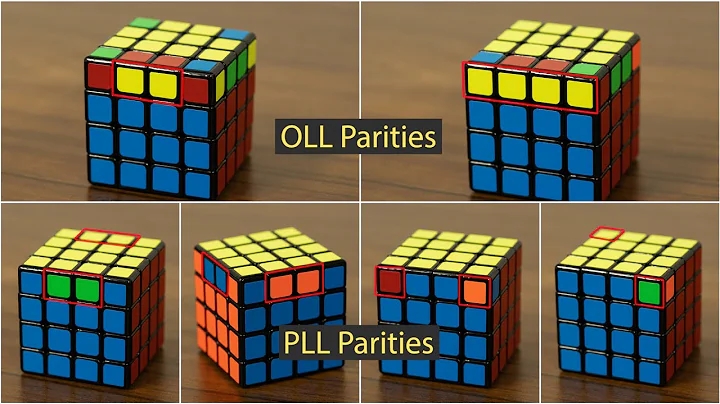
This situation creates what looks like an unsolvable mess. You have reduced the cube to a 3×3 state, but the last layer refuses to cooperate with standard algorithms. This is the moment every cuber dreads, but with the right parity fix, it becomes a routine part of the process. It is crucial to remember that parity is not a mistake. It is an inherent property of the puzzle's design, a mathematical quirk that requires a specific intervention to resolve.
Why Standard Algorithms Fail
When you encounter parity, standard 3×3 algorithms will fail completely. If you try to perform an OLL (Orientation of the Last Layer) algorithm on a parity case, you might flip the correct edges but scramble the rest of the cube, or worse, do nothing at all. This is because the parity algorithm alters the permutation of the pieces in a way that standard moves cannot undo without disrupting the already-solved centers and edges.
The core issue lies in the slice moves. On a 3×3, you only turn outer layers. On a 4×4, you can turn inner slices (like r or l). Parity often occurs because an odd number of these inner slice quarter turns were performed during the edge pairing phase. To fix it, you must introduce an odd number of inner slice turns specifically designed to swap or flip the problematic pieces without disturbing the rest of the puzzle.
Decoding OLL Parity: The Flipped Edge Nightmare
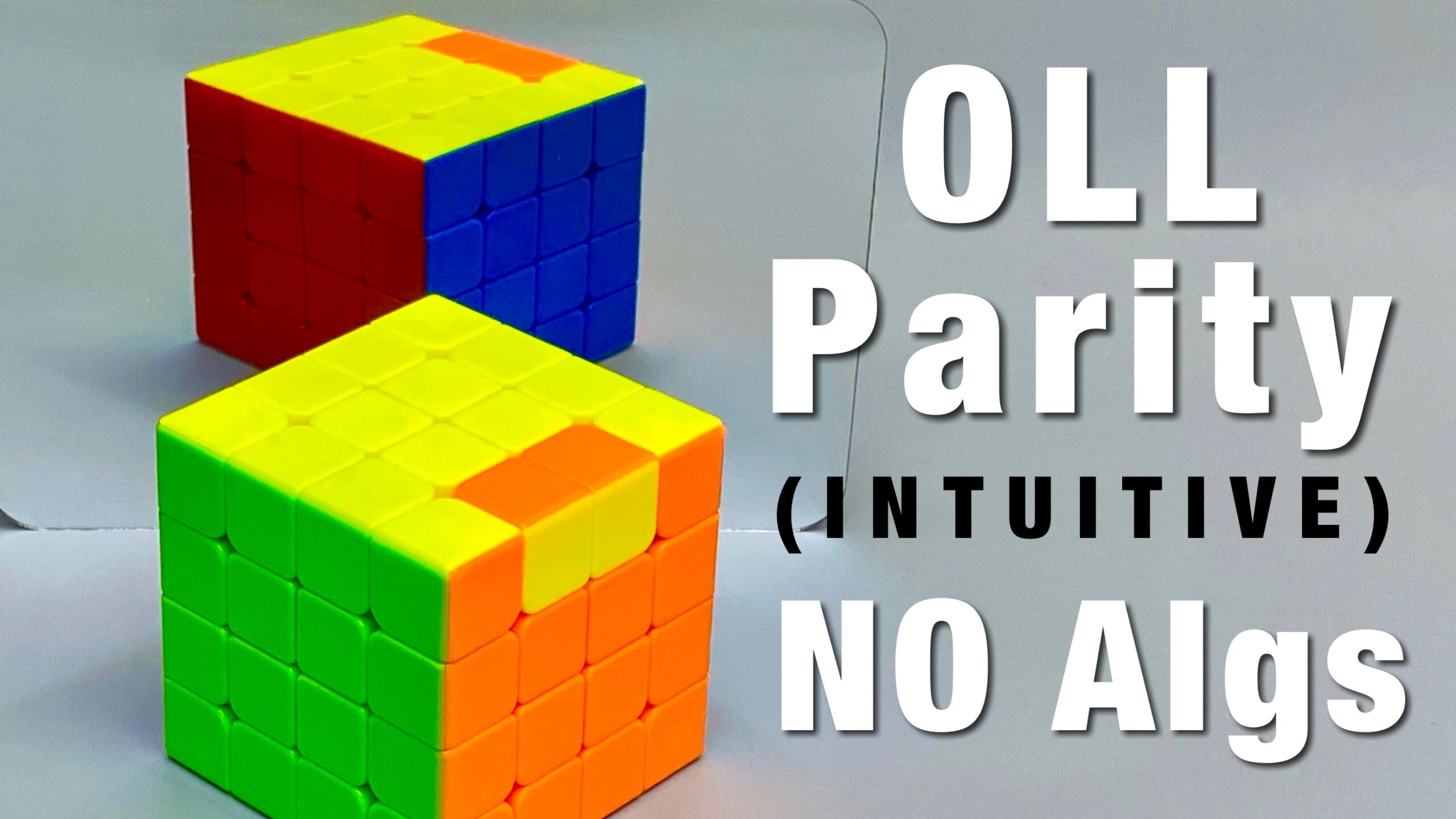
One of the most common occurrences for solvers tackling even layered cubes is OLL Parity. This case typically manifests when you are attempting to orient the last layer corners and edges, and you find that two opposite edges appear to be flipped. On a normal 3×3, if you see two flipped edges, you would expect a specific pattern that allows for a solution. On a 4×4, however, these edges look identical to a flipped state, yet no standard algorithm works.
Recognizing OLL Parity
Recognizing OLL parity is about elimination. First, ensure your centers are solved and your edges are paired. Then, proceed to the OLL step. If you execute a standard OLL algorithm (like the F R U R' U' F' cross algorithm) and end up with:
- All corners oriented correctly, but…
- Two opposite edges still showing their wrong color…
You have encountered OLL Parity. Another tell-tale sign is having an odd number of flipped edges (1 or 3) when you know the total number of flipped edges should be even based on previous steps. This "impossible" state signals that the internal logic of the cube has been twisted by an odd permutation during edge pairing.
The Universal OLL Parity Algorithm
While there are variations depending on the cube size, the most widely accepted and efficient algorithm for fixing OLL parity on a 4×4 relies on wide moves. Wide moves involve turning both the outer layer and the adjacent inner slice together (e.g., Uw means turn the top two layers). This is essential because it allows the algorithm to affect the paired edges directly while maintaining the integrity of the rest of the cube.
The classic algorithm to resolve this is:
R2 U2 R2 Uw2 R2 Uw2
Let's break down why this works:
- R2: A double turn of the right face.
- U2: A double turn of the top face.
- R2: Another double turn of the right face.
- Uw2: A double turn of the top two layers (Wide Upper).
- R2: Double turn of the right face again.
- Uw2: Another wide upper turn.
This sequence effectively flips the two misoriented edges. The use of Uw2 is critical here; on a 3×3, Uw is impossible, which is why this algorithm is exclusive to even-layered cubes and larger. In 2026, with the popularity of high-quality cubes like those from GAN or Moyu, executing wide moves smoothly is easier than ever, making this algorithm a staple in any speedcuber's repertoire.
Advanced Variations and Speed Techniques
For intermediate and advanced solvers, memorizing the long version of the algorithm might feel sluggish. Fortunately, there are shorter variants and recognition tricks. Some solvers prefer the algorithm written without wide moves, though it requires more slice manipulation:
R2 B2 U2 l – U2 r' U2 r – U2 F2 r F2 – l' B2 r2
However, for speedcubing, the wide-move version remains king due to its fluidity. It is also important to note that sometimes an AUF (Adjustment of U Face) is required before or after applying the parity algorithm. If the flipped edges are not in the exact position the algorithm expects (usually opposite), you may need to rotate the whole cube or the U layer to align them correctly before triggering the fix.
Conquering PLL Parity: The Swapped Edge Crisis
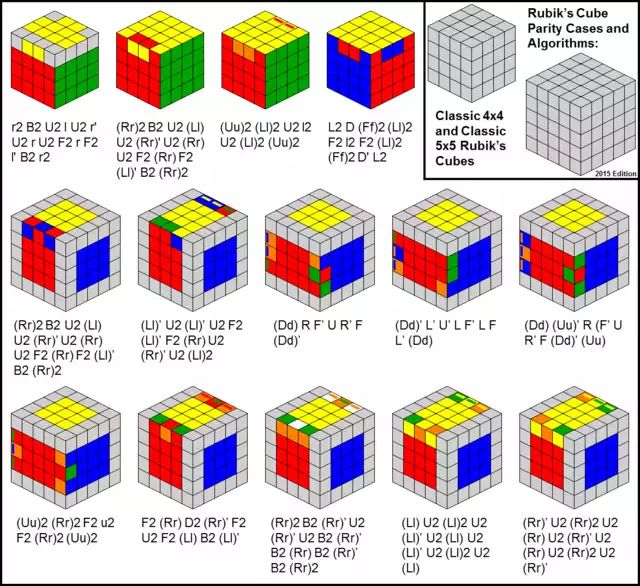
If OLL parity deals with orientation, PLL Parity deals with permutation. This is arguably the more confusing case for beginners because it mimics a situation that looks like two corners or two edges are swapped, which is impossible on a 3×3. When this happens, your cube appears to be in a state where a simple swap algorithm should work, but it leaves the cube scrambled.
Identifying PLL Parity Cases
PLL Parity usually presents itself during the final stage of solving, when you are trying to permute the last layer edges or corners. Common scenarios include:
- Two Edges Swapped: You have two edges that need to swap positions, but they are opposite each other.
- Four Corners Swapped: A cycle of four corners needs to be rotated, but it behaves like two disjoint swaps.
- Edge Cycle Error: An odd number of edges seem to be in the wrong place despite being paired correctly.
Unlike OLL parity, which affects the orientation of pieces, PLL parity affects their position. On a 3×3, swapping two edges results in an odd permutation, which cannot happen legally. On a 4×4, because the centers can move, you can accidentally create this legal-but-impossible-on-3×3 state.
The Primary PLL Parity Algorithm
The most famous and reliable algorithm for fixing PLL parity on a 4×4 involves a series of slice moves that essentially perform a 3-cycle on the edges while flipping them back into alignment. The algorithm is:
r2 U2 r2 Uw2 r2 Uw2
Wait, that looks familiar? Yes, the structure is similar to OLL parity, but the application differs slightly regarding the target pieces. Often, this same algorithmic family is used, but the context changes. For a pure edge swap parity (where two edges are swapped), the algorithm is frequently cited as:
Rw2 Fw2 F2 U2 Fw2 – D Rw2 U2 Fw2 – U’ Fw2 L2 U2 – B2 Lw2 U
This longer version uses specific slice notation (Fw, Lw, Rw) to manipulate the wing edges. However, for modern solvers, the simplified wide-move version is preferred for its efficiency. A commonly taught version for the "two edge swap" scenario is:
Rw2 Fw2 F2 U2 Fw2 – D Rw2 U2 Fw2 – U’ Fw2 L2 U2 – B2 Lw2 U
Executing this requires precision. You must identify which edges are swapped. If the swapped edges are adjacent, the approach might differ slightly from when they are opposite. Always verify your cube state before committing to the algorithm.
Integration with Standard PLL
One of the biggest challenges with PLL parity is integrating it with the standard PLL (Permutation of the Last Layer) algorithms. After you fix the parity, your cube is technically a 3×3 again, but the orientation of the centers or the position of the edges might have shifted slightly.
It is a common misconception that you can just apply a standard PLL algorithm immediately after the parity fix. In many cases, you need to perform an AUF (adjust the U face) to align the fixed edges with the correct slots before running your chosen PLL algorithm (like T-perm, J-perm, or Z-perm). Failure to account for this shift can lead to repeating the parity error or scrambling the solved state. Practice recognizing the "post-parity" state so you can instantly visualize the necessary adjustment.
Strategies for Larger Cubes: 6×6, 8×8, and Beyond
As the cube size increases, so does the complexity of parity. Solving a 6×6 or an 8×8 involves significantly more edge pairing and center building, increasing the probability of encountering parity errors. While the fundamental math remains the same—any even-layered cube can exhibit odd permutations—the sheer volume of pieces makes execution more tedious.
Scaling the Algorithms
The algorithms used for the 4×4 generally scale up to larger cubes, but the notation changes. Instead of r (right inner slice), you deal with r, l, f, b, and their wide counterparts. For a 6×6, you have three layers per side. The risk of parity increases because you are pairing more edges, creating more opportunities for an odd flip.
Some solvers find that using commutators is more efficient than memorizing long parity algorithms for cubes larger than 4×4. A commutator is a sequence of moves of the form A B A' B' that isolates a small change to the cube. Learning a few key commutators for parity can save time compared to muscle-memory-dependent long algorithms, especially as you aim for sub-minute solves on a 6×6.
Center Building and Parity Prevention
Interestingly, parity is not inevitable; it is a result of how you pair edges. While you cannot prevent parity entirely (as it is built into the puzzle's geometry), smart edge pairing strategies can minimize the likelihood of hitting difficult parity cases.
- Symmetrical Pairing: Try to pair edges symmetrically whenever possible.
- Color Matching: Be mindful of edge colors. If you notice a pattern emerging that suggests an odd flip is coming, pause and re-evaluate your pairing path.
- Center Integrity: Ensure your centers are perfectly formed before starting edge pairing. Loose or misaligned centers can force you into awkward pairing situations that lead to parity.
The Psychology of Parity: Turning Frustration into Flow
Let's be honest: encountering parity can be emotionally taxing. After spending 20 minutes reducing a 6×6 cube, only to hit a wall at the last step, the urge to throw the cube across the room is real. This is the "frustration factor" of even-layered cubes. However, mindset is everything in speedcubing.
Reframing the Experience
View parity not as a failure, but as a signature feature of advanced cubing. It separates casual solvers from dedicated enthusiasts. Every world-class speedcuber, from Max Park to Yusheng Du, has faced parity countless times. The difference is that they have normalized it. They don't see it as a roadblock; they see it as a checkpoint where they apply a specific tool to keep moving forward.
In local cubing communities, such as those found in major hubs like New York City, Tokyo, or Berlin, parity is often discussed openly during meetups. Sharing tips on how to handle a tricky parity case builds camaraderie. Remember, the goal of the rubiks cube parity fix for even layered cubes is not just to solve the puzzle, but to do so efficiently and enjoyably.
Practice Drills for Mastery
To build muscle memory for these algorithms, isolation practice is key. Do not wait for parity to happen naturally during a full solve. Instead:
- Set up a specific parity case manually.
- Solve it repeatedly until you can execute the algorithm without looking at your hands.
- Gradually increase the speed.
- Mix it in with random scrambles to improve recognition speed.
Many solvers use apps and online simulators available in 2026 to practice these scenarios virtually. These tools allow you to reset instantly and focus purely on the algorithm execution, accelerating your learning curve significantly.
The Evolution of Parity Algorithms in the Modern Era
As we look toward 2026, the landscape of cubing algorithms has evolved significantly alongside hardware improvements. The advent of high-precision magnetic cubes with adjustable tension and optimized internal geometry has changed how solvers approach parity fixes. In the past, executing a wide move like Uw required significant finger strength to ensure the inner slices moved smoothly without sticking. Today, modern cube designs feature low-friction bushings and precision-magnet systems that allow for fluid, rapid wide turns. This technological leap means that algorithms which once felt clunky and slow can now be executed at blistering speeds, often becoming indistinguishable from standard 3×3 PLL sequences in terms of flow.
The community has also seen a shift in algorithm notation and memorization techniques. While traditional notation remains the standard for competition, many speedcubers are adopting "shorthand" methods or visual recognition patterns that reduce the cognitive load during a solve. For instance, instead of memorizing the exact sequence of moves for every specific permutation, advanced solvers learn to recognize the shape of the parity case and immediately visualize the necessary correction based on color orientation. This mental mapping allows for faster decision-making, which is crucial in competitive environments where milliseconds matter. Furthermore, the rise of AI-driven training tools has enabled solvers to analyze their own solves, identifying exactly where they hesitated during a parity fix and allowing them to refine their muscle memory with surgical precision.
Advanced Techniques for Specialized Scenarios
While the algorithms discussed earlier cover the vast majority of parity cases, there are niche scenarios that arise, particularly on massive cubes like the 10×10 or 12×12. These larger puzzles introduce what some call "hidden parity" or complex edge permutations that don't fit neatly into the standard OLL or PLL categories. Solving these requires a deeper understanding of group theory and the ability to construct custom commutators on the fly.
One such advanced technique involves the use of slice parity triggers. On a 12×12, you might encounter a situation where three edges are swapped in a cycle rather than two being swapped directly. Standard algorithms designed for double swaps will fail here. In these instances, experienced solvers utilize a sequence known as the "Triple Swap Commutator." This involves a delicate balance of outer layer turns and inner slice rotations that effectively rotates three pieces while leaving the rest of the cube untouched. Mastering this requires not just memorization but a profound intuition for how piece cycles interact within the puzzle's structure.
Another specialized area is center parity on even-layered cubes with asymmetric center patterns. While rare, certain scrambles can result in center blocks that appear solved visually but are actually permuted in an odd manner relative to the corners. This creates a scenario where the cube looks correct but cannot be solved using standard reduction methods. To address this, solvers must employ "center cycling" algorithms that rotate entire center blocks without disturbing the paired edges. These algorithms are typically longer and more complex, often requiring multiple repetitions to complete the cycle, but they are essential for maintaining efficiency on the largest puzzles ever created.
The Role of Software and Community Resources
In 2026, the resources available to learn and practice parity fixes have never been more robust. Dedicated mobile applications and web-based simulators now offer real-time parity detection. These tools can scan a scrambled cube (via camera input or manual entry) and instantly highlight potential parity issues before the solver even begins the reduction phase. This proactive approach saves valuable time during practice sessions and helps beginners understand why a specific state is impossible on a 3×3 but valid on a 4×4.
Online communities continue to be the heartbeat of cubing knowledge sharing. Platforms like Reddit's r/Cubers, Discord servers dedicated to speedcubing, and specialized forums host daily threads where solvers post their most difficult parity encounters and request solutions. Video tutorials on YouTube have also evolved, moving beyond static demonstrations to interactive content where creators break down the physics behind each move. Channels focusing on "Parity Deep Dives" explain the mathematical underpinnings of why certain algorithms work, appealing to the curious minds who want to understand the "why" behind the "how."
Moreover, the integration of augmented reality (AR) has begun to transform how parity is taught. AR glasses and smartphone apps can project algorithm sequences directly onto the physical cube, guiding the user's fingers step-by-step through complex fixes. This technology reduces the learning curve for new solvers, allowing them to focus on execution rather than memorization. As these tools become more accessible, the barrier to entry for mastering even-layered cube parity continues to lower, democratizing access to advanced cubing skills.
Building a Personal Parity Toolkit
For any serious cuber, building a personalized toolkit of parity algorithms is essential. While there are standard algorithms that work for almost everyone, individual comfort levels with different finger tricks vary greatly. Some solvers prefer algorithms that rely heavily on wrist flicks, while others excel at finger spins. It is important to test various versions of parity algorithms to find the one that feels most natural for your hand size and dexterity.
A well-rounded parity toolkit should include:
- Standard OLL Parity: The
R2 U2 R2 Uw2 R2 Uw2variation, optimized for wide moves. - Standard PLL Parity: The edge swap algorithm that balances slice moves and wide turns.
- Corner Parity: A less common but critical algorithm for handling corner permutations on 6×6 and above.
- Center Parity Fixes: Specific sequences for managing center block shifts on massive cubes.
- Emergency Shortcuts: Quick, albeit slightly less efficient, algorithms for situations where time is of the essence, such as in blindfolded solving or competition finals.
Regularly reviewing and refining this toolkit ensures that you are always prepared for whatever parity case the scramble throws at you. It also allows you to adapt to different cube types; an algorithm that works perfectly on a stock 4×4 might feel sluggish on a custom-shaped puzzle with uneven edge lengths. Flexibility in your approach is key to maintaining high solve rates across diverse challenges.
Frequently Asked Questions (FAQ)
Q: Can parity ever be avoided completely when solving even-layered cubes?
A: Unfortunately, no. Parity is an inherent mathematical property of even-layered cubes. Because there are no fixed centers, the permutation of pieces can result in an odd state that is impossible on a 3×3. However, by using smart edge pairing strategies and symmetrical construction methods, you can significantly reduce the frequency of encountering difficult parity cases, though you will never eliminate them entirely.
Q: Why do my standard 3×3 algorithms fail when I encounter parity?
A: Standard 3×3 algorithms assume a fixed reference frame provided by the center pieces. On even-layered cubes, the centers are movable, and parity introduces an odd permutation that disrupts this frame. When you apply a 3×3 algorithm to a parity state, it attempts to correct a problem that doesn't exist in the 3×3 logic system, often resulting in further scrambling or no change at all. Parity requires a specific intervention that alters the inner slice configuration, which standard 3×3 moves cannot do.
Q: Is there a difference in parity algorithms between a 4×4 and a 6×6?
A: The fundamental nature of the parity is the same, but the execution differs. On a 6×6, you have more layers to manipulate, and the algorithms often involve more slice moves (r, l, f, b) rather than just wide moves (Rw, Lw). Additionally, larger cubes may require specific algorithms for center parity or complex edge cycles that are not needed on a 4×4. The notation expands to accommodate the additional inner slices, but the goal remains identical: to fix the odd permutation.
Q: How long does it take to master parity fixes?
A: Mastery varies by individual, but most solvers can execute basic OLL and PLL parity algorithms confidently within a few weeks of consistent practice. Achieving fluid, instinctive recognition and execution—where you don't have to think about the algorithm but simply react to the pattern—typically takes several months of regular solving. With the help of modern practice tools and community resources, this timeline can be shortened significantly for dedicated learners.
Q: Are there any safety concerns when performing wide move parity algorithms?
A: While rare, forcing wide moves on a cube with poor lubrication or excessive tension can lead to broken pieces or strained fingers. It is crucial to ensure your cube is well-maintained before attempting aggressive parity fixes. If you feel resistance when turning wide layers, stop and adjust the tension or add more lube. Modern cubes are generally designed to handle these moves safely, but proper maintenance is always recommended.
Conclusion: Embracing the Challenge
Mastering the rubiks cube parity fix for even layered cubes is more than just learning a set of algorithms; it is about embracing the complexity and beauty of the puzzle. Parity represents the frontier where casual solving meets advanced strategy, offering a glimpse into the deep mathematical structures that govern our favorite pastime. By understanding the theory, practicing the algorithms, and leveraging the wealth of modern resources available in 2026, you transform frustration into flow and confusion into clarity.
Whether you are tackling a humble 4×4 for the first time or pushing the limits with a 12×12 behemoth, remember that every parity case you solve is a victory over impossibility. It is a testament to human ingenuity and the relentless pursuit of perfection. As you continue your journey in the world of cubing, let parity be your guide to deeper understanding and faster times. The cube awaits, ready to challenge you again and again, promising that with every fix, you grow not just as a solver, but as a thinker and a creator. So grab your cube, embrace the odd permutation, and keep turning those layers toward victory. The ultimate solution lies not just in the final state of the puzzle, but in the resilience and skill you develop along the way.