Are you tired of staring at a solved cube, wondering if your practice sessions are actually making you faster? In the high-stakes world of speedcubing, guesswork is the enemy of improvement. Whether you are a beginner trying to break the 3-minute barrier or an advanced competitor aiming for a sub-10 average, the only way to know where you stand is through rigorous data tracking. As we move deeper into 2026, the tools available to track your progress have evolved from simple stopwatches into sophisticated AI-powered analytics dashboards. This guide will walk you through exactly how to track your Rubik's Cube solving progress, ensuring every minute you spend twisting is an investment in your future PB (Personal Best).
The modern cuber does not just solve; they analyze. By understanding the nuances of session averages, split times, and pattern recognition, you can transform random luck into consistent skill. We will explore everything from the basic mechanics of using a physical timer to leveraging cloud-based platforms like CubeStats and acubemy that offer deep dives into your algorithmic efficiency. Let's dive into the data and start tracking your journey to mastery.
Why Manual Tracking Fails and What You Need Instead
For years, many solvers relied on mental math or scribbling times on a napkin after a solve. While this worked for casual hobbyists, it fails completely for anyone serious about improvement. The human brain is notoriously bad at remembering exact numbers, especially when emotions run high after a frustrating DNF (Did Not Finish) or a lucky skip. Furthermore, manual tracking lacks the ability to visualize trends over time.
In 2026, the standard for tracking progress involves automated timing systems that eliminate human error. These devices, often called Stackmats or smart timers, record the exact millisecond between the scramble ending and the cube being fully solved. But having the tool is only half the battle; knowing how to interpret the data is what separates amateurs from professionals.
The Danger of Chasing Singles
One of the most common mistakes new trackers make is obsessing over their fastest single solve. A personal best of 8 seconds is exciting, but if your average of 5 is hovering around 15 seconds, that single 8-second solve is likely an anomaly. It could be the result of a lucky scramble, a familiar last-layer case, or even a solver's block.
Relying on singles can lead to false confidence. You might think you are ready for competition when you are actually inconsistent. To truly track progress, you must shift your focus to averages. An average smooths out the noise of individual variance, giving you a realistic picture of your current skill level.
Consistency Over Velocity
Speedcubing is fundamentally about consistency. The goal is not to hit one magical fast time, but to ensure that your worst solves are getting closer to your best ones. When you track your data correctly, you will notice that your slowest times begin to converge with your fastest times. This convergence is the true metric of improvement. Without proper tracking tools, this subtle but crucial trend remains invisible to the naked eye.
Mastering the Basics: Essential Tools for 2026
Before diving into complex analytics, you need the right hardware and software foundation. The ecosystem of speedcubing tools has matured significantly, offering solutions for every budget and technical comfort level.
Physical Stackmats vs. Smart Cubes
The gold standard for official WCA (World Cube Association) competition is the Stackmat timer. These are tactile pads that detect when you place the cube on them to start and stop the clock. They are reliable, affordable, and essential for practicing under competition conditions. However, for home practice, many solvers now opt for smart cubes like the Gans, MoYu, or ShengShou models equipped with Bluetooth connectivity.
Smart cubes take tracking to the next level by recording not just your time, but your move count and algorithm usage. Apps like acubemy pair directly with these cubes via Bluetooth to provide real-time feedback. If you are looking to buy gear in Los Angeles, you can find specialized shops in Santa Monica or Pasadena that stock the latest Stackmats and compatible smart cubes, allowing you to test the hardware before committing.
The Software Ecosystem
Once you have your timer, you need a place to store your data. Relying solely on local storage is risky; if your computer crashes, your history vanishes. Modern platforms offer cloud synchronization, ensuring your progress is safe across devices.
- csTimer: This remains the industry favorite for desktop users. It offers a robust interface for generating scrambles, logging sessions, and viewing detailed split times. Its open-source nature means it is constantly updated with community features.
- CubeStats: Ideal for data visualization enthusiasts, this platform allows you to upload backups from csTimer or Twisty Timer. It provides heatmaps, percentile rankings, and deep historical analysis of your Personal Best progression.
- Speed Cube Hub: A newer entrant focused on community and gamification. It tracks session logs, calculates weekly averages, and lets you share your profile with other cubers globally.
Decoding the Numbers: Understanding Key Metrics
Having a list of times is useless unless you know what they mean. To effectively track your progress, you must master the specific metrics that matter in the speedcubing community.
Average of 5 (Ao5) vs. Average of 12 (Ao12)
The two most critical statistics you will see are the Average of 5 and the Average of 12.
- Average of 5: This is calculated by taking five solves, discarding the fastest and slowest, and averaging the remaining three. It is excellent for quick practice checks. However, because the sample size is small, a single lucky or unlucky solve can skew the result significantly.
- Average of 12: This is the professional standard for measuring true skill. By averaging twelve solves (discarding the top and bottom two), you eliminate almost all statistical outliers. If your Ao12 is improving, you can confidently say your overall ability is rising.
Standard Deviation: The Measure of Stability
While the average tells you how fast you are, the Standard Deviation (StdDev) tells you how consistent you are. A low standard deviation means your solves are clustered tightly around your average, indicating stability. A high standard deviation suggests your performance is erratic—you might have incredible days and terrible days.
When tracking progress, aim to lower your standard deviation while simultaneously lowering your average. This indicates that you are not only getting faster but also more reliable under pressure. Many advanced timers display this automatically, but understanding the concept helps you diagnose issues. For instance, if your average drops but your stddev spikes, you are getting faster but losing control, which is a warning sign for upcoming competitions.
Split Times and Segment Analysis
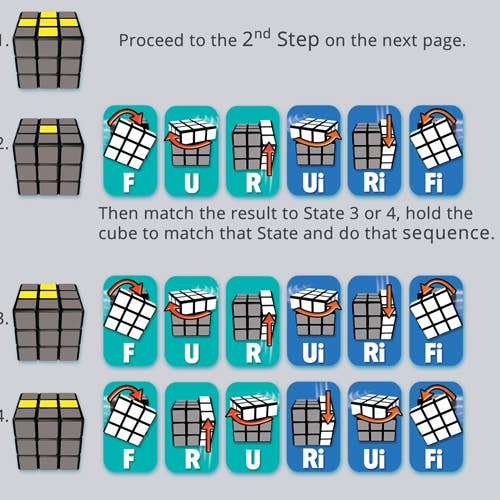
Advanced tracking goes beyond total time. Professional timers allow you to view split times, breaking your solve into segments: Cross, F2L (First Two Layers), OLL (Orientation of Last Layer), and PLL (Permutation of Last Layer).
By analyzing splits, you can pinpoint exactly where you lose time. Are you spending too long planning your cross? Is your F2L execution sluggish? Maybe your last-layer recognition is slow, causing you to hesitate before executing an algorithm. Tracking these segments transforms your timer from a scoreboard into a diagnostic tool. It tells you exactly which part of the puzzle needs your attention during your next practice session.
Advanced Analytics: Turning Data into Actionable Insights
Now that you understand the basics, let's look at how to use advanced analytics to accelerate your learning curve. In 2026, AI-driven insights are no longer science fiction; they are everyday tools for serious cubers.
Heatmaps and Activity Patterns
Platforms like CubeStats utilize activity heatmaps to visualize your practice habits. These calendars show when and how often you cube throughout the week. Consistency is key in speedcubing; solving for one hour on Saturday is less effective than solving for twenty minutes every day.
If your heatmap shows large gaps in activity, it explains plateaus in your progress. Use this data to set realistic goals. Perhaps you need to commit to a "daily streak" challenge. Seeing your consistency visualized can be a powerful motivator to return to the cube after a busy week. Additionally, heatmaps can reveal your peak performance times. Do you solve faster in the morning or late at night? Aligning your practice with your natural cognitive peaks can yield faster improvements.
AI-Powered Weakness Detection
Tools like acubemy represent the cutting edge of tracking technology. Instead of just recording time, these apps use AI to analyze your algorithm execution. By connecting to a smart cube, the system learns which algorithms you struggle with. Did you consistently take extra moves on ZBLL cases? Did you frequently forget an OLL parity algorithm?
The app generates a personalized training plan based on this data. It doesn't just tell you "you are slow at PLL"; it tells you, "You need to drill Case #47 specifically for 15 minutes today." This targeted approach ensures you aren't wasting time reviewing skills you already master. It shifts your practice from grinding to efficient, high-impact drilling.
Benchmarking Against the Global Community
One of the most motivating aspects of modern tracking is the ability to compare yourself to others. WCA Explorer and similar databases allow you to look up any cuber in the world. You can side-by-side compare your stats with competitors, see their PB progression, and even find upcoming competitions in your region.
Seeing where you stand globally provides context. If you are stuck at a 14-second average, knowing that the world average is around 10 seconds gives you a clear target. Conversely, if you are already sub-12, seeing how close you are to the top 1% can drive you to refine your technique further. This competitive element, facilitated by global data tracking, keeps the passion alive.
Building a Sustainable Practice Routine with Data
Tracking data is pointless without a corresponding change in behavior. To truly leverage your progress reports, you need to integrate them into a structured practice routine. Here is a framework for using your tracker to build a winning habit.
The Weekly Review Protocol
Establish a weekly review ritual. Set aside 15 minutes every Sunday to download your session logs from the previous week. Look at your graphs. Did your average improve? Was your standard deviation lower? Read your notes. Most timers allow you to add short text notes after each solve (e.g., "Cross was hard," "Missed OLL").
Reviewing these notes alongside your times reveals patterns. If you notice that every time you practice after 8 PM, your times are slower, adjust your schedule. If you see that your F2L pauses increase when you are tired, prioritize fresh practice sessions. Data-driven adjustments prevent burnout and ensure you are practicing optimally.
Setting SMART Goals Based on Trends
Use your historical data to set SMART goals (Specific, Measurable, Achievable, Relevant, Time-bound). Instead of a vague goal like "get faster," set a goal like "Lower my Ao12 from 14.5s to 13.5s within the next 4 weeks."
Look at your past progress rates. If your average improves by 0.2s per month, set a realistic timeline. Break this down into weekly targets. For example, "This week, I will focus on reducing my F2L transition time by 0.5 seconds." When you achieve these micro-goals, check your tracker to confirm the trend. This creates a feedback loop of continuous improvement.
Ignoring the Noise
Finally, learn to ignore the noise. There will be days where your timer shows a terrible time due to external factors: a bad scramble, a dropped cube, or simply feeling unwell. Do not let a single outlier derail your morale or alter your long-term strategy. Trust the average, not the single. If your weekly trend line is going up, one bad solve in the middle of the pack is irrelevant. Stay disciplined and trust the data over your emotions.
The Psychology of Data: Overcoming the Plateau Effect
As you delve deeper into the world of data-driven cubing, you will inevitably encounter a phenomenon known as the plateau. This is the frustrating period where your times stop improving despite consistent practice and rigorous tracking. In the early stages of learning, progress is often exponential; you learn one algorithm and suddenly drop 30 seconds off your time. However, as you approach higher levels of proficiency, gains become marginal—hundredths of a second at a time. This is where advanced tracking becomes not just a tool for measurement, but a psychological anchor.
When you rely solely on raw numbers, a plateau feels like failure. You see the line on the graph flatten out, and the doubt creeps in: "Am I not talented enough?" or "Have I reached my genetic limit?" By shifting your perspective to view these flat lines as necessary consolidation phases, you change the narrative. In 2026, we understand that skill acquisition is non-linear. The data shows that after every period of rapid improvement, there is a required period of stability where the brain integrates new motor patterns before it can push further.
Tracking helps you identify why you are plateauing. Is it a lack of variety in your scrambles? Are you neglecting a specific step like inspection time? Or perhaps you are suffering from mental fatigue, leading to repetitive errors that your average hides but your split times reveal. When your heatmap shows a decline in session frequency during stressful life periods, you can correlate that with your performance dip. Recognizing these correlations allows you to adjust your lifestyle rather than your technique, realizing that rest is also part of the training data.
Furthermore, data tracking combats the "imposter syndrome" common among advanced solvers. Seeing your name climb the global leaderboards, even slowly, provides objective proof of your hard work. It transforms subjective feelings of "getting better" into concrete evidence of movement. This validation is crucial for maintaining motivation during those long months of grinding sub-second improvements. Remember, the greatest speedcubers in history did not reach their peaks overnight; they were sustained by years of meticulous logging and analysis that most casual observers never saw.
Navigating Competition Logistics Through Analytics
In the competitive sphere, tracking extends beyond personal improvement to strategic preparation for tournaments. The World Cube Association (WCA) regulations are strict, and being unprepared due to a lack of familiarity with timing protocols can cost you valuable ranking points. Modern tracking software now includes features specifically designed to simulate competition environments, ensuring you are ready when the clock starts.
Simulating WCA Scramble Formats
One of the biggest shocks for new competitors is the difference between casual scrambles and official WCA scrambles. Official scrambles are generated using complex algorithms designed to maximize distance from the solved state, often resulting in more difficult last-layer cases. Many home timers allow you to switch scramble generators to "WCA Format." By tracking your performance under these specific conditions weeks before a competition, you can calibrate your expectations. If your Ao12 drops significantly when switching to WCA scrambles on your tracker, you know you need more specific drill time on hard cases before the event.
Inspection Time Optimization
Inspection time—the 15 seconds given before a solve begins—is a critical component of total solve time that is often overlooked. Advanced trackers now allow you to log your inspection duration alongside your solve time. By analyzing this metric over hundreds of solves, you can determine your optimal inspection window. Some solvers benefit from spending 10 seconds looking for patterns and 5 seconds planning; others need the full 15. If your data shows that extending your inspection time by two seconds consistently improves your solve time by three seconds, you have found a free gain. Conversely, if longer inspections lead to rushed mistakes, the data tells you to shorten your look-ahead time.
Gear Calibration and Consistency Checks
Before a major meet, tracking your gear consistency is vital. Different cubes have different friction profiles, turn speeds, and lock-up tendencies. By logging splits on multiple cubes leading up to a competition, you can identify which cube yields the most stable times for you. Perhaps one cube turns faster but has more pop, leading to higher standard deviations, while another is slightly slower but incredibly smooth. Your historical data will reveal which machine performs best under pressure. Additionally, some smart cubes can detect wear and tear; if your move count increases unexpectedly without a change in technique, it might indicate your cube needs lubrication or adjustment, a maintenance tip derived directly from your usage statistics.
Future Trends: AI, Augmented Reality, and the Metacube
As we look toward the horizon of 2026 and beyond, the landscape of progress tracking is poised for a revolution that blends artificial intelligence, augmented reality (AR), and immersive gaming elements. The distinction between "practicing" and "playing" is blurring, creating an ecosystem where improvement happens organically through engagement.
The Rise of Predictive AI Coaching
We are moving past reactive analytics, where software tells you what happened after the fact, toward predictive coaching. Imagine an AI assistant that analyzes your live solving session in real-time. As you twist the layers, the AI predicts your next mistake based on your historical error patterns and offers a subtle haptic cue or visual overlay suggesting a better algorithm choice. In this future, your tracker doesn't just store data; it actively guides your muscle memory formation. It could say, "Based on your last ten F2L sequences, you tend to pause here. Try inserting the pair earlier next time." This level of granular, real-time feedback accelerates the learning curve exponentially, turning every solve into a micro-lesson.
Augmented Reality Overlays
Imagine wearing AR glasses while practicing. Instead of staring at a physical cube, you see digital overlays indicating the optimal path for your cross, highlighting the pairs you should target in F2L, or showing the algorithm you are currently executing. These systems would sync with your smart cube's telemetry data, providing a heads-up display of your current efficiency metrics. If your PLL recognition is slow, the AR interface could subtly highlight the case pattern you are facing, reinforcing pattern recognition without breaking your flow. This integration makes the abstract concept of "tracking progress" tangible and visually intuitive.
Gamification and Social Stacking
The social aspect of speedcubing is becoming increasingly integrated into tracking platforms. We are seeing the rise of "Social Stacking," where groups of friends compete against each other in real-time virtual leagues. Your personal stats feed into a larger community pool, allowing for collaborative challenges. "Can our city beat the average time of Tokyo this week?" Such gamified elements leverage the human desire for connection and competition, making the枯燥 (dull) process of repetition highly engaging. Leaderboards are no longer static lists; they are dynamic ecosystems that evolve daily, driven by the collective data of millions of solvers worldwide.
Frequently Asked Questions (FAQ)
Q: How often should I update my tracking logs to see meaningful trends?
A: Meaningful trends generally require a sample size of at least 20 to 30 solves. While logging every single solve is ideal for maximum accuracy, aiming for a minimum of three sessions per week with five solves each will provide a solid baseline within a month. Quality matters more than quantity; a well-analyzed log of 15 solves is better than a rushed log of 50.
Q: Can I track my progress without buying expensive smart cubes?
A: Absolutely. High-end smart cubes are convenient, but they are not mandatory. Dedicated Stackmat timers paired with free software like csTimer or Twisty Timer offer 99% of the functionality needed for serious tracking. The key is the consistency of the data entry, not the price tag of the hardware. Many top-tier cubers started with nothing more than a phone stopwatch and a notebook.
Q: What is the most important metric for a beginner to focus on?
A: For beginners, the Average of 5 (Ao5) is the most actionable metric. It balances the need for a larger sample size than a single solve with the immediacy of quick results. Focus on lowering your Ao5 while keeping your standard deviation manageable. Once you stabilize your Ao5 around 20-25 seconds, you can then shift focus to the Average of 12 and split times.
Q: How do I handle days where my times are terrible?
A: Treat bad days as data points, not failures. In your tracking notes, record context: Were you sick? Did you sleep poorly? Was the cube too dry? Analyzing the correlation between your life circumstances and your performance helps you build a resilient routine. Trust that over a month, the outliers will average out, and the true trend will emerge.
Conclusion: The Journey of a Thousand Twists
Tracking your Rubik's Cube solving progress is far more than a hobbyist's exercise in number-crunching; it is the foundational discipline that separates dreamers from doers in the world of speedcubing. In 2026, the tools available to us are more powerful and accessible than ever before, offering a crystal-clear lens through which to view our skills, weaknesses, and potential. By embracing automated timing, understanding key statistical metrics, and leveraging advanced analytics, you transform the chaotic act of twisting colors into a structured path toward mastery.
Remember that data is merely a mirror; it reflects your effort, but it does not create it. The magic happens in the moments between the scans, in the quiet concentration of a practice session, and in the resilience to keep turning when the times don't improve. Use your tracker to set goals, diagnose issues, and stay motivated, but never let the numbers replace the joy of the puzzle. The ultimate goal is not just a low average time on a leaderboard, but the deep satisfaction of knowing exactly how far you have come and how much further you can go.
As you close this guide, take a moment to review your own history. Look at your earliest solves and compare them to today. The gap between who you were and who you are is filled with thousands of twists, each one logged, analyzed, and learned from. Keep that momentum going. Log your next solve, analyze your splits, and trust the process. Your Personal Best is waiting just around the corner, guided by the data you choose to collect today. Happy cubing, and may your averages always be low.