Welcome to the new era of speedcubing. If you are reading this in 2026, you know that the hobby has evolved far beyond simply buying a plastic cube and hoping for the best. The gap between a casual solver and a competitive athlete is no longer just about raw finger dexterity; it is about the ecosystem of tools surrounding your practice session. Whether you are training in the bustling streets of Tokyo, the quiet suburbs of Chicago, or a dedicated studio in Austin, Texas, the right setup can shave critical milliseconds off your average time.
Speedcubing is now recognized as a legitimate cognitive sport requiring precision, endurance, and the perfect environment. In this comprehensive guide, we will explore the best accessories for speedcubing practice at home. We will move past the basics to discuss how ergonomic furniture, acoustic treatments, smart technology, and maintenance kits combine to create a "sanctuary" for peak performance. By optimizing every element of your station, you transform a simple hobby into a professional-grade training ground capable of pushing you toward sub-10-second averages.
Why Your Home Setup Dictates Your Personal Best
The psychology of speedcubing is deeply rooted in flow state. To reach this zone, where your mind and body operate in perfect synchronization, external distractions must be eliminated. A cluttered desk, an uncomfortable chair, or background noise from traffic can break your concentration mid-algorithm. Recent studies in sports psychology confirm that environmental consistency directly correlates with reaction times and memory retention in puzzle-solving tasks.
In 2026, the concept of a "Cubing Sanctuary" is more relevant than ever. This isn't just about having a table; it's about curating a space where every tool serves a specific purpose to enhance performance. From the ergonomics of your seating to the acoustic dampening of your walls, these factors determine whether you hit a plateau or smash your personal best (PB). Many solvers overlook the physical toll of thousands of solves, leading to wrist strain and back pain, which inevitably slows down progress. Investing in high-quality accessories is an investment in your long-term health and speed.
Consider the difference between practicing on a wobbly kitchen table versus a height-adjustable, solid wood desk designed for precision work. The stability of the surface affects how smoothly your cube turns. Furthermore, the lighting in your room impacts your ability to read algorithms quickly during inspection. By treating your practice area with the same seriousness as a pro athlete's gym, you signal to your brain that it is time to focus, learn, and execute at maximum capacity.
The Ergonomic Foundation: Chair and Desk Essentials
The most critical accessory you can own is not a cube at all; it is your ergonomic chair. Spending hours hunched over a puzzle can lead to chronic neck strain, carpal tunnel syndrome, and lower back issues. In 2026, modern office furniture has adapted specifically for the needs of serious puzzlers. Look for chairs with adjustable lumbar support, breathable mesh backs, and customizable armrests that allow your shoulders to remain relaxed while you execute fast F2L pairs.
High-end models like the CELLBELL Swift Black Mesh Mid Back Chair have become staples in cubing communities for their ability to provide full-body support during marathon sessions. These chairs ensure that your spine maintains its natural curve, preventing the fatigue that kills momentum during long practice logs. Additionally, your arms need to rest comfortably without lifting your shoulders, which creates tension in your fingers—the very muscles responsible for turning the cube.
Your desk is the foundation of your entire station. Traditional desks often sit too low, forcing your wrists into a bent position that restricts blood flow and reduces dexterity. The ideal solution for 2026 is a height-adjustable standing desk. Brands like Green Soul offer tables with memory presets, allowing you to switch seamlessly between sitting and standing positions. This variability keeps your blood flowing and your energy levels high throughout the day. For those with limited space, wall-mounted folding tables provide a dedicated spot for your timer and mat without consuming valuable floor space.

The Core Toolkit: Timers, Mats, and Scoring Systems
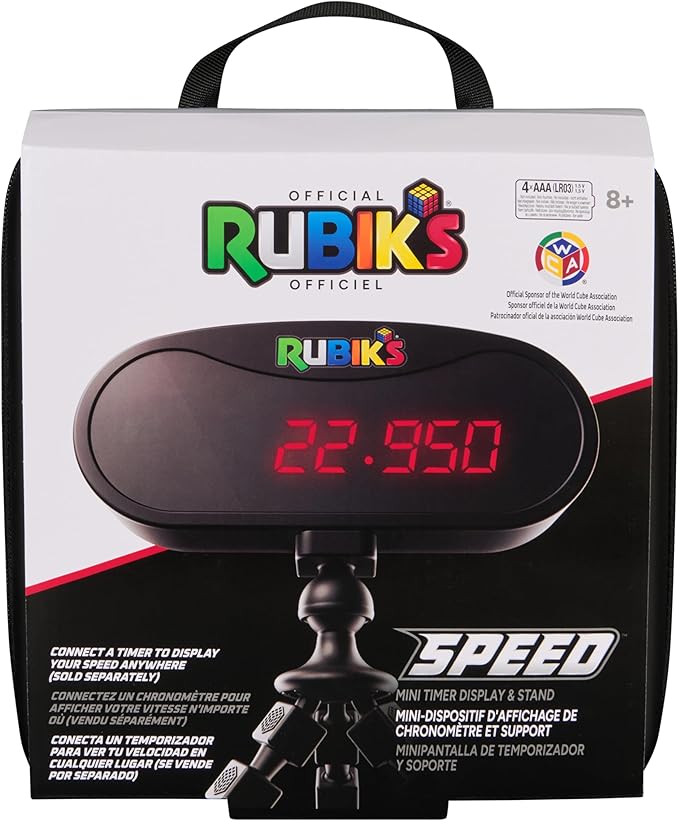
If the chair is the foundation, the timer is the heartbeat of your practice session. In competitive cubing, fractions of a second matter. While smartphone apps exist, a dedicated physical timer provides tactile feedback and eliminates screen distraction. The industry standard in 2026 remains the Stackmat timer, known for its lightning-fast sensor response and reliability. Models like the SpeedStacks G5 Pro are favored by competitors worldwide because they eliminate the "lag" associated with digital screens, ensuring that your start time is recorded the instant your hands leave the pads.
It is crucial to master the transition from inspection to solving. With a good timer, you can practice the ritual of placing your fingers on the pads before the green light appears, then exploding off immediately upon activation. This muscle memory is vital for consistent starts. Many advanced cubers also utilize Timer Displays that sit on the desk, showing your current average and best times clearly without needing to look away from the cube.
Beyond the timer, the solving mat plays a surprisingly significant role. A high-quality mat provides a consistent friction surface, preventing the cube from sliding unpredictably across the desk. It also protects your expensive cubes from scratches and dust. In a home setting, a mat with a defined boundary helps keep your workspace organized, reducing visual clutter. Some mats even feature integrated cup holders or storage pockets for lube and tools, creating a streamlined workflow.
Digital Integration: Smart Cubes and Apps
The year 2026 marks the golden age of smart cubing technology. Traditional mechanical timers are being complemented—and sometimes replaced—by Bluetooth-enabled devices that sync directly with mobile apps and cloud databases. These systems automatically record your solve times, calculate your averages, and track your progress over months or years. Apps like CSTimer have evolved into comprehensive training platforms, offering features such as virtual cubes, random scramble generators, and algorithm trainers that adapt to your skill level.
For the tech-savvy cuber, Smart Cubes (such as the GAN Smart series or MoYu iCube) offer an entirely new dimension to practice. These cubes connect to your phone via Wi-Fi or Bluetooth, providing real-time data on your turn speed, pause detection, and mistake frequency. You can analyze exactly where you lost time in a solve, allowing for targeted practice on weak areas. While some purists prefer traditional plastic cubes for competitions, using a smart cube at home for analysis is an unbeatable way to accelerate improvement.
Furthermore, many modern setups include scramble generators projected onto a secondary screen or tablet. This allows you to visualize the solved state while looking at the scrambled cube, aiding in pattern recognition. The integration of hardware and software creates a feedback loop that traditional methods cannot match, making your home practice session as data-driven as a professional coaching session.
Acoustic Control and Environmental Optimization
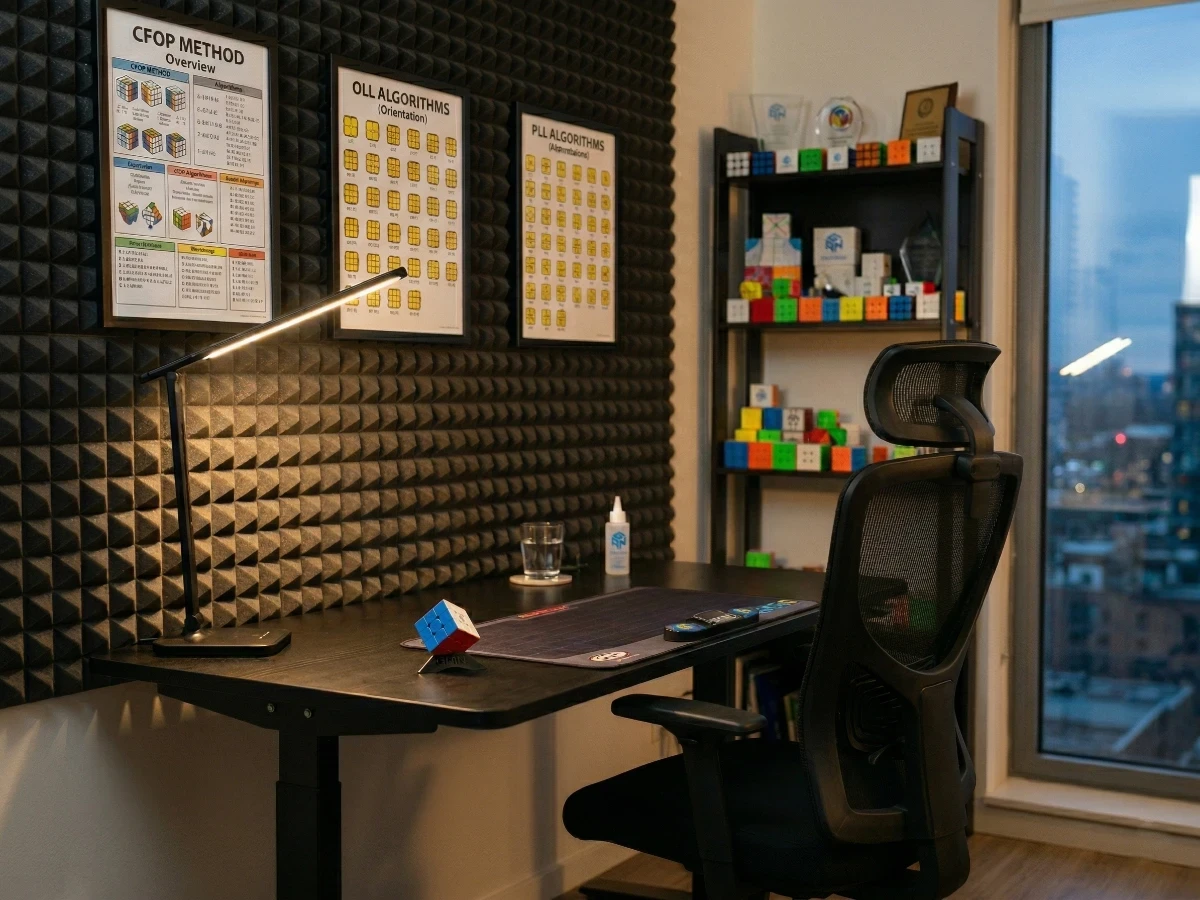
Concentration is the backbone of speedcubing. External noises—traffic, family conversations, or even the hum of a refrigerator—can break your flow during a critical solve. Achieving near-total silence allows you to hear the clicks and snaps of your cube, providing vital tactile and auditory feedback that guides your fingers. To minimize echo and external noise, many cubers now invest in sound-absorbing materials for their walls.
Premium acoustic foam panels, such as the YGM Acoustic Foams® Pyramid Acoustic, are becoming essential for serious practitioners. These 12-inch by 12-inch panels, made of 50-density foam, significantly dampen room reflections and create a quiet, focused atmosphere. By installing these on the walls behind your desk, you transform a noisy living room into a professional recording studio for your brain. The reduction in reverberation helps you isolate the subtle sounds of the mechanism, which is crucial for detecting misalignments or sticky spots instantly.
Lighting is another often-overlooked environmental factor. Harsh overhead lights can cause glare on the stickers of your cube, making it difficult to read colors quickly. Instead, opt for adjustable LED desk lamps with warm, diffused light. Position the light source to illuminate the cube evenly without casting shadows from your hands. Proper lighting reduces eye strain during long inspection periods, ensuring that your eyes remain sharp when scanning the scramble.
Creating a dedicated corner in your home, perhaps in a quiet neighborhood like the suburbs of Atlanta or a serene apartment in Seattle, can make all the difference. By controlling the sound, light, and temperature of your environment, you remove variables that could hinder your performance. A well-optimized room becomes a trigger for your brain to enter "solve mode" automatically whenever you sit down.
Maintenance and Lubrication: The Secret to Smooth Turns
Even the fastest cube in the world will feel sluggish if it is not properly maintained. Lubrication is the unsung hero of speedcubing. Over time, factory grease dries out, attracting dust and increasing friction. Regular maintenance ensures that your cube turns with buttery smoothness, allowing for faster layer rotations and smoother corner cutting. In 2026, the market offers a wide variety of specialized lubes ranging from thin oils for quick adjustment to thick greases for heavy-duty stability.
A complete lubrication kit should include syringes for precise application, cleaning wipes to remove old residue, and a variety of viscosities. Brands like CubeLube and various DIY blends are popular among enthusiasts who want total control over their cube's feel. Applying lube correctly involves taking the cube apart, cleaning the core and stickers, and applying drops to the contact points between pieces. This process not only improves speed but also extends the lifespan of your internal springs and bearings.
Beyond lubrication, replacement parts are essential for longevity. Springs can lose tension, stickers can peel, and center caps can crack. Keeping a small inventory of spare springs, screws, and stickers means you can fix a cube instantly rather than stopping your practice to order new parts. Many top-tier brands offer modular designs where individual components can be swapped out to customize the tension and weight distribution of the cube to your exact preference.
Cleaning your cube regularly is equally important. Dust accumulation inside the mechanism is a common cause of sticking. Using compressed air or a soft brush to clear out debris after every few months of heavy use keeps the internals running smoothly. Some cubers also use cleaning sprays specifically designed for plastic and electronics to wipe down the exterior, removing fingerprints and oils that can degrade sticker adhesion over time.
Customization and Modding Culture
The culture of modding has flourished in recent years, offering solvers the ability to tailor their equipment perfectly. Center caps come in various materials, including metal, plastic, and even wood, allowing for aesthetic customization. Magnet kits enable solvers to add magnetic stabilization to older cubes, giving them the snap-back feeling of modern speed cubes without buying a new one. These upgrades are cost-effective ways to breathe new life into vintage puzzles.
Custom stickers are another avenue for expression. While many prefer original factory stickers for consistency, custom vinyl wraps allow for unique color schemes that match your personality or team branding. High-quality matte or glossy finishes can reduce glare and improve color contrast, making it easier to distinguish adjacent faces quickly. Whether you choose to go fully stock or dive deep into the modding scene, the goal remains the same: achieving the perfect balance of speed, stability, and comfort.
Protection, Storage, and Portability
Speedcubes are intricate machines filled with tiny magnets and springs. Protecting them from drops, dust, and humidity is paramount, especially if you travel to local competitions or carry your gear to community meetups in cities like Denver or Boston. Individual cube bags are an essential accessory for any serious cuber. These padded cases prevent damage during transit and keep dust out when the cube is not in use.
There are numerous styles available, from simple drawstring pouches to hard-shell carrying cases with custom foam inserts. Hard cases offer the highest level of protection, safeguarding your prized puzzles against crushing forces. For collectors with large inventories, storage boxes with dividers help keep everything organized and accessible. Transparent cases are particularly useful for display purposes, allowing you to show off your collection while keeping it safe.
Cube stands serve a dual purpose: protection and presentation. When you aren't solving, placing your cube on a stand prevents it from rolling off the desk and getting damaged. Stands also make excellent conversation starters during local club meetings. Many stands are designed with specific angles to hold multiple cubes simultaneously, saving desk space and adding a professional touch to your setup. Choosing a stand that matches your cube's color scheme or logo can enhance the overall aesthetic of your cubing station.
For those who commute, a compact backpack or tote bag designed specifically for twisty puzzles is invaluable. These bags often feature dedicated compartments for cubes, timers, lube, and tools, ensuring that everything fits securely without tangling. A good travel bag makes it easy to drop by a coffee shop or library to practice during lunch breaks, turning idle time into productive training sessions.
Building the Ultimate Community Hub
While much of speedcubing is a solitary pursuit, building a community hub at home can boost motivation and learning. Setting up a small area with a whiteboard for writing algorithms, a shelf for displaying trophies, and a chalkboard for teaching beginners can transform your room into a mini-academy. Hosting weekly solve-ins with friends or participating in online Discord servers from your dedicated space fosters a sense of belonging and shared passion.
Local clubs in areas like Portland or Minneapolis often organize gatherings where members share tips on setup and maintenance. Having a well-equipped home base makes you a valuable resource within these groups. You might find yourself lending out your premium timer or sharing your lube recipes with fellow enthusiasts. This exchange of knowledge not only strengthens your own skills but also contributes to the growth of the broader cubing community.
Moreover, a dedicated space encourages consistency. When you have a specific spot reserved for cubing, your brain associates that location with practice and improvement. This psychological anchor helps overcome procrastination and builds a habit of daily training. Whether you are working towards a world record or simply enjoying the challenge of solving faster, having a sanctuary makes the journey more enjoyable and sustainable.
The Psychology of Consistency: Mental Training Tools
While physical accessories provide the hardware for speedcubing, mental training tools provide the software. In 2026, the line between physical practice and mental conditioning has blurred significantly. Many advanced cubers now integrate mental visualization apps and algorithm flashcards directly into their daily routine. These digital tools allow you to rehearse complex algorithms in your mind without moving a single piece, strengthening neural pathways associated with pattern recognition. Apps like SpeedCubeSolver or custom-built VR environments enable solvers to "walk through" a scramble, visualizing the solution path before ever touching the cube. This cognitive warm-up can reduce solve times by improving anticipation and reducing hesitation during critical decision points.
Furthermore, breathing and focus exercises have become standard components of the pre-solve ritual. Just as an athlete stretches before a race, a speedcuber must center their mind before inspection begins. Portable sound generators that emit white noise or binaural beats can help induce a state of flow more quickly. Some high-end setups even include haptic feedback devices that simulate the tactile sensation of turning a cube, allowing users to practice finger tricks while completely stationary. This hybrid approach to training ensures that both the body and the brain are operating at peak efficiency, minimizing the gap between theoretical knowledge and practical execution.
Budget-Friendly Upgrades for Aspiring Champions
Not every solver needs to invest thousands of dollars to see significant improvements. There is a thriving ecosystem of budget-friendly accessories that offer professional-grade performance at a fraction of the cost. For instance, generic silicone mats from local craft stores can be cut to size and provide excellent friction control without breaking the bank. Similarly, DIY lubrication kits made from household items like PTFE powder mixed with light oil can yield surprisingly smooth results for cubes that feel gritty straight out of the box.
Beginners often overlook the value of second-hand timers. While new Stackmats are reliable, many competitive timers from previous years remain in excellent condition on secondary markets. These older models often lack the latest Bluetooth features but retain the core mechanical reliability needed for serious practice. Swapping out cheap plastic springs for aftermarket metal ones in entry-level cubes can also double the lifespan and improve the turning quality immediately. By strategically allocating funds—spending big on the chair and timer, but saving on storage and decorative items—you can build a formidable setup without financial strain. The key is identifying which accessories directly impact your solve time versus those that are purely aesthetic.
Future Trends: AI and Predictive Analytics
Looking ahead, the integration of Artificial Intelligence (AI) into speedcubing accessories promises to revolutionize how we train at home. We are already seeing early adopters use AI-driven cameras that track hand movements and cube rotation in real-time. These systems can analyze your solve frame-by-frame, identifying micro-hesitations or inefficient finger movements that the human eye might miss. Imagine an app that listens to your solves and says, "You paused for 0.3 seconds on the F2L pair involving the red-orange edge; try this specific algorithm next."
Predictive analytics will soon allow smart desks and timers to generate personalized training regimens based on your historical data. If the system detects that you consistently struggle withOLL parity cases, it will automatically adjust your scramble generator to present those scenarios more frequently until mastery is achieved. This level of personalization transforms the home practice session from a repetitive grind into a targeted coaching session. As these technologies become more affordable and accessible throughout 2026 and beyond, the barrier to entry for elite-level training will continue to lower, democratizing access to world-class coaching tools.
Frequently Asked Questions (FAQ)
Q: Do I really need a dedicated desk for speedcubing, or can I practice comfortably on a dining table?
A: While you can technically practice on any flat surface, a dedicated desk is highly recommended for serious improvement. Dining tables are often too low, forcing your wrists into an awkward angle that restricts blood flow and reduces dexterity over long sessions. A height-adjustable desk allows you to customize the surface to match your arm length, ensuring optimal ergonomics. Furthermore, a dedicated space helps eliminate distractions and creates a psychological trigger for focus. If space is limited, consider a wall-mounted folding table or a high-quality lap desk with a wrist rest, but avoid surfaces that wobble or lack stability.
Q: What is the most important maintenance task I should perform weekly?
A: The single most impactful maintenance task is disassembly and cleaning followed by re-lubrication. Every few weeks, you should take your primary practice cube apart completely. Use a soft brush and compressed air to remove dried grease and dust from the core and internal mechanisms. Wipe down all plastic pieces with a microfiber cloth and apply a fresh layer of appropriate viscosity lube before reassembly. Neglecting this leads to increased friction, inconsistent turns, and eventual wear on the bearings. Even if your cube feels fine, internal grit builds up silently and will eventually degrade performance.
Q: Can smart cubes replace traditional plastic cubes for competition preparation?
A: Smart cubes are excellent for analysis and learning algorithms at home due to their connectivity and data tracking capabilities. However, they cannot fully replace traditional plastic cubes for competition prep. The weight distribution, tactile feedback, and spring tension of a smart cube often differ significantly from official competition-legal cubes like the GAN 11 M Pro or MoYu RS3 M. Relying solely on a smart cube can lead to muscle memory issues regarding weight and resistance. The best approach is to use a smart cube for daily drills and analysis, but dedicate specific practice sessions to traditional cubes that mimic the exact feel of your competition equipment.
Q: How much does a complete professional cubing setup typically cost in 2026?
A: Costs vary widely depending on your goals. A basic functional setup with a decent cube, a Stackmat timer, and a mat can be assembled for under $50. A mid-range professional setup, including an ergonomic chair, a high-end desk, a premium cube, and acoustic treatments, typically ranges from $300 to $600. For an elite sanctuary featuring a standing desk, top-tier furniture, multiple smart cubes, and comprehensive soundproofing, investments can easily exceed $1,000. Remember that this is a long-term investment; prioritize ergonomics and reliability over flashy aesthetics to ensure your gear serves you for years.
Conclusion: Your Journey to Mastery Starts Here
The journey to becoming a speedcubing master is as much about the environment you create as it is about the algorithms you memorize. In 2026, the tools available to home practitioners are more powerful, interconnected, and accessible than ever before. From the ergonomic support of a specialized chair to the precision of a Bluetooth-enabled timer, every accessory plays a vital role in refining your skills. By curating a "Cubing Sanctuary" that addresses your physical comfort, acoustic needs, and mental focus, you create an ecosystem where progress is inevitable.
Remember that perfection is not about having the most expensive gear; it is about having the right gear for your specific style and goals. Whether you are a beginner looking to break the 2-minute barrier or an expert chasing sub-6 second averages, optimizing your home station is the first step toward unlocking your full potential. The intersection of technology, ergonomics, and passion has never been stronger. So, clear your desk, tune your timer, and let the clicks of your cube mark the beginning of your fastest era yet. The world of speedcubing awaits, and with the right accessories, there is no limit to how fast you can go.