
In 2026, fifty years after its creation, the Rubik's Cube remains an undisputed icon of human ingenuity. What began as a humble teaching aid for architecture students in Budapest has evolved into a global phenomenon that transcends generations, languages, and cultures. This article explores the complete history of Ernő Rubik and the puzzle revolution, detailing how a single professor's struggle to solve his own invention changed the world forever. From the wooden prototypes of the 1970s to the high-speed competitions of today, the journey of the cube is a testament to the power of problem-solving and the enduring appeal of challenge.
The Architectural Genesis: A Professor's Classroom Challenge
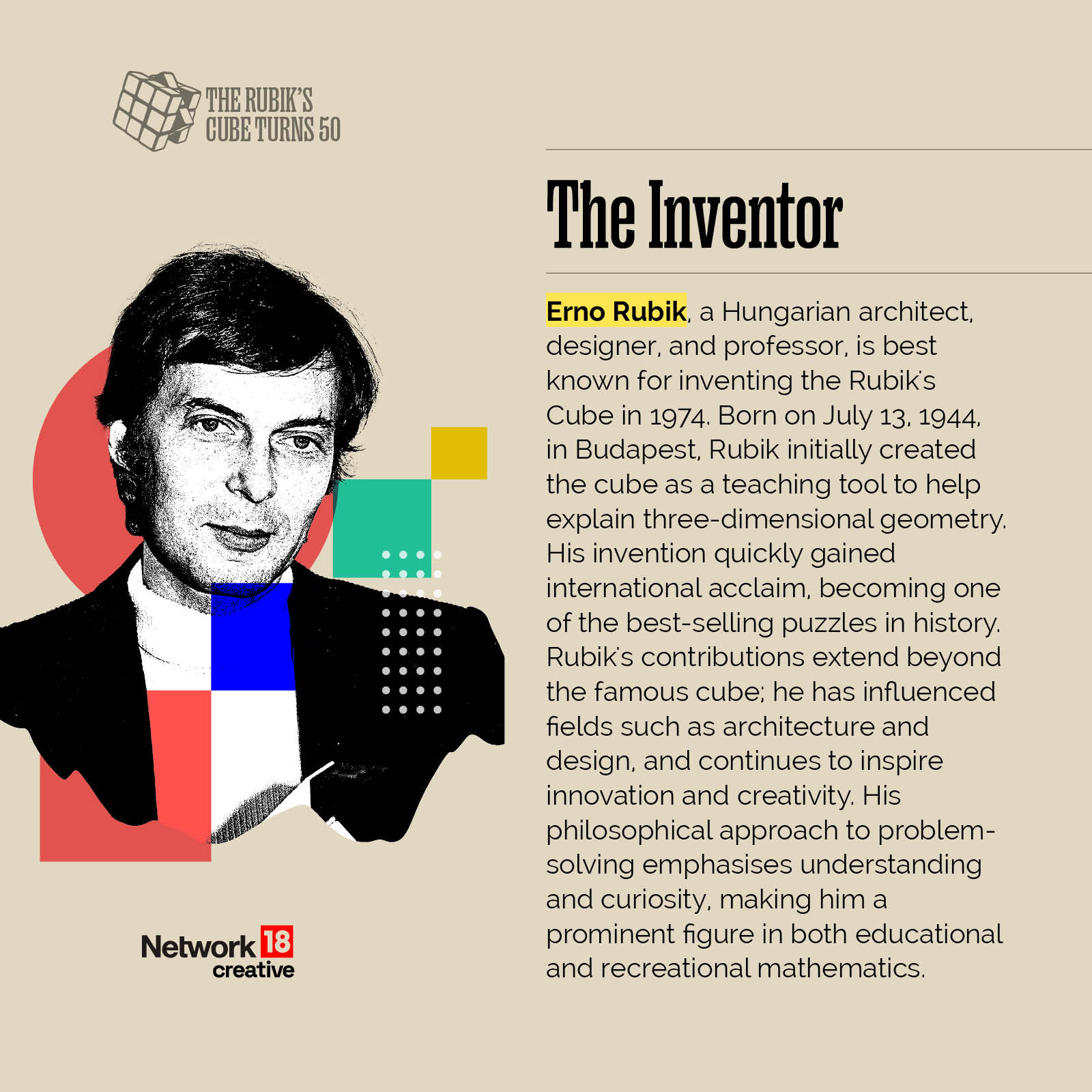
The story of the Rubik's Cube does not begin in a toy factory or a marketing boardroom; it starts in a classroom at the Academy of Applied Arts and Crafts in Budapest, Hungary. In 1974, Ernő Rubik, then a 29-year-old professor of interior design and three-dimensional sculpture, faced a specific pedagogical challenge. His students were struggling to visualize complex spatial relationships and structural integrity in three dimensions. Traditional flat drawings and two-dimensional models were insufficient for conveying the depth required for modern architectural design.
Rubik wanted a physical tool that could demonstrate how individual components interact within a unified structure while maintaining independence of movement. He envisioned a mechanism where blocks could rotate freely on multiple axes without falling apart. This was not merely a toy; it was a mechanical model designed to teach algebraic group theory and spatial logic. As a man deeply rooted in engineering and design, Rubik approached the problem with the mindset of an architect rather than a toy manufacturer.
He began experimenting with various materials, eventually settling on wood because it was readily available in his school workshop and did not require sophisticated machinery. Using simple tools like drills, elastic bands, and cutting knives, he constructed the first prototype. This initial version consisted of twenty-seven smaller wooden cubes arranged in a larger cube formation. The connections were held together by rubber bands, a makeshift solution that would later be refined into the intricate plastic interlocking mechanism we know today.
The Month-Long Struggle to Solve His Own Creation
The most ironic and fascinating chapter in this history is that the inventor could not solve his own invention immediately. After constructing the wooden prototype, Rubik scrambled the colored faces to test its functionality. He assumed that if the pieces moved independently, they could simply be returned to their original state by reversing the moves. However, he quickly discovered that this assumption was flawed. The internal mechanics allowed for permutations that seemed impossible to resolve without undoing every single move made previously.
It took Rubik over one month of intense, solitary effort to figure out how to restore the cube to its solved state. During this period, he developed the fundamental algorithms and sequences of moves that form the basis of all solving methods used today. He realized that the cube was not just a static object but a dynamic system with deep mathematical properties. This personal struggle transformed the object from a simple teaching aid into a genuine puzzle, one that required logic, patience, and pattern recognition to master.
Once he finally solved it, Rubik recognized the potential of his creation. He understood that the difficulty lay not in the complexity of the mechanism, but in the sheer number of possible combinations. The cube presented a perfect storm of simplicity in appearance and complexity in execution. It was a tangible representation of abstract mathematics, making it an ideal tool for education, yet its addictive nature suggested it could be much more.
From Budapest to the World: The Patent and the Magic Cube
Following the success of his prototype, Rubik sought to protect his intellectual property. In January 1975, he applied for a patent for the mechanism used in his rotating cube. By March 1977, he received Hungarian Patent HU00170062. At this time, Hungary was part of the Eastern Bloc, under communist rule, which imposed strict controls on exports and international trade. This political landscape posed a significant hurdle for bringing the invention to a global market.
Rubik initially partnered with Politechnika Ipari Szövetkezet, a Hungarian cooperative known for manufacturing plastic chess sets and similar games. They produced the first commercial versions of the puzzle, which were sold under the Hungarian name "Bűvös Kocka," translating to "Magic Cube." Unlike the Western perception of toys as mere entertainment, the Hungarian version retained its identity as a serious educational tool, though its colorful plastic construction hinted at broader appeal.
The breakthrough came when Tibor Laczi, a Hungarian businessman based in Austria, encountered the Magic Cube at a trade fair in Budapest in 1979. Recognizing its explosive potential, Laczi took the cube to the Nuremberg Toy Fair in Germany. There, it captivated attendees and caught the attention of Ideal Toy Corp. of New York. Ideal agreed to license the product for international distribution, renaming it the "Rubik's Cube" to honor its creator and make it more marketable in English-speaking markets.
The 1980s Cube Craze: A Global Phenomenon
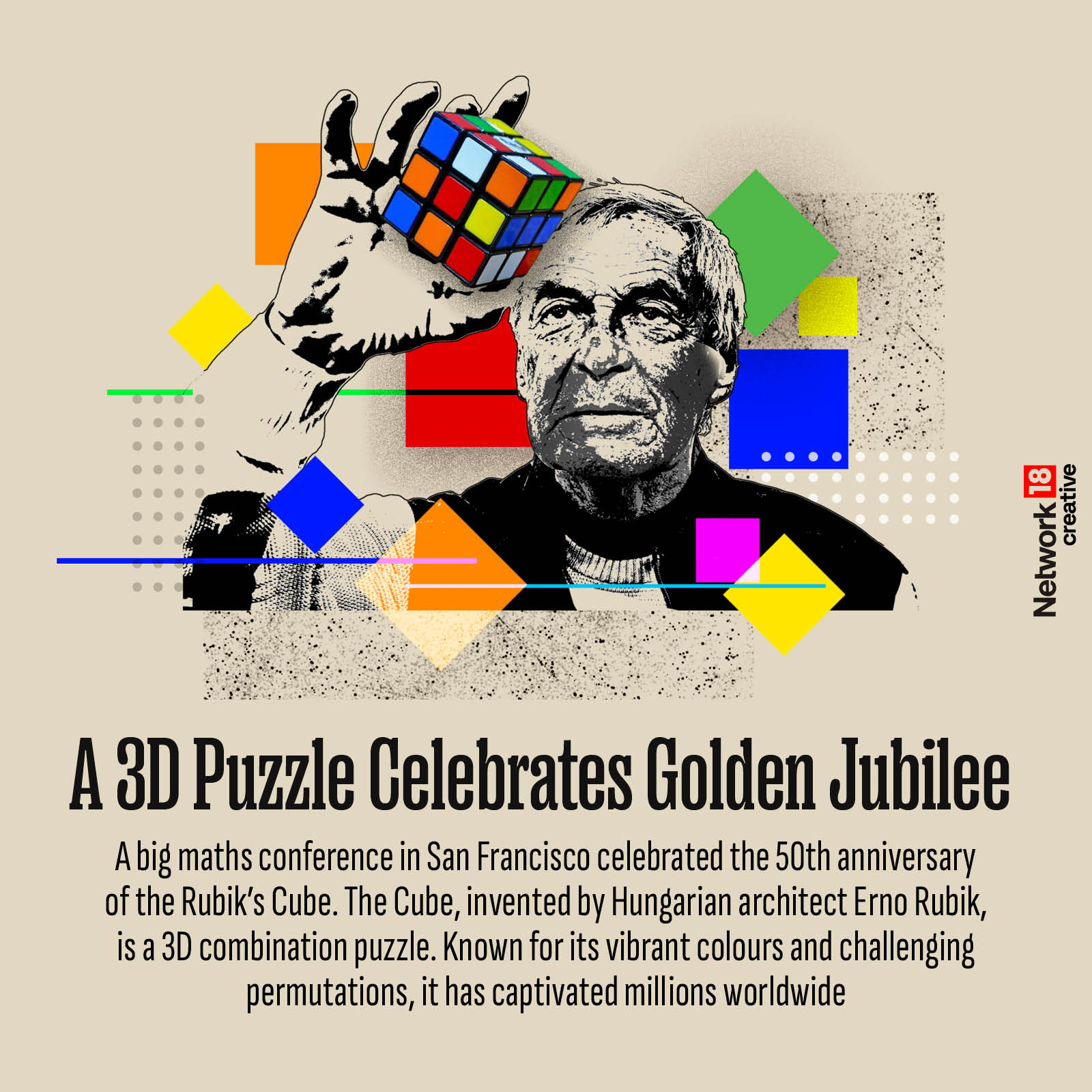
When the Rubik's Cube launched globally in 1980, it sparked a frenzy unlike anything seen in the toy industry prior. The combination of its visual appeal, the mystery of its unsolved state, and the word-of-mouth marketing created a cultural explosion. Within just three years, over 100 million authorized units were sold worldwide. Estimates suggest that an additional 50 million unauthorized imitations flooded the market, particularly in Asia, further cementing its status as a household name.
The craze was fueled by media coverage, magazine articles, and television appearances. Children and adults alike became obsessed with mastering the puzzle. Over 50 books were published dedicated solely to explaining how to solve the cube, ranging from simple step-by-step guides to advanced mathematical analyses. The cube became a symbol of intelligence and perseverance, appearing in movies, music videos, and even political cartoons.
However, the initial hype eventually led to a decline in sales by 1983. The novelty wore off for many consumers, and warehouses filled with unsold inventory. Many critics declared the cube a dead fad, destined to join the ranks of other short-lived trends. Yet, beneath the surface of declining retail sales, a different kind of revolution was brewing—one that would redefine the puzzle forever.
The Mathematical Heart: Group Theory and Combinatorial Complexity
While the public saw a colorful toy, mathematicians and scientists saw a profound demonstration of abstract algebra. The Rubik's Cube is a physical manifestation of a mathematical group, specifically the symmetry group of the cube. Each twist of a face represents a permutation of the cube's 20 movable pieces (excluding the fixed center pieces in some models, though standard cubes have 6 fixed centers).
The total number of possible permutations is staggering. The exact number of unique configurations is 43,252,003,274,489,856,000, often rounded to 43 quintillion. To put this in perspective, if every person on Earth (roughly 8 billion in 2026) tried to solve a new scramble once every second, non-stop, it would take hundreds of millions of years to try every combination. This immense complexity ensures that the puzzle never truly loses its challenge, regardless of how many times it has been solved before.
In 2010, a team of researchers using supercomputers proved what became known as "God's Number." They demonstrated that any scrambled Rubik's Cube can be solved in 20 moves or less. This discovery highlighted the efficiency of the cube's underlying structure and opened new avenues for algorithmic research. It showed that even in a system with quadrillions of possibilities, there is a shortest path to order hidden within the chaos.
The Rise of Speedcubing and Competitive Solving
As the initial retail craze faded in the late 1980s, a subculture emerged that kept the cube alive: speedcubing. What started as casual attempts to beat personal bests evolved into organized competitive events. The first official Rubik's Cube World Championship was held in Budapest in 1982, won by Minh Thai with a time of 22.95 seconds. Fast forward to 2026, and the sport has matured into a highly professionalized discipline with global tours, sponsorships, and record-breaking performances.
Modern speedcubers utilize specialized cubes designed for smooth turning and quick resets. These puzzles feature magnetic mechanisms and optimized internal geometries that allow solvers to execute algorithms at incredible speeds. The current world record for a single solve stands at an astonishing 3.13 seconds, set by Max Park in 2023. This is a dramatic improvement from the nearly 23-second average of forty years prior, showcasing the rapid evolution of both hardware and human technique.
Competitions now follow strict guidelines set by the World Cube Association (WCA). Events include not only single solves but also averages of five attempts, blindfolded solving, one-handed solving, and even multi-cube challenges. The community has grown into a vibrant network of enthusiasts who share tutorials, analyze algorithms, and push the boundaries of human cognition. The cube has become a bridge between hobbyists and professionals, uniting people across borders through a shared love of challenge.
Beyond the Cube: Ernő Rubik's Later Innovations and Education
Contrary to the belief that Ernő Rubik retired after his famous invention, he continued to innovate throughout his career. In the 1980s, he introduced several other successful puzzles, including the Rubik's Snake in 1981 and Rubik's Magic in 1986. The Snake, consisting of interconnected triangular prisms, allows users to create countless shapes, while Magic involves sliding tiles to reveal images. Both products sold millions of units worldwide, proving Rubik's ability to design engaging geometric challenges beyond the classic 3×3 format.
The Shift Toward STEM Education and Science Promotion
In recent decades, Rubik's focus has shifted significantly toward promoting science in education. He founded organizations such as the Rubik Learning Initiative and became involved with the Judit Polgar Foundation, which supports young chess prodigies. These efforts aim to engage students in science, mathematics, and problem-solving at a young age, using the cube as a gateway to understanding complex concepts.
Rubik believes that the cube teaches valuable life skills beyond mathematics. It fosters spatial reasoning, pattern recognition, and resilience. When a solver fails, they learn to analyze their mistakes, adjust their strategy, and try again. This growth mindset is crucial in today's rapidly changing world, where adaptability and critical thinking are more important than ever. Through workshops and exhibitions, Rubik encourages educators to integrate these types of tactile learning tools into their curricula.
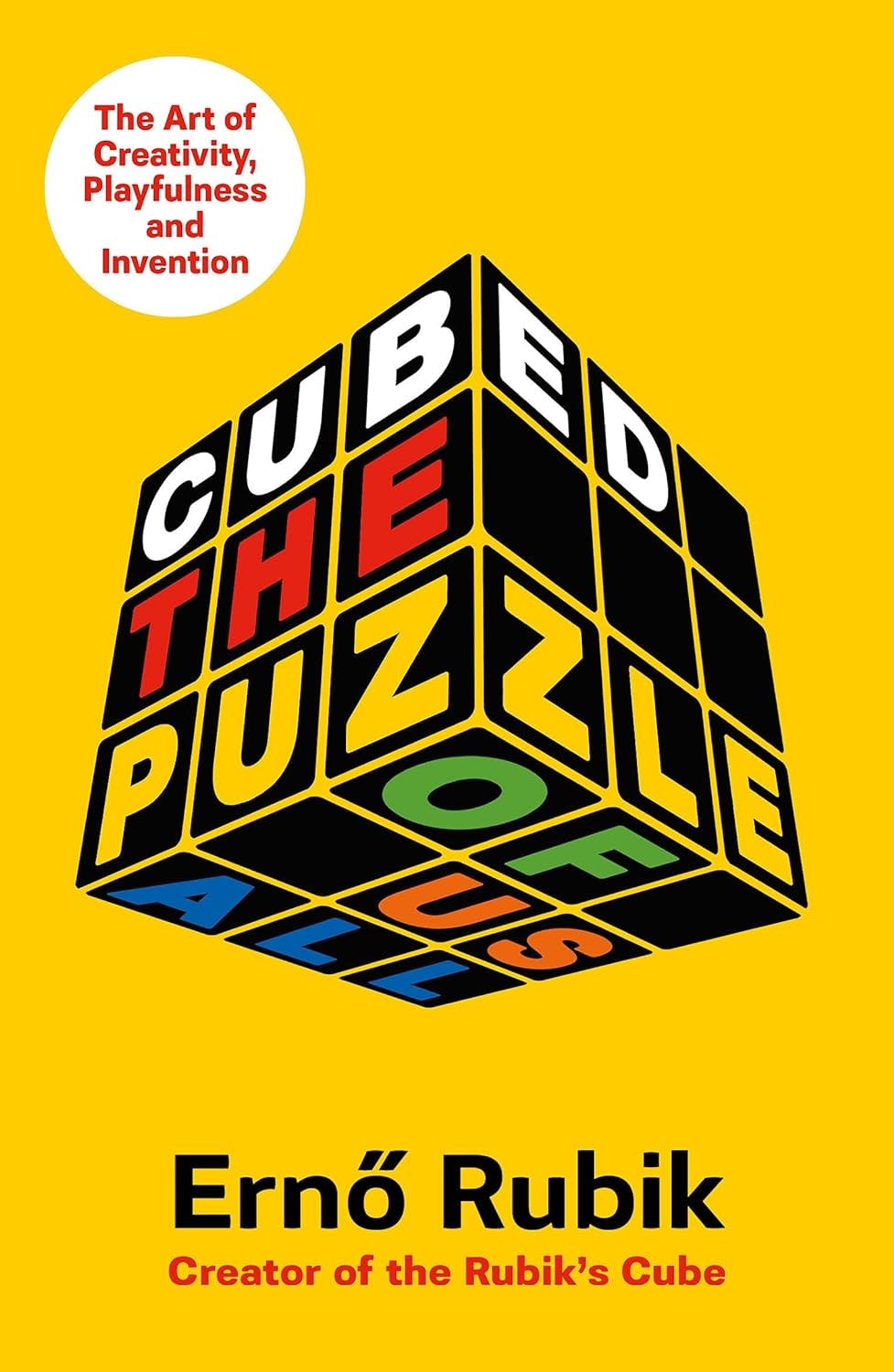
His memoir, Cubed: The Puzzle of Us All, published in 2008, reflects on the cultural impact of the cube and his personal journey. In it, he discusses how the puzzle connects people across cultures and generations, serving as a universal language of logic and creativity. The book serves as a historical document, capturing the essence of the revolution he inadvertently started.
The Modern Era: Acquisitions, Technology, and Future Horizons
The landscape of the Rubik brand has undergone significant changes in the 21st century. In 2021, the Canadian children's entertainment company Spin Master acquired the rights to the Rubik's brand. This acquisition brought renewed investment in product development, licensing, and global marketing strategies. Spin Master has worked to modernize the brand while respecting its heritage, introducing new variants, digital apps, and educational kits tailored for the modern consumer.
Technology has also played a pivotal role in the cube's evolution. In 2026, smart cubes equipped with sensors and Bluetooth connectivity allow users to track their progress, receive hints, and compete online against players worldwide. These devices sync with mobile applications that offer guided tutorials, random scrambles, and leaderboards. While purists argue that traditional cubes offer a purer experience, technology has undeniably expanded the reach of the puzzle, attracting younger generations who are comfortable with digital interfaces.
Furthermore, the cube continues to inspire artistic and scientific endeavors. Artists create massive installations made of thousands of cubes, while scientists use the principles of the cube to study neuroplasticity and cognitive development. The legacy of Ernő Rubik extends far beyond a simple toy; it is a catalyst for continuous learning and exploration. As we look toward the future, the cube remains relevant, adapting to new technologies while retaining its core appeal.
Why the Revolution Endures Half a Century Later
The reason the puzzle revolution initiated by Ernő Rubik has lasted for fifty years lies in its unique balance of simplicity and depth. On the surface, it appears to be a trivial game of matching colors. Beneath that surface, however, lies a universe of mathematical beauty and psychological challenge. No matter how advanced our technology becomes, humans crave tangible problems to solve. The Rubik's Cube offers a perfect medium for this need.
It democratizes intelligence. You do not need a degree in physics or mathematics to enjoy the cube; you only need curiosity and persistence. This accessibility has allowed it to thrive in diverse environments, from impoverished communities in developing nations to luxury boutiques in major cities. It bridges the gap between the young and the old, the skilled and the novice.
Moreover, the cube has become a symbol of hope and achievement. For many, solving the cube for the first time is a milestone moment of personal triumph. It proves that seemingly impossible tasks can be broken down into manageable steps. In an era of instant gratification and digital shortcuts, the cube demands time, effort, and dedication, making the eventual solution feel even more rewarding.
The Cultural Metamorphosis: From Fad to Timeless Symbol
The journey of the Rubik's Cube from a novelty item to a cultural cornerstone is a study in resilience and adaptation. In the early 1980s, when the world was gripped by the initial frenzy, the cube was often viewed with suspicion by parents and educators who feared it was merely a distraction from "real" learning. However, as decades passed, that perception shifted dramatically. What was once dismissed as a passing fad transformed into an enduring symbol of intellectual curiosity. By 2026, the cube is no longer just a toy; it is a piece of history, a teaching aid, a competitive sport, and a work of art all rolled into one plastic package.
This metamorphosis was driven by the community itself. Unlike many consumer products that rely on top-down marketing to sustain interest, the Rubik's Cube thrived on grassroots enthusiasm. Online forums, video sharing platforms, and social media groups created spaces where enthusiasts could share solutions, debate strategies, and celebrate record-breaking feats. These digital communities kept the flame alive during the quiet years of the late 1990s and early 2000s, ensuring that when interest waned in physical stores, it burned brightly in the virtual realm. The internet turned isolated solvers into a global network, fostering a sense of belonging among people who might never meet in person but shared a common passion for twisting and turning.
Furthermore, the cube's appearance in high culture solidified its status. It featured prominently in films like Die Hard with a Vengeance, where it served as a critical plot device in a deadly game of wits. In music videos, fashion shows, and political rallies, the cube became a shorthand for intelligence, chaos, and order. Its geometric perfection made it a favorite subject for photographers and artists, who appreciated the interplay of light and color on its rotating faces. This widespread visibility ensured that even those who had never held a cube in their hands understood its significance, embedding it deep into the collective consciousness of modern society.
The Future of Twist: Innovation and Global Impact
As we stand in 2026, looking back at fifty years of revolution, the future of the Rubik's brand appears brighter than ever. The acquisition by Spin Master in 2021 was not merely a corporate transaction; it was a strategic reinvestment in the soul of the puzzle. Under new leadership, the brand has embraced innovation without losing its identity. New product lines cater to diverse interests, from giant floor-sized cubes designed for team-building exercises to miniature keychain versions for everyday carry. There are also editions tailored for specific disabilities, featuring larger pieces and tactile feedback for visually impaired users, ensuring that the spirit of inclusion continues to grow.
Education remains at the heart of Ernő Rubik's vision, and this focus has only intensified. Schools around the world now integrate cube-solving into their STEM curricula, recognizing the tangible benefits for cognitive development. Studies have shown that regular engagement with the cube improves memory retention, enhances spatial visualization skills, and boosts problem-solving agility. In 2026, universities offer courses specifically dedicated to the mathematics of the cube, exploring group theory, algorithms, and computational complexity through the lens of this beloved object. The classroom has become a laboratory for discovery, where students learn that failure is not an endpoint but a necessary step toward mastery.
Moreover, the global impact of the cube extends beyond individual achievement. In regions facing economic hardship, the low cost of the cube makes it an accessible tool for empowerment. NGOs and educational charities distribute thousands of cubes to children in developing nations, using them as a means to teach logic and patience. The cube has proven to be a universal language, capable of transcending barriers of language, religion, and politics. In a world often divided by conflict, the simple act of solving a cube brings people together, creating moments of shared joy and accomplishment that transcend cultural differences.
A Legacy Written in Moves
The legacy of Ernő Rubik is not defined solely by the invention of a puzzle, but by the ripple effects that invention created. He did not set out to change the world; he set out to help his students understand space. Yet, in doing so, he inadvertently sparked a revolution that would touch billions of lives. The cube stands as a testament to the power of simplicity, proving that profound ideas can emerge from humble beginnings. It reminds us that sometimes the most complex problems can be solved with the simplest tools, if only we have the patience to turn them over and over again.
In the end, the story of the Rubik's Cube is a story about us. It reflects our desire to challenge ourselves, to find order in chaos, and to celebrate our capacity for growth. As long as there are people willing to pick up a scrambled cube and try to make sense of it, the revolution will continue. The colors may change, the materials may evolve, and the technologies may advance, but the core essence remains unchanged: the joy of the solve, the thrill of the twist, and the satisfaction of completion.
Ernő Rubik himself has watched this evolution with pride. In interviews conducted recently, he expressed gratitude for the global community that has kept his creation alive. He noted that seeing young children in remote villages solving cubes with the same intensity as speedcubers in major cities is the greatest reward of his life. His journey from a Budapest professor to a global icon serves as an inspiration to inventors, educators, and dreamers everywhere. It teaches us that one small idea, nurtured with care and creativity, can grow into something that reshapes the world.
Conclusion: The Eternal Twist
Fifty years after its creation, the Rubik's Cube remains an undisputed icon of human ingenuity. What began as a humble teaching aid for architecture students in Budapest has evolved into a global phenomenon that transcends generations, languages, and cultures. The history of Ernő Rubik and the puzzle revolution is a compelling narrative of persistence, mathematical beauty, and cultural adaptation. From the wooden prototypes held together by rubber bands to the high-speed competitions of today, the journey of the cube is a testament to the power of problem-solving and the enduring appeal of challenge.
The cube teaches us that complexity does not require complication. With just six faces and twenty movable pieces, it creates a universe of possibilities that challenges the mind and delights the senses. It bridges the gap between the abstract and the concrete, making mathematics tangible and fun. In an increasingly digital world, the Rubik's Cube offers a rare opportunity for tactile engagement, forcing us to slow down and think deeply. It reminds us that progress often comes from taking things apart and putting them back together again, a lesson that applies as much to machines as it does to our own lives.
As we look to the future, the cube shows no signs of slowing down. New generations are discovering its magic, finding new ways to solve it, and pushing the boundaries of what is possible. The revolution started by Ernő Rubik in a quiet Hungarian classroom continues to roar across the globe, inspiring millions to embrace the challenge, celebrate the struggle, and enjoy the triumph of the solved state. The twist never ends; it simply evolves, carrying forward the legacy of a man who saw potential in a block of wood and changed the world forever.
FAQ Section
Q: Why did Ernő Rubik originally create the cube?
A: Ernő Rubik created the cube in 1974 as a teaching aid for his students at the Academy of Applied Arts and Crafts in Budapest. He needed a three-dimensional model to help architecture students visualize spatial relationships and structural integrity, which flat drawings could not adequately convey. It was designed to demonstrate how individual components could interact within a unified structure while maintaining independent movement.
Q: How long did it take Rubik to solve his own invention?
A: It took Ernő Rubik approximately one month of intense, solitary effort to figure out how to restore his wooden prototype to its solved state. He initially assumed that reversing the moves would suffice, but he quickly discovered that the internal mechanics allowed for permutations that required specific algorithms to resolve, leading him to develop the fundamental solving methods used today.
Q: What is "God's Number" in relation to the Rubik's Cube?
A: "God's Number" refers to the maximum number of moves required to solve any scrambled Rubik's Cube. Proven in 2010 by a team of researchers using supercomputers, this number is 20. This means that no matter how the cube is scrambled, it can always be solved in 20 moves or fewer, highlighting the efficiency of the cube's underlying mathematical structure.
Q: How has the ownership of the Rubik's brand changed over time?
A: Originally invented and patented in Hungary, the cube was licensed internationally by Ideal Toy Corp. in the early 1980s. In January 2021, the Canadian children's entertainment company Spin Master acquired the rights to the Rubik's brand from魔方 (Rubik's) owners, bringing renewed investment in product development, licensing, and global marketing strategies to modernize the brand while respecting its heritage.