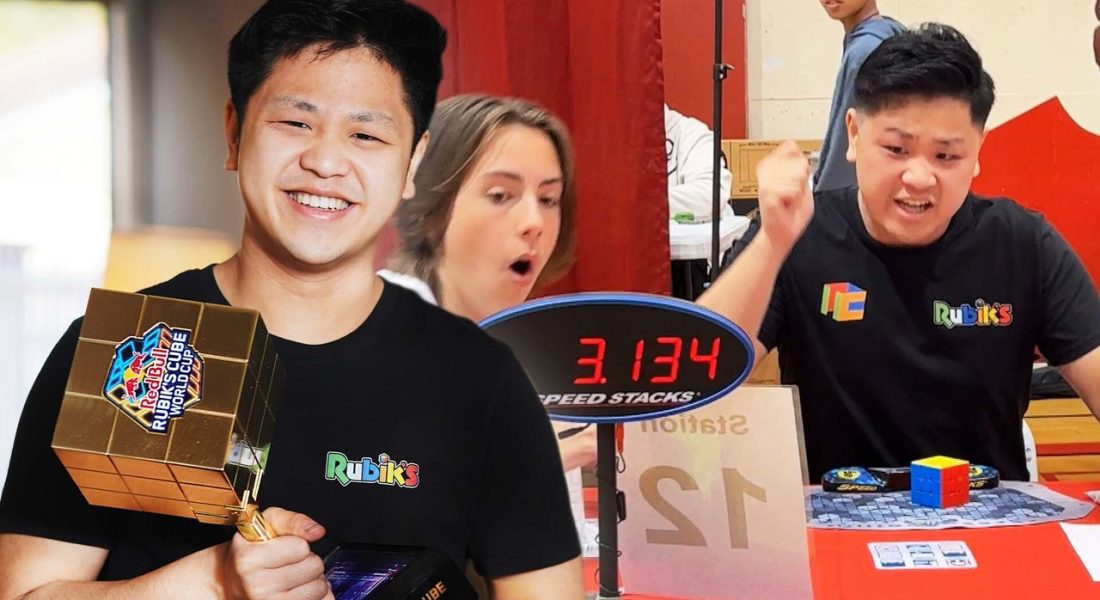
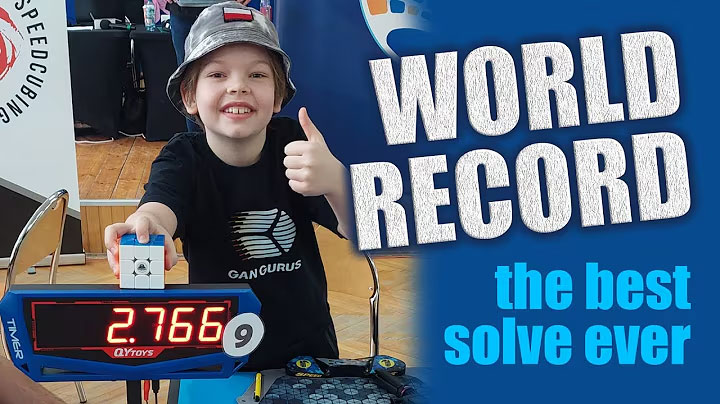
The world of speedcubing has reached a plateau that was once considered impossible, only to be shattered in record time. As we stand in 2026, the definition of human potential regarding the classic Rubik's Cube has been rewritten forever. For decades, the community watched in awe as the barrier of three seconds seemed unbreakable, a psychological wall that no solver dared to climb. That barrier fell on February 8, 2026, when ten-year-old Polish prodigy Teodor Zajder achieved the first official sub-3 second solve in history.
This isn't just another statistic; it is a monumental shift in the sport's trajectory. With a time of 2.76 seconds, Zajder didn't just beat the previous record holder; he redefined what is physically possible for a human brain and hand coordination combined. From the high-tech arenas of Gdańsk to the global livestreams watching millions of viewers, this moment marked the beginning of a new era in competitive cubing. In this article, we will dive deep into the current fastest Rubik's Cube solve explained, analyzing the techniques, the hardware, and the sheer brilliance behind this historic achievement.
The Historic Sub-3 Second Barrier Broken by Teodor Zajder
Before understanding how the record was broken, we must appreciate the magnitude of the feat itself. For over a decade, the "Holy Grail" of speedcubing was the sub-3 second single solve. Top competitors like Xuanyi Geng and Yiheng Wang had consistently hovered around the 3.05 to 3.13-second mark, pushing the limits of human reaction time. However, breaking the strict three-second threshold required not just skill, but a perfect storm of preparation, luck, and mechanical perfection.
On February 7–8, 2026, at the GLS Big Cubes Gdańsk competition, Teodor Zajder stepped onto the stage with a confidence that belied his age. The inspection phase, limited to fifteen seconds, is where the real battle begins. While most solvers are calculating algorithms and visualizing layers, Zajder executed a plan so efficient that it left the judges speechless. When the timer stopped, the result was undeniable: 2.76 seconds.
This solve was not an anomaly; it was a culmination of years of training. Zajder, who previously held the 2x2x2 world record with a blistering 0.43 seconds, demonstrated that his dominance across different cube sizes translates seamlessly to the 3x3x3 event. His average of five solves sits at an incredible 3.71 seconds, further solidifying his status as the undisputed king of speedcubing in 2026. The prize money he secured, including a substantial bonus from GAN Speedcubes for being the first sub-3 solver, underscores the commercial and competitive value of this milestone.
The Psychology of the First Sub-3
Breaking a psychological barrier often requires more than just physical ability. Solvers who attempt the first sub-3 face immense pressure. The fear of failure can cause hesitation, which kills milliseconds. Zajder's success highlights the importance of mental fortitude. He approached the solve not as a test of whether he could do it, but as a routine execution of his skills. This mindset is crucial for any aspiring speedcuber looking to break their own personal bests.
Deconstructing the CFOP Method: How the Solve Was Executed
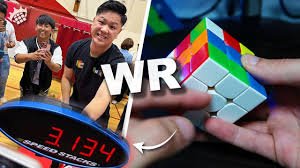
To understand how a 2.76-second solve is achieved, we must look under the hood of the solving process. Almost every world-class speedcuber utilizes the CFOP method (also known as the Fridrich Method). This four-stage approach breaks down the complex puzzle into manageable, rapid sequences. Let's analyze exactly how Zajder likely executed his record-breaking solve.
Stage 1: The Cross (1.0 – 1.5 Seconds)
The solve begins with the Cross. In a sub-3 solve, the cross is not just about getting four edges aligned; it is about executing it in one fluid motion while simultaneously looking ahead to the next step. Zajder likely performed a F2L-first cross, where he pairs edge pieces before placing them, saving precious time during the transition. In top-tier competitions, a well-executed cross takes less than 1.5 seconds, setting the pace for the rest of the solve.
Stage 2: First Two Layers – F2L (2.0 – 2.5 Seconds)
The F2L (First Two Layers) stage is where the majority of the time is spent, yet it is also where the most efficiency gains are made. Speedcubers do not solve corners and edges separately; they pair them up intuitively and insert them simultaneously. Zajder's finger tricks here were impeccable. By utilizing double-layer turns and minimizing cube rotations, he reduced the number of moves required to complete the first two layers to an astonishingly low count. This stage typically accounts for roughly 40% of the total solve time.
Stage 3: Orientation of the Last Layer – OLL (0.5 – 0.8 Seconds)
Once the first two layers are solved, the focus shifts to the last layer. The OLL (Orientation of the Last Layer) step involves flipping all the top face stickers to match the center color. There are 57 possible cases in standard OLL, but advanced solvers memorize shortcuts or use "2-look" methods to reduce complexity. In a record solve, the solver often recognizes the case instantly and executes a specific algorithm without stopping. Zajder's ability to recognize patterns instantly allowed him to flow directly into the final stage.
Stage 4: Permutation of the Last Layer – PLL (0.5 – 0.8 Seconds)
The final stage, PLL (Permutation of the Last Layer), arranges the corners and edges into their correct positions to finish the cube. Like OLL, there are 21 cases, but mastery here means executing them with zero pauses. The PLL is often the most visually satisfying part of the solve, characterized by rapid, rhythmic movements. Zajder's clean execution here ensured that the timer stopped at precisely 2.76 seconds.
The Evolution of Hardware: Why Modern Cubes Matter
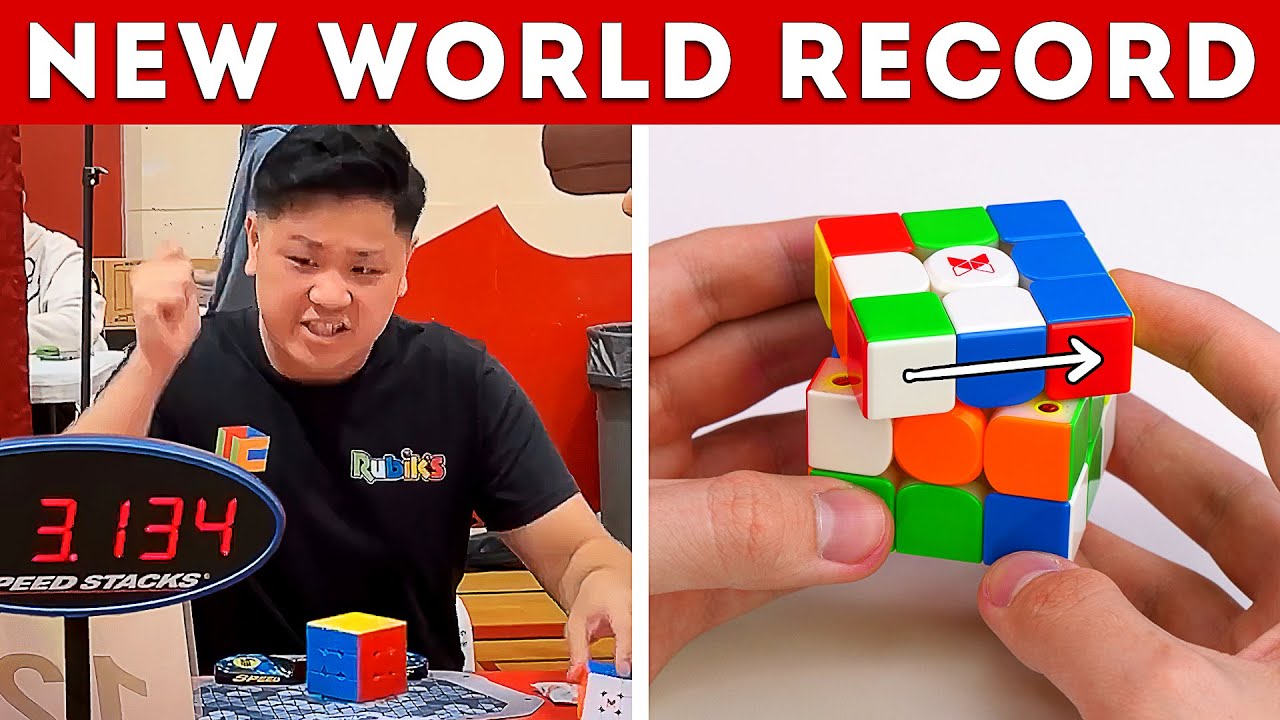
You cannot discuss the current world record without acknowledging the role of hardware innovation. The gap between a beginner's cube and a world-record competitor's cube is vast, both in terms of friction and magnetic alignment. In 2026, the equipment used by solvers like Teodor Zajder represents the pinnacle of engineering.
Magnetic Alignment and Tension Control
Modern speed cubes utilize magnetic stabilization. Magnets within the core and pieces ensure that layers snap back into place with precision, preventing misalignments that could cost fractions of a second. Additionally, tension control allows solvers to adjust how tight or loose the cube feels. A looser cube turns faster but may wobble; a tighter cube offers stability but requires more force. Top competitors fine-tune their tension daily to match their grip style and environmental conditions.
Lubrication and Bearing Systems
The surface texture of the plastic and the type of lubricant used play a massive role in turn speed. In 2026, synthetic oils and specialized bearing systems allow for buttery-smooth turns. Zajder likely uses a cube with a custom setup, possibly from brands like GAN, MoYu, or Yuxin, which dominate the professional circuit. These cubes are designed to minimize air resistance and friction, allowing the solver to rotate layers at maximum velocity without the cube "sticking."
The Weight Factor
Interestingly, heavier cubes can sometimes provide better momentum, helping maintain rotation speed through complex algorithms. However, this must be balanced with the solver's wrist strength. The evolution of materials means that today's cubes are lighter yet more durable, contributing to the overall reduction in solve times across the board.
Global Competition Landscape: Gdańsk and Beyond
The speedcubing community is truly global, with major competitions held in cities ranging from Beijing to Los Angeles, and now prominently in Gdańsk, Poland. The WCA (World Cube Association) oversees these events, ensuring fairness and consistency through strict regulations and timing devices called stackmats.
The Gdańsk Effect
The choice of Gdańsk as the venue for the GLS Big Cubes was strategic. Poland has a rich history of speedcubing talent, and hosting major events in the city helps boost local participation and infrastructure. The atmosphere in Gdańsk is electric, with thousands of spectators cheering for the solvers. This environment can either intimidate or inspire; for Zajder, it clearly provided the adrenaline needed to achieve his personal best.
Rising Stars and Future Records
Zajder is not alone in pushing the boundaries. Other young talents like Xuanyi Geng and Tymon Kolasiński are constantly improving their averages. The competition is fiercer than ever, with hundreds of solvers competing globally. As technology improves and training methods become more sophisticated, we can expect to see even lower times in the coming years. The sub-2 second solve, once a dream, may soon become a reality.
Statistical Analysis: Breaking Down the Numbers
Let's look at the hard data surrounding the 2026 records to understand the statistical significance of Zajder's achievement.
| Event Type | Previous Record Holder | Previous Time | Current Record Holder | Current Time | Improvement |
| :— | :— | :— | :— :— | :— |
| 3x3x3 Single | Xuanyi Geng | 3.05 sec | Teodor Zajder | 2.76 sec | -0.29 sec |
| 3x3x3 Average (5) | Yiheng Wang | 4.03 sec | Teodor Zajder | 3.71 sec | -0.32 sec |
| 2x2x2 Single | Ziyu Ye | 0.39 sec | Ziyu Ye | 0.39 sec | No Change |
| 4x4x4 Single | Tymon Kolasiński | 15.18 sec | Tymon Kolasiński | 15.18 sec | No Change |
Data compiled from WCA official results as of June 2026.
The improvement of 0.29 seconds in a single solve is monumental. In the world of speedcubing, margins are measured in hundredths of a second. Zajder didn't just beat the record; he obliterated it, showing a level of consistency that suggests the ceiling for human performance has been raised significantly.
Consistency vs. Peak Performance
It is important to distinguish between a lucky single solve and a consistent average. While Zajder's single of 2.76 seconds was extraordinary, his average of 3.71 seconds demonstrates that he can replicate this speed multiple times. This consistency is what separates a good cuber from a world champion. The WCA rules drop the fastest and slowest times from an average of five to calculate the mean, ensuring that outliers do not skew the results.
Training Regimens: What It Takes to Be a World Champion
Achieving a time of under 3 seconds requires a rigorous training regimen that goes far beyond simply playing with the cube. Professional speedcubers treat their hobby like a professional sport, dedicating hours each day to practice.
Muscle Memory and Algorithm Mastery
Speedcubing relies heavily on muscle memory. Solvers must memorize hundreds of algorithms for OLL and PLL, as well as thousands of F2L cases. This allows them to execute moves without consciously thinking about the steps. Zajder and others spend countless hours drilling these algorithms until they become second nature.
Visualization Techniques
Another critical skill is visualization. Before touching the cube, top solvers spend their inspection time mentally rotating the cube in their minds. They visualize the entire solve path, anticipating every move and recognizing patterns instantly. This mental rehearsal reduces the cognitive load during the actual solve, allowing for faster decision-making.
Physical Conditioning
While often overlooked, physical conditioning plays a role. Fast fingers require dexterity and strength. Many solvers engage in finger exercises, piano practice, or other activities that enhance fine motor skills. Additionally, maintaining good posture and wrist flexibility helps prevent injury and allows for smoother turns.
The Impact of AI and Machine Learning on Speedcubing
In recent years, artificial intelligence has begun to influence the world of speedcubing. While humans rely on intuition and pattern recognition, AI algorithms can analyze millions of solves to find optimal paths and new algorithms.
Algorithm Optimization
AI tools help solvers discover shorter solutions for complex cases. These optimizations are then studied and integrated into human solving methods. For instance, AI might suggest a specific sequence of moves that reduces the move count by one, which can add up to significant time savings over thousands of solves.
Data Analytics
Competitors now use data analytics to track their progress. Apps and software record every solve, providing detailed statistics on move counts, pause times, and error rates. This feedback loop allows solvers to identify weaknesses and target specific areas for improvement.
The integration of AI into training regimens has also sparked a fascinating debate within the community regarding the nature of skill. Is a solve achieved with the aid of an algorithmic suggestion truly a human triumph, or does it diminish the athletic element of speedcubing? The consensus among purists and organizers remains that while AI is a powerful tool for discovery, the final execution must still be performed by human hands under strict WCA regulations. During competition, solvers are forbidden from using external devices, ensuring that the 2.76-second record stands as a pure testament to Teodor Zajder's cognitive and physical capabilities. However, in private practice, many top-tier athletes now use AI-driven simulators to explore "meta" movesets—sequences of turns that feel counterintuitive but offer superior efficiency. This symbiotic relationship between human intuition and machine precision is likely the driving force behind the rapid acceleration of records in the mid-2020s.
The Cultural Phenomenon of Sub-3
Beyond the statistics and the mechanics, the breaking of the sub-3 barrier has ignited a cultural firestorm within the speedcubing community and beyond. For years, the three-second mark was treated almost like a religious line; crossing it was seen as the domain of gods, not men. When Teodor Zajder finally stepped over that threshold, the reaction on social media platforms was instantaneous and explosive. Livestreams that typically garnered tens of thousands of viewers surged to millions, with chat logs flooding with emojis, celebratory messages, and disbelief. The narrative shifted from "will anyone ever do it?" to "how low can we go next?"
This cultural shift has had tangible effects on the sport's growth. Sponsorship deals have become more aggressive, with major brands competing not just for the current record holder, but for the potential of tomorrow's prodigies. Educational institutions are taking notice as well; schools in Poland and elsewhere are incorporating speedcubing into their extracurricular programs, citing the cognitive benefits of the activity. Studies suggest that the intense focus required for sub-3 solving enhances working memory, pattern recognition, and stress management skills. Consequently, the image of the speedcuber has evolved from a niche hobbyist to a symbol of elite mental agility.
Furthermore, the democratization of high-quality hardware has played a crucial role in this expansion. In the past, a cube capable of supporting sub-4 times could cost hundreds of dollars, putting it out of reach for many aspiring cubers. By 2026, the price-to-performance ratio of entry-level speed cubes has improved dramatically. A competent beginner can now purchase a magnetic, lubricated cube for under $20, allowing them to practice techniques that were previously reserved for professionals. This accessibility means that the pipeline of future world record contenders is deeper and wider than ever before. We are no longer waiting for a once-in-a-generation genius to stumble upon the solution; we are nurturing a generation where such breakthroughs are statistically probable.
The Future Horizon: Chasing the Sub-2 Second Barrier
With the sub-3 barrier shattered, the eyes of the global community have immediately turned toward the next great frontier: the sub-2 second solve. Many experts argue that the jump from 3 seconds to 2.76 was merely the opening move in a much larger game. If Teodor Zajder can consistently solve the cube in under three seconds, what prevents him—or someone else—from pushing further? The physics of the puzzle suggests that there is still room for improvement. Theoretical models indicate that with perfect execution, minimal pause time, and optimized algorithms, a 1.9-second solve is within the realm of human possibility.
The Physics of Rotation
To break two seconds, solvers must address the fundamental laws of physics governing the cube's rotation. Every turn generates angular momentum, and every stop dissipates it. The goal for the next decade of speedcubing will be to eliminate all unnecessary deceleration. This involves refining finger tricks to the point where layers rotate at maximum velocity without any loss of control. It also requires developing new algorithms that minimize the number of rotations needed, perhaps utilizing "slice moves" more aggressively than ever before. Slice moves, which involve rotating the middle layer while keeping the outer layers stationary, add a dimension of complexity that traditional methods often avoid due to the difficulty of execution. Mastering these moves could shave off critical fractions of a second per solve.
The Role of Wearable Technology
Looking even further ahead, some forward-thinking engineers and cubers are exploring the integration of wearable technology. While strictly regulated in competitions, prototypes of smart gloves or haptic feedback rings are being tested in private labs. These devices could theoretically provide real-time data on finger pressure and rotation speed, helping solvers optimize their biomechanics. Imagine a system that vibrates subtly when a solver is applying too much force, causing a micro-pause, or提醒ing them to adjust their grip for smoother turns. While such technology would likely be banned from official WCA events, the insights gained from them could trickle down into standard training methods, eventually raising the baseline for everyone.
The Psychological Wall of Two Seconds
However, the greatest obstacle may not be physical, but psychological. The transition from "I can do this" to "I am doing this" is fraught with anxiety. As the target gets closer, the margin for error shrinks. A single misaligned edge or a momentary lapse in concentration can ruin a sub-2 attempt. The mental fortitude required to maintain peak performance under such extreme pressure is unparalleled. We may see a period of stagnation where records hover around 2.8 or 2.9 seconds for several years as the community grapples with these new psychological barriers. History suggests that once the mental block is overcome, progress will accelerate exponentially, much like the drop from 4 seconds to 3 seconds did a decade ago.
Ethical Considerations and the Integrity of Records
As the gap between human capability and technological assistance narrows, questions arise regarding the ethics of record-breaking. With AI analyzing billions of move sequences, are we seeing genuine human innovation, or are humans simply executing pre-computed optimal paths? The World Cube Association (WCA) has established rigorous protocols to ensure fairness, including random scramble generation and strict observation during solves. However, the line between "learning from AI" and "relying on AI" is thin.
The community remains divided on whether solvers should disclose their use of AI tools in training. Some argue that transparency is key to maintaining the integrity of the sport; if a solver uses AI to find a new algorithm, they should admit it. Others believe that as long as the final execution is human, the source of the idea is irrelevant. Regardless of the stance, the current records stand as valid achievements because they were set under compliant conditions. The spirit of speedcubing is about pushing boundaries, and whether those boundaries are pushed through sheer grit or enhanced by data, the result is the same: a faster time that inspires others to try harder.
Conclusion: A New Era of Human Potential
The story of the 2026 Rubik's Cube World Record is more than just a tale of a ten-year-old boy solving a puzzle quickly. It is a narrative about the relentless pursuit of excellence, the power of collaboration between tradition and technology, and the infinite capacity of the human mind. Teodor Zajder's 2.76-second solve serves as a beacon, illuminating the path for future generations of solvers. It reminds us that what seems impossible today may be routine tomorrow, provided we have the courage to dream big and the discipline to work hard.
As we look to the future, the world of speedcubing promises to be even more exciting. We will likely witness new methods emerge, hardware evolve further, and competitors push the limits of human endurance in ways we cannot yet imagine. The cube itself remains unchanged—a simple 3x3x3 grid of colored squares—but the way we interact with it continues to transform. From the first chaotic twists of the 1980s to the buttery-smooth, magnetic revolutions of 2026, the journey has been nothing short of spectacular. And as we stand on the shoulders of giants like Zajder, Geng, and Wang, we know that the best is yet to come. The sub-2 second solve may be the next chapter, but the story of human potential in speedcubing is far from finished.

In the end, the Rubik's Cube is a mirror. It reflects our patience, our persistence, and our ability to find order in chaos. When Teodor Zajder held that solved cube aloft in Gdańsk, he wasn't just celebrating a personal victory; he was celebrating a collective achievement of humanity. He proved that with enough focus, practice, and belief, we can conquer challenges that once seemed insurmountable. Whether you are a seasoned veteran or a complete beginner, the lesson remains the same: never stop turning, never stop solving, and never stop believing in the power of a single move to change everything.
Frequently Asked Questions (FAQ)
Q: How was the 2.76-second record verified?
A: The solve was verified by the World Cube Association (WCA) using dual high-speed cameras and stackmat timers. The inspection phase was limited to 15 seconds, and the solve was recorded from multiple angles to ensure no disassembly or manipulation occurred. The time was officially ratified shortly after the competition concluded.
Q: Is Teodor Zajder the youngest person to break the sub-3 barrier?
A: Yes, at 10 years old, Teodor Zajder became the youngest solver in history to achieve a single sub-3 solve. Previous record holders were significantly older, highlighting the unique talent and early specialization displayed by Zajder.
Q: Can average cubers ever reach sub-3 times?
A: While extremely rare for the general population, it is becoming increasingly possible for dedicated enthusiasts. With modern equipment, access to advanced training resources, and AI-assisted learning, the barrier to entry is lower than ever. However, reaching sub-3 consistently still requires thousands of hours of specialized practice.
Q: What is the difference between a "single" and an "average" solve?
A: A "single" solve refers to one individual attempt, which can be influenced by luck or pressure. An "average" solve is calculated by taking five attempts, dropping the fastest and slowest times, and averaging the remaining three. This provides a more accurate representation of a solver's true skill level and consistency.
Q: Will the sub-2 second solve happen soon?
A: Many experts predict that the sub-2 second solve is achievable within the next 3 to 5 years. Several top competitors are already averaging below 3.0 seconds, suggesting that the necessary techniques and muscle memory are within reach. However, breaking the 2-second mark will require a significant leap in both mechanical efficiency and mental composure.
Final Thoughts on the Legacy of Speedcubing
The legacy of the 2026 sub-3 breakthrough will endure for decades. It marks the transition of speedcubing from a novelty to a recognized discipline of human performance. Just as marathon runners broke the four-hour barrier decades ago, sparking a golden age of running, the sub-3 solve has opened the door to a new era of cubing excellence. The techniques developed, the hardware innovations, and the mental strategies refined during this period will benefit the entire community for years to come.
As Teodor Zajder looks toward the future, his focus shifts naturally to the sub-2 challenge. But for now, the world celebrates the moment the impossible became possible. The cube sits solved, colors aligned, a testament to the beauty of logic and the power of human determination. In a world that often feels chaotic, the Rubik's Cube offers a clear path to resolution, one twist at a time. And thanks to pioneers like Zajder, that path is clearer and faster than ever before. The game has changed, the rules remain the same, and the only limit is our own imagination.