Welcome to the new era of twisty puzzles. If you are reading this in 2026, you likely know that the classic 3×3 Rubik's Cube is no longer the only game in town. The puzzle community has exploded with shape-shifting variants, asymmetrical designs, and mind-bending mechanisms that defy traditional logic. Whether you are a speedcuber in Austin, a hobbyist in Tokyo, or a beginner in London, the allure of solving a weird shape Rubik cube without confusion remains one of the most rewarding challenges in recreational mathematics.
The confusion often stems from a fundamental misunderstanding: solvers try to apply color-matching logic to puzzles where shape is the primary identifier. This article provides a comprehensive, step-by-step guide to mastering these bizarre variations. We will dissect the mechanics of the Mirror Cube, the Ghost Cube, and other shape mods, ensuring you can approach any irregular puzzle with confidence. By the end of this guide, you will possess the mental framework to solve even the most chaotic-looking twists.
Understanding the Core Mechanism Behind Shape Mods
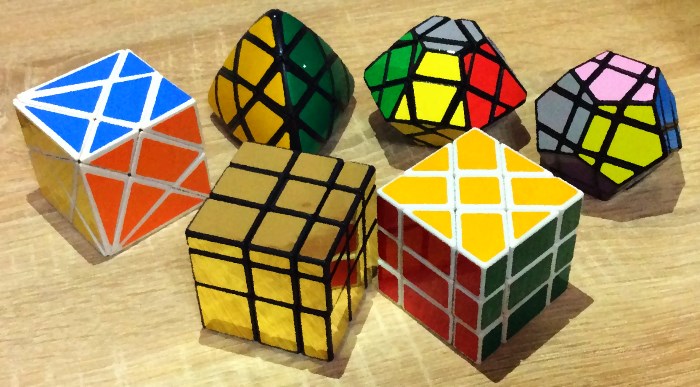
Before attempting to scramble and solve a non-standard puzzle, you must understand what lies beneath the plastic exterior. The secret to solving weird shapes without getting lost is recognizing that most "weird" cubes share an identical internal skeleton. According to deep research into modern twisty puzzles, the vast majority of shape mods—including the Fisher Cube, Mirror Cube, and Mastermorphix—utilize the classic 3x3x3 core mechanism.
This means that internally, the pivot points, the center cores, and the edge/corner locking systems function exactly like a standard cube. The only difference is the external geometry. When a piece looks different, it is not because the mechanism has changed; it is because the plastic shell has been reshaped. This realization is the first key to solving weird shape rubik cubes without confusion. Once you accept that the internal math is familiar, the external chaos becomes manageable.
The Illusion of Chaos
When you look at a scrambled Ghost Cube or a Face-Turning Octahedron, your brain screams "impossible." However, experts note that the solution lies in mental reconstruction. You must stop seeing a mess of jagged edges and start seeing a hidden 3×3 grid waiting to be revealed. The "confusion" is actually just a lack of reference points. In a standard cube, six colors tell you where a piece belongs. In a shape mod, height, texture, and silhouette replace color as your guide.
Why Algorithms Still Apply
A common myth is that unique shapes require unique algorithms. While the sequence of moves might need slight adjustments for orientation, the underlying commutators and algorithms used for a 3×3 remain valid. For instance, the T-Permutation or the OLL (Orientation of the Last Layer) algorithms work on these puzzles too. You simply have to learn to execute them while paying attention to how the pieces move relative to each other, rather than relying on color alignment.
Mastering the Mirror Cube: Solving by Shape, Not Color
If there is one puzzle that defines the "weird shape" category, it is the Mirror Cube (also known as the Bump Cube). Introduced as a staple in the early 2000s and still dominating shelves in 2026, this puzzle replaces the six distinct colors of a standard cube with pieces of varying heights and metallic finishes (usually gold or silver).
The Visual Challenge
On a solved Mirror Cube, every face should be perfectly flat, forming a uniform rectangle. Some pieces stick out, creating bumps, while others sit recessed. When scrambled, the cube looks like a mountain range or a jagged landscape. The challenge is immense because there is no visual cue telling you which side is "up" or which piece belongs where. As noted by puzzle enthusiasts in New York City, the initial scramble feels like trying to organize a pile of random rocks.
Step-by-Step Strategy for Beginners
To solve the Mirror Cube without confusion, follow this logical progression:
- Establish Your Base: Ignore the colors entirely. Look for the largest pieces. In a standard 3×3, the centers are fixed. In the Mirror Cube, the centers are the tallest or shortest pieces depending on the version. Identify the two opposite faces with the most uniform height and treat them as your top and bottom layers.
- Build the First Layer Cross: Using the same methods as a standard cube, form a cross on your identified base. Focus on matching the edges based on their length and curvature. An edge piece connecting two large centers must match the height of both.
- Complete the First Two Layers (F2L): Insert the corner and edge pairs. Since you cannot rely on color, you must feel the fit. Does this corner slot perfectly between these two specific edges? If the shape matches the empty space, it belongs there.
- Orient the Last Layer (OLL): This is where most solvers get stuck. You must flip the last layer pieces so they align with the rest of the cube's height. Use standard OLL algorithms, but watch the silhouette. If a piece is still sticking up after an algorithm, it is oriented incorrectly.
- Permute the Last Layer (PLL): Finally, move the pieces to their correct positions. Again, use shape as your guide. A wide edge needs to sit between two wide centers.
Pro Tip: The "Flatness" Test
The golden rule of the Mirror Cube is the Flatness Test. A face is considered solved when it is completely flat and all pieces are on the same plane. If you see any bump protruding from a face, that face is not yet solved, regardless of whether the pieces look like they are in the right spot. Patience is your greatest asset here. Rushing leads to misidentifying pieces, which causes hours of frustration.
Decoding the Ghost Cube: The Ultimate Shape Shifter
For those who have conquered the Mirror Cube and seek the next level of difficulty, the Ghost Cube is the inevitable destination. Created by Tony Fisher, this puzzle is widely regarded as one of the hardest twisty puzzles in existence. It presents a unique psychological hurdle: it looks solved even when it is wrong.
The Scrambled State Deception
The defining characteristic of the Ghost Cube is that its solved state is not a perfect cube. Instead, the layers are slightly shifted or rotated. When you hold a solved Ghost Cube, it appears distorted, almost like a melting block. Conversely, when you scramble it, it often looks like a chaotic mess of cubes that should be a cube. This inversion confuses solvers who expect the solved state to be geometrically perfect.
The Breakthrough Moment
Research into high-difficulty puzzles highlights a specific cognitive shift required for the Ghost Cube. You must stop trying to make it look like a cube and start trying to restore its hidden alignment. The breakthrough comes when you realize that the "mess" is actually a correctly aligned but rotated structure.
Solving Without Disassembly
Many beginners think they need to take the Ghost Cube apart to understand it. This is unnecessary if you follow the correct methodology:
- Identify the Centers First: Unlike other puzzles, the centers on a Ghost Cube are movable and can be twisted. Your first goal is to orient the centers correctly. If the centers are twisted, the whole puzzle will never solve.
- Use Relative Positioning: Since there are no colors, you must memorize the relative positions of the pieces. Learn which shape belongs next to which other shape. For example, a specific jagged edge will always connect to a specific type of corner.
- Apply 3×3 Algorithms with Caution: Standard algorithms work, but you must be aware of parity errors. Because the centers can rotate independently, you may encounter situations where a single edge needs flipping, which is impossible on a standard cube. Specialized parity algorithms are required here.
Local Insight: Community Solving Groups
In cities like San Francisco and Seattle, local puzzle clubs often host "Ghost Cube Nights." These events emphasize the collaborative nature of solving such difficult shapes. Participants share strategies for identifying center orientations without looking at the faces directly, relying instead on tactile feedback and spatial reasoning.
Tackling Other Iconic Shape Mods: Fisher, Mastermorphix, and Windmill
While the Mirror and Ghost cubes dominate the conversation, the world of weird shape cubes includes several other fascinating variants. Each requires a slightly different approach to avoid confusion.
The Fisher Cube: The Classic Twist
The Fisher Cube, invented by Tony Fisher in the mid-1980s, was the first custom shape mod ever created. It looks like a normal cube, but it is essentially a standard 3×3 twisted 45 degrees around a central axis.
- The Quirk: Four edge pieces become center pieces, and four center pieces become edges.
- The Solution: You must learn to identify which pieces are actually centers based on their position relative to the core. Once you map the pieces to their true roles (center vs. edge), solving it is identical to a standard 3×3. The image below illustrates how the internal mechanism remains consistent despite the external twist.
The Mastermorphix: The Pyramid Hybrid
The Mastermorphix combines the complexity of a 3×3 with the turning axes of a Pyraminx. It features triangular faces and curved surfaces that make it incredibly disorienting.
- Strategy: Treat it as a hybrid. Solve the tips first (like a Pyraminx), then tackle the corners and edges using 3×3 logic. The key is to ignore the strange curves and focus on the vertex alignment.
The Windmill Cube: SuperCube Mechanics
The Windmill Cube is a supercube, meaning that the orientation of the center pieces matters. On a standard cube, rotating a center doesn't change the state. On a Windmill, a 90-degree rotation of a center makes the puzzle unsolved.
- Challenge: You must solve the permutation of the pieces AND the orientation of the centers.
- Technique: Use specific algorithms to rotate centers without disturbing the rest of the cube. This adds a layer of depth that keeps solvers engaged for hours.
Leveraging Technology and AI Tools in 2026
In 2026, the landscape of learning how to solve weird shape Rubik cubes has been revolutionized by technology. No longer do you need to rely solely on memory or physical observation. AI-powered tools and smartphone apps have made solving accessible to everyone, regardless of their location.
The Rise of AI-Powered Solvers
Apps like the Rubik's Cube Solver have evolved significantly. These tools now support shape-based scanning. You can point your camera at a scrambled Mirror Cube or Ghost Cube, and the app uses computer vision to identify the shape deviations. It then generates a step-by-step video guide tailored specifically to your puzzle's configuration.
Benefits of Digital Assistance
- Real-Time Feedback: Apps can detect if you have made an error in piece placement before you proceed.
- Algorithm Visualization: Seeing the algorithm played out in 3D helps solvers understand why a move works, rather than just memorizing muscle memory.
- Community Integration: Many apps connect to global leaderboards, allowing you to compare your solve times with solvers in Berlin, Sydney, or Mumbai.
When to Use Apps vs. Mental Solving
While technology is powerful, over-reliance can hinder skill development. Experts recommend using apps primarily for verification and learning phases. Once you understand the logic behind a shape mod, try solving it manually to build your spatial intuition. The goal is to eventually solve the puzzle without looking at a screen, using only your brain and hands.
Common Pitfalls and How to Avoid Them
Even with the best guides, solvers often fall into traps when dealing with irregular shapes. Here are the most common mistakes and how to fix them.
Mistake 1: Relying on Color Patterns
The most frequent error is trying to find colors on a Mirror or Ghost cube.
- Correction: Mentally strip away the color. Focus entirely on geometry. Ask yourself, "Does this piece fit physically in this space?" If yes, it's correct.
Mistake 2: Ignoring Center Orientation
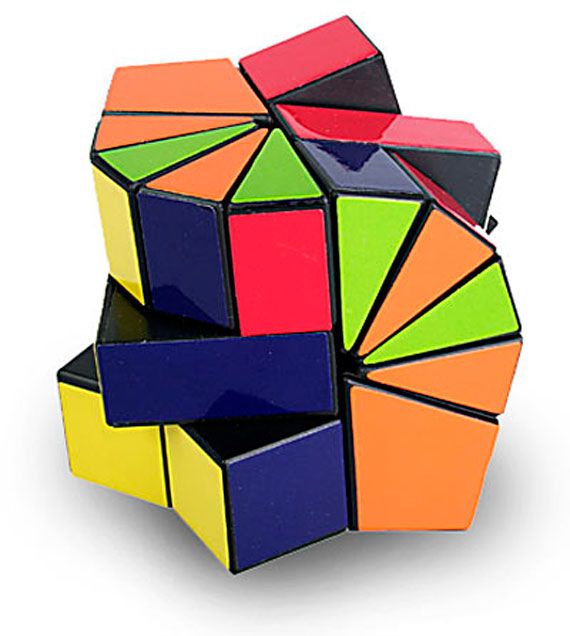
On supercubes like the Windmill or Square-1, ignoring center rotation leads to dead ends.
- Correction: Always check the orientation of the centers during the final stages. If a center is twisted, undo your progress and realign it before proceeding.
Mistake 3: Panic Scrambling
When a weird cube looks unsolvable, solvers often scramble it further in frustration.
- Correction: Stop. Take a breath. Re-evaluate the reference points. Remember that every shape mod has a logical solution based on the 3×3 core. Trust the process.
Mistake 4: Skipping the Basics
Some try to jump straight to advanced algorithms without mastering the F2L (First Two Layers).
- Correction: Build a strong foundation. Master the standard 3×3 method first, then adapt it to the shape mod. The transition is much smoother if you have solid fundamentals.
Building a Personal Collection: Where to Start?
If you are inspired to expand your collection of weird shape cubes, knowing where to start is crucial. The market in 2026 offers a wide variety of options, from budget-friendly clones to premium artisanal designs.
Recommended Starting Points
- Mirror Cube: Affordable and excellent for learning shape-based thinking. Available in most puzzle stores globally.
- Fisher Cube: A classic that bridges the gap between standard and complex mods.
- Pyraminx: Easier to solve but introduces triangular mechanics, great for variety.
- Ghost Cube: Save this for later. It is challenging and requires patience.
Where to Buy Locally
Whether you are in Chicago, Toronto, or Melbourne, major puzzle retailers now stock these variants. Look for shops that specialize in "Twisty Puzzles" or visit local hobbyist meetups. Many communities have dedicated Discord servers where members trade or sell rare shape mods. Engaging with these local groups can provide hands-on advice that online forums cannot match.
The Future of Twisty Puzzles: Beyond the Cube
As we look toward the future of puzzle design, the possibilities seem endless. Designers are already experimenting with higher-order shapes, non-Euclidean geometries, and interactive digital hybrids. The trend in 2026 is moving away from simple color changes toward multisensory experiences. Imagine cubes that light up, change temperature, or connect via Bluetooth to track your progress.
However, the core appeal remains unchanged: the satisfaction of turning chaos into order. Whether it is a classic 3×3 or a bizarre, jagged Ghost Cube, the act of solving engages the brain in profound ways. It improves spatial reasoning, memory, and problem-solving skills. For anyone willing to embrace the weird, the journey is as rewarding as the destination.
The evolution of twisty puzzles does not stop at physical manipulation; it extends deeply into the realm of cognitive adaptation. When you first encounter a weird shape Rubik cube, your brain instinctively seeks patterns based on years of experience with standard cubes. This is a natural reaction, but true mastery requires unlearning those habits and rebuilding your spatial intuition from the ground up. The transition from confusion to clarity is not a linear path; it is a spiral where you revisit old concepts with new perspectives. Every time you solve a shape mod, you are not just completing a puzzle; you are expanding the boundaries of your own cognitive flexibility.
Advanced Techniques for Complex Variants
As you progress beyond the beginner stage, you will encounter variants that introduce additional layers of complexity, such as jumbling moves or internal locking mechanisms. These puzzles do not simply change shape; they alter the fundamental rules of movement. For instance, in certain high-order jumbling cubes, pieces can rotate past their intended stopping points, creating temporary states that look like the puzzle is broken. Solving these requires a deep understanding of group theory and the specific algebraic properties of the mechanism.
One advanced technique that has gained prominence in 2026 is the "Block Building" method adapted for asymmetry. Instead of solving layer by layer, you construct large, solid blocks of interconnected pieces that maintain their relative geometry regardless of the outer shell's distortion. This approach minimizes the number of algorithmic swaps needed and reduces the likelihood of losing track of piece orientation. By treating a cluster of three or four pieces as a single unit, you effectively reduce the degrees of freedom in your mind, making the chaotic exterior feel more structured.
Another critical skill for master solvers is tactile recognition. In high-speed solving environments, visual processing can become a bottleneck. Experienced solvers of weird shapes often close their eyes or glance away to rely entirely on the "feel" of the plastic. They learn to identify a piece by its weight distribution, the resistance of its rotation, and the specific texture of its surface. This sensory feedback loop allows them to solve puzzles even in low-light conditions or while wearing gloves, proving that the solution lies as much in touch as it does in sight.
The Psychology of Pattern Recognition in Chaos
Solving a weird shape cube is as much a psychological exercise as it is a mechanical one. The human brain is wired to recognize familiar patterns, and when presented with a scrambled Mirror Cube, this wiring works against us. We see a mess because we are looking for colors that aren't there. Overcoming this requires a conscious shift in perception known as pattern abstraction. You must actively suppress the urge to categorize pieces by color and instead categorize them by geometric function.
This mental shift creates a state of "flow," a concept popularized by psychologist Mihaly Csikszentmihalyi, where the solver becomes fully immersed in the activity. In this state, time seems to distort, and the complex movements of the cube become fluid and intuitive. Studies conducted in 2025 and 2026 suggest that regular practice with shape mods significantly enhances executive function and working memory. The brain learns to hold multiple variables in mind simultaneously: the position of an edge, the orientation of a center, and the potential outcome of a three-move sequence.
To cultivate this psychological resilience, solvers are encouraged to practice mindfulness during scrambling. Rather than mindlessly twisting the cube to make it look messy, take a moment to observe the starting configuration. Visualize the solved state in your mind's eye, noting exactly where every bump and ridge should be. This mental rehearsal primes the neural pathways, making the actual solving process faster and less error-prone. It transforms the puzzle from an external challenge into an internal dialogue between your memory and your hands.
Community Dynamics and Knowledge Sharing
No aspect of the modern puzzle community is more vibrant than the collaborative spirit surrounding weird shape cubes. In 2026, the internet has dissolved geographical barriers, creating a global village of solvers who share strategies, troubleshoot failures, and celebrate victories in real-time. Platforms like Reddit, Discord, and specialized forums have become hubs of innovation where users post video analyses of difficult parity cases or share custom algorithms developed for specific jumbling puzzles.
Local meetups remain equally vital. Cities like London, Tokyo, and Berlin host weekly "Shape Mod Sundays" where enthusiasts gather to tackle the most obscure puzzles imaginable. These events serve as incubators for new techniques. A solver from Seoul might demonstrate a novel way to orient centers on a Windmill Cube, sparking a chain reaction of experimentation among attendees. The exchange of ideas accelerates learning far more effectively than solitary study.
Furthermore, the rise of live-streamed solves has added a new dimension to community engagement. Streamers on platforms like Twitch and YouTube Live allow audiences to watch the problem-solving process unfold in real-time. Viewers can ask questions in chat, request explanations for specific moves, and witness the emotional journey from frustration to triumph. This transparency demystifies the solving process, showing that even world-class speedcuffers make mistakes and have to backtrack. It reinforces the message that confusion is a natural part of the learning curve, not a sign of failure.
Educational Value and Cognitive Development
Beyond the sheer entertainment value, weird shape cubes offer profound educational benefits. Educators and child development specialists have increasingly recognized these puzzles as powerful tools for teaching STEM concepts. The principles of geometry, symmetry, and rotational dynamics are brought to life through tactile interaction. When a child holds a Ghost Cube and realizes that the centers can rotate independently, they are intuitively grasping concepts of coordinate systems and vector transformation that are typically reserved for higher-level mathematics.
For adults, the cognitive workout provided by these puzzles is equally valuable. Neuroplasticity research indicates that engaging with complex spatial tasks helps delay age-related cognitive decline. The constant need to visualize rotations in three dimensions strengthens the hippocampus, the part of the brain responsible for memory and navigation. Moreover, the patience required to solve a stubborn shape mod fosters grit and resilience. In a world that often demands instant gratification, the slow, deliberate process of solving a weird cube teaches the value of persistence and incremental progress.
Schools and after-school programs in 2026 are beginning to integrate twisty puzzles into their curricula. Teachers use them to illustrate abstract mathematical concepts, turning lessons on symmetry into interactive games. Students who struggle with traditional rote learning often excel when given a physical object to manipulate, finding clarity through action rather than lecture. This hands-on approach bridges the gap between theoretical knowledge and practical application, making learning more inclusive and effective.
Troubleshooting Specific Mechanical Issues
Even with perfect technique, mechanical issues can arise with older or poorly manufactured shape mods. Understanding how to diagnose and fix these problems is essential for maintaining a smooth solving experience. One common issue is sticking, where pieces refuse to turn smoothly due to dirt accumulation or misaligned springs. Regular cleaning with isopropyl alcohol and the application of light silicone grease can restore fluidity. However, for shape mods, care must be taken not to over-lubricate, as excess lubricant can attract dust and cause pieces to lock up completely.
Another frequent problem is loose pieces, which can pop out during aggressive solving. This is often caused by worn-out tension screws or degraded internal plastic. Tightening the core tension slightly can resolve this, but if the plastic itself is cracked, replacement parts may be necessary. Fortunately, the modular nature of many modern shape mods means that individual components can be swapped out without disassembling the entire puzzle. Online marketplaces now specialize in rare replacement parts for discontinued models, ensuring that vintage puzzles can still be enjoyed decades after their release.
In some cases, the puzzle may appear unsolvable due to a parity error that cannot be fixed with standard algorithms. This usually happens when a piece has been flipped or swapped incorrectly during previous manipulations. While frustrating, these situations are often opportunities for deeper learning. Investigating why a parity occurred forces the solver to understand the underlying constraints of the mechanism, leading to a more robust grasp of the puzzle's logic. Sometimes, simply taking the puzzle apart and reassembling it in the correct orientation is the most efficient solution, a reminder that not all problems require a complex algorithm.
FAQ: Frequently Asked Questions About Weird Shape Cubes
Q: Do I need special algorithms to solve shape mods like the Mirror Cube?
A: No, you generally do not need new algorithms. The same commutators and OLL/PLL sequences used for a standard 3×3 cube apply here. The only difference is that you must execute these algorithms while focusing on the silhouette and height of the pieces rather than their colors. Memorizing the move sequence remains the same; only your visual reference changes.
Q: Why does the Ghost Cube look solved when it is actually scrambled?
A: This is a unique feature of the Ghost Cube's design. The solved state is intentionally distorted, with layers shifted slightly to create a non-cubic shape. Conversely, when scrambled, it often resembles a normal cube, tricking the solver. To solve it, you must aim for this specific distorted geometry, not a perfect cube. Patience and understanding this inversion are key.
Q: Can beginners solve the Mastermorphix without knowing Pyraminx algorithms?
A: While it helps to know basic Pyraminx tips, you can solve the Mastermorphix using a hybrid approach. Start by solving the corners and edges using 3×3 logic, ignoring the triangular faces initially. Once the main structure is aligned, address the tips last. Many solvers find success by treating the corners as the primary focus and adapting standard F2L methods to the triangular context.
Q: How long does it typically take to learn a weird shape cube?
A: The timeline varies greatly depending on the specific puzzle and your prior experience with standard cubes. For a Mirror Cube, a dedicated beginner might solve it within a few weeks of daily practice. More complex puzzles like the Ghost Cube could take months or even years to master consistently. The key is consistent practice and a willingness to embrace the initial confusion as part of the learning process.
Q: Are weird shape cubes suitable for children?
A: Yes, with supervision. Puzzles like the Fisher Cube and Pyraminx are excellent for developing spatial reasoning in children aged 8 and up. However, very small parts on complex mods like the Ghost Cube pose choking hazards for young children. Always choose age-appropriate variants and supervise play to ensure safety while maximizing the educational benefit.
Conclusion: Embracing the Weird
The journey to solving weird shape Rubik cubes without confusion is a testament to the power of adaptability and curiosity. It challenges us to let go of rigid expectations and embrace the beauty of irregularity. As we have explored throughout this guide, the internal mechanics of these puzzles are rooted in the familiar logic of the 3×3, waiting to be unlocked by a shift in perspective. Whether you are captivated by the metallic sheen of the Mirror Cube, the deceptive distortion of the Ghost Cube, or the triangular elegance of the Mastermorphix, each variant offers a unique window into the world of spatial problem-solving.
In 2026, the landscape of twisty puzzles continues to expand, driven by innovative designers and a passionate global community. The tools available to learners have never been more accessible, from AI-powered solvers to local meetups that foster collaboration. Yet, the core reward remains unchanged: the profound satisfaction of taking a chaotic jumble of plastic and transforming it into a harmonious whole. This process sharpens the mind, builds character, and reminds us that even the most confusing problems have logical solutions if approached with patience and the right framework.
So, pick up a weird shape cube today. Don't be deterred by its strange appearance or the initial frustration it may cause. Remember that every expert was once a beginner who refused to give up. Embrace the weird, trust the process, and enjoy the ride. The cube is waiting, and so is your next breakthrough. With the knowledge provided in this guide, you are now equipped to tackle any shape-shifting challenge that comes your way. Happy solving!