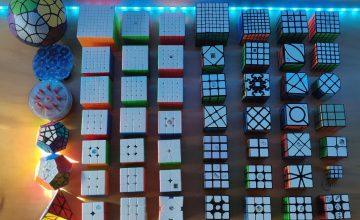
Are you tired of staring at a scrambled Rubik's Cube, your fingers hovering uselessly over the stickers, waiting for inspiration that never comes? In the fast-paced world of speedcubing in 2026, hesitation is the enemy. The difference between a 45-second solve and a sub-10-second masterclass isn't just raw dexterity; it is the ability to instantly recall complex sequences of moves from deep within your muscle memory. Whether you are a beginner trying to break the 2-minute barrier or an advanced cuber aiming for the podium, mastering the art of how to memorize and drill rubiks cube algorithms quickly is the single most impactful skill you can develop.
The modern cubing landscape has evolved. With AI-driven training tools like Cubedex becoming ubiquitous and top-tier brands like GAN and MoYu releasing cubes with unprecedented sensor technology, the barrier to entry has lowered, but the ceiling for speed has risen. Today, we aren't just talking about learning moves; we are talking about neuro-plasticity optimization, trigger recognition, and high-intensity drilling strategies that leverage the latest understanding of human cognition. This guide will take you through the exact methodologies used by world-ranked solvers to transform abstract letter notation into fluid, instinctive motion.
Understanding the Architecture of Speed: Why Memorization Matters
Before diving into the "how," we must understand the "why." In the context of 2026 speedcubing, algorithms are not merely random strings of letters; they are the linguistic vocabulary of the puzzle. Without this vocabulary, solving a cube faster than the beginner's method is impossible. The most popular method globally remains CFOP (Cross, F2L, OLL, PLL), which relies heavily on a library of approximately 78 algorithms for the last layer alone. Add in the hundreds of F2L cases, and you are looking at thousands of potential scenarios.
The Cognitive Load Problem
When you first start, your brain is overwhelmed by cognitive load. You are trying to visualize the cube state, interpret the notation (R, U, F, etc.), plan the finger trick, execute the move, and check the result—all simultaneously. This bottleneck causes the infamous "pause" where the timer stops ticking in your mind while your hands fumble. By shifting the burden from short-term memory to long-term muscle memory, you free up your cognitive resources to focus on lookahead—the ability to see the next case before you finish executing the current one.
The Role of Notation and Logic
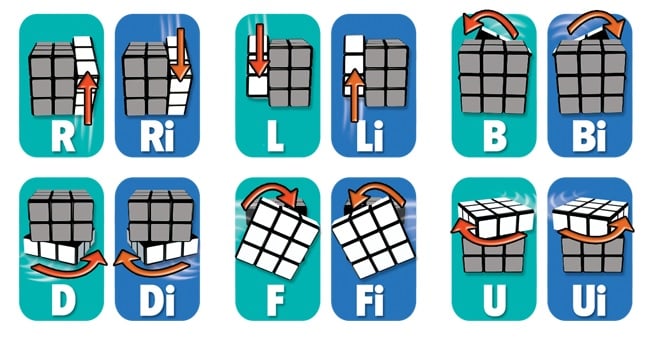
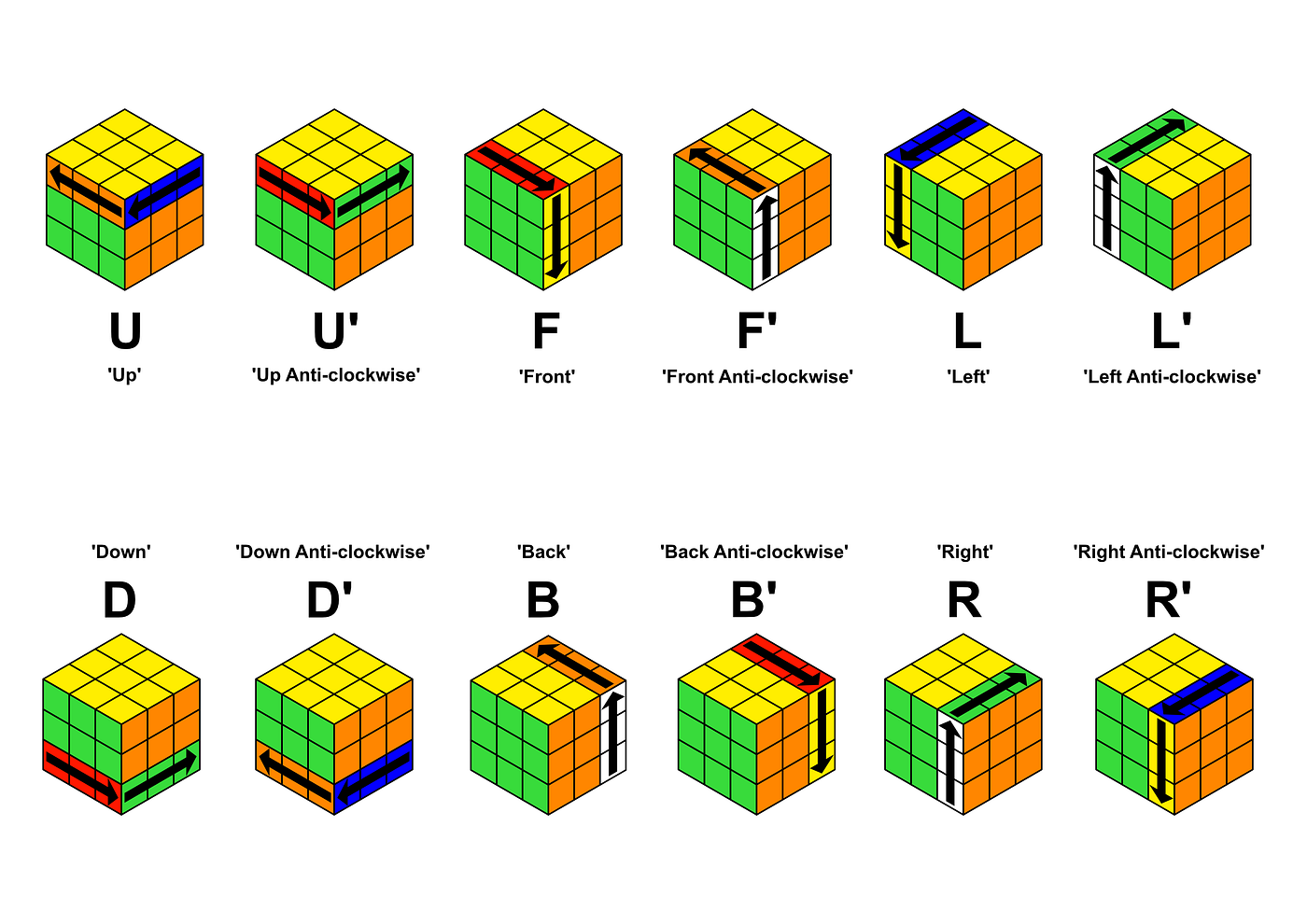
To memorize quickly, you must first speak the language fluently. Notation is simply shorthand:
- R: Rotate the Right face clockwise.
- R': Rotate the Right face counter-clockwise (prime).
- U2: Rotate the Up face 180 degrees.
- x, y, z: Rotate the entire cube.
However, rote memorization of "R U R' U' R U2 R'" is inefficient. The brain struggles to retain isolated data points. Instead, successful cubers in 2026 rely on pattern recognition. They do not remember the letters; they remember the shape the algorithm creates and the path the pieces take. When you understand the logic—such as how an algorithm swaps two corners while leaving the rest untouched—you create a mental hook that makes retention nearly automatic.
The Trigger System: Breaking Down Complexity into Chunks
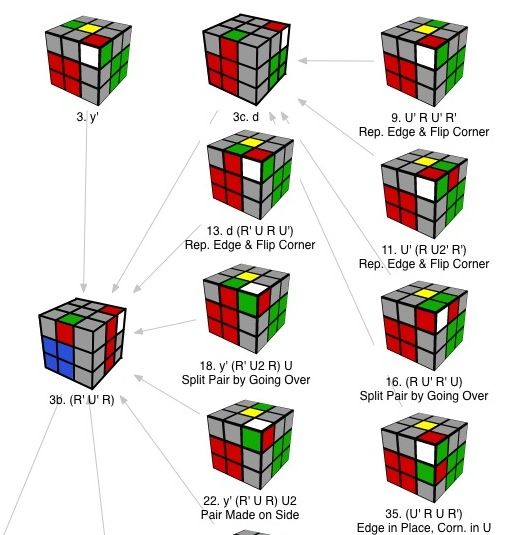
One of the most critical secrets to memorizing Rubik's cube algorithms easily is the concept of the "Trigger." A trigger is a short, recognizable sequence of moves (usually 3 to 4 turns) that acts as a building block for longer algorithms. If you try to memorize a 15-move algorithm as a single block, you will likely fail. If you break it into five 3-move triggers, your brain can store them effortlessly.
Identifying Your Triggers
Most advanced algorithms are constructed from variations of basic triggers. For instance, the "Sexy Move" (R U R' U') is arguably the most important trigger in existence. It appears in dozens of different algorithms across OLL and PLL. Once you internalize this four-move sequence until it feels like breathing, you have unlocked a massive portion of the solution set.
Another powerful trigger is the "Sledgehammer" (R' F R F'), often used in insertion algorithms. By recognizing these sub-sequences, you stop seeing a wall of text and start seeing a Lego structure. You can mentally assemble the algorithm by placing these known blocks together.
Chunking Strategies for Rapid Recall
When approaching a new algorithm, apply the following chunking technique:
- Scan for Repetition: Look for mirrored sequences (e.g.,
A B C ... C' B' A'). These are often easier to memorize because they follow a logical symmetry. - Isolate the "Meat": Identify the core action that solves the problem (e.g., swapping edges) and the setup moves required to get there. Focus your energy on the core.
- Connect the Dots: Practice connecting the triggers slowly. Start with Trigger A + Trigger B. Once smooth, add Trigger C. Gradually build the full chain.
This method reduces the memory load by up to 60%, allowing you to learn complex sets in minutes rather than hours. It transforms the daunting task of memorizing 21 PLL algorithms into the manageable task of mastering 5 distinct trigger patterns.
Visual Encoding and Mnemonics: Turning Moves into Stories
While triggers handle the mechanics, mnemonics handle the psychology. Human brains are evolutionarily wired to remember stories, images, and emotions far better than abstract data. In 2026, top solvers utilize sophisticated visualization techniques to encode algorithms into vivid mental movies.
The Peg System for Cubing
The Peg System involves assigning a specific image to every letter of the alphabet based on its shape or sound.
- R could be a Rabbit hopping.
- U could be a Umbrella.
- F could be a Foot.
When you encounter an algorithm like R U R' U', you don't read the letters; you watch a movie in your mind: A Rabbit jumps (R), opens an Umbrella (U), hops again (R' – maybe the rabbit lands awkwardly?), and closes the umbrella (U'). This narrative stickiness ensures that even if you forget the exact order during a competition, the story provides the correct sequence.
Action-Based Visualization
Beyond simple pegs, you can visualize the physical sensation of the move. This is known as kinesthetic encoding. As you read an algorithm, imagine the specific finger flick required.
- Does
Rrequire a thumb push or a finger snap? - Does
U2feel like a double tap or a slow turn?
By associating the visual pattern with the tactile feeling, you create a dual-coding effect in your brain. Sources like LearnCube emphasize that "visual tracking" is superior to blind notation reading. Instead of looking at the paper saying "R U R'", look at the corner piece and visualize it moving up, then right, then down. Your brain remembers the trajectory of the piece much better than the command to move it.
The Science of Drilling: Building Unbreakable Muscle Memory
Memorization is only half the battle; drilling is where the magic happens. Knowing an algorithm exists in your head is useless if your fingers cannot execute it under pressure. In the competitive scene of 2026, drills are designed to simulate competition stress while reinforcing neural pathways.
The Repetition Protocol
Consistency is key. Research suggests that spaced repetition is far more effective than massed practice (cramming). Instead of doing one algorithm 100 times in one hour, do 10 repetitions every day for ten days. This allows your sleep cycles to consolidate the motor skills. During sleep, the brain strengthens the synaptic connections formed during the day, turning conscious effort into unconscious ability.
High-Intensity Drill Techniques
To truly master speed, you need variety in your drills:
- Random Scramble Drill: Set a timer for 5 minutes. Generate random scrambles. Every time a specific case appears (e.g., a T-Perm), execute the algorithm as fast as possible without stopping. This builds reaction time.
- Blind Execution: Turn off your phone or close your eyes after setting up the case. Force your brain to retrieve the algorithm purely from memory without visual confirmation of the notation sheet.
- The "Netflix" Test: Perform your drills while watching a distracting video or having a conversation. If you can execute the algorithm smoothly while distracted, you have achieved true muscle memory. This is crucial for competitions where noise and crowd pressure are inevitable.
Utilizing Modern Technology
In 2026, you have access to unparalleled digital tools. Applications like Cubedex allow you to create custom drill sets, track your WPM (algorithms per minute), and analyze your execution consistency. These apps provide instant feedback, highlighting exactly where your timing falters. Using such tools alongside traditional physical practice creates a hybrid training regimen that accelerates progress exponentially.
Method-Specific Strategies: CFOP, Roux, and ZZ
Different solving methods require different approaches to memorization. While the core principles of triggers and visualization apply universally, the volume and nature of algorithms vary significantly.
CFOP: The Volume Game
CFOP is the standard for speedcubing but requires memorizing the most algorithms.
- Strategy: Focus heavily on OLL (Orientation of Last Layer) and PLL (Permutation of Last Layer). There are 57 OLL cases and 21 PLL cases.
- Drill Focus: Since these are executed entirely on the last layer, practice them in isolation. Use a timer to ensure you aren't pausing to think. Group similar algorithms (e.g., all the "Sune" variants) to notice patterns in their notation.
- Local Context: Many local cubing groups in cities like Austin, Toronto, and London host weekly "OLL/PLL nights" where members teach each other mnemonics. Participating in these community events can provide fresh perspectives on difficult algorithms.
Roux: Efficiency Over Volume
The Roux method focuses on block-building and typically uses fewer algorithms than CFOP, relying more on intuitive F2L and M-slice moves.
- Strategy: Prioritize understanding the M-slice (middle slice) rotations. Roux solvers often memorize fewer final layer algorithms but must be proficient in edge orientation and positioning without rotating the whole cube.
- Drill Focus: Practice lookahead extensively. Since Roux relies on solving pairs, your drill should focus on identifying the next pair while finishing the current one.
ZZ: Edge-First Logic
The ZZ method solves edges first, eliminating the need for cube rotations (y moves) during the last layer.
- Strategy: The primary memorization challenge here is the EOLine and the specific edge permutation algorithms.
- Drill Focus: Because ZZ minimizes cube rotations, your drills should emphasize maintaining orientation. Practice algorithms where the cube stays fixed in space to build the specific finger tricks required for E-permutations.
Overcoming Plateaus: Advanced Tips for 2026 Solvers
Even with perfect drills, many cubers hit a plateau where improvement stalls. Here is how to break through using advanced 2026 techniques.
Sleep Optimization for Motor Learning
As mentioned earlier, sleep is when the brain wires muscle memory. However, the quality of sleep matters. Ensure you are getting 7-9 hours of restorative sleep. Studies show that napping after a learning session can double retention rates. If you are struggling to memorize a new set of algorithms, try practicing them right before bed. Your brain will continue processing the information overnight, often leading to sudden breakthroughs the next morning.
The Power of Nicknames
Give your algorithms personality. Instead of "Algorithm 14," call it "The Mario Jump" or "The Phone Number." Emotional hooks make memories durable. When you are under pressure in a competition, a silly name can trigger the recall faster than a dry description.
Community and Mentorship
Never solve in a vacuum. Join online forums like Reddit's r/cubing or local clubs. Teaching an algorithm to someone else is the fastest way to solidify your own understanding. Explaining why an algorithm works forces you to engage deeply with the logic, reinforcing the memory trace.
Conclusion: From Hesitation to Flow
Mastering the art of how to memorize and drill rubiks cube algorithms quickly is a journey that blends neuroscience, strategy, and relentless practice. In 2026, the tools are better than ever, but the fundamental principles remain unchanged: understand the logic, break it into triggers, visualize the movement, and drill with purpose.
Remember, the goal is not just to know the moves, but to reach a state of flow where the cube becomes an extension of your body. When you stop thinking about "R U R'" and simply feel the rotation happen, you have transcended the beginner stage. You are no longer solving a puzzle; you are dancing with it. Start today by picking one algorithm, finding its triggers, and drilling it until it feels natural. The sub-10 second solve is waiting for those who are willing to put in the work.
Frequently Asked Questions (FAQ)
Q: How long does it take to memorize all 57 OLL algorithms?
A: For a dedicated solver practicing 30 minutes daily, it typically takes 2 to 4 weeks to memorize all OLL cases comfortably. However, achieving fluid execution and speed usually takes several months of consistent drilling.
Q: Is it better to memorize algorithms by reading notation or watching videos?
A: A hybrid approach is best. Use videos initially to see the finger tricks and visual patterns, then switch to reading notation to reinforce the symbolic memory. Eventually, rely solely on visualization to avoid dependency on external aids.
Q: Can I learn algorithms without knowing the full cube notation?
A: Yes, you can learn basic algorithms using descriptive terms, but to advance to speedcubing, you must master standard notation (R, L, U, D, F, B, and primes). It is the universal language of the community.
Q: What is the most common mistake beginners make when drilling?
A: The most common mistake is practicing too fast too soon. Always prioritize accuracy over speed. If you make mistakes while rushing, you are reinforcing bad habits. Slow down until the movement is perfect, then gradually increase the tempo.