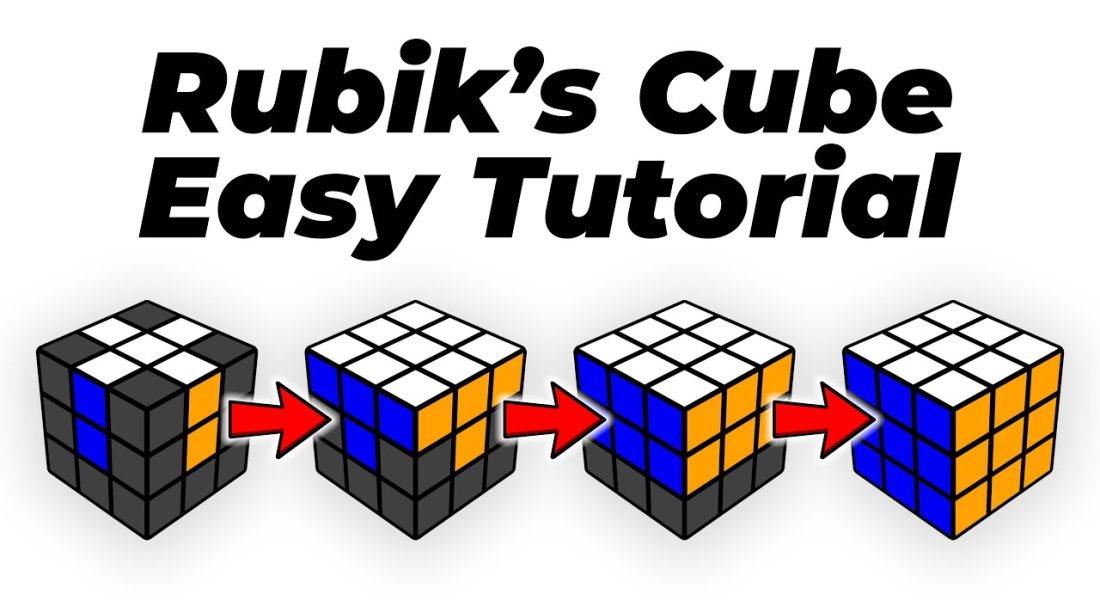
Welcome to the definitive guide for visual learners seeking to master the iconic Rubik's Cube in 2026. If you have ever stared at a scrambled puzzle, feeling overwhelmed by the sheer number of possible configurations, you are not alone. For decades, solving the cube relied heavily on vocal instructions and dense text diagrams that could confuse even the most dedicated enthusiasts. However, the landscape of cubing education has shifted dramatically. Today, the internet offers an unprecedented array of high-definition video tutorials specifically designed for those who learn best by seeing rather than reading.
In this comprehensive article, we will explore the best Rubik's cube tutorials on YouTube for visual learners, curating a list of channels that prioritize clear visuals, slow-motion demonstrations, and interactive elements. Whether you are a complete beginner looking to solve your first cube or an intermediate solver aiming to break into sub-10-second times, there is a visual resource tailored just for you. We will dive deep into the top creators, analyze their teaching methodologies, and provide actionable steps to start your journey today. By the end of this guide, you will have a roadmap to mastering the puzzle using the most effective visual tools available in 2026.
Why Visual Learning is the Key to Mastering the Cube
The mechanics of the Rubik's Cube involve complex spatial reasoning and muscle memory. For many, traditional written algorithms—strings of letters like "R U R' U'"—are abstract and difficult to translate into physical movement without a strong mental map. This is where visual learning becomes indispensable. Studies in cognitive science suggest that individuals who process information visually retain up to 65% more information after three days compared to those who read the same information. In the context of cubing, this means that seeing a move performed slowly, from multiple angles, drastically reduces the time it takes to internalize the algorithm.
The Limitations of Text-Based Guides
Historically, cubing resources were dominated by books and text-heavy websites. While these are still useful for quick reference, they lack the dynamic nature required to teach 3D manipulation. A static image cannot show the direction of rotation, the speed of the turn, or the subtle finger tricks used by speedcubers. Furthermore, text requires the reader to constantly switch between reading instructions and holding the cube, leading to frustration and confusion.
The Advantages of Video Tutorials in 2026
Modern YouTube tutorials have evolved to address these limitations. In 2026, high-speed cameras and advanced editing software allow educators to present content with crystal-clear clarity. You can now find videos that feature:
- Macro lens shots: Zoomed-in views of individual stickers and corner pieces.
- Multi-angle perspectives: Simultaneous front, top, and side views of the cube.
- Slow-motion replays: Breaking down complex sequences into manageable chunks.
- Interactive overlays: Digital annotations highlighting specific moves in real-time.
For visual learners, these features transform the learning process from a confusing chore into an engaging, almost cinematic experience. The ability to pause, rewind, and re-watch a specific segment until the motion feels natural is a game-changer. It eliminates the guesswork and builds confidence rapidly.
Top YouTube Channels for Visual Cubing Education
Identifying the best Rubik's cube tutorials on YouTube for visual learners requires looking beyond subscriber counts. We need channels that demonstrate a commitment to pedagogical clarity. Based on extensive research into current content quality, production value, and user feedback, here are the standout channels dominating the space in 2026.
J Perm: The Gold Standard for Clarity
No discussion of modern cubing education is complete without mentioning J Perm (Dylan Wang). With nearly 2 million subscribers, J Perm has set the benchmark for how instructional content should be produced. His videos are renowned for their clean editing, professional lighting, and precise camera work.
J Perm's approach is uniquely suited for visual learners. He often uses a "show, don't tell" methodology. Instead of just describing an algorithm, he demonstrates the setup moves clearly before executing the main sequence. His "Beginner Method" series is particularly famous because it breaks down the solution into intuitive steps, avoiding unnecessary jargon. For visual learners, his use of color-coded cubes and distinct background contrasts ensures that every piece movement is unmistakable. Whether you are learning the CFOP method or exploring advanced techniques, J Perm's library is a must-watch resource.
CubeSkills: World Champion Instruction
If you want to learn from the absolute best, look no further than CubeSkills, hosted by two-time World Champion Feliks Zemdegs. Feliks brings over a decade of competitive experience to his tutorials, offering insights that go beyond basic solving. His channel focuses on speedcubing efficiency and refining technique.
What makes CubeSkills exceptional for visual learners is Feliks's ability to deconstruct his own solves. He frequently provides "solve reconstructions," showing exactly how he approached a scramble step-by-step. This transparency allows viewers to see the decision-making process behind the moves. His videos often include slow-motion breakdowns of tricky algorithms, highlighting finger independence and wrist flicks that are invisible at normal speed. For anyone serious about improving their average time, Feliks's visual guidance is unparalleled.
LearnCube.org: Interactive Visualizations
While primarily known as an educational platform, LearnCube.org has expanded its presence with high-quality video content that complements its interactive tools. This resource is ideal for learners who benefit from a structured visual path. The site offers step-by-step guides supported by animated diagrams and video snippets that explain notation, algorithms, and layer-by-layer logic.
LearnCube stands out because it integrates interactive visualizations directly into the viewing experience. Viewers can manipulate 3D models of the cube on screen while watching the tutorial, allowing them to practice along in real-time. This dual-mode learning—watching and interacting—is perfect for kinesthetic and visual learners alike. Their coverage of the 2×2, 3×3, 4×4, and 5×5 cubes ensures that progression is smooth and logically connected.
SoupTimmy: Artistic and Creative Approaches
For those who find standard solving methods dry, SoupTimmy offers a refreshing alternative. Timothy Huynh combines puzzle artistry with instruction, creating visually stunning content that captivates the audience. His channel features creative challenges, such as solving cubes while performing other tasks or creating portraits using only cube rotations.
SoupTimmy's videos are highly edited and engaging, making the learning process feel like entertainment. His unique style helps visual learners stay focused and motivated. By presenting the cube as a canvas for creativity, he demystifies the complexity of the puzzle. His tutorials often include behind-the-scenes glimpses into his artistic process, providing a holistic view of how the cube functions in various contexts.
Essential Techniques for Visual Mastery
To truly leverage the power of visual tutorials, you must adopt specific learning techniques. Simply watching videos passively is rarely enough; active engagement is key to building muscle memory and spatial awareness. Here are the essential strategies to maximize your progress.
The Power of Slow Motion and Pause
One of the greatest advantages of digital video is control. When watching a tutorial, do not rush through the footage. Use the pause button liberally. After watching a short segment (5–10 seconds), pause and attempt to replicate the move on your own cube. Only then should you resume the video to check your work. This iterative process reinforces the visual pattern in your brain.
Many top tutors in 2026 explicitly film their videos with this in mind, including frequent pauses and verbal cues that align with visual highlights. Look for tutorials that offer slow-motion replays of critical moments, such as inserting a corner piece or executing a parity algorithm. These放慢 sequences reveal nuances that are lost in real-time play.
Multi-Angle Observation
A single camera angle can sometimes obscure important details. The best Rubik's cube tutorials on YouTube for visual learners often utilize multiple cameras or strategic editing to show the cube from different perspectives. As you watch, try to visualize the cube in 3D space. Ask yourself:
- How does the piece move relative to the center?
- What happens to the adjacent layers during this turn?
- Can I see the orientation change from the back?
Channels like CubeSkills excel at this, often switching angles mid-sequence to ensure nothing is hidden. Developing the habit of mentally rotating the cube based on the visual input will significantly enhance your solving ability.
Color-Coded Visualization
Color plays a crucial role in visual learning. When following a tutorial, pay close attention to how the tutor uses color contrast to distinguish pieces. Many modern tutorials use cubes with high-contrast colors or even digitally highlight specific pieces in the video overlay.
Try to associate specific colors with specific movements. For example, if a tutorial consistently shows a red edge moving to a blue position, commit that visual association to memory. Over time, you will develop an instinctive understanding of piece relationships without needing to count stickers. This color-based mapping is a powerful tool for pattern recognition, a skill vital for advanced methods like CFOP.
Structured Learning Paths for Different Skill Levels
Whether you are holding a cube for the first time or trying to shave seconds off your personal best, there is a structured path available through visual learning. The best Rubik's cube tutorials on YouTube for visual learners cater to every stage of development.
Phase 1: The Absolute Beginner
If you have never solved a cube, start with foundational content. Look for tutorials that emphasize the layer-by-layer method. This approach is intuitive and relies on simple algorithms.
- Key Focus: Understanding cube notation (R, L, U, D, F, B) and the concept of fixed centers.
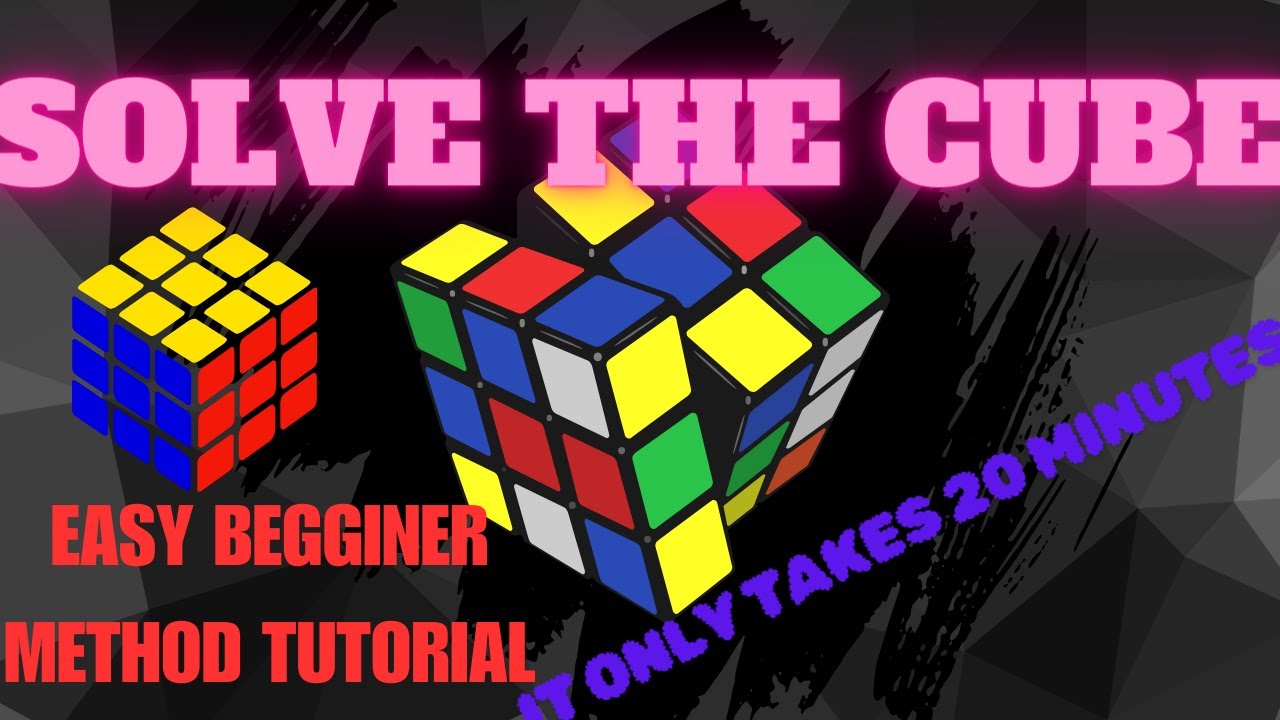
- Recommended Content: Search for "Beginner Method Step-by-Step" on channels like J Perm or SolveTheCube. These videos break down the creation of the white cross, the placement of white corners, and the completion of the first two layers.
- Visual Aid: Ensure the video clearly shows the white face staying on top throughout the process to build consistency.
Phase 2: Intermediate Progression
Once you can solve the cube consistently, it's time to introduce faster methods. The transition to CFOP (Cross, F2L, OLL, PLL) is where visual learning shines brightest.
- Key Focus: F2L (First Two Layers) pairing and intuition.
- Recommended Content: Advanced tutorials from Cube Academy or ModusBeke. These channels offer detailed breakdowns of how to pair edges and corners simultaneously, reducing the number of moves required.
- Visual Aid: Look for videos that use overlays to show the target slots for piece insertion. Seeing the "ghost" of where a piece needs to go is incredibly helpful for developing intuition.
Phase 3: Advanced Speedcubing
For those aiming for sub-10 or sub-7 second solves, the focus shifts to optimization and memorization.
- Key Focus: OLL (Orientation of Last Layer) and PLL (Permutation of Last Layer). There are 57 OLL cases and 21 PLL cases to master.
- Recommended Content: Specialized algorithm libraries from Cube Quest or Z3Cubing. These resources provide exhaustive lists of cases with高清 video demonstrations for every single scenario.
- Visual Aid: Utilize the recognition guides offered by these channels. They teach you to spot patterns instantly, turning complex algorithms into automatic responses triggered by visual cues.
Leveraging Interactive Tools and Communities
In 2026, the ecosystem surrounding visual learning extends far beyond passive video consumption. Engaging with interactive tools and communities can accelerate your mastery of the cube.
Online Simulators and Practice Engines
Many top educational platforms now integrate cube simulators directly into their tutorial suites. These tools allow you to practice algorithms on a virtual cube before attempting them on a physical one.
- Benefits: You can drill specific OLL cases or PLL permutations repeatedly without worrying about damaging your cube or running out of space.
- Features: Look for platforms that offer timed drills and random case generators. This mimics the unpredictability of a real solve and helps improve your recognition speed.
Community Challenges and Feedback
Joining a community of fellow visual learners can provide motivation and constructive feedback. Platforms like Reddit's r/cubing or Discord servers dedicated to specific channels often host weekly challenges.
- Strategy: Share your progress videos and ask for critiques on your hand positioning or cube handling.
- Collaboration: Many channels, such as YouCubers, encourage viewers to submit their own solves for featured spots. This creates a sense of belonging and keeps you accountable to your goals.
Staying Updated with 2026 Trends
The world of cubing is dynamic, with new methods and tools emerging regularly. To stay ahead, follow channels that cover competition footage and innovation. Watching world champions like Max Park or Leo Borromeo compete gives you insight into the latest trends in speedsolving.
- Trend Alert: In 2026, there is a growing trend towards AI-assisted analysis, where software breaks down solves frame-by-frame to identify inefficiencies. Keeping an eye on these technological advancements can give you a competitive edge.
The Role of AI and Augmented Reality in Modern Cubing Education
As we navigate the educational landscape of 2026, the integration of artificial intelligence (AI) and augmented reality (AR) has revolutionized how visual learners approach the Rubik's Cube. No longer are solvers limited to pre-recorded videos; they now have access to real-time, interactive assistance that adapts to their specific learning pace.
AI-Driven Recognition Systems
Advanced algorithms can now analyze a video feed of your cube and overlay digital annotations directly onto the screen as you solve it. Imagine holding your cube while watching a tutorial on your tablet or smartphone; an AR app could detect your piece movements in real-time, highlighting exactly which algorithm you should be executing next. This "smart tutor" feature eliminates the need to constantly pause and rewind, creating a seamless flow between practice and instruction. For visual learners, this means the guidance is always present, acting as a persistent digital mentor that points out mistakes instantly and suggests corrections based on your current configuration.
Virtual Reality (VR) Immersion
For those who prefer total immersion, VR cubing tutorials have reached unprecedented maturity in 2026. Channels like VR Cubing Academy offer fully immersive environments where users don just a headset and step into a 3D world dedicated to solving. In these simulations, the cube floats in space, allowing the user to rotate the entire environment around them. This provides a 360-degree view of every twist and turn, something impossible with traditional flat-screen videos. Visual learners benefit immensely from this spatial freedom, as they can examine the internal mechanics of the cube from angles that would be physically awkward or impossible to achieve in the real world. These virtual sessions often include haptic feedback gloves, adding a tactile dimension that further cements muscle memory through combined sight and touch.
Troubleshooting Common Visual Learning Hurdles
Even with the best resources available, visual learners may encounter specific obstacles during their journey. Understanding these common pitfalls and knowing how to overcome them is essential for sustained progress.
The Problem of "Analysis Paralysis"
One frequent issue for visual learners is getting stuck in a loop of watching tutorials without ever picking up the cube. Because the visual information is so rich and detailed, it can be tempting to consume hours of content rather than practicing. To combat this, adopt the "15-Minute Rule": spend no more than 15 minutes watching a new concept before switching to physical practice. Force yourself to replicate what you saw immediately. If you cannot do it, pause and re-watch only that specific segment. This balance ensures that your brain receives the visual input but also engages the motor cortex to build the necessary neural pathways.
Misinterpreting Mirror Images
Another challenge arises when tutorials are filmed from different perspectives than how you hold your cube. A move shown from the front might look like a mirror image if you are holding the cube differently. This confusion can lead to frustration and incorrect finger positioning.
- Solution: Always note the camera angle at the start of a tutorial. Most professional creators explicitly state whether the video is filmed from the solver's perspective or a fixed external view. If possible, try filming yourself from the same angle as the instructor using a phone mount. Alternatively, practice translating the moves mentally by imagining the cube rotating to match the camera's viewpoint before attempting the physical move.
Overwhelming Complexity in Advanced Methods
When transitioning from beginner methods to advanced systems like CFOP or Roux, the sheer volume of algorithms can feel visually overwhelming. Seeing hundreds of different patterns on a single screen can induce cognitive overload.
- Strategy: Break down advanced methods into micro-skills. Do not try to learn all 57 OLL cases in one sitting. Instead, focus on mastering one case per day, using high-quality visual aids that isolate that specific pattern. Use color-coding charts provided by channels like CubeSkills to group similar algorithms together visually. This chunking technique prevents burnout and makes the massive library of algorithms feel manageable.
Maximizing Retention Through Active Recall
Passive observation is rarely enough to master a complex skill like cubing. To ensure that the visual information you absorb translates into actual solving ability, you must employ active recall techniques. This involves testing your memory of the visual patterns without looking at the solution immediately.
The Blank Paper Method
After watching a tutorial on a specific algorithm, close the video and grab a blank sheet of paper. Attempt to draw the sequence of moves you just watched. Sketch the cube faces, indicate the direction of rotation, and write down the notation. This process forces your brain to reconstruct the visual path from memory, strengthening the neural connections associated with that movement. If you get stuck, open the video and check only the part you missed, then try drawing again. This iterative cycle of recall and correction is far more effective than passive re-watching.
Teaching to Learn
One of the most powerful forms of active learning is teaching. Record yourself explaining a tutorial you just watched. Speak aloud as you demonstrate the moves on your cube, narrating the logic behind each step. Even if you are recording just for yourself, the act of verbalizing the visual instructions reinforces the connection between the image in your mind and the physical action. Many top YouTubers, including J Perm, recommend this method because it exposes gaps in your understanding that you might miss when simply watching. If you stumble over your explanation, you know exactly which part of the visual process needs more attention.
The Future of Cubing Instruction: What Lies Ahead?
As we look toward the future of cubing education in 2026 and beyond, the potential for innovation seems limitless. The convergence of better internet speeds, higher resolution displays, and smarter AI promises even more personalized and effective learning experiences.
Hyper-Personalized Learning Paths
Future tutorials will likely utilize machine learning to create hyper-personalized curricula. Based on your solving speed, error types, and preferred learning style, an AI system could generate custom video sequences tailored specifically to your weaknesses. If you struggle with edge orientation but excel at corner placement, the system will prioritize visual drills for edges, skipping redundant content you already know. This level of customization ensures that every visual learner gets the most efficient path to mastery.
Global Collaboration and Live Coaching
The barrier to entry for high-level coaching is expected to lower significantly. Live streaming platforms will integrate real-time annotation tools, allowing world champions to coach students globally during live solves. Visual learners will be able to see their own cube feed overlaid with expert commentary and arrows pointing to optimal moves in real-time. This democratization of expertise means that anyone with an internet connection can receive world-class visual instruction, regardless of their location or budget.
Gamification of Mastery
Finally, the integration of gamification elements into tutorial platforms will make learning even more engaging. Completing modules, earning badges for mastering specific algorithms, and competing in visual recognition challenges will keep motivation high. These features transform the solitary act of learning into a dynamic, rewarding journey, ensuring that visual learners remain excited and committed to their craft.
Frequently Asked Questions (FAQ)
Q: Can I really learn to solve the Rubik's Cube just by watching videos?
A: Absolutely. In fact, for visual learners, watching high-quality video tutorials is often the most efficient method. The key is active engagement: pause frequently, rewind difficult sections, and immediately practice what you see. Passive watching alone isn't enough, but combining video instruction with deliberate practice yields excellent results.
Q: Which channel is best for someone who struggles with 3D visualization?
A: If you find it hard to visualize 3D movements, start with LearnCube.org or J Perm's beginner series. They use clear color contrasts, slow-motion replays, and multi-angle views that make spatial relationships easier to grasp. Additionally, utilizing their interactive 3D simulators can help bridge the gap between 2D screens and 3D reality.
Q: How often should I watch tutorials versus practicing?
A: Aim for a ratio of roughly 30% viewing and 70% practicing. Spend about 15–20 minutes learning a new concept or refining a specific algorithm, then dedicate the rest of your session to drilling that move until it becomes automatic. Consistency is more important than duration; short, frequent sessions yield better retention than long, infrequent marathons.
Q: Are there free resources available, or do I need to pay for premium courses?
A: The vast majority of the best Rubik's cube tutorials on YouTube for visual learners are completely free. Channels like J Perm, CubeSkills, and SoupTimmy offer comprehensive guides without charge. While some platforms offer paid premium courses with extra perks like personalized feedback or exclusive content, the foundational knowledge required to go from beginner to advanced is readily available to everyone for free.
Conclusion: Your Journey Begins With a Single Turn
Mastering the Rubik's Cube is a journey of patience, persistence, and visual discovery. In 2026, the tools available to visual learners have never been more powerful or accessible. From the crystal-clear productions of J Perm and the world-champion insights of Feliks Zemdegs to the cutting-edge AI integrations and VR simulations of tomorrow, the path to solving the puzzle is clearer than ever before.
Remember that every expert solver was once a beginner staring at a scrambled cube, feeling lost and overwhelmed. The difference between those who succeed and those who quit is simply the willingness to watch, pause, practice, and repeat. By leveraging the best Rubik's cube tutorials on YouTube for visual learners, you are equipping yourself with the ultimate advantage: the ability to see the solution before you can physically execute it.
Start today. Pick a channel, choose a method, and take that first turn. Whether you aim to solve it in under a minute or chase the glory of a world record, the visual roadmap is laid out before you. Embrace the colors, trust the motion, and let the cube become not just a puzzle to be solved, but a canvas for your growing skills. The community is waiting, the algorithms are ready, and your moment to solve is now. Happy cubing!