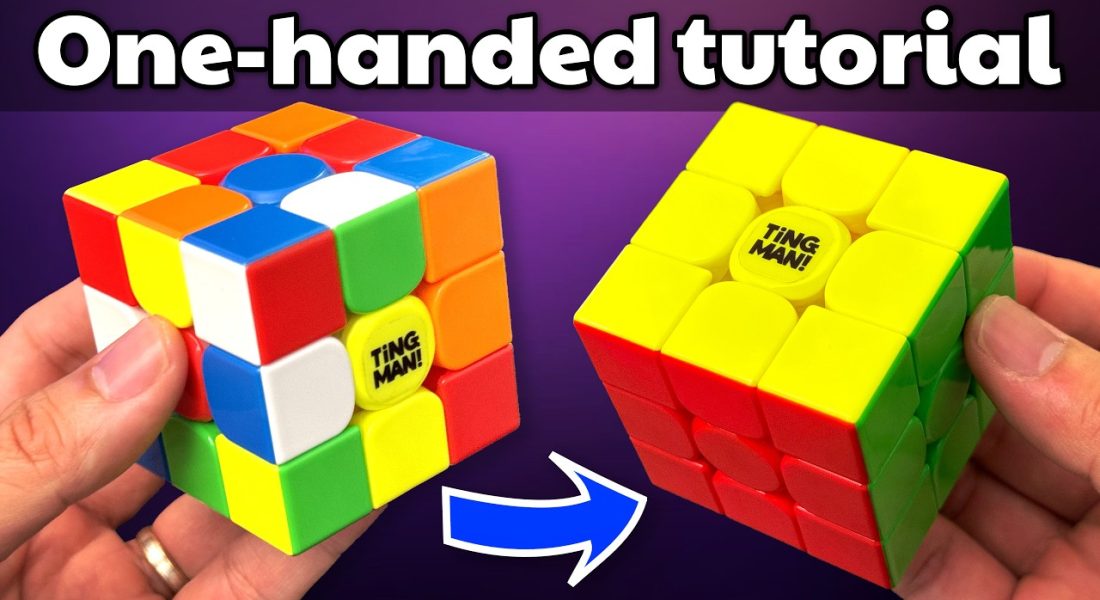
Solving a Rubik's Cube with one hand is the pinnacle of dexterity and mental agility for speedcubers worldwide. In 2026, the sport has evolved significantly, with world records dropping below 6 seconds for the average solve. Whether you are a beginner looking to challenge yourself or an intermediate cuber aiming to break into the top 100 rankings, mastering the one-handed Rubik's cube technique is the next logical step in your journey. This comprehensive guide breaks down exactly how to solve a Rubik's cube one handed step by step, covering everything from choosing the right gear to executing complex algorithms with surgical precision.
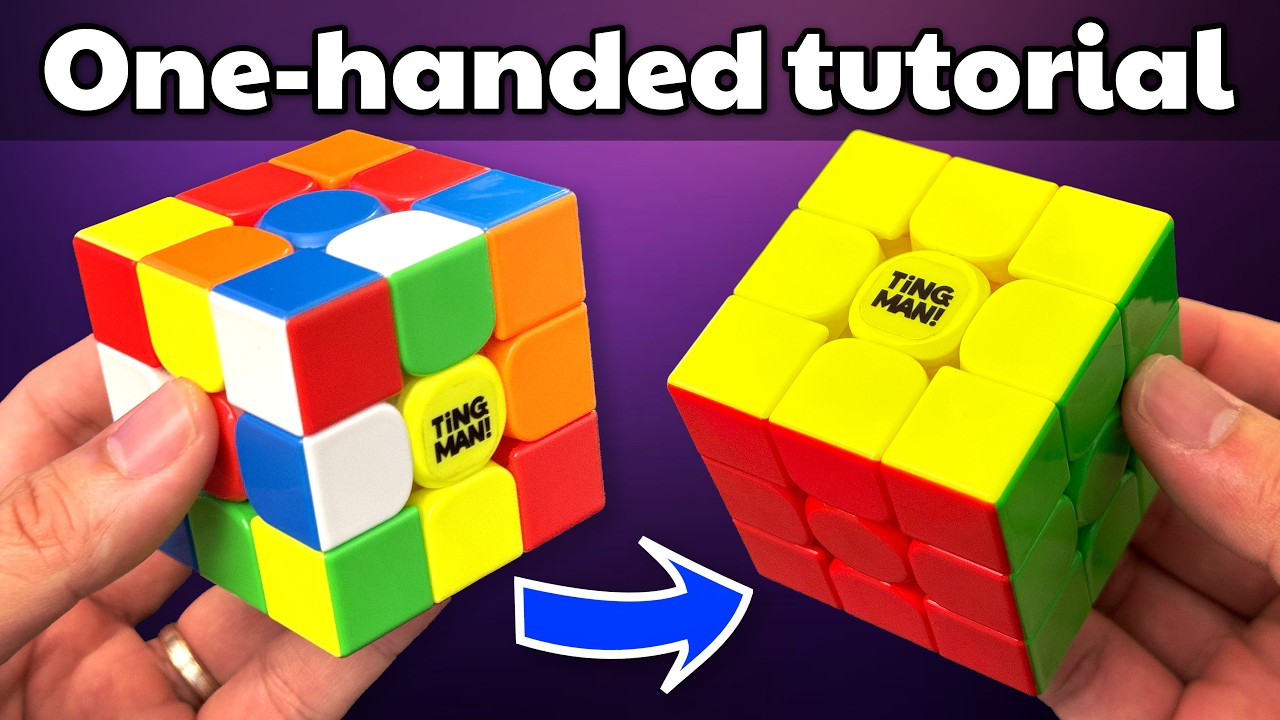
The transition from two-handed solving to one-handed cubing requires a fundamental shift in strategy. You are no longer just rotating layers; you are managing grip stability, finger independence, and muscle memory simultaneously. This article will walk you through the entire process, ensuring you have the knowledge to start your one-handed speedcubing adventure today. We will explore the most effective methods used by top competitors, the specific finger tricks required, and the physical conditioning needed to prevent injury while pushing your limits.
Understanding the Fundamentals of One-Handed Solving
Before diving into the algorithms, it is crucial to understand what makes one-handed solving unique compared to standard two-handed speedcubing. In a traditional solve, your non-dominant hand often stabilizes the cube while your dominant hand performs the turns. In OH (One-Handed) events, governed by the World Cube Association (WCA), you must hold and manipulate the entire puzzle using only five fingers on a single hand.
Why One-Handed Cubing Is Different
The primary difference lies in the grip mechanics. When you use two hands, you can apply force to the cube from opposite sides, allowing for rapid layer rotations. With one hand, you must rely on friction and leverage created by your thumb, index, middle, ring, and pinky fingers. This means that moves which are effortless with two hands, such as an L turn (Left face), become incredibly difficult if you are using your left hand because your fingers lack the opposing pressure.
Most solvers find their left hand more natural for OH because it allows them to perform R (Right) and U (Up) moves easily while holding the cube. However, right-handed dominance is also common. The key is to choose the hand that feels most comfortable for generating torque without excessive strain.
The Importance of Equipment Selection
In 2026, the technology available to speedcubers has reached new heights. Choosing the wrong cube can lead to fatigue and poor performance. For one-handed solving, the consensus among experts is clear: you need a loose, lightweight cube.
- Looseness: A slightly looser tension reduces the resistance when turning faces, preventing your hand from tiring out after just a few seconds. Many top OH solvers use cubes that are specifically tuned for low tension, sometimes even older models that have been worn down over time.
- Weight: Lighter cubes require less muscular effort to rotate. Heavier cubes add unnecessary load to your wrist and fingers during rapid sequences.
- Size: While standard 3×3 cubes are the norm, some advanced solvers prefer slightly smaller variants for better control, though this is a matter of personal preference.
Preparing Your Hand and Mind for Speed
Physical preparation is just as critical as learning the algorithms. One-handed solving places significant stress on the tendons and muscles of the hand. Without proper warm-up, you risk strain injuries that could sideline you for weeks.
Essential Warm-Up Routine
Before attempting a single solve, you must prepare your hand. Spend at least 5 to 10 minutes warming up with gentle stretches. Focus on extending your fingers fully and flexing them back gently. This increases blood flow and flexibility, allowing for smoother movements.
- Finger Extensions: Spread your fingers wide apart and hold for 10 seconds. Repeat three times.
- Wrist Circles: Rotate your wrist slowly in both directions to loosen the joint.
- Grip Strengthening: Squeeze a soft stress ball lightly to activate the flexor muscles without causing fatigue.
Developing Muscle Memory
The goal of practice is to build muscle memory so that your brain doesn't have to consciously think about every micro-movement. When you first start, your hand will feel clumsy, and you might drop the cube frequently. This is normal. Consistency is key. Aim for short, frequent practice sessions rather than long, exhausting marathons. Short bursts allow you to maintain high focus and proper form throughout the session.
Choosing the Right Method: CFOP, ZZ, and Roux
There are several established methods for solving the Rubik's Cube, but not all are equally efficient for one-handed solving. Based on data from the WCA and community analysis, three main methods dominate the OH scene: CFOP, ZZ, and Roux.
CFOP: The Industry Standard
CFOP (Cross, F2L, OLL, PLL) is the most widely used method for OH solving, adopted by the vast majority of the top 100 speedcubers. Its popularity stems from its familiarity; if you already know how to solve the cube two-handed using CFOP, transitioning to one-hand is relatively straightforward.
- Pros: Extensive resources available online, including specific OH algorithms optimized for finger tricks.
- Cons: Can be algorithm-heavy, requiring memorization of many variations.
- Best For: Beginners who want access to the largest pool of tutorials and community support.
ZZ: The Efficiency Specialist
The ZZ method is gaining traction as a superior alternative for OH due to its efficiency. It relies heavily on EOLine (Edge Orientation + Line) early in the solve, which sets up the rest of the puzzle perfectly.
- Pros: After the EOLine step, the remaining steps only require R, U, and L moves, making it highly compatible with one-handed finger tricks. The total algorithm count is significantly lower than CFOP.
- Cons: Steeper learning curve initially; fewer dedicated OH resources compared to CFOP.
- Best For: Intermediate to advanced solvers looking to reduce algorithm load and increase flow.
Roux: The Controversial Powerhouse
Roux is known for its block-building approach but is considered controversial for OH due to the difficulty of performing M-slice moves with one hand.
- Pros: Extremely fast once mastered; minimal rotation of the whole cube is needed.
- Cons: Requires significant training to master M-slices one-handed. Many solvers struggle with the ergonomics of slice moves without the second hand to stabilize.
- Best For: Advanced solvers who have mastered M-slice techniques and want to push speed boundaries.
Step-by-Step Guide: Executing the Cross and F2L
Now that you have chosen your method and prepared your equipment, let's dive into the actual solving process. We will focus on the CFOP method adapted for one hand, as it offers the best balance of accessibility and speed for most learners.
Step 1: Solving the Cross One-Handed
The first step in any solve is creating the cross on the bottom face. In two-handed solving, you might rotate the entire cube to align edges. In one-handed solving, you cannot rotate the whole cube easily without losing your grip. Instead, you must learn to manipulate the cube in your hand to bring edges together.
- Technique: Hold the cube with your thumb on the front face and your middle finger on the back. Use your index, ring, and pinky fingers to pull edges into position.
- Look Ahead: Practice spotting where the next edge needs to go before you finish placing the current one. This reduces pause time between moves.
- Color Alignment: Ensure the side colors of the cross edges match the center pieces of the adjacent faces.
Step 2: Mastering First Layer Corners (F2L)
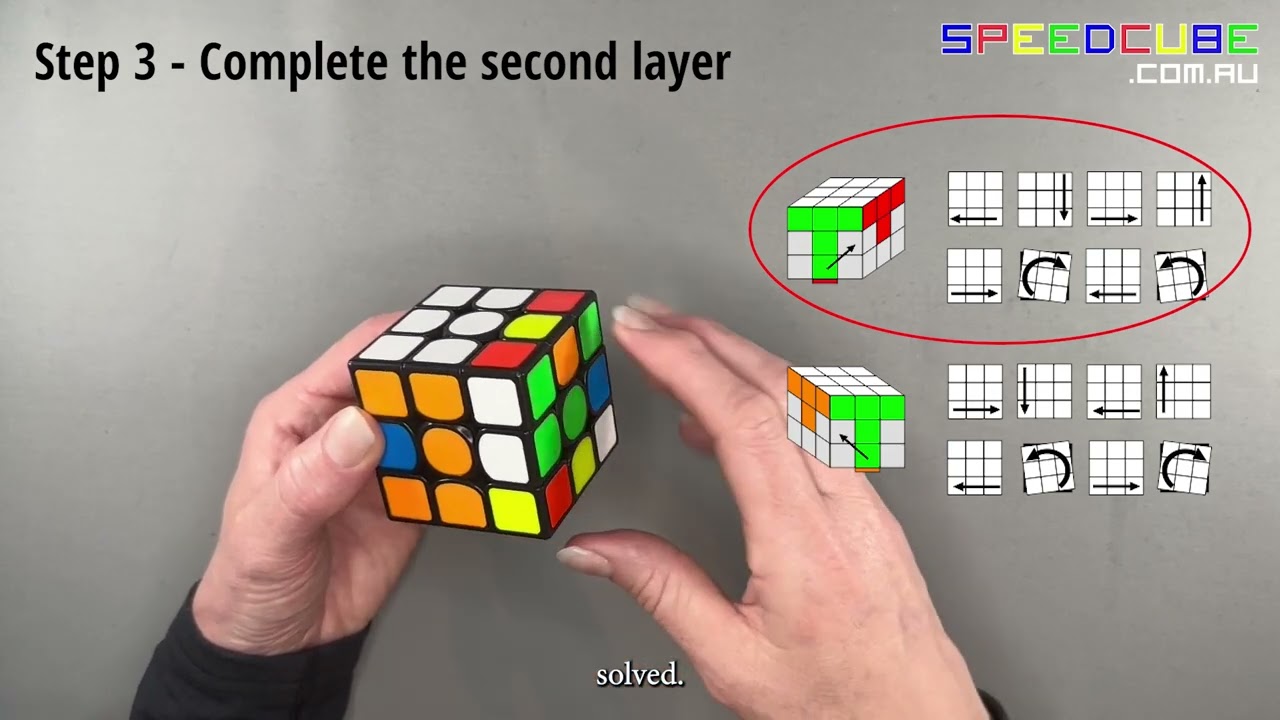
The F2L (First Two Layers) stage is where the real challenge begins. You need to insert corner-edge pairs into their slots without disrupting the cross you just built.
- Grip Adjustment: Shift your grip slightly to expose the slot you are working on. Often, this involves tilting the cube so the target slot faces your palm.
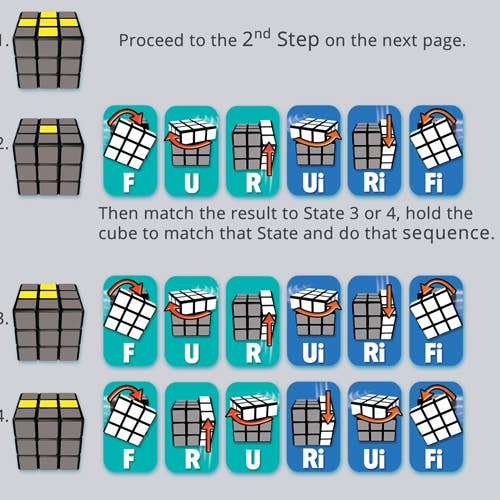
- Finger Tricks: Learn to execute R U R' U' type sequences using only your index and middle fingers. Avoid using your thumb for these delicate adjustments; let your fingers do the work.
- Common Mistake: Trying to force pieces into place. If a piece won't go in, re-scramble the pair and try a different angle. Patience is vital here.
Step 3: Orienting the Last Layer (OLL)
Once the first two layers are complete, you focus on the top face. The goal of OLL is to make the entire top face a single color, regardless of whether the side patterns match yet.
- Algorithm Variety: Depending on your method, you may need to memorize 57 algorithms for full OLL or use a "4-Look" method for beginners (grouping cases).
- One-Handed Optimization: Many standard OLL algorithms involve large rotations that are awkward one-handed. Seek out OH-specific OLL algorithms that minimize cube rotation and maximize finger flicks.
- Practice Drills: Isolate specific OLL cases and practice them repeatedly until you can execute them blindfolded in your mind.
Step 4: Permuting the Last Layer (PLL)
The final stage is PLL, where you move the last layer pieces to their correct positions to complete the cube.
- Speed is Key: PLL algorithms are often long sequences. In OH, even a split-second hesitation can ruin your time.
- Fluidity: Aim for a fluid motion where one finger trick flows naturally into the next. There should be no visible pauses between moves.
- Look Ahead Continuation: As you finish the PLL, your eyes should already be scanning the scrambled state for the next potential scramble pattern, preparing you mentally for the next cycle if practicing continuously.
Advanced Techniques: Finger Tricks and Move Combos
To truly excel in one-handed speedcubing, you must master finger tricks and move combos. These are the secret weapons of world-class solvers like Kian Mansour and Dhruv Sai Meruva.
What Are Finger Tricks?
Standard cubing often involves rotating the entire face of the cube (e.g., turning the whole Right face). Finger tricks involve keeping the cube stationary in your hand and using specific fingers to push or pull the layers.
- Index Finger Flicks: Ideal for quick R and L turns. Snap the index finger against the sticker to rotate the layer rapidly.
- Middle Finger Pushes: Used for U and D turns. Pushing with the middle finger provides more power and control than the index finger alone.
- Thumb Levers: Sometimes used for B (Back) or F (Front) turns depending on the grip, though less common in pure OH styles.
Creating Move Combos
Move combos are sequences of two or three turns performed with alternating fingers to maintain momentum.
- Example Combo: Instead of doing
R U R' U'with separate motions, train your hand to doR(index), immediately followed byU(middle), thenR'(index again), creating a continuous rhythm. - Efficiency: Combos reduce the time spent resetting your grip between moves. They create a "stream of consciousness" effect where the cube seems to solve itself.
Physical Conditioning and Injury Prevention
One-handed solving is physically demanding. Ignoring your body's signals can lead to repetitive strain injuries (RSI), carpal tunnel syndrome, or tendonitis.
Strengthening Exercises
Incorporate hand-strengthening exercises into your daily routine outside of cubing sessions.
- Tennis Ball Squeeze: Helps build overall grip strength.
- Putty Resistance: Using therapy putty to resist expansion strengthens the intrinsic hand muscles.
- Finger Extensions: Use a rubber band around all five fingers and spread them apart against resistance.
Listening to Your Body
If you feel sharp pain, stop immediately. Burning or dull aching is normal during intense practice, but sharp pain indicates injury.
- Rest Days: Take at least one full rest day per week to allow tissues to recover.
- Ice Therapy: Apply ice to sore areas after intense practice sessions to reduce inflammation.
- Proper Form: Ensure you aren't gripping the cube too tightly. A loose grip saves energy and prevents cramping.
Training Strategies for Rapid Improvement
How do you go from solving in 45 seconds to under 15 seconds? Structured practice is the answer.
Deliberate Practice vs. Random Solving
Simply scrambling and solving repeatedly yields diminishing returns. Instead, engage in deliberate practice.
- Drill Specific Cases: If you struggle with a specific OLL case, spend 20 minutes solving only that case until it becomes automatic.
- Timer Usage: Use a timer to track your progress. Record your times for specific stages (e.g., just the F2L) to identify bottlenecks.
The Look-Ahead Technique
Look-ahead is the ability to see the next move while executing the current one. In OH, this is harder because you can't rotate the cube freely to inspect it.
- Solution: Train your peripheral vision to spot piece locations. Develop a habit of finishing a move with your eyes already on the next target slot.
- Pattern Recognition: Learn to recognize common patterns instantly so you don't have to calculate the solution from scratch every time.
Simulating Competition Conditions
To improve your competitive edge, simulate race conditions.
- Blindfolded Scrambles: Have someone scramble the cube while you cover your eyes, then solve it OH. This improves recognition skills.
- Pressure Testing: Solve in front of others or record yourself to get used to the pressure of being watched.
The Mental Game: Overcoming Plateaus and Building Resilience
As you progress from the initial stages of learning one-handed solving to mastering advanced techniques, you will inevitably encounter plateaus. These are periods where your time stops improving despite hours of practice. In the high-stakes environment of 2026 competitive cubing, mental resilience is just as critical as finger dexterity. The transition from a beginner who drops the cube frequently to a competitor who solves in under 10 seconds is often defined by how you handle frustration.
Dealing with Frustration and Tilt
"Tilt" is a common term in speedcubing referring to a state of emotional disturbance that leads to poor decision-making and increased error rates. When you are one-handed, the margin for error is slim; a single slip of the thumb can ruin an entire solve. It is easy to feel discouraged when a specific algorithm fails repeatedly. To combat this, adopt a mindset of analytical observation rather than emotional reaction. Instead of thinking, "I can't do this," ask yourself, "What specifically went wrong? Was my grip too tight? Did I miss a lookahead point?" By isolating the variable, you transform frustration into a solvable problem.
Visualization and Mental Rehearsal
Even without a physical cube in front of you, you can improve your solving ability through visualization. This technique involves mentally walking through a solve step-by-step. Close your eyes and imagine holding the cube. Visualize the texture of the plastic, the sound of the pieces clicking, and the specific finger movements required for each algorithm.
- Step-by-Step Visualization: Start with the cross. Imagine rotating the bottom layer, placing each edge piece. Then move to F2L. Visualize the corner-edge pairs entering the slots. Continue all the way through OLL and PLL.
- Error Simulation: Don't just visualize perfect solves. Visualize yourself making a mistake and then correcting it. This prepares your brain to handle unexpected situations during actual competition, reducing panic when things don't go according to plan.
Building Endurance for Long Solves
While most OH solves are quick, lasting only a few seconds, training sessions can involve hundreds of attempts. This repetitive motion requires significant stamina. Over time, your hand muscles will fatigue, leading to slower turn speeds and decreased accuracy. To build endurance, incorporate "volume training" into your routine. Set a timer for 30 minutes and commit to solving as many times as possible, focusing on maintaining consistent form even as your fingers get tired. This simulates the end-game pressure of a competition round where mental and physical fatigue set in.
Navigating the Competitive Landscape in 2026
The world of one-handed speedcubing has matured significantly. In 2026, the barrier to entry is lower due to accessible online resources, but the ceiling for performance has risen dramatically. Understanding the current landscape helps you set realistic goals and identify areas for improvement.
World Records and Benchmark Times
To understand where you stand, it is helpful to know the current benchmarks. As of late 2025 and early 2026, the average world record for a standard 3×3 one-handed solve hovers around 5.5 to 6.0 seconds. For context, a sub-10-second solve places you in the top tier of casual enthusiasts, while breaking 8 seconds puts you in the national ranking bracket. Solves under 7 seconds are considered elite and are achieved by a dedicated handful of athletes who have spent thousands of hours refining their mechanics.
If your current time is above 20 seconds, focus on consistency and method mastery before chasing speed. If you are already under 15 seconds, the path forward involves optimizing finger tricks, improving lookahead, and perhaps switching to a more efficient method like ZZ if you haven't already.
Community Resources and Learning Platforms
The community surrounding one-handed cubing is vibrant and supportive. In 2026, platforms like YouTube, Reddit, and specialized forums provide an unprecedented wealth of knowledge.
- Algorithm Databases: Websites now offer interactive databases where you can filter algorithms by difficulty, hand preference, and efficiency. You can find custom OH variants of standard algorithms that minimize wrist rotation.
- Video Analysis: Many top solvers upload detailed breakdowns of their solves, showing exactly where they look ahead and how they adjust their grip. Watching these videos can provide insights that text descriptions cannot convey.
- Local Clubs and Online Events: Even in a digital age, local cubing clubs remain vital. They offer a space to meet fellow enthusiasts, share tips, and participate in informal competitions that build confidence.
Equipment Evolution and Customization
Beyond simply buying a cube, many serious OH solvers in 2026 opt for customized equipment. This might include:
- Custom Tension Springs: Adjusting the internal springs to achieve a perfect balance between stability and speed.
- Stickerless vs. Stickers: Some prefer stickerless cubes for better grip friction, while others like the tactile feedback of stickers.
- Grip Aids: While not officially allowed in WCA competitions (which require bare hands), some solvers use temporary grip enhancers during practice to build strength, though they must be removed for official records.
Frequently Asked Questions (FAQ)
Navigating the world of one-handed cubing often raises specific questions. Here are answers to the most common queries to help you on your journey.
Q: Is it harder to learn one-handed solving if I am left-handed?
A: Actually, it can be easier for left-handed individuals to learn one-handed solving using their dominant hand. Since most right-handed people naturally favor the right hand for complex turns, left-handers often find the mechanics of holding and turning with their left hand more intuitive. However, the fundamental physics remain the same regardless of handedness; the key is finding a grip that feels natural and allows for maximum finger independence.
Q: Can I solve a Rubik's Cube one-handed without memorizing algorithms?
A: Technically, yes, but it would be extremely inefficient and slow. Standard methods like CFOP rely heavily on algorithms to optimize the solution process. Without them, you would likely resort to trial-and-error or basic layer-by-layer solving, which could take minutes per solve rather than seconds. Memorizing algorithms is the shortcut that separates hobbyists from speedcubers. However, you can start by learning a few essential algorithms for the cross and corners before tackling the full list.
Q: How long does it typically take to go from zero to a sub-20-second solve?
A: With consistent daily practice (30–60 minutes), most dedicated learners can reach a sub-20-second solve within 3 to 6 months. This timeline varies based on prior experience with two-handed cubing, natural dexterity, and the quality of instruction received. Those with a background in chess or music often adapt faster due to superior pattern recognition and fine motor skills.
Q: Are there any health risks associated with one-handed cubing?
A: Like any repetitive motion activity, there is a risk of strain injuries such as tendonitis or carpal tunnel syndrome if proper form and rest are ignored. However, these risks are easily mitigated by warming up before sessions, stretching afterwards, and listening to your body. Taking regular breaks and varying your grip slightly can also prevent localized stress on specific tendons.
Q: What is the difference between OH and Blindfolded One-Handed solving?
A: Standard One-Handed (OH) solving involves looking at the scrambled cube throughout the entire process. Blindfolded One-Handed (BHOH) adds the challenge of memorizing the cube's state before starting the solve, often with the cube covered or viewed briefly, and then executing the solution without looking. BHOH requires a completely different skill set focused on memory and spatial reasoning rather than visual pattern recognition and speed.
Conclusion: Your Journey to Mastery
Solving a Rubik's Cube one-handed is more than just a party trick or a display of dexterity; it is a profound exercise in patience, precision, and perseverance. In 2026, the sport continues to evolve, offering new challenges and opportunities for growth. Whether you aim to break a personal best, compete in local events, or simply enjoy the meditative flow of manipulating the puzzle, the path to mastery is open to anyone willing to put in the work.
Remember that every world-record holder started exactly where you are now: struggling with their first grip, dropping the cube, and wondering if they had the talent for it. The difference between those who succeed and those who quit is often just the willingness to keep practicing when progress seems slow. Embrace the frustration as part of the learning process. Celebrate small victories, like finally nailing a difficult finger trick or completing a cross without looking away.
As you continue your journey, keep these core principles in mind: prioritize proper equipment, warm up your hands thoroughly, choose a method that suits your learning style, and practice deliberately rather than randomly. Surround yourself with a supportive community, stay patient with your progress, and never stop experimenting with new techniques. The Rubik's Cube is a mirror of your own capabilities; as you refine your one-handed skills, you will find that you are also refining your focus, your problem-solving abilities, and your resilience.
So, pick up your cube, tighten your grip, and make your first turn. The solution awaits, and with every twist, you are one step closer to unlocking the ultimate challenge. Happy cubing!