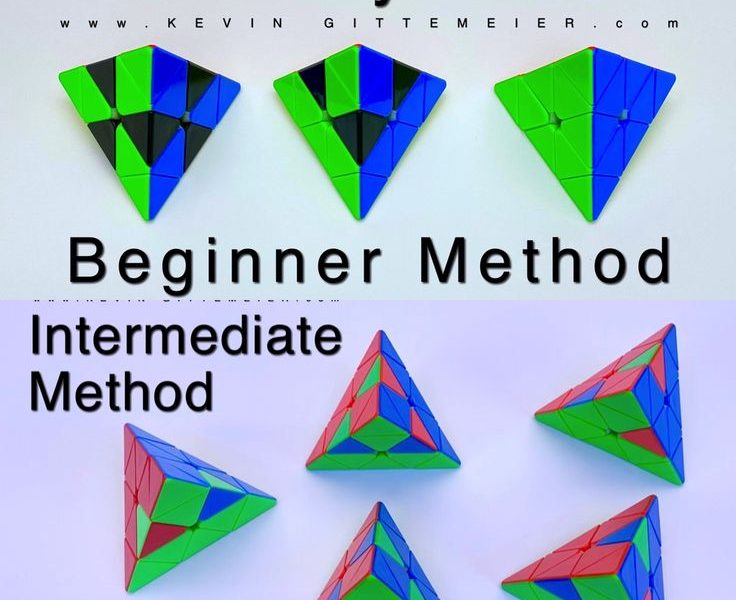
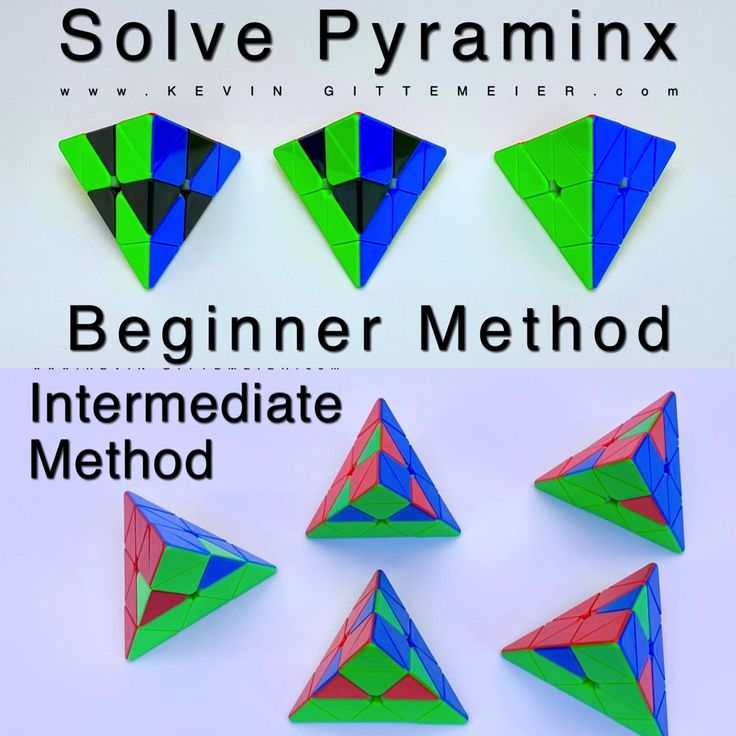
Welcome to the most comprehensive guide on mastering the Pyraminx solution explained for beginners step by step in 2026. If you are holding a tetrahedral puzzle and feeling overwhelmed by its triangular faces, you are not alone. The Pyraminx, often called the "triangle cube," has seen a massive resurgence in popularity among puzzle enthusiasts globally, from the bustling streets of Tokyo to the quiet libraries of London. Unlike the complex 3×3 cube, the Pyraminx is designed with intuition in mind, making it one of the fastest puzzles to learn. However, understanding the specific mechanics of how to align the tips, centers, and edges is crucial for going from a confused beginner to a confident solver in under an hour.
In this article, we will break down every single move required to solve this iconic twisty puzzle. We will cover everything from the basic terminology used by speedcubers to advanced troubleshooting techniques that even intermediate solvers use. Whether you are looking to impress friends at a local coffee shop in Chicago or preparing for your first World Cube Association (WCA) event, this guide provides the exact roadmap you need. Let's dive into the geometry of success and unlock the secrets of the pyramid.
Understanding the Anatomy of the Pyraminx Puzzle
Before you attempt your first turn, you must understand exactly what you are manipulating. Many beginners fail because they try to treat the Pyraminx like a Rubik's Cube, but the mechanics are fundamentally different. The Pyraminx is a regular tetrahedron, meaning it has four triangular faces, six edges, and four corners. To solve it efficiently, you need to master three distinct types of pieces: Tips, Centers, and Edges.
The Tips: Your Starting Point
The Tips are the small, rotating triangular caps located at the very apex of each of the four corners. There are four tips in total. What makes them unique is that they can be rotated independently of the rest of the puzzle. In the context of a pyraminx solution explained for beginners step by step, this is actually the easiest part of the entire process. You do not need algorithms or complex sequences for the tips; you simply twist them until the color on the tip matches the color of the adjacent center piece. Once all four tips are aligned, you have effectively solved 4 out of the 14 movable pieces on the puzzle. This intuitive step builds immediate confidence.
The Centers: Defining the Faces
Directly below each tip lies the Center piece. These are the thicker, stationary triangles that define the primary color of each face. Unlike the core pieces of a 3×3 cube which stay fixed relative to each other, the Pyraminx centers move around the axis, but they maintain their relationship to the tips. There are four axial pieces, and each side has three centers visible when the puzzle is scrambled. Understanding that these centers dictate the goal color for each face is vital. When learning the pyraminx solution explained for beginners step by step, remember that your goal is often to form a solid-colored face, usually starting with yellow or white, depending on your preference.
The Edges: The Core Challenge
The Edges are the long triangular pieces situated between the centers. There are twelve edge pieces in total, and these are the main components you need to manipulate to complete the puzzle. Each edge piece has two colors. Solving the Pyraminx essentially comes down to correctly positioning these twelve edges so that every face displays a single, uniform color. While the tips and centers seem simple, the edges require pattern recognition and specific algorithms to insert without disrupting the work you've already done. Mastering the movement of these edges is the key to unlocking the full potential of the puzzle.
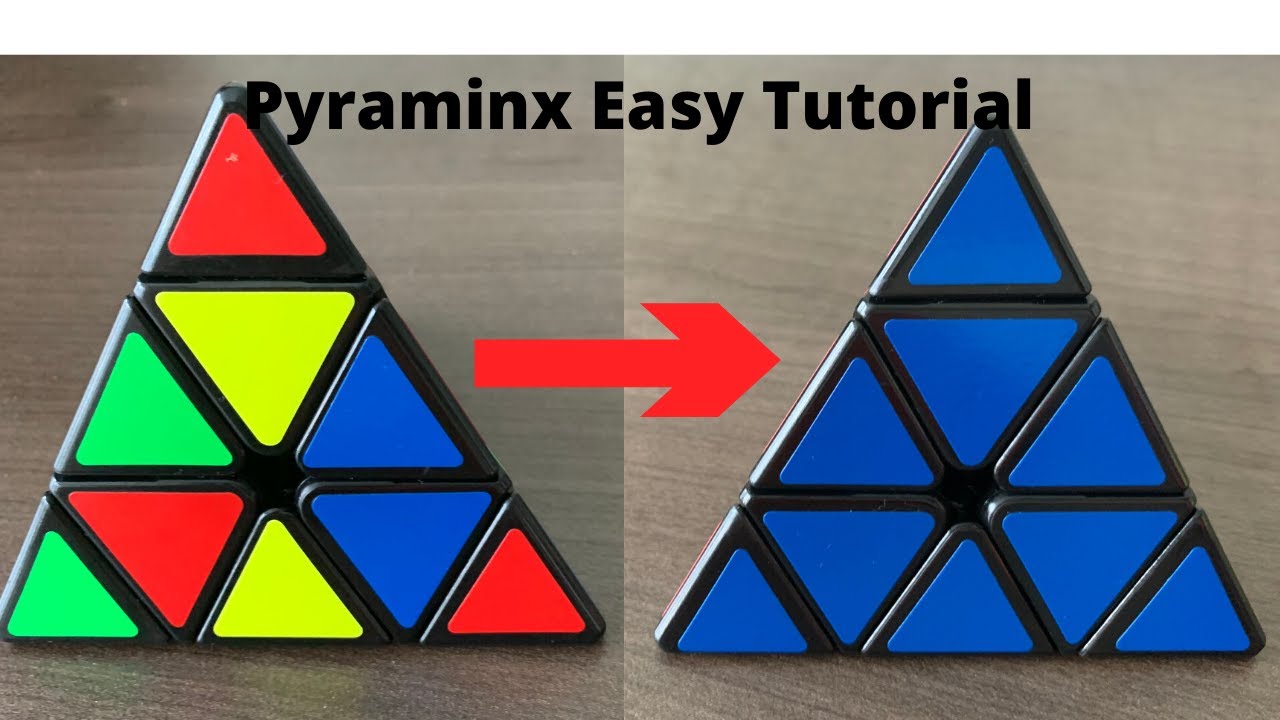
Step-by-Step Beginner Method: From Scrambled to Solved
Now that you understand the anatomy, let's get solving. The most widely accepted method for beginners is the Layer-by-Layer approach. This method is logical, sequential, and relies heavily on intuition rather than memorizing dozens of algorithms. By following these four distinct stages, you will solve the Pyraminx faster than you think.
Step 1: Aligning the Tips Intuitively
This is arguably the most critical first step in any pyraminx solution explained for beginners step by step. Take your scrambled Pyraminx and look at the four tips. Twist each tip individually until the color on the tip matches the color of the center piece directly adjacent to it. For example, if the tip is yellow and the center next to it is yellow, leave it alone. If the tip is blue and the center is green, twist the tip until it becomes green.
Once you have done this for all four corners, rotate the entire puzzle to check your work. You should see four distinct "diamonds" where the tip and the center below it share the same color. Do not worry about the rest of the puzzle yet. This step solves 28% of the puzzle immediately and sets the foundation for everything that follows. It is purely intuitive, requiring zero memorization, which makes it perfect for absolute beginners who want to start solving today.
Step 2: Solving the First Layer (The "Mitsubishi" Logo)
With the tips aligned, your next goal is to solve the centers and the edges surrounding them to form a solid-colored face. This is often referred to as creating the "Mitsubishi" logo on one face. The objective here is to get three centers of the same color together on one face, and then position the three edges connecting those centers to match.
Start by picking a color to solve first, typically the color opposite your dominant hand or the color you find most visually appealing. Look for the three center pieces of that color. Rotate the layers until these three centers form a triangle on one face. Once the centers are grouped, look at the edge pieces connected to them. You need to orient these edges so that their second color matches the centers of the adjacent faces.
If you encounter an edge piece that is flipped incorrectly, you can use a simple algorithm to fix it. Hold the puzzle so the misaligned edge is on the front-right. Perform the sequence: R U R' U'. Repeat this until the edge flips correctly. Then, slide it into place. Continue this process for all three edges on your chosen face. When you succeed, you will have a complete solid-colored face with the tips matching, forming the iconic Mitsubishi logo shape. This completes the first major phase of the puzzle.
Step 3: Inserting the Bottom Layer Edges
Now that one face is solved, flip the puzzle over so the unsolved face is on the bottom. Your goal now is to solve the remaining edges on the bottom layer (the layer adjacent to the solved face). These are the edges that connect the solved face to the unsolved tips.
Look for an edge piece that belongs in the bottom layer. It will have one color matching the solved face and another color matching a side center. Position the puzzle so that the target slot is in the front-right position. If the edge piece is already in the correct spot but flipped, use the algorithm L' U' L U to flip it. If it is in the wrong position, move it to the top layer first using standard rotations, then bring it down into the correct slot.
There are only two main scenarios you will face here:
- Correct Orientation: The piece is in the right spot but twisted. Use R U' R' U to cycle it.
- Wrong Orientation: The piece needs to move to a different slot. Use the same algorithms to cycle the edges until they fall into place.
This step requires patience. Unlike the 3×3 cube where you might lose progress, the Pyraminx is forgiving. If you make a mistake, you can usually undo it quickly. Focus on getting the colors to match the adjacent centers. By the end of this step, you should have two fully solved faces (the top and the bottom), leaving only the middle ring of edges unsolved.
Step 4: Solving the Final Layer (The Last Ring)
You are now in the final stretch. You have two opposite faces solved, and the four tips are aligned. The only thing left is the middle ring of four edge pieces. These edges are currently mixed up, and you need to permute them until each edge connects two matching colors.
This stage introduces the most common algorithms for the Pyraminx. There are generally two cases you will encounter:
- Case A: Two adjacent edges are swapped, and the other two are swapped diagonally.
- Case B: All four edges are in the wrong positions.
For Case A, hold the puzzle so the two correct edges are on the left and right. Perform the algorithm: R U R' U R U2 R'. Watch closely as the edges cycle into their correct positions. For Case B, you may need to apply the algorithm twice or combine it with a rotation of the whole puzzle to set up Case A first.
Once you execute the correct sequence, the four edges will snap into place. Verify that each edge connects two identical colors. Finally, double-check your tips. If any tip is mismatched after the last layer is solved, simply twist that specific tip to match the center below it. Congratulations! You have successfully completed the Pyraminx solution explained for beginners step by step.
Advanced Techniques and Troubleshooting for Faster Solves
While the beginner method gets you home, speedcubers in 2026 utilize refined techniques to solve the Pyraminx in under ten seconds. Transitioning from a casual solver to a competitive one involves understanding commutators, improving your finger tricks, and mastering the OLL (Orientation of the Last Layer) cases without looking.
Mastering Finger Tricks
One of the biggest bottlenecks for beginners is reliance on wrist turns, which are slow and prone to error. To increase your speed, practice finger tricks. Instead of rotating the entire face with your wrist, use your thumb, index, and middle fingers to flick specific layers. For example, when performing the R U R' U' algorithm, practice initiating the 'R' move with your right thumb and the 'U' move with your index finger. This reduces muscle fatigue and allows for much faster execution during competitions. Spend time practicing these isolated moves until they become muscle memory.
Dealing with Parity Issues
Although rare, some solvers encounter situations where an edge seems impossible to orient correctly, known as a parity issue. In the standard Pyraminx, true parity does not exist because the puzzle is simpler than the 3×3. However, if you feel stuck, it is usually a case of misalignment. Re-scan your previous steps. Did you accidentally skip flipping an edge in Step 3? Often, simply re-doing the problematic section with extra care resolves the issue. Remember, the Pyraminx has only 933,120 possible permutations, making it highly predictable compared to larger cubes.
Recognizing Patterns Instantly
Expert solvers do not calculate moves; they recognize patterns. As you practice the beginner method repeatedly, you will start to notice recurring shapes. For instance, seeing three yellow centers automatically triggers the memory of the "Mitsubishi" algorithm. Try to train your brain to identify these configurations instantly rather than analyzing the geometry each time. This shift from analytical thinking to pattern recognition is the hallmark of an advanced solver.
Why the Pyraminx is the Perfect Gateway Puzzle
In the world of twisty puzzles, the Pyraminx holds a unique地位. It was actually invented before the modern 3×3 Rubik's Cube, yet it gained massive popularity only after the cube took over the world. Many people mistakenly believe the Pyraminx is harder because of its strange shape, but the reality is quite the opposite. It is significantly easier to learn and often faster to solve than a standard 3×3 cube.
Lower Cognitive Load
The primary reason the Pyraminx is so accessible is its lower cognitive load. With a 3×3 cube, you have to worry about corner orientation, edge orientation, and layer permutation all at once. The Pyraminx simplifies this by separating the tips (which are trivial) from the rest. You solve the tips, then the centers, then the edges. This linear progression allows beginners to experience success early, which is crucial for building motivation. Statistics from the WCA show that the average solve time for a Pyraminx is drastically lower than that of a 2×2 or 3×3 for new learners.
Building Foundational Skills
Solving the Pyraminx teaches fundamental skills that transfer directly to other puzzles. The concept of layer-by-layer solving, understanding piece relationships, and executing algorithms are all honed here. Once you master the Pyraminx, moving on to the Skewb or even the Megaminx feels much less intimidating. The spatial reasoning developed while twisting a tetrahedron enhances your ability to visualize 3D structures, a skill beneficial in fields ranging from engineering to art.
The Social Aspect
Beyond the mechanics, the Pyraminx is a social connector. Because it looks unique and solves relatively quickly, it is a conversation starter everywhere. Whether you are at a tech conference in San Francisco, a university campus in Boston, or a local hobby store in Seattle, pulling out a Pyraminx demonstrates curiosity and intelligence. It breaks the ice faster than a standard cube because its geometry is immediately intriguing to observers.
Common Mistakes to Avoid When Learning
Even with a clear guide, many beginners stumble over specific pitfalls. Avoiding these common errors will save you frustration and hours of unnecessary repetition.
Ignoring the Tips
The most frequent mistake is rushing past the tips. Some beginners try to solve the centers first, forgetting that the tips must match. While you can technically solve the puzzle without aligned tips, it makes the subsequent steps significantly more confusing because the reference points for your colors are shifting constantly. Always ensure your tips are matched before proceeding to Step 2.
Overcomplicating Algorithms
Beginners often try to memorize long, complex sequences of moves instead of understanding the logic behind them. The beauty of the Pyraminx is its simplicity. Stick to the basic algorithms like R U R' U' and L' U' L U. Only introduce more complex commutators once you are completely comfortable with the basics. Trying to learn advanced methods before mastering the fundamentals is a recipe for failure.
Not Practicing Consistently
Puzzle solving is a skill that degrades without practice. Solving once a month will not yield improvement. To see real results, aim for short, daily practice sessions of 15–20 minutes. Consistency is far more important than duration. Even during a busy week in New York or Los Angeles, dedicating a few minutes to scramble and solve keeps your neural pathways sharp.
Essential Tips for Maintenance and Lubrication
As you progress in your Pyraminx journey, the physical condition of the puzzle becomes increasingly important. A well-maintained Pyraminx not only lasts longer but also significantly improves your solving speed and accuracy. The friction and tension of the puzzle can change over time, especially if you are solving it frequently during your commute in cities like Miami or during breaks in San Francisco. Understanding how to care for your puzzle is a crucial aspect of becoming a proficient solver.
Regular Cleaning
Dust and grime can accumulate in the gaps between the pieces, causing the puzzle to stick or turn sluggishly. To clean your Pyraminx, gently disassemble it by carefully popping out one of the tips and then removing a center piece. Use a soft brush, such as an old toothbrush, to dust off the internal mechanisms. Avoid using water or harsh chemicals, as these can damage the plastic and the internal springs. A dry, soft cloth is usually sufficient for wiping down the exterior.
Lubrication
If your Pyraminx feels too tight or makes a grinding sound when you turn it, a little lubrication can work wonders. Use a high-quality, silicone-based lubricant designed specifically for twisty puzzles. Apply a small drop to the internal core and the axes where the pieces rotate. Work the lubricant in by scrambling the puzzle thoroughly. Be cautious not to over-lubricate, as excess oil can attract dirt and make the puzzle slippery to hold. Proper maintenance ensures that your practice sessions in places like the bustling cafes of Seattle or the quiet corners of Austin libraries are smooth and enjoyable.
Adjusting Tension
Most modern Pyraminx puzzles feature an adjustable core, allowing you to fine-tune the tension. If the puzzle feels too loose and pieces pop out easily, or too tight and hard to turn, you can adjust the tension screw located inside the core. Use a small screwdriver to make incremental adjustments. Loosen the screw to decrease tension for faster turns, or tighten it to increase stability. Finding the right balance is a matter of personal preference and practice. Many competitive solvers prefer a slightly looser setting to maximize speed, while beginners might find a tighter setting more forgiving.
By incorporating these maintenance practices into your routine, you will extend the life of your Pyraminx and enhance your solving experience. A well-cared-for puzzle is a reliable companion on your path to mastery, whether you are practicing in the vibrant streets of New Orleans or the serene landscapes of Denver.
Preparing for Competitions: From Local Events to the World Stage
Once you have mastered the beginner method and achieved consistent solve times, you might consider entering the competitive circuit. The World Cube Association (WCA) organizes events globally, and the Pyraminx is a standard event in many competitions. Participating in these events not only tests your skills but also connects you with a vibrant community of puzzle enthusiasts.
Understanding Competition Formats
In a typical WCA competition, you will be allocated several attempts to solve the Pyraminx. Your final time is usually the median of your attempts, which helps mitigate the impact of a particularly bad solve. Familiarize yourself with the rules, such as how to start and stop the timer, and the penalties for disallowing a solve (e.g., if the puzzle pops apart). Watching recordings of competitions online can give you a clear idea of what to expect. Many local meetups in cities like Toronto, Sydney, or Berlin offer a welcoming environment for first-time competitors.
Developing a Competition Routine
A consistent pre-solve routine can greatly improve your performance. This might include inspecting the puzzle for 15 seconds, planning your first few moves, and mentally rehearsing the algorithms you are likely to use. Practice this routine during your daily solving sessions to build muscle memory. Additionally, work on your inspection skills: learn to identify the color scheme quickly and spot any potential parity issues early.
Mental Preparation
Competitions can be stressful, especially for beginners. Develop strategies to stay calm, such as deep breathing exercises or positive visualization. Remember that the goal is to improve and enjoy the experience, not just to achieve a personal best. Many solvers find that the social aspect of competitions—meeting new friends, sharing tips, and celebrating others' successes—makes the pressure feel lighter.
By preparing thoroughly, you can turn your Pyraminx skills into a competitive advantage. Whether you are aiming to qualify for the World Championship or simply want to participate in your local meet, the journey is rewarding and full of learning opportunities. The community is supportive, and every competition is a step toward greater mastery.
Frequently Asked Questions (FAQ)
Q: How many possible permutations does a Pyraminx have?
A: The standard Pyraminx has 933,120 possible permutations. This number is significantly smaller than the 3×3 Rubik's Cube's 43 quintillion permutations, making the Pyraminx much more approachable for beginners.
Q: What is the current world record for solving a Pyraminx?
A: As of 2026, the single solve world record stands at an impressive 0.91 seconds, set by a top competitor from Europe. The average of five solves record is also in the sub-two-second range, demonstrating the high level of skill achieved by elite cubers.
Q: Can I solve a Pyraminx without using any algorithms?
A: Yes, it is possible to solve a Pyraminx purely through intuition, especially if you are a strong spatial reasoner. However, learning a few basic algorithms, such as those for flipping edges, will greatly reduce the time and effort required, particularly for beginners.
Q: Are there different types of Pyraminx puzzles?
A: Absolutely. In addition to the standard Pyraminx, there are variations like the Pyraminx Crystal (a larger, more complex version), the Master Pyraminx (similar to a 4×4 but in pyramid shape), and the Pyraminx Duel (a two-player puzzle). Each variant offers unique challenges and learning experiences.
Q: How often should I practice to see improvement?
A: Consistency is key. Practicing for 15–20 minutes daily is far more effective than a single long session once a week. Regular practice helps build muscle memory, improve pattern recognition, and maintain fluidity in your moves.
Conclusion
Mastering the Pyraminx is a fulfilling journey that blends logic, dexterity, and patience. From the initial confusion of a scrambled tetrahedron to the satisfying click of the final piece falling into place, each solve is a small victory that builds your confidence and problem-solving skills. The pyraminx solution explained for beginners step by step laid out in this guide provides a clear, actionable path to success, ensuring that you never feel lost along the way.
As you continue to practice, remember that the Pyraminx is more than just a puzzle—it is a gateway to a global community of enthusiasts, a tool for cognitive development, and a source of endless entertainment. Whether you are solving it during a quiet evening in a Parisian apartment or showing it off to friends at a beachside cafe in Barcelona, the Pyraminx connects you to a world of challenge and achievement.
Don't be discouraged by early mistakes; they are an integral part of the learning process. Embrace the challenge, refine your techniques, and soon you will find yourself not only solving the Pyraminx with ease but also exploring more complex twisty puzzles. The skills you develop here will serve you well in any puzzle you tackle next.
In 2026 and beyond, the Pyraminx remains a timeless classic, continually attracting new solvers with its elegant design and intuitive solution. So grab your puzzle, follow the steps, and join the millions who have discovered the joy of solving the triangle cube. Your next solve awaits—make it count.