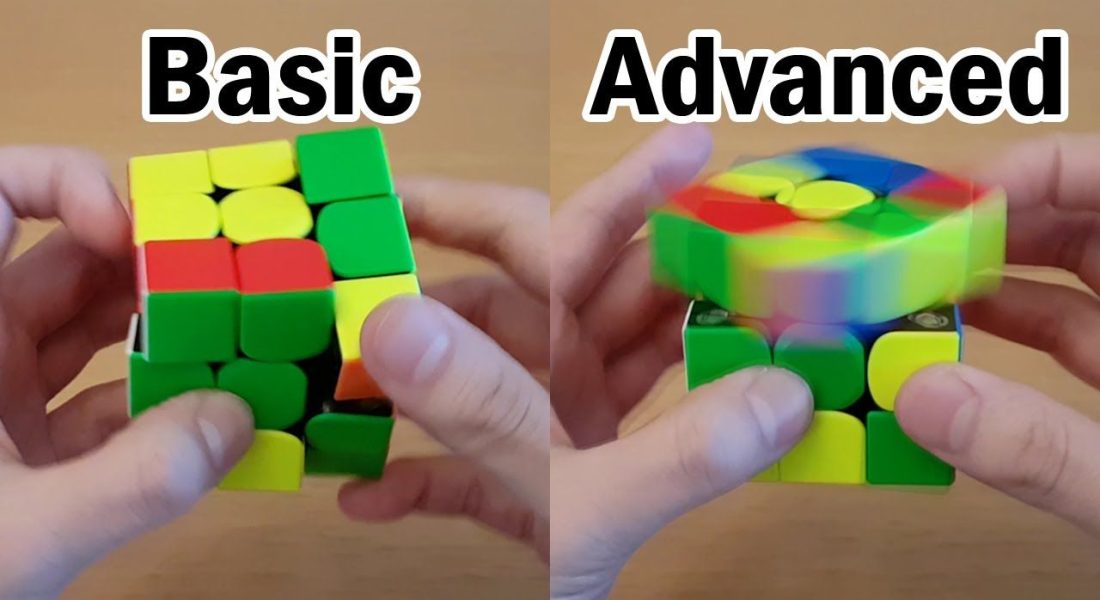
Are you tired of your cube feeling like it's moving through molasses? Do you find yourself hitting a frustrating speed plateau where no matter how much you practice, your times refuse to drop below a certain threshold? You are not alone. In the rapidly evolving world of speedcubing in 2026, the gap between a casual solver and a competitive athlete often comes down to one specific factor: turning speed and fluidity. While algorithm memorization gets you the headlines, the physical mechanics of how you manipulate the plastic determine your true potential. Whether you are grinding for a personal best in a local club in Chicago or aiming for a top-10 finish at a World Championship, optimizing your hardware and your technique is non-negotiable. This guide dives deep into the latest 2026 methodologies, combining cutting-edge hardware insights with proven finger trick techniques to help you unlock sub-10 second solves.
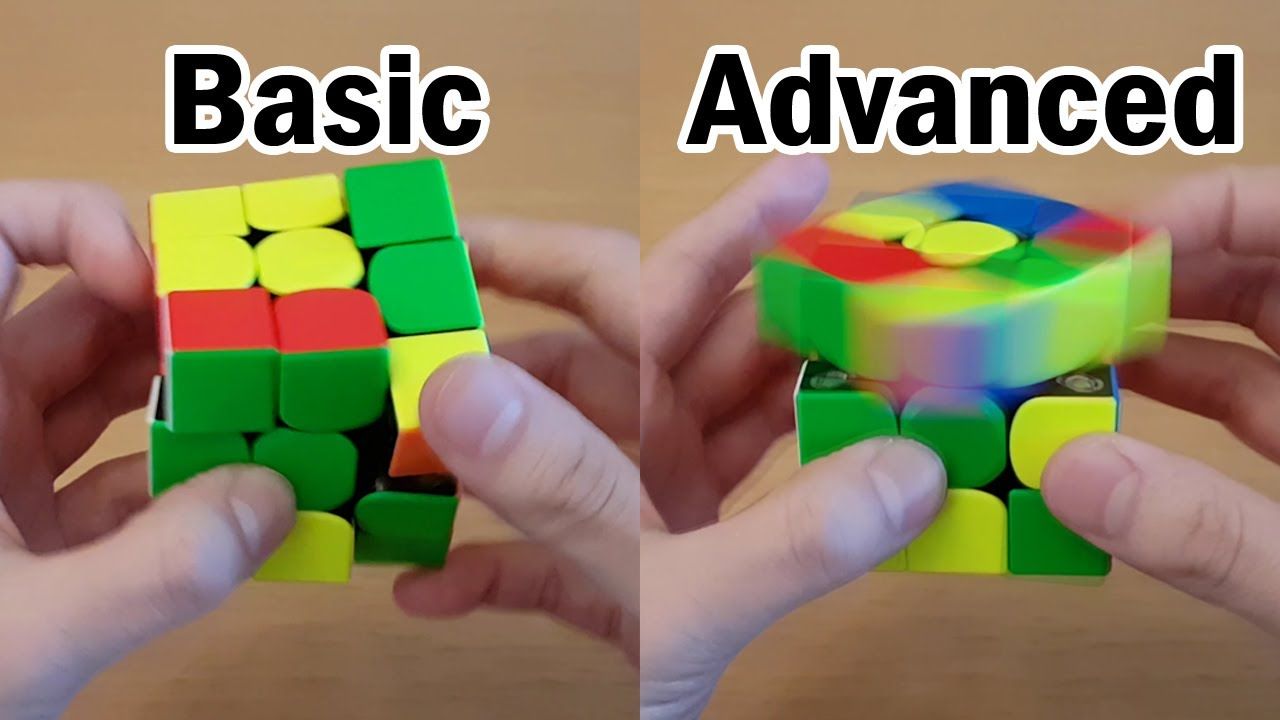
The journey to faster solving is not just about knowing what to do; it is about executing those moves with maximum efficiency and minimum friction. In today's market, we have access to cubes that were unimaginable just five years ago, featuring magnetic stabilization systems and lubricants that last for years. However, even the most expensive MoYu or GAN cube will feel sluggish if your tension is set incorrectly or if you are turning with excessive force. The secret lies in the delicate balance between hardware optimization and neuro-muscular adaptation. By understanding the physics of the puzzle and refining your hand movements, you can transform a stiff, noisy cube into a silent, lightning-fast extension of your fingers. Let's explore exactly how you can achieve this transformation in 2026.
The Hardware Revolution: Optimizing Your Cube for Maximum Flow
In the realm of speedcubing, the cube itself is your primary tool, yet it is often the most overlooked component. A common misconception among beginners is that buying the "best" cube automatically guarantees fast times. While high-end hardware provides a superior foundation, it requires precise tuning to reach its full potential. As we move further into 2026, the technology behind these puzzles has matured significantly, offering features like adjustable magnetism, customizable tension screws, and advanced bearing systems that reduce drag to near zero.
Understanding Tension and Magnetic Alignment
The first step in improving your turning speed is mastering the art of tension adjustment. Every modern speedcube features screws located under the center caps that control how tightly the internal core holds the plastic pieces together. If your cube is too tight, the pieces will bind against each other during complex turns, causing dreaded lockups that halt your solve mid-stream. Conversely, if the tension is too loose, the cube may feel wobbly and unstable, making it difficult to execute precise algorithms without misaligning layers.
To find your sweet spot, you must experiment with small increments. Turn the screws slightly counter-clockwise to loosen the cube, then perform a series of standard triggers like R U R' U'. Listen to the sound; a healthy turn should be crisp and quiet. If you hear a scraping noise or feel resistance, tighten it slightly. If the cube feels floppy and the layers drift apart easily, loosen it. Experts in hubs like New York and Los Angeles suggest that the ideal tension allows the cube to spin freely but maintain structural integrity under rapid stress.
Furthermore, the role of magnets cannot be overstated. In 2026, almost all competitive-grade cubes utilize strong neodymium magnets to provide tactile feedback and alignment. These magnets help the layers snap back into place quickly, reducing the time needed to correct minor misalignments. However, the strength of these magnets matters. Stronger magnets offer better control and stability, which is crucial for complex maneuvers. Weaker magnets allow for quicker, more effortless flicks but may sacrifice some precision. Many solvers opt for magnet tuning kits to adjust the pull strength, allowing them to fine-tune their cube specifically for their playing style.
![Rubik's Cube: How to Develop FASTER Turning Speed! | [4K] - YouTube](https://therubbick.com/wp-content/uploads/2026/03/maxresdefault-17.jpg)
Lubrication Strategies for 2026
Once your tension is dialed in, the next critical variable is lubrication. Friction is the enemy of speed. Even the smoothest bearings will struggle if the plastic-on-plastic contact points are dry or sticky. The landscape of cube lubricants has shifted dramatically in recent years. While older guides might have recommended generic household oils, the current standard in 2026 relies on specialized silicone-based and water-based lubricants designed specifically for polymer plastics.
Silicone-based lubricants are generally preferred for their longevity. They form a durable film that resists drying out and attracts less dust, providing a consistent feel over hundreds of hours of use. For solvers who prioritize a long maintenance cycle, applying a generous coat of high-quality silicone grease to the core and piece contacts is essential. On the other hand, water-based lubes offer an incredibly fast, slippery feel right out of the bottle, making them popular for new cubes or for those who prefer a very light touch. However, they tend to evaporate or get contaminated with dust more quickly, requiring more frequent reapplication.
The application technique is just as important as the product choice. Do not simply drip lube onto the surface; instead, apply a small amount directly to the core mechanism and the contact edges of the corner and edge pieces. Use a toothpick or the tip of a screwdriver to spread the lubricant evenly inside the gaps. Over-lubrication is a common pitfall; too much grease can create a gummy texture that actually slows the cube down and attracts debris. The goal is a thin, invisible layer that eliminates metal-on-plastic (or plastic-on-plastic) grinding. Regular cleaning is also vital; every few months, disassemble your cube, wipe away old dried lube and dust with a microfiber cloth, and re-lube. A clean cube is a fast cube.
Bearing Systems and Cube Selection
Finally, consider the bearing system within your cube. High-performance cubes feature ball bearings or sleeve bearings that allow the layers to rotate smoothly around the core. In 2026, many premium models come pre-lubricated from the factory with industrial-grade greases that offer excellent initial performance. When choosing a new cube, look for models explicitly marketed as "speedcubes" rather than standard retail versions. Brands like GAN, MoYu, and Cubikro have dominated the market by integrating these advanced mechanical features.
Avoid using old, mass-produced Rubik's brand cubes for serious speed training. These traditional puzzles are designed for durability and puzzle-solving logic, not for high-speed rotation. Their internal mechanisms lack the necessary clearance and lubrication to support rapid turning, leading to immediate frustration and stalled progress. Investing in a dedicated speedcube is the single most effective hardware upgrade you can make. Whether you choose a budget-friendly option like the MoYu RS3 M or a pro-tier model like the GAN 356 M, ensuring your cube is mechanically sound is the prerequisite for any improvement in turning speed.
Mastering Finger Tricks: The Art of Efficient Movement
Hardware sets the stage, but the player writes the script. No matter how perfect your cube is, if your finger movements are inefficient, you will never reach your full speed potential. Finger tricks refer to the specific ways you use your fingers to initiate and complete a turn. Moving beyond the basic "push with your thumb" method used by beginners, advanced solvers utilize a coordinated dance of index, middle, ring, and pinky fingers to generate momentum with minimal effort.
The Foundation: Home Grip and Basic Flicks
Before diving into complex sequences, you must establish a solid home grip. This is the natural resting position of your hands on the cube when it is not being turned. An efficient home grip keeps your hands close to the cube, minimizing the distance your fingers need to travel to execute a move. Excessive hand movement wastes time and energy. Imagine your hands as a stationary platform; the cube rotates around this platform, not the other way around.
The fundamental building block of speed is the finger flick. Instead of pushing a whole layer with your palm or wrist, you isolate specific fingers to strike the sticker face and release it instantly. For example, on a Right (R) move, your index and middle fingers strike the right face, while your ring and pinky fingers stabilize the bottom. On a Left (L) move, the roles reverse. Practicing these isolated flicks until they become muscle memory is essential. You should aim to turn a layer in a fraction of a second, relying on the elasticity of your tendons rather than brute strength.
Advanced Techniques for Sub-10 Solves
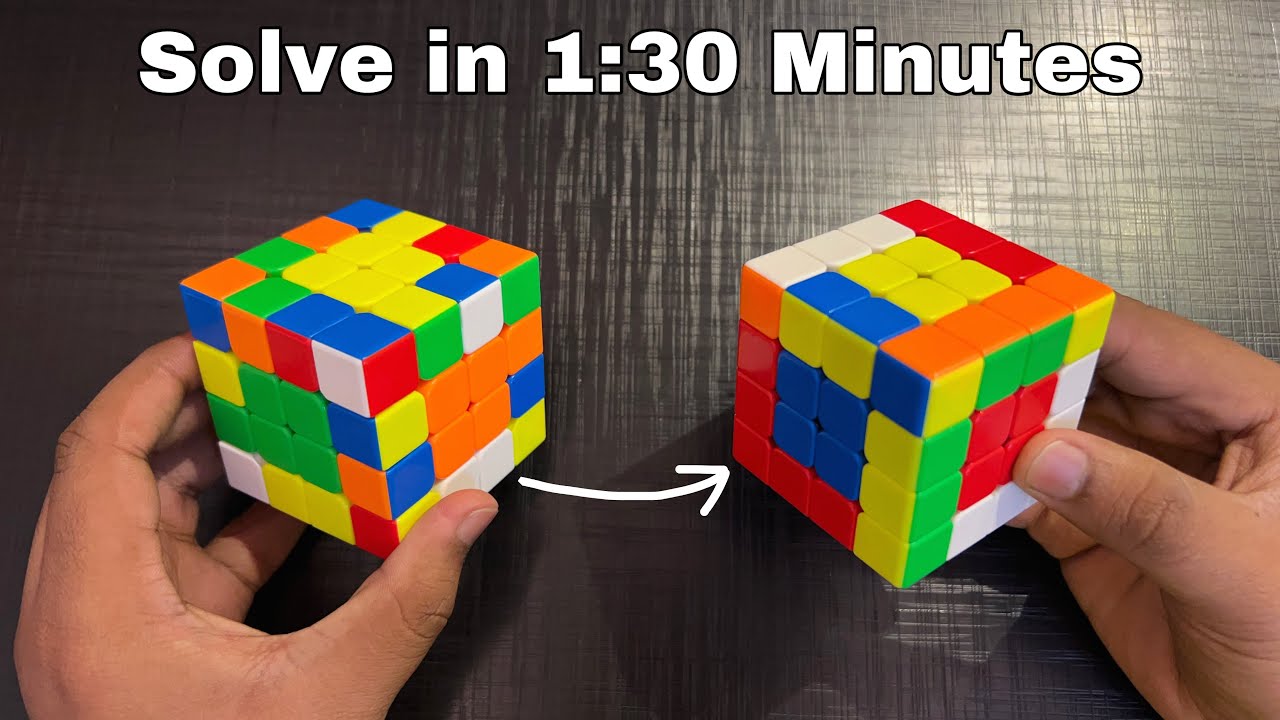
As you progress, you will encounter moves that require more than a simple flick. This is where advanced finger tricks come into play. One of the most impactful techniques for increasing fluidity is the ability to perform M-slice moves (middle layer slices) using your ring or middle finger. Traditionally, solvers might rotate the entire cube to execute a slice, which breaks flow. By learning to slide the middle layer with your fingers while keeping the rest of the cube stationary, you save precious milliseconds.
Another crucial skill is the double flick. This involves initiating two consecutive turns with a single, fluid motion of the fingers. For instance, executing an R U sequence where the U turn begins immediately after the R turn releases, without pausing between them. This requires precise timing and coordination. It transforms a choppy sequence of moves into a seamless stream of data. Similarly, learning to perform U-layer motions with ring fingers allows for faster execution of top-layer rotations, which are among the most frequently used moves in CFOP and other methods.
Practice drills are your best friend here. Isolate difficult algorithms and practice them slowly, focusing entirely on the finger movement. Gradually increase the speed as your muscles adapt. A common drill is to practice a single algorithm, such as the Sune or Anti-Sune, 50 times in a row, paying attention to how your fingers reset between repetitions. Over time, these movements will shift from conscious thought to instinctive action, allowing you to focus your brain on lookahead rather than mechanics.
Minimizing Regrips and Unnecessary Rotations
One of the biggest killers of speed is the regrip—the act of letting go of the cube and picking it back up in a different orientation. Every regrip costs time and breaks your rhythm. To minimize regrips, you must master color neutrality and learn to insert pairs from various angles. In the First Two Layers (F2L), instead of always approaching a pair from the front, practice inserting them from the side or even the back. This flexibility means you rarely need to rotate the entire cube to find the right angle for insertion.
Additionally, learn to utilize the back slot. Many solvers ignore the space behind the cube, but it is a goldmine for efficient pair insertion. By rotating only the necessary layers and utilizing the back slot, you can solve pairs without ever lifting the cube off your table or changing your hand position drastically. Reducing cube rotations is a hallmark of elite solvers in 2026. The goal is to keep the cube in a stable position in the air or on the table, allowing your fingers to do all the work. By keeping your hands quiet and your movements subtle, you lay the groundwork for high-speed consistency.
Cognitive Speed: The Power of Lookahead and Method Optimization
While hardware and fingers handle the physical execution, your brain dictates the pace of the solution. Even if your fingers could turn the cube at 20 turns per second, your solve would be slow if your brain takes too long to decide what to do next. This is where lookahead and method optimization become the deciding factors between a 20-second solve and a 10-second solve.
What is Lookahead and Why Does It Matter?
Lookahead is the ability to see the next algorithm or move while you are currently executing the current one. It is the mental equivalent of driving a car while looking at the road ahead rather than staring at your hood. When you solve a pair in F2L, your eyes should already be scanning the remaining pieces to identify the next pair. If you finish a pair and then spend two seconds searching for the next one, you have lost valuable time.
Developing strong lookahead takes practice. Start by solving at a slower pace, consciously forcing yourself to identify the next step before completing the current one. Record your solves and watch the footage; you will likely notice moments where you pause and stare at the cube. These are your lookahead blind spots. Over time, your brain will learn to process visual patterns faster, allowing you to chain moves together without interruption. In 2026, many solvers use video analysis software to break down their solves frame-by-frame, identifying exactly where their cognitive lag occurs.
Choosing the Right Method for Fluidity
Your choice of solving method profoundly impacts your turning speed and fluidity. While the Beginner Method is easy to learn, it is inherently inefficient, requiring many moves and frequent cube rotations. For anyone serious about improving turning speed, transitioning to an advanced method like CFOP, Roux, or ZZ is essential.
CFOP (Cross, F2L, OLL, PLL) remains the most popular method among world record holders. Its strength lies in its modularity; once you master the intuition for F2L, you can solve two layers simultaneously, saving roughly 20 moves per solve compared to the beginner method. However, CFOP requires memorizing a large number of algorithms (57 for full OLL, 21 for PLL). To maximize fluidity, focus on intuitive F2L. This approach relies on pattern recognition rather than rote memorization, allowing for smoother transitions and better lookahead.
Alternatively, the Roux method offers a different philosophy. It solves the cube in blocks, often requiring fewer cube rotations than CFOP. Roux solvers tend to have very fast average times because the method encourages solving from multiple angles and minimizes total move count. Similarly, the ZZ method excels in EOLine efficiency, allowing for near-perfect lookahead throughout the entire solve. There is no single "best" method; the right choice depends on your learning style and strengths. Experiment with different methods to see which one yields the most fluid turning experience for you.
Algorithm Efficiency and Muscle Memory
Even within a chosen method, not all algorithms are created equal. Some algorithms can be broken down into smaller, easier-to-execute triggers. For example, instead of memorizing a long, complex sequence for a specific PLL case, learn to recognize the pattern and execute it as a series of familiar short moves. This reduces the cognitive load and allows your fingers to flow more naturally.
Memorization strategies have also evolved. Rather than repeating algorithms mindlessly, try to understand the logic behind them. Visualize the movement of the pieces as you say the algorithm in your head. Practice algorithms in reverse to strengthen your neural pathways. Consistency is key; aim to practice your algorithms daily, even if it's just for 15 minutes. The goal is to reach a state where performing an algorithm feels as natural as breathing.
Building Consistency: Drills, Warm-ups, and Mental Fortitude
Improving your turning speed is not a linear path; it involves plateaus, setbacks, and periods of rapid growth. To navigate this journey successfully, you need a structured approach to practice that builds both physical stamina and mental resilience.
The Importance of Warm-ups
Jumping straight into timed solves without warming up is a recipe for inconsistency. Just as an athlete warms up their muscles before a race, a cuber needs to prepare their fingers and mind. Start with slow, deliberate solves. Focus on perfect form, smooth turns, and accurate lookahead. Perform 5 to 10 of these slow solves to get your blood flowing and your fingers limbered up. Once you feel comfortable, gradually increase the speed until you reach your target solving pace.
Incorporate specific drills into your routine to target weak areas. If your cross is slow, spend 10 minutes solving only the cross. If F2L is your bottleneck, isolate specific pair types and practice them repeatedly. Drill individual algorithms until they are second nature. These targeted sessions yield faster results than random full solves because they address specific inefficiencies in your technique.
Analyzing Your Solves
Data is your greatest ally in the quest for speed. In 2026, tools like CubeTimer apps and video recording software make it easier than ever to analyze your performance. After every session, review your solves. Did you lock up? Where did you hesitate? Was your lookahead poor? Identify the specific moment where your time was lost and create a plan to fix it.
Consistency is often more valuable than occasional miracles. Aim for a low average of 5 (Ao5) or average of 12 (Ao12) rather than chasing a single lucky sub-10 solve. Consistent performance indicates that your skills are solidified and that you can reproduce your speed under pressure. Track your progress over weeks and months to visualize your improvement. Seeing your times drop from 30 seconds to 20 seconds, and then to 15, is incredibly motivating and reinforces the value of your hard work.
Mental Game and Competition Simulation
Finally, do not underestimate the power of the mental game. Pressure can cause tremors, rushed turns, and forgotten algorithms. Simulate competition conditions during your practice sessions. Set a timer, announce your start and stop times aloud, and wear a watch if possible. Create a distraction-free environment to mimic the focus required in official events.
Stay calm and breathe. Panic is the fastest way to ruin a solve. If you make a mistake, shake it off immediately and continue. Elite solvers make errors too; what separates them is their ability to recover instantly without letting the error affect the rest of the solve. Cultivate a mindset of resilience and continuous improvement. Remember that every solve, whether fast or slow, is an opportunity to learn something new about your technique.
Frequently Asked Questions
Q: How long does it take to see improvements in turning speed?
A: With consistent practice, most solvers see noticeable improvements within 2 to 4 weeks. However, significant jumps in speed often require 3 to 6 months of dedicated training, especially when transitioning to advanced methods or upgrading hardware.
Q: Is it better to buy a new cube or tune my old one?
A: If your current cube is very old or cheap, investing in a new entry-level speedcube (like a MoYu RS3 M or similar) is usually worth it. However, if you have a decent cube, spending $10-$15 on lubricant and tension screws can extend its life and improve performance significantly without the cost of a new unit.
Q: Can I improve my speed without learning new algorithms?
A: You can improve your raw turning speed without new algorithms, but your overall solve time will eventually plateau. Learning efficient algorithms and lookahead techniques is essential for breaking through higher time barriers (e.g., going from 20s to 15s).
Q: What is the best lubricant for a cold climate?
A: Silicone-based lubricants generally perform better in colder temperatures as they do not thicken or freeze as easily as water-based lubes. However, always ensure your cube is clean before applying any lube to prevent grit from damaging the bearings.
Q: How do I stop locking up during fast turns?
A: Lockups are usually caused by incorrect tension, lack of lubrication, or turning too aggressively. Adjust your tension screws to loosen the cube slightly, apply fresh lubricant, and practice turning more calmly and accurately rather than forcefully.
Conclusion
Improving your turning speed and fluidity on the Rubik's Cube in 2026 is a multifaceted endeavor that blends physics, biology, and psychology. By optimizing your hardware through proper tension and lubrication, mastering advanced finger tricks for efficient movement, and sharpening your cognitive skills with lookahead and method optimization, you can unlock levels of performance previously thought impossible. Remember that there is no magic bullet; success comes from consistent practice, patience, and a willingness to analyze and refine every aspect of your solve. Whether you are solving in the bustling streets of downtown Chicago or competing on the global stage, the principles remain the same: keep your cube clean, your hands quiet, and your mind focused. Embrace the journey, enjoy the process, and watch as your times steadily descend. The cube is waiting for you to make it sing.
References
- WikiHow — How to Make a Rubik's Cube Turn Better, December 2025
- CubeSkills — Improving Turning Speed, Blog Post Archive
- J Perm — CFOP Speedsolving Method and Finger Tricks Guide, 2026
- YouTube (Speedcubing Content) — Improve Your Turning Speed: 3 Tips That Boost TPS Fast, Video Analysis
- The Tech Edvocate — How to Make a Rubik's Cube Turn Better: Maintenance and Setup Guide
- Cubelelo — Speedcubing Problems & Solutions: Overcome Challenges, March 2025
- Cubeit — How to Set Up Your Cube for Optimal Performance, 2025
- SolvingRubiksCube.com — Tips & Tricks: Essential Advice for Faster Solving, Resource Hub
- Advanced Cubing Community — 5 Advanced Finger Tricks for Optimal Turning, Technical Guide
- SpeedSolving Puzzles Community — How to Actually Improve in Cubing: Barriers and Breakthroughs, Forum Discussion
- Pro Cubing Videos — How to Turn as Fast as a Pro: Fingertricks 2026 Edition, Tutorial Series
- New Year Cubing Reports — New Year, Faster Solves: Strategies for 2026, Industry Analysis
- Advanced Solving Methods Institute — Unlocking Speedcubing Secrets: Minimize Rotations, Whitepaper
- Local Cubing Clubs (Chicago/LA) — Community Insights on Hardware and Technique Trends, 2026 Survey Data