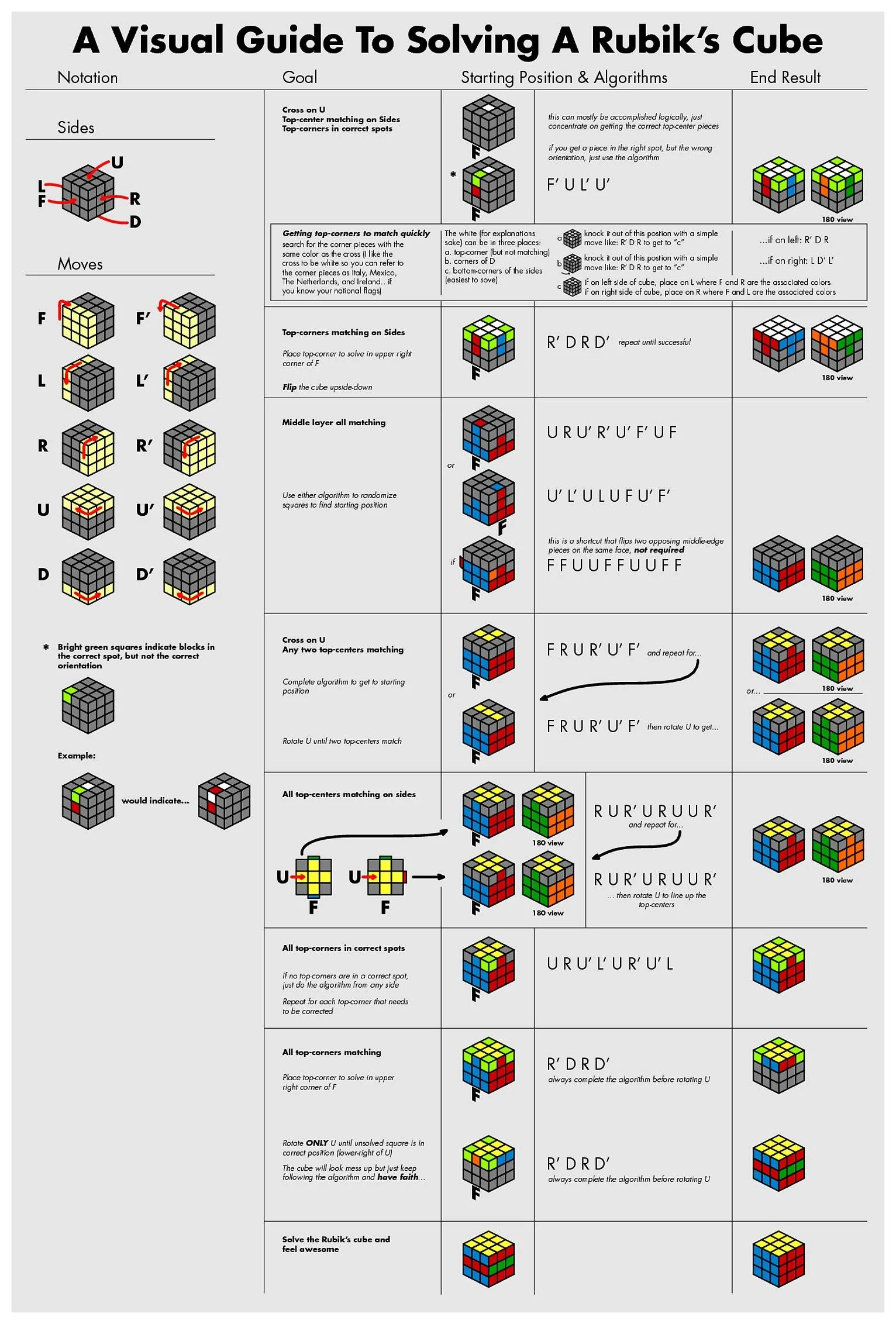
Understanding the Journey from Casual Solver to Speedcuber
Breaking past the minute barrier on the Rubik's Cube requires a complete shift in how you look at the puzzle. Casual solvers look at one piece at a time, relying on slow, methodical twists that drain precious seconds from the clock. If you want to know how to get faster at Rubik's cube, you must transition from thinking in individual moves to recognizing patterns, executing fluid finger tricks, and planning your opening moves before you even touch the puzzle.
Speedcubing is less about raw hand speed and more about efficiency, ergonomic movement, and smart practice habits. The world's fastest solvers do not necessarily move their fingers like lightning; rather, they eliminate pauses between steps. Every time you stop to search for a piece, your time climbs. By adopting a structured training regime, you can systematically remove these bottlenecks and watch your averages plummet.
Essential Prerequisites Before You Start Training for Speed
Before diving into advanced drills, ensure your setup and fundamental knowledge are optimized for speed.
- A quality speed cube that is properly lubricated, tensioned, and capable of corner cutting without locking up.
- Complete mastery of beginner-level layer-by-layer solving without needing to look at a cheat sheet.
- A solid understanding of standard Rubik's cube notation to read and learn new algorithms efficiently.
- A dedicated digital timer or stackmat to accurately track your average solve times over large sample sizes.
- A quiet, distraction-free practice environment where you can focus entirely on your finger movements and inspection times.
- A notebook or tracking app to record your daily solves, personal bests, and specific areas that need improvement.
Step-by-Step Walkthrough to Accelerate Your Solve Times
-
Master the Fridrich Method (CFOP), which stands for Cross, F2L, OLL, and PLL. This is the industry standard for competitive speedcubing.
-
Transition from a standard beginner white cross on the bottom to solving the cross on any color depending on which one is easiest.
-
Eliminate rotational habits during the cross phase so you can plan your first First Two Layer pair during inspection.
-
Learn intuitive First Two Layer (F2L) pair insertion to solve the bottom two layers simultaneously without turning the cube over repeatedly.
-
Memorize all 57 Orientation of the Last Layer (OLL) algorithms gradually, starting with the two-look variants before tackling the full set.
-
Master the 21 Permutation of the Last Layer (PLL) algorithms to permute the final layer pieces in a single fluid execution.
-
Incorporate proper finger tricks such as index flicks, ring finger pulls, and thumb pushes to execute turns without regripping.
-
Practice slow solves focusing entirely on lookahead, keeping your eyes on the next target piece instead of the current move.
-
Record your solves on video to analyze your execution flaws, hesitation points, and inefficient rotations.
Why Efficiency Beats Raw Hand Speed Every Single Time
The Mathematics of Move Count Reduction
Many beginners believe that faster fingers are the ultimate secret to dropping times. However, a clumsy solve executed at high speed will always lose to a smooth, efficient solve executed at a moderate pace. For instance, if your beginner method requires 80 total moves, you have to turn the cube at nearly 3 moves per second just to break 30 seconds. Conversely, an advanced CFOP solver using only 55 moves can easily break 30 seconds with a much more relaxed turning speed.
Consider how professional typists operate. They do not smash keys frantically; they use touch typing and proper finger placement to glide across the keyboard with minimal wasted motion. The same principle applies directly to speedcubing. By minimizing finger adjustments and cutting out unnecessary cube rotations, you preserve your stamina and drastically reduce lockups during high-pressure solves.
- Reduced move counts lower the probability of execution errors and finger slips.
- Smooth turning allows your brain to process the next step while your hands finish the current algorithm.
- Efficient ergonomics prevent hand fatigue during long practice sessions and competitions.
- Consistent pacing leads to more stable and predictable solve averages over time.
Common Speedcubing Pitfalls That Slow Down Progress
Avoiding typical training traps will save you months of frustration and plateauing.
- Relying too heavily on full cube rotations instead of using wide turns or learning back-slot insertions.
- Practicing haphazardly without tracking your solves or identifying specific algorithmic weaknesses.
- Neglecting slow-motion practice in favor of frantic, sloppy timed solves that reinforce bad habits.
- Failing to learn proper finger tricks, leading to awkward regrips that break the flow of execution.
- Trying to memorize all 78 CFOP algorithms at once instead of learning them in manageable groups.
- Using an old, dry, stiff Rubik's brand puzzle instead of a modern, adjustable magnetic speed cube.
- Ignoring the inspection phase and rushing into the cross without a clear plan for the first few moves.
Real-World Practice Case Study: Breaking the 30-Second Barrier
Meet Alex, a casual solver stuck at an average of 48 seconds for over six months. Frustrated by the lack of progress, Alex shifted focus away from timed runs and dedicated two weeks exclusively to slow F2L practice and advanced speedcubing techniques. Instead of timing every attempt, Alex watched the pieces move, learned to track corner-edge pairs without looking away, and committed the essential memorization strategies to long-term muscle memory. Within three weeks, Alex's average dropped cleanly under 30 seconds.
"Speedcubing is not a test of raw athletic reflexes; it is a visual language of patterns and muscle memory executed with calm precision."
This case study illustrates a universal truth in puzzle solving: breakthrough performance comes from deliberate practice, not mindless repetition. When you slow down to fix underlying structural flaws in your solving habits, speed naturally follows as a byproduct of improved mechanics.
Comprehensive Speedcubing Training Checklist
-
Upgrade to a modern magnetic speed cube with adjustable tension springs.
-
Audit your current cross-solving technique to eliminate unnecessary hand regrips.
-
Dedicate 20 minutes daily solely to slow, lookahead-focused First Two Layer practice.
-
Learn three new PLL algorithms each week until the entire 21-algorithm set is mastered.
-
Incorporate regular finger trick drills to build automatic muscle memory in both hands.
-
Analyze your timed solves using an average of 50 or 100 to measure true progress.
-
Maintain proper hand ergonomics and take regular breaks to prevent repetitive strain injuries.
Comparing Speedcubing Methods and Learning Curves
Choosing the right method depends on your long-term goals and how much time you wish to invest in algorithm memorization.
| Method Name | Average Move Count | Algorithms Required | Speed Potential | Learning Difficulty |
|---|---|---|---|---|
| Beginner Method | 100+ Moves | 7 - 10 | Low (Under 1 min) | Very Easy |
| CFOP (Fridrich) | 55 - 60 Moves | 78 Algorithms | Very High (Sub-10s) | Moderate to High |
| Roux Method | 48 - 52 Moves | 40 Algorithms | Elite (World Class) | High (Intuitive blockbuilding) |
| ZZ Method | 50 - 55 Moves | Varies | High (Edge orientation) | Advanced |
Mastering the Inspection Phase for Seamless Execution
The 15-second inspection period allowed in official competitions is your secret weapon for dropping times. Most beginners waste this time staring blankly at the cube or only planning the very first move of the cross. To get faster, you must use every second of inspection to plan your entire cross and track where the first pair of the First Two Layer phase is located. This eliminates the frantic hesitation that usually occurs right after the cross is completed.
Practicing blind inspection is a powerful exercise. Close your eyes immediately after your inspection period ends and try to solve the cross entirely in your head before touching the hardware. If you can visualize the first four to eight moves accurately, your transition into the F2L phase will become completely frictionless. Consistent inspection training turns a chaotic start into a controlled, predictable opening sequence.
- Inspect all six faces of the cube during your initial 15-second window.
- Trace the path of every cross piece from its starting position to its solved slot.
- Locate the first corner and edge pair for F2L while planning the cross.
- Practice starting your solves with your eyes closed during the first two turns.
Developing Superior Lookahead Skills Under Pressure
Lookahead is the holy grail of speedcubing. It refers to the ability of your eyes to track and recognize the next set of pieces while your hands are still executing an algorithm for the current pieces. When your lookahead is well-developed, your solves appear effortless and continuous, with zero dead air between steps. Achieving this requires immense cognitive discipline and thousands of repetitions at a relaxed turning speed.
If you turn the cube too fast, your brain gets tunnel vision and cannot process incoming visual data. To improve lookahead, force yourself to turn at half your maximum speed while keeping your gaze fixed on pieces that are not currently involved in your active algorithm. Over time, your peripheral vision will adapt, allowing you to anticipate movements and chain algorithms together like links in a seamless chain.
- Reduce your turning speed by 50 percent during daily training sessions.
- Keep your eyes focused on upcoming puzzle elements rather than the current insertion.
- Use a metronome app to maintain a steady, unhurried turning cadence.
- Gradually increase your speed only when your lookahead remains fluid without pauses.
Fine-Tuning Finger Tricks and Ergonomic Efficiency
Finger tricks are specialized motor patterns that allow youors to manipulate multiple layers of the Rubik's cube using individual fingers rather than whole-hand rotations. For example, executing a standard right-hand trigger algorithm should involve quick index finger flicks and wrist rotations that keep the cube stable in your palms. Poor finger mechanics lead to dropped puzzles, finger cramps, and slow execution times.
Spend time isolating common triggers like right-hand and left-hand sexy moves, sune variations, and double-flick movements. Practice these isolated triggers repeatedly while watching television or listening to music until your fingers move purely on autopilot. When your hands execute algorithms without conscious thought, your brain is free to focus entirely on lookahead and advanced strategy.
- Use your right index finger for U and U' outer layer flicks.
- Employ your left ring finger for D layer turns without regripping.
- Keep your thumbs resting lightly on the front face for maximum stability.
- Practice wide-turn wrist rotations to minimize overall hand movement.
Optimizing Your Daily Practice Routine for Maximum Gains
Randomly scrambling and solving a cube fifty times a day is an inefficient way to improve. Instead, structure your practice sessions with targeted blocks focusing on specific weaknesses. Spend the first ten minutes on fingertick drills, twenty minutes on slow F2L lookahead practice, fifteen minutes learning new algorithms, and only the final fifteen minutes on timed solves and averages.
Tracking your metrics is essential for long-term motivation and objective progress measurement. Record your current rolling average of 12 and average of 50 solves daily. When you notice a plateau, analyze which phase of the solve is taking the longest and dedicate your next few training sessions exclusively to that specific bottleneck.
- Start every session with structured finger warmup drills and slow solves.
- Isolate weak algorithms and drill them repetitively until flawless.
- Keep sessions short and focused rather than long and exhausting.
- Review your timed solve averages weekly to measure true skill gains.
Mental Toughness and Handling Competition Nerves
Even the most skilled cubers experience performance anxiety during timed trials or official competitions. Your hands might shake, your heart rate spikes, and your lookahead completely collapses under pressure. Developing mental resilience is just as important as mastering algorithms. Training under simulated pressure—such as having a friend time you or competing in online match-ups—helps desensitize your nervous system to anxiety.
Breathe deeply and maintain a calm focus before starting every solve. Accept that mistakes will happen, and train yourself to recover instantly from a dropped piece or an algorithmic slip without letting it ruin the rest of your solve. Mental composure turns average cubers into reliable, clutch performers when every second counts.
- Practice deep breathing exercises before starting your daily timing sessions.
- Simulate high-pressure environments by timing yourself with an audience.
- Learn to let go of bad solves immediately and focus entirely on the next scramble.
- Maintain physical relaxation in your shoulders, wrists, and jaw while solving.