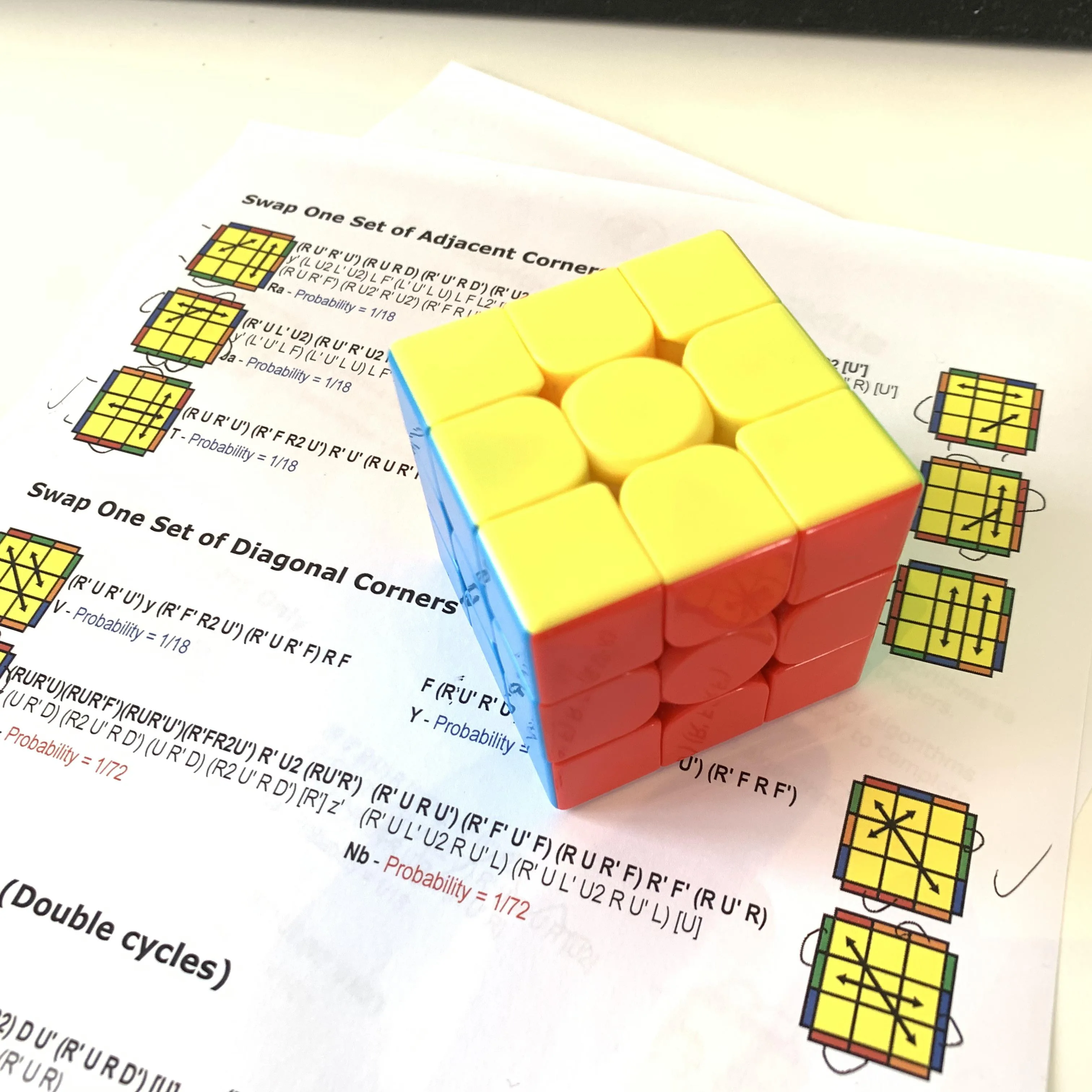
The Foundation of Speedcubing Performance
Speedcubing is more than just solving a puzzle; it is a discipline of pattern recognition, muscle memory, and strategic execution. For beginners, the transition from solving a cube slowly to competing at high speeds requires shifting your focus from individual moves to fluid, block-based movements. Achieving consistent sub-minute solves starts with understanding that your hands need to catch up to your brain's ability to identify pieces.
The journey toward becoming a faster solver involves a mix of deliberate practice, hardware optimization, and algorithm memorization. You must move away from the basic beginner's method once you feel confident in your ability to solve the cube without guides. This transition period is where most cubers either plateau or accelerate, so choosing the right path is crucial for long-term growth.
Defining Your North-Star Metric: The Average of 100
In the world of competitive cubing, your primary metric is the Average of 100 (Ao100). This figure smooths out the variance of individual lucky or unlucky scrambles and provides a clear picture of your actual skill level. By tracking this over weeks and months, you can identify whether your training sessions are actually yielding results or if you are simply spinning your wheels.
Key Metrics for Performance Tracking
| Metric | Formula | Good Range (Beginner) | Owner |
|---|---|---|---|
| Ao5 | Average of 5 solves | 45s - 60s | Solver |
| Ao100 | Average of 100 solves | 50s - 75s | Solver |
| TPS | Turns Per Second | 1.5 - 2.5 | Solver |
| Look-ahead | Pause duration | < 2 seconds | Solver |
Leveraging Input Metrics for Growth
To improve your overall speed, you must break down the solve into its constituent parts and apply specific levers to each. These input metrics serve as the building blocks for your final time. By isolating these variables, you can create targeted practice sessions that address specific weaknesses in your technique.
- Cross Efficiency: Measure how many moves you take to complete the cross; aiming for fewer than 8 moves is a standard goal for beginners.
- F2L Efficiency: Track the number of moves per pair; focus on reducing redundant rotations.
- OLL/PLL Recognition Time: Use a metronome or timer to measure how long you take to identify the correct algorithm once the state is reached.
- Finger Trick Speed: Time your execution of specific algorithms (like J-perms or T-perms) to see if your motor speed is the limiting factor.
- Pause Frequency: Count the number of times you stop turning during a full solve; your goal is to make this number zero.
- Conduct a 'solve audit' where you record yourself for 10 solves.
- Identify the step that accounts for the highest percentage of your total time.
- Dedicate 70% of your daily practice time to that specific phase.
- Perform 10 drills focused only on that phase without worrying about total solve time.
- Re-evaluate your metrics after one week of focused drilling.
Optimizing Your Hardware: Why Gear Matters
While a cheap plastic cube can technically be solved, high-performance speedcubing relies on hardware that minimizes friction and maximizes corner cutting. Beginners often struggle because their cube locks up or pops during fast execution. Investing in a good magnetic Rubik's cube for beginners can instantly shave seconds off your time simply by providing a more stable turning experience.
- Magnetic alignment helps the layers snap into place, reducing the need for precise finger accuracy.
- Adjustable tension systems allow you to customize the cube to your specific turning style.
- Modern lubricants significantly reduce internal friction, making the cube feel "buttery" and responsive.
- Lightweight plastic construction prevents hand fatigue during long practice sessions.
- Corner cutting ability ensures the cube doesn't jam if your turns are slightly misaligned.
Mastering Finger Tricks for Smoother Execution
Finger tricks are the secret language of fast cubers. Instead of turning the cube with your whole hand or wrist, you use your fingers to flick the layers. This minimizes movement and keeps the cube stable in your palms. If you are still rotating your entire wrist to perform an R move, you are losing precious milliseconds on every single turn.
- Practice the standard 'R' and 'U' flicks using only your index and middle fingers.
- Learn to perform 'double flicks' with your ring and index finger for faster U2 moves.
- Focus on maintaining a neutral grip on the cube to avoid unnecessary rotations.
- Incorporate finger tricks into your slow-solve practice to build muscle memory.
- Record your solves on video to identify where your hands are moving inefficiently.
The Role of Look-ahead in Speedcubing
Look-ahead is the ability to track the movement of pieces for the next step while you are still solving the current one. Many beginners stare intently at the pieces they are currently moving, which leads to a "stop-and-start" solving style. To get faster, you must learn to solve the current step while your eyes scan the board for the next set of pieces.
The biggest mistake beginners make is trying to turn as fast as possible before they know what to do next. Speed is a byproduct of efficient planning, not just raw motor speed.
Structuring Your Weekly Practice Sessions
Consistency beats intensity when it comes to neuro-muscular adaptation. It is better to practice for 30 minutes every day than to spend six hours on a single Sunday. Create a routine that balances learning new algorithms with pure execution speed. Use the 3x3 Rubik's Cube CFOP method for beginners to ensure you are learning the industry-standard approach to solving.
- Warm up with 5-10 slow solves focusing on turn quality.
- Spend 15 minutes drilling new algorithms or specific move sequences.
- Execute 20-30 timed solves while recording your times in a spreadsheet.
- Analyze your worst-performing solves to see which step caused the delay.
- End with a few "blind" practice rounds where you try to plan the first few moves ahead.
Vanity Metrics vs. Actionable Data
It is easy to get caught up in tracking every single number, but not all data is created equal. Beginners often fall into the trap of obsessing over 'Personal Bests' (PB) rather than their long-term average. A PB single solve is often the result of a 'lucky scramble' rather than genuine skill improvement. Focusing solely on these outliers can lead to frustration when your average remains stagnant.
- Ignore the occasional lucky solve; focus on the consistency of your averages.
- Do not compare your progress to elite cubers; focus on your own historical data.
- Stop tracking 'solve count' as a measure of success; quality of practice matters more than quantity.
- Avoid changing hardware every week; focus on mastering one cube setup.
- Do not let your ego dictate your practice speed; slow down to gain control.
Weekly Review Agenda for Sustained Improvement
To ensure your practice remains productive, implement a structured weekly review. This process prevents stagnation and keeps your training aligned with your long-term goals.
- Sunday: Review your Ao100 spreadsheet and calculate your average time reduction.
- Monday: Identify one specific algorithm or F2L case that you consistently struggle with.
- Tuesday: Dedicate the entire session to drilling that one case until it becomes intuitive.
- Wednesday: Analyze your cross-building technique and look for more efficient solutions.
- Thursday: Perform a full, timed simulation session to mimic competition conditions.
- Friday: Rest your hands to prevent repetitive strain injuries.
- Saturday: Free practice session to explore new turning styles or cube hardware.
Common Pitfalls That Slow Down Progress
Many beginners fall into traps that hinder their growth. One common issue is "algorithm obsession," where a solver learns complex algorithms before they have mastered the basic intuition of how pieces move. Another is relying on color-based solving instead of recognizing piece relationships. Avoid these traps to keep your progress on an upward trajectory.
- Don't ignore the importance of cross-building on the bottom face.
- Avoid learning too many algorithms at once; focus on mastering a few high-frequency ones.
- Stop rotating the cube unnecessarily; learn to solve pieces from different angles.
- Don't neglect your cross-solving efficiency, as it sets the tone for the entire solve.
- Ensure you are not practicing on a cube that is too stiff or poorly tensioned.
The Importance of Slow-Motion Solving
It sounds counterintuitive, but to go fast, you must go slow. Slow-motion solving allows your brain to process the movement of pieces without the pressure of a timer. When you solve at a slow, deliberate pace, you can observe exactly how the cube reacts to your moves, which is essential for developing intuition. This is the best way to get faster at Rubik's cube by removing the panic factor.
Tracking Progress: The KPI Dashboard Approach
Treating your cubing progress like a business project can help you stay motivated. Use a simple tracking sheet to log your times. Plot your progress on a graph to see the downward trend of your solve times. When you hit a plateau, look at your metrics to see if you are failing at the Cross, F2L, OLL, or PLL stage of the solve.
- Set a target for your Ao100 for the end of the month.
- Identify your "bottleneck" step where you spend the most time.
- Keep a list of algorithms you struggle to execute under pressure.
- Celebrate small milestones, like breaking your personal best single solve.
- Compare your current stats to your stats from two weeks ago to measure growth.
Advanced Warm-up Exercises for Your Fingers
Just like a musician warming up, a cuber needs to prepare their hands. Perform simple sequences like R U R' U' repeatedly to get your fingers moving. This helps prevent injury and ensures your hands are ready for high-speed performance. You can find more detailed guides on how to solve a Rubik's cube for beginners to refine these basics.
The Psychology of Competitive Solving
Competition nerves are real. Even if you are just competing against yourself, the pressure of a timer can make your hands shake or your brain go blank. Practice solving while listening to music, in front of a mirror, or while someone is watching you. This builds resilience against external pressure, ensuring that your practice speed translates to your performance speed.
Leveraging Online Resources and Communities
The speedcubing community is incredibly active and helpful. Websites like the World Cube Association provide regulations and global rankings, while forums and video tutorials offer endless tips. Don't be afraid to reach out to more experienced cubers for advice on your specific technique. Often, a small adjustment in your grip or a different finger trick can solve a problem you've been struggling with for weeks.
Advanced Practice: The 4x4 Transition
Once you are comfortable with the 3x3, you might want to try larger cubes. Learning how to solve a 4x4 Rubik's cube for beginners forces you to think about parity and center building, which actually improves your 3x3 skills. It broadens your understanding of the cube's geometry and makes standard 3x3 solves feel much simpler by comparison.
Finalizing Your Training Routine
Your journey in speedcubing is a marathon, not a sprint. Keep a log of your practice, invest in a decent magnetic cube, and never stop refining your finger tricks. If you find yourself frustrated, take a break and come back with a fresh perspective. The key is to enjoy the process of improvement. By consistently applying these methods, you will find yourself reaching your goals faster than you ever thought possible.