Understanding the Role of PLL in Speedcubing
Permutation of the Last Layer, or PLL, represents the final stage of solving a 3x3 Rubik's cube using the CFOP method. After you have oriented the last layer pieces, you are left with a set of pieces that are in their correct spots but might be in the wrong order. Mastering these patterns allows you to move from being a casual solver to a true speedcuber who can finish the puzzle in mere seconds.
For beginners, the sheer number of algorithms can feel daunting. However, you do not need to memorize all 21 standard PLL cases immediately. Instead, focusing on the most frequent permutations will significantly reduce your solve times. This guide breaks down these sequences into manageable chunks so you can build muscle memory efficiently.
If you are still working on the basic steps, you might want to look at Rubik's Cube Algorithms for Beginners: Step-by-Step Guide to ensure your foundation is rock solid before moving into advanced last-layer techniques.
The 2-Look PLL Framework Explained
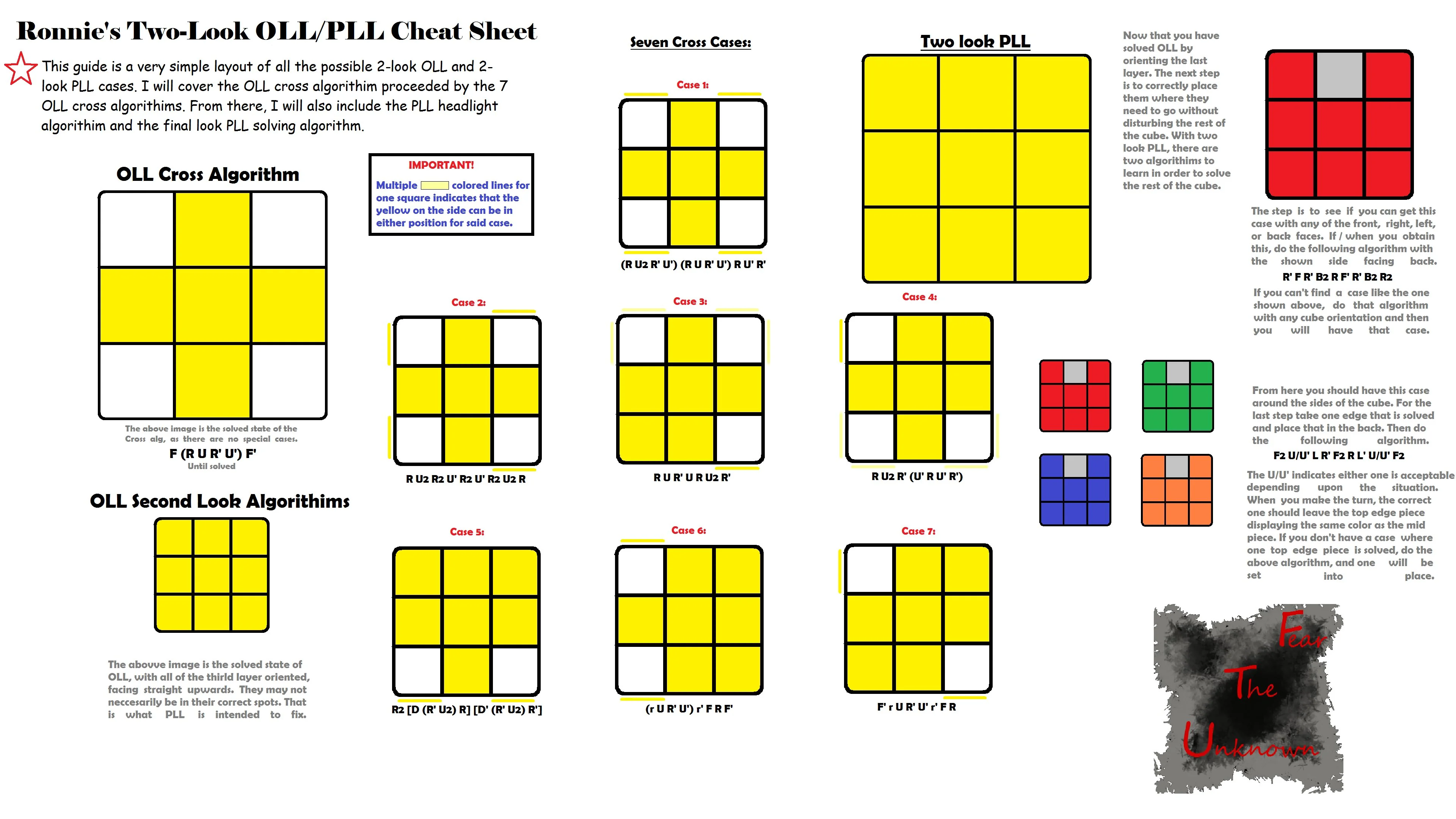
The 2-Look PLL approach is the industry standard for intermediate solvers. Instead of learning 21 distinct algorithms, you break the process into two separate steps: first, permuting the corners, and second, permuting the edges. This reduces the cognitive load and allows you to solve the cube quickly without needing perfect recall of every possible case.
- The first step focuses on the corners, known as Corner Permutation (CP).
- The second step focuses on the edges, known as Edge Permutation (EP).
- By separating these, you only need to learn about six to seven specific algorithms.
- This method is highly scalable, allowing you to add more algorithms as you get faster.
- Many world-class cubers started their journey exactly this way to build consistency.
- You can find more context on the earlier phases in our Rubik's Cube OLL Algorithms for Beginners: The Ultimate 2-Look Guide.
Step 1: Corner Permutation Algorithms
Corner permutation involves swapping the positions of the corner pieces on the top face. When you reach this stage, you look for a "headlight" pattern, where two corners on one side match in color, while the others do not. If you have headlights on all four sides, your corners are already solved.
- Identify if you have a side with matching corner stickers, which we call headlights.
- If you have one set of headlights, place them on the back of the cube.
- Perform the
T-PermorA-Permalgorithm depending on the specific arrangement of the remaining pieces. - If you have no headlights, perform a corner swap algorithm from any orientation.
- Ensure that your grip remains consistent throughout the execution of the moves.
- Practice these movements slowly at first to ensure your finger tricks are accurate.
Step 2: Edge Permutation Algorithms
Once your corners are in the correct place, you will often find that the edges need to be cycled. This is the final step of the 2-Look process. You might encounter cases where three edges need to rotate clockwise, counter-clockwise, or cases where edges need to swap in opposite pairs.
Common Edge Permutation Scenarios
- U-Perm Clockwise: Moves the front edge to the left, left to back, and back to front.
- U-Perm Counter-Clockwise: Moves the front edge to the right, right to back, and back to front.
- H-Perm: Swaps edges in opposite pairs, looking like a horizontal line of movement.
- Z-Perm: Involves a more complex swap of adjacent and opposite edges.
Comparing 2-Look PLL vs. Full PLL
Deciding when to transition from a 2-Look system to full PLL is a common milestone for cubers. While 2-Look is faster for beginners, full PLL eliminates the extra step, saving valuable seconds in a timed solve. The following table compares the two approaches based on learning difficulty and efficiency.
| Feature | 2-Look PLL | Full PLL |
|---|---|---|
| Algorithm Count | 7 Algorithms | 21 Algorithms |
| Learning Time | 2-4 Weeks | 3-6 Months |
| Efficiency | Moderate | High |
| Complexity | Low | High |
| Speed Potential | Under 20 Seconds | Under 10 Seconds |
The Importance of Proper Notation
Before you dive into the algorithms, you must understand the language of the cube. Standard notation uses letters like R, L, U, D, F, and B to represent the faces. Learning these symbols is non-negotiable if you want to follow written guides or watch tutorials online. For a deep dive into this, refer to Rubik's Cube Notation Explained for Beginners: Master the Language of Cubing.
"Success in cubing is not about how fast you move your hands, but how effectively you recognize patterns before you even start the algorithm." — Expert Speedcuber Wisdom
When you see an apostrophe, such as R', it means a counter-clockwise turn. A number 2, such as U2, means a double turn of that face. Mastering these small details prevents frustration and ensures you are executing the moves exactly as intended by the creators of the algorithms.
Common Mistakes When Learning Algorithms
Beginners often fall into traps that hinder their progress. One of the most frequent errors is trying to memorize sequences without understanding the structure of the moves. This often leads to "finger locking," where your fingers trip over each other during execution. Another mistake is ignoring the importance of the initial orientation of the cube.
- Attempting to learn all 21 algorithms at once instead of mastering a few.
- Neglecting to practice finger tricks, which are essential for speed.
- Failing to recognize the case correctly before starting the algorithm.
- Practicing only on one side or orientation, leading to one-sided habits.
- Ignoring the importance of a high-quality, lubricated speed cube.
- Getting discouraged by temporary plateaus in speed and accuracy.
How to Practice Effectively
Consistency beats intensity in the world of cubing. It is better to practice for 15 minutes every single day than to spend five hours on a single Sunday. When you are practicing, use a metronome or a timer to track your progress. This creates a feedback loop that helps you identify which specific algorithms are slowing you down.
- Select one algorithm to focus on for the entire practice session.
- Perform the algorithm 50 times in a row, focusing strictly on accuracy.
- Once you can perform it without looking, start focusing on finger speed.
- Mix the cube and try to recognize the case from different angles.
- Repeat the process with a new algorithm the following week.
- Document your times to see tangible proof of your improvement over time.
Recognizing PLL Cases by Sight
Pattern recognition is the secret weapon of elite solvers. Instead of looking at every individual sticker, look for "blocks" of colors. For instance, in a T-Perm, you will see a pair of corner-edge-corner blocks that need to be swapped. Training your brain to see these blocks rather than individual pieces will allow you to react instantaneously.
This skill, known as look-ahead, is what separates the casual solvers from the competitors. When you finish your previous step, your eyes should already be scanning the last layer for the specific PLL case you are about to encounter. If you find this difficult, try to slow down your solves until your eyes can consistently find the pattern before your hands start moving.
The Role of Finger Tricks
Finger tricks are the physical techniques used to turn the faces of the cube quickly. Instead of using your whole hand to turn a face, you use your index and middle fingers to flick the layers. This reduces the distance your hand has to travel, making every turn significantly faster. Many beginners waste energy by gripping the cube too tightly, which actually slows down their turns.
Learning to use the "double flick" for the U layer is a game-changer. By using your index finger and then your middle finger in rapid succession, you can perform a U2 turn in a fraction of a second. Practice these small movements until they feel natural, and you will notice your times dropping almost immediately without needing to learn any new algorithms.
Mental Strategies for Memorization
Memorizing algorithms is a task of muscle memory, not just rote repetition. When you learn a new sequence, break it down into smaller, logical groups of moves called "triggers." For example, many algorithms start with a Sexy Move (R U R' U'). If you identify these triggers, you aren't memorizing 10-15 random moves; you are memorizing 3-4 familiar chunks.
- Divide longer algorithms into segments of three to four moves each.
- Say the moves out loud while you perform them to engage your auditory memory.
- Visualize the path of the pieces as you perform the algorithm.
- Use an app or website that provides visual feedback for each move.
- Take breaks to prevent mental fatigue, which can lead to bad habits.
- Create flashcards with the algorithm on one side and a picture of the case on the other.
Equipment Matters: Choosing the Right Cube
While you can learn algorithms on any cube, a modern, magnetic speed cube makes a world of difference. Older cubes are often stiff and prone to "corner cutting" issues, where the pieces get stuck. A good magnetic cube will snap into place, helping you align the layers and reducing the number of lock-ups during your solves.
You do not need to spend a fortune to get a great cube. Many entry-level magnetic cubes are available for under twenty dollars and offer performance that is more than sufficient for a beginner. Look for brands that are popular in the speedcubing community, as these will have the best tutorials and support available online. Reliable resources like Wikipedia offer a great historical perspective on the puzzle itself.
Tracking Your Progress Over Time
Set realistic goals to keep your motivation high. Instead of trying to be the fastest in the world, try to beat your personal best by just one second each week. Keep a notebook or use a digital app to log your times. This data will show you that you are making progress, even on days when you feel like your fingers are moving slowly.
- Start by measuring your average solve time over 50 solves.
- Identify which stage of the solve is taking the longest.
- Spend extra time practicing the algorithms for that specific stage.
- Celebrate small milestones, such as breaking the 60-second or 30-second barrier.
- Avoid comparing yourself to others who have been practicing for years.
- Remember that every expert was once a beginner who refused to quit.
Maintaining Consistency Through Routine
The final key to mastering PLL is routine. Create a dedicated space and time for your practice. When you sit down to solve, clear your mind and focus on the task at hand. If you find yourself getting frustrated, step away from the cube for a few minutes. Cubing should be a fun hobby, and maintaining a positive attitude is the best way to ensure you continue to improve over the long term.
Once you are comfortable with these PLL basics, you can move on to other advanced topics. If you are interested in exploring more complex puzzles, check out our guide on How to Solve a 4x4 Rubik's Cube for Beginners: The Ultimate Guide to challenge your skills further.