Understanding the Core Rubik's Cube Persona Paths
Learning how to solve a Rubik's cube can feel intimidating if you do not have a structured plan tailored to your learning style. Every aspiring cuber approaches the puzzle with different goals, patience levels, and spatial reasoning skills. By identifying your specific learner persona, you can target the exact algorithms and mechanical finger tricks you need without getting overwhelmed by advanced speedcubing theory. Whether you want to casually solve the puzzle on weekends or build a solid foundation for future competitive times, understanding your starting point changes everything.
Different people require different instructional pacing. Some learners absorb visual move sequences instantly, while others need methodical breakdowns of every single turn. This guide categorizes the primary learning styles into clear pathways so you can follow a custom route. Let us explore the foundational goals and constraints of each distinct cubing persona before diving into the actual notation and sequences.
Persona Overview and Learning Matrix
Before executing any moves, it is helpful to see how your learning style aligns with standard puzzle methodologies. The following breakdown maps out distinct cuber archetypes, their primary objectives, and common hurdles they face during early practice sessions.
| Persona Archetype | Primary Goal | Core Constraint |
|---|---|---|
| The Visual Tactile Learner | Understand piece movement through physical repetition | Easily confused by flat 2D diagram arrows |
| The Analytical Thinker | Memorize mathematical patterns and corner permutations | Prone to overthinking simple trigger moves |
| The Casual Weekend Solver | Solve the puzzle once without intense memorization | Limited time to practice complex finger tricks |
| The Aspiring Speedcuber | Build muscle memory for future fast solves | Impatience with slow, deliberate turning habits |
The Visual Tactile Learner Path
If you learn best by physically manipulating objects and watching how pieces interact, your journey starts with slow, tactile exploration. You do not need to memorize abstract formulas right away; instead, focus on how the face turns affect adjacent corners and edges. Holding the puzzle properly in your hands is the very first step to success.
- Rest the puzzle comfortably in your palms with your thumbs resting lightly on the front and back faces.
- Practice turning the right face clockwise and counter-clockwise until your fingers build basic muscle memory.
- Observe how the center pieces never move, acting as fixed anchors for every single side.
- Twist the top layer back and forth to understand how edge pieces cycle through positions.
- Perform simple quarter-turn rotations without looking at any cheat sheets to test your spatial awareness.
- Do not squeeze the puzzle too tightly, as this causes hand fatigue and locks up the internal mechanism.
- Avoid making random chaotic turns hoping for a lucky solve, which only scrambles the cube further.
- Never peel off or swap the colored stickers, because true mastery comes from logical manipulation.
- Refrain from practicing on a loose, unlubricated puzzle that catches and misaligns constantly.
Visual learners thrive when they connect physical sensations to visual outcomes. Spend at least ten minutes just getting comfortable with the weight and rotation resistance of your puzzle before attempting formal solving steps.
The Analytical Thinker Path
Analytical learners prefer breaking down the cube into logical formulas, coordinate systems, and systematic sub-steps. For this path, understanding why a move sequence works is just as important as executing it correctly. You will approach the puzzle like a coding problem or a mathematical matrix.
- Study the standard notation system where R represents Right, L represents Left, U represents Top, and F represents Front.
- Learn that adding an apostrophe symbol, such as R prime, means turning that face counter-clockwise.
- Write down the step-by-step sequence for inserting a corner piece into the bottom layer.
- Analyze how a standard four-move trigger affects the orientation of adjacent edge pieces.
- Verify your cube state after every algorithm execution to ensure no intermediate steps were skipped.
- Do not skip the foundational notation rules, or subsequent algorithm guides will look like complete gibberish.
- Avoid rushing through algorithmic sequences before verifying that your grip matches the starting position.
- Never assume a memorized formula will work if your starting cube orientation is tilted incorrectly.
- Refrain from guessing move directions; always double-check whether a turn is clockwise or counter-clockwise.
Analytical solvers excel when they treat the puzzle as a structured puzzle box with strict rules. Take notes in a small notebook if writing down algorithms helps cement them in your long-term memory.
The Casual Weekend Solver Path
If your goal is simply to impress friends at a dinner party or check a fun item off your bucket list, you need a streamlined, low-stress approach. You do not need to become a competitive speedcuber to enjoy the satisfaction of a solved puzzle. This path skips advanced finger tricks and focuses purely on reliable, easy-to-remember trigger sequences.
- Focus entirely on solving the white cross and first layer without worrying about advanced corner insertion methods.
- Master just one universal right-hand trigger algorithm and use it for multiple different scenarios.
- Keep your cube on a stable desk or table surface if holding it in the air feels clumsy.
- Practice the final layer steps using a printed cheat sheet nearby for quick reference.
- Celebrate small milestones, like completing a solid face or matching two complete layers.
- Do not let initial frustration discourage you; even casual solvers need a few days of practice.
- Avoid trying to learn all seven final layer algorithms at once when a beginner method requires fewer.
- Never practice when you are tired or frustrated, as mistakes become harder to spot and fix.
- Refrain from comparing your casual progress to professional speedcubers online.
Casual solvers should keep the experience fun and relaxed. For more simplified approaches, you can review the easiest way to solve a Rubik's cube to find streamlined shortcuts that bypass heavy memorization.
The Aspiring Speedcuber Path
For those bitten by the competitive bug, early habits dictate future speed ceilings. Even as a beginner, practicing efficient finger placement prevents bad habits that take months to unlearn later. Speedcubing is as much about finger dexterity and look-ahead vision as it is about knowing formulas.
- Practice executing basic algorithms with both your left and right hands to build balanced dexterity.
- Incorporate proper finger tricks, such as using your index finger to flick the top layer quickly.
- Minimize unnecessary wrist rotations by turning faces with individual finger pushes where possible.
- Time your individual layer completions using a standard stopwatch to track gradual improvement.
- Transition smoothly from one algorithm into the next without pausing to inspect the puzzle.
- Do not sacrifice turning accuracy for raw speed, as hand locks ruin your solve times.
- Avoid practicing on a stiff, dry puzzle that resists smooth finger flicks.
- Never ignore cross-building efficiency even in your earliest beginner practice solves.
- Refrain from changing your solving method too frequently before mastering a basic CFOP or Layer-by-Layer foundation.
Aspiring speedcubers need patience and deliberate practice routines. If you want a glimpse into faster competitive milestones, check out how to solve a Rubik's cube faster to understand how simple efficiency tweaks compound over time.
Shared Foundations Across All Cuber Types
No matter which persona path you choose, every cuber must master the universal anatomy of the 3x3 puzzle. The puzzle consists of six center pieces that never change relative positions, twelve edge pieces with two colors, and eight corner pieces with three colors. Recognizing these piece types is essential before attempting any algorithm.
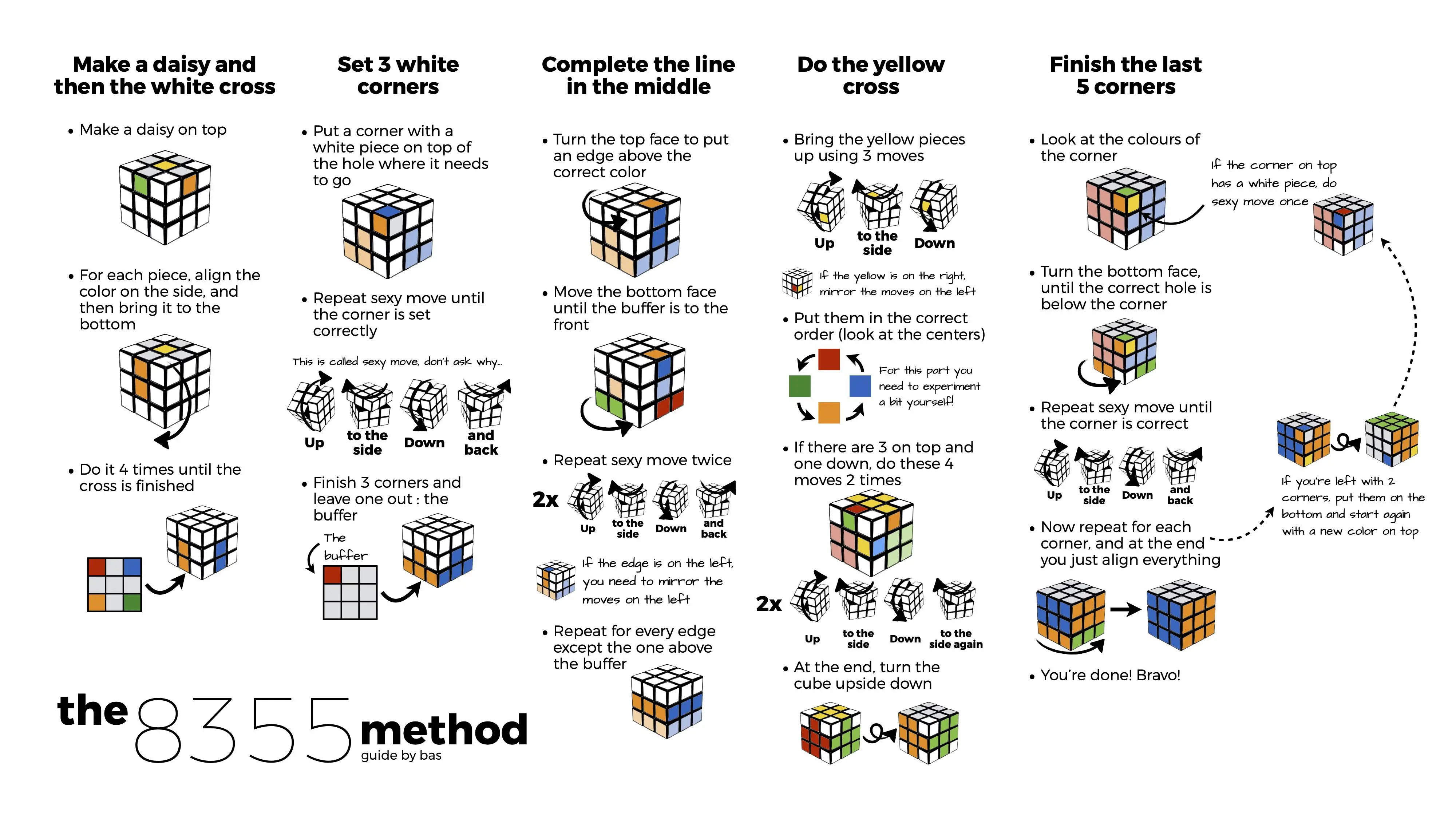
Furthermore, standard notation serves as the universal language of cubing across the globe. When you read a sequence like R U R' U', you are executing the classic right-hand trigger that forms the backbone of countless beginner solutions. Grasping this specific four-move sequence early on will accelerate your progress across any learning path you select.
Addressing Wrong Persona Paths and Course Corrections
Sometimes you start down a rigorous speedcubing path only to realize you wanted a relaxing, casual hobby. There is no shame in switching your approach halfway through your learning journey. If you find yourself frustrated by heavy algorithm memorization, step back and pivot to a more intuitive method.
For instance, if memorizing dozens of triggers feels like a chore, you can explore how to solve a Rubik's cube without memorizing algorithms for a refreshing perspective that relies more on logical piece placement and spatial intuition than rote memorization.
Essential Gear and Cube Maintenance Basics
Having the right equipment drastically improves your early cubing experience. Vintage 1980s cubes are notoriously stiff and prone to popping pieces out, which can halt your progress entirely. Modern budget speed cubes feature rounded internal corners and adjustable tension screws that make turning effortless.
- Purchase a modern, adjustable beginner speed cube from a reputable puzzle manufacturer.
- Apply a drop of silicone-based puzzle lubricant if your turns feel dry or scratchy.
- Adjust the center screw tensions evenly if the puzzle feels too loose or catches constantly.
- Store your cube in a protective pouch or case when traveling in backpacks.
- Keep the puzzle clean by wiping dust and oils off the plastic exterior periodically.
Good gear removes unnecessary friction from the learning process, letting you focus entirely on finger placement and algorithm execution.
Common Beginner Mistakes to Avoid Immediately
Even with great instructions, beginners often fall into predictable traps that slow down their learning curve. Recognizing these pitfalls early saves hours of frustration and prevents bad muscle memory from forming.
- Do not scramble your puzzle beyond recognition before you have even learned how to solve the first layer.
- Avoid holding the puzzle upside down halfway through an algorithm sequence, which reverses all face turns.
- Never force a jammed puzzle piece into place with excessive brute force, as this snaps plastic stems.
- Refrain from skipping practice days, because consistent short sessions beat infrequent marathon study blocks.
- Do not rely exclusively on one single video tutorial if a particular step remains confusing; look for alternative explanations.
Keeping these common errors in mind ensures steady progress and keeps your practice sessions enjoyable and productive.
Structuring Your Daily Practice Routine
Consistency is the ultimate secret to mastering Rubik's cube algorithms. Setting aside just fifteen minutes a day yields much better results than cramming for two hours once a week. Create a balanced practice routine that targets different phases of the solve.
- Spend the first three minutes reviewing standard notation and finger flick drills.
- Dedicate five minutes to practicing the white cross and first layer smoothly without pauses.
- Practice your second layer edge insertions for another four minutes with a reference sheet.
- Finish your session by attempting one full uninterrupted solve from start to finish.
- Do not skip your warm-up drills, as cold fingers make more turning errors.
- Avoid getting stuck on one failed solve for twenty minutes; scramble and start fresh.
- Never practice in dim lighting or distracting environments where you cannot see face colors clearly.
- Refrain from tracking your times obsessively during your very first week of learning.
Establish a quiet, well-lit study space where you can focus entirely on your finger movements and puzzle alignment.
Preparing for More Advanced Solving Horizons
Once you comfortably execute basic beginner algorithms without a cheat sheet, a whole new world of puzzle mastery opens up. You might decide to explore 4x4 cubes, Pyraminx puzzles, or advanced speedcubing methods like CFOP. For a comprehensive look at standard methods from start to finish, you can also consult how to solve a 3x3 rubik's cube step by step to reinforce your core foundational skills.
Remember that every expert speedcuber started exactly where you are right now. Patience, methodical practice, and a willingness to learn from scrambled mistakes will turn you into a confident cuber in no time.
Success in cubing comes not from raw speed, but from flawless execution of simple fundamentals repeated thousands of times.
Keep your enthusiasm high, enjoy the tactile challenge of the puzzle, and celebrate every milestone along your personal cubing journey.