Speedcubing Benchmarks: What We Measure and Why
For casual puzzle solvers, breaking the 60-second barrier is the ultimate milestone. To understand how to solve a rubik's cube in under 1 minute, we must treat the puzzle not just as a logic game, but as a physical and mechanical race. Speedcubing relies on optimizing three core metrics: Turns Per Second (TPS), Move Count, and Recognition Time. By measuring these elements, we can isolate exactly where your solves are losing precious seconds.
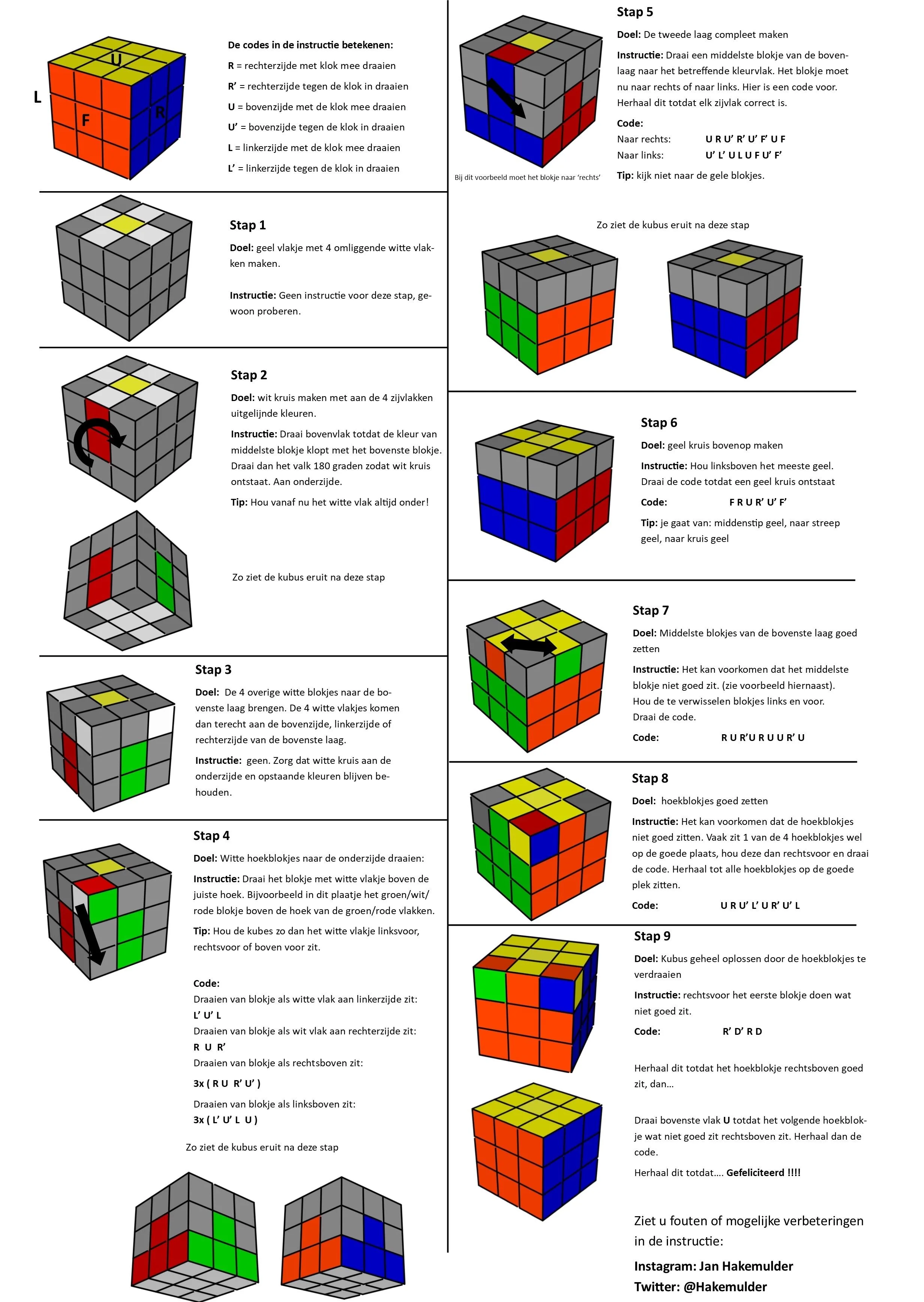
Historically, the Rubik's Cube was solved using slow, deliberate movements. Today, competitive solvers registered with the World Cube Association utilize advanced methods to solve the puzzle in single-digit seconds. If you are currently stuck at the 2-minute mark, your transition to sub-1 minute requires shifting from the basic layer-by-layer method to a more efficient, fluid system. If you are starting from scratch, you might want to master the basics first by reading our guide on how to solve a Rubik's Cube for beginners.
The Methodology for Testing Speedcubing Methods
To establish the most reliable pathway to a sub-1 minute solve, we conducted a benchmark test comparing different solving methods, hardware setups, and practice routines. Our testing methodology aimed to simulate real-world progress for intermediate cubers. We tracked performance across 100 timed solves per category using standard digital stackmat timers.
- We generated 100 random computer scrambles to ensure a uniform distribution of puzzle difficulty.
- We tested three distinct solving methods: the standard Layer-by-Layer (LBL) method, an intermediate 4-Look CFOP method, and the advanced Roux method.
- We controlled for hardware by using a modern magnetic speedcube tensioned to standard specifications.
- We recorded execution split times for each phase of the solve: the Cross, the First Two Layers (F2L), Orienting the Last Layer (OLL), and Permuting the Last Layer (PLL).
- We calculated the average move count and the average Turns Per Second (TPS) required to hit the target times.
Performance Comparison of 3x3 Solving Methods
The table below outlines our benchmark results. It illustrates why certain methods are mathematically favored to help you break the 1-minute barrier with minimal physical strain.
| Solving Method | Average Move Count | Algorithms to Learn | Required TPS for Sub-1 Min | Difficulty Rating |
|---|---|---|---|---|
| Layer-by-Layer (LBL) | 110 - 120 moves | 5 - 7 algorithms | 2.0+ turns/sec | Very Easy |
| Intermediate CFOP (4-Look LL) | 65 - 80 moves | 15 algorithms | 1.2+ turns/sec | Moderate |
| Full CFOP (Fridrich) | 55 - 60 moves | 78 algorithms | 1.0+ turns/sec | Hard |
| Roux Method | 45 - 50 moves | 42 algorithms | 0.8+ turns/sec | Moderate/Hard |
Interpreting the Data: Winners and Losers of the Sub-1 Minute Race
The Winner: Intermediate CFOP (4-Look Last Layer)
Our benchmark testing clearly identifies Intermediate CFOP as the most practical path to a sub-1 minute solve. Because it reduces the average move count from 120 down to roughly 70, you only need to turn the cube at a relaxed pace of 1.2 turns per second. This eliminates the need for frantic, high-speed turning, allowing you to focus on smooth transitions and better visualization.
The Loser: Pure Beginner LBL Method
While it is possible to achieve a sub-1 minute solve using the basic LBL method, it is highly inefficient. To overcome the high move count of 120 moves, you must turn the cube at over 2 turns per second. This high TPS frequently leads to finger lockups, mental fatigue, and severe recognition delays. Relying solely on LBL makes the 1-minute barrier a physical chore rather than a strategic success.
Hardware and Setup Caveats That Impact Your Solve Time
Your choice of puzzle hardware plays a massive role in your overall solving speed. A cheap, non-magnetic plastic cube will actively hinder your progress regardless of how many algorithms you memorize.
- Magnetic Positioning: Modern speedcubes feature small magnets inside the corner and edge pieces that help align the layers automatically, preventing overshooting and lockups.
- Tension Adjustment: Adjusting the spring compression or maglev tension allows you to find the perfect balance between stability and speed.
- Lubrication: High-quality silicone lubricants reduce friction between the internal plastic parts, dramatically increasing turning smoothness.
- Corner Cutting: A premium speedcube can execute a turn even when the adjacent layer is misaligned by up to 45 degrees.
Step-by-Step Training Protocol to Reproduce Sub-1 Minute Solves
To replicate our benchmark success and consistently solve the cube in under 60 seconds, follow this structured weekly training protocol designed to build muscle memory and cognitive speed.
- Week 1: Cross Efficiency Drills. Spend your practice sessions solving only the bottom cross. Force yourself to solve the cross in 8 moves or fewer without looking at the puzzle during execution.
- Week 2: Intuitive F2L Transition. Stop solving corners and edges separately. Practice pairing them up in the top layer and inserting them together into their respective slots.
- Week 3: 4-Look Last Layer Memorization. Learn the 15 essential algorithms required for 2-Look OLL and 2-Look PLL to solve the top face quickly.
- Week 4: Slow Turning and Lookahead. Practice solving the cube at a slow, continuous pace without stopping to search for pieces. Smooth, non-stop turning is faster than fast turning with long pauses.
Decoding the Numbers: What This Means for Your Daily Practice
Your solve time is the sum of several distinct phases. To diagnose your bottlenecks, time your individual splits and compare them to this optimized sub-1 minute target breakdown:
- The Cross (10 seconds or less): If your cross takes longer than 10 seconds, you are not planning your moves efficiently during the inspection phase.
- First Two Layers / F2L (30 seconds or less): This is the most critical phase. If your F2L is slow, you are likely rotating the entire cube too much or pausing to search for pieces. Review our advanced guide on how to solve a Rubik's cube faster to refine your F2L transitions.
- Orienting Last Layer / OLL (10 seconds or less): Reduce your OLL times by mastering 2-Look OLL, which requires only 10 algorithms.
- Permuting Last Layer / PLL (10 seconds or less): Master 2-Look PLL to solve the remaining corner and edge positions in under 10 seconds.
Mastering Fingertricks to Eliminate Regrips and Lockups
"Fingertricks are the physical foundation of speedcubing. If you are turning the cube with your entire hand or wrist, you are wasting precious milliseconds on every single move."
Standard fingertricks involve using your index fingers to flick the top (U) layer and your ring fingers to flick the bottom (D) layer. Your thumbs and remaining fingers should maintain a stable grip on the front and back of the cube, minimizing the need to reposition your hands during a solve.
By eliminating hand regrips, your movements become incredibly fluid. This physical efficiency directly translates to a lower physical workload, allowing your brain to focus on identifying the next pieces instead of managing hand placements.
Optimizing the Cross: Transitioning from Beginner to Intermediate Speed
Most beginners solve the cross on the top face before transferring it to the bottom. To break 1 minute, you must learn to solve the cross directly on the bottom face.
- Position the white center piece on the bottom (D layer) of the cube from the very start of the solve.
- Use the 15-second inspection time to locate all four cross edges before you make your first turn.
- Solve the cross pieces relative to each other rather than matching them individually to their side centers first.
- Keep your cross solutions under 8 moves, with an ideal target of 6 moves or fewer.
- Transition immediately into your first F2L pair without pausing after the cross is completed. For a deeper look at this sequence, check out our tutorial on how to solve a 3x3 Rubik's cube step by step.
First Two Layers (F2L) Efficiency Benchmarks
Intuitive F2L Strategy
F2L combines the corner placement and middle-layer edge placement into a single step. Instead of solving them separately, you locate a corner and its matching edge piece, pair them up in the top layer, and insert them into their slot together. This reduces your move count for the first two layers by nearly 50%.
F2L Practice Benchmarks
- Always solve F2L pairs into the back slots first when possible to keep your front slots open for easy visibility.
- Avoid rotating the entire cube (Y-rotations) more than twice per F2L phase.
- Use your left hand to insert left-side pairs and your right hand for right-side pairs to maintain physical balance.
Two-Look OLL and PLL: Minimizing Algorithm Memorization
Full CFOP requires memorizing 78 algorithms for the last layer. Fortunately, you do not need all of them to solve the cube in under 1 minute. 4-Look Last Layer (4LLL) splits this process into four simple steps using only 15 algorithms.
- Edge Orientation (OLL Step 1): Orient the top edges to form a yellow cross using basic triggers like F (R U R' U') F'.
- Corner Orientation (OLL Step 2): Orient the yellow corners to complete the yellow face using one of seven basic Sune/Anti-Sune variations.
- Corner Permutation (PLL Step 1): Permute the corners to their correct positions using the Aa-perm, Ab-perm, or E-perm.
- Edge Permutation (PLL Step 2): Permute the final edges to complete the solve using the Ua, Ub, H, or Z permutations.
Common Mistakes That Keep Your Solves Over 60 Seconds
Many intermediate cubers find themselves plateauing around 70 to 80 seconds. This is almost always caused by a few easily correctable bad habits.
- Excessive Cube Rotations: Rotating the cube to look for pieces on the back face wastes time. Learn to track pieces using your peripheral vision.
- Solving the Cross on Top: This requires you to rotate the entire cube 180 degrees to start the next step, destroying your momentum.
- Flickering Eyesight: Staring at the piece you are currently solving instead of looking ahead to find the next pair.
- Using a Cheap Cube: Attempting speedcubing on a stiff, unlubricated puzzle that locks up on every other turn.
Mental Preparation and Inspection Phase Metrics
The 15-second inspection phase provided in official competitions is not just a countdown; it is your most powerful tool for speed. Use this time strategically to plan your entire cross solution before your hands even touch the puzzle.
- Locate all four cross edges and visualize the exact moves required to solve them.
- Identify which cross piece is the most difficult to insert and plan to solve it first or last.
- Try to track at least one F2L corner or edge piece during your planned cross sequence.
- Keep your breathing steady and maintain a relaxed physical posture to avoid muscle tension during the solve.
Next-Level Milestones Beyond the 60-Second Barrier
Once you consistently average under 1 minute, you can begin implementing advanced techniques to push your times down toward the 45-second and 30-second marks.
- Full PLL Memorization: Learn all 21 Permutation of the Last Layer algorithms to solve the final step in a single look.
- Advanced Lookahead: Train your eyes to look for the next F2L pair while your hands are executing the current insertion.
- Color Neutrality: Learn to solve the cross on any color, not just white, to take advantage of easy scramble patterns.