Unleashing the Power of CFOP in Speedcubing
When you first pick up a Rubik's Cube, solving it feels like a monumental achievement. However, as curiosity takes over, most cubers quickly realize that beginner layer-by-layer methods are simply too slow for competitive times. This is where learning the CFOP method for a Rubik's cube changes everything. Standing for Cross, F2L (First Two Layers), OLL (Orientation of the Last Layer), and PLL (Permutation of the Last Layer), CFOP is the undisputed standard among modern speedcubers. By mastering this system, you transition from basic intuition to structured, high-efficiency finger tricks that can drop your average times from minutes down to mere seconds.
Adopting this advanced framework requires patience, muscle memory, and a strategic approach to algorithmic learning. Instead of memorizing hundreds of formulas at once, successful speedcubers break the learning process into manageable milestones. Whether you are aiming to break the thirty-second barrier or simply want to understand how elite solvers manipulate the puzzle with blinding speed, this comprehensive guide will walk you through the essential phases, tactical drills, and common pitfalls of the CFOP methodology.
Assessing the Speedcubing Threat Landscape
Before diving into algorithms, you must understand the inherent challenges of transitioning to CFOP. Many beginners rush into the system without building proper finger dexterity, leading to finger locks, lock-ups, and frustration. Speedcubing is essentially a physical discipline governed by friction, mechanical cube design, and human reaction time. If your hardware is substandard or your turning style is rigid, even the most optimized CFOP algorithms will fail to deliver fast times.
To overcome these mechanical obstacles, speedcubers often audit their gear and execution style:
- Lubrication viscosity directly impacts how smoothly your layers glide during rapid algorithmic execution.
- Tension adjustments on modern magnetic cubes prevent over-turning and corner-cutting failures.
- Color neutrality allows you to start your cross on any color, drastically reducing your inspection time.
- Look-ahead capabilities determine whether you have to pause between steps or flow seamlessly from F2L into the last layer.
- Ergonomic hand placement minimizes wrist strain during long practice sessions and high-speed solves.
- Algorithm fingertricks must be practiced slowly at first to build reliable, subconscious muscle memory.
Phase One: Attacking the Cross with Precision
The foundation of any great CFOP solve is the cross. Unlike the beginner method where you solve the cross on the bottom and constantly flip the cube, a CFOP cross is built directly on the bottom face (typically white) without ever looking at it. This requires complete spatial awareness and strict inspection discipline. You have fifteen seconds of inspection time to plan all four cross edge pieces in your head before your timer even starts.
To master the cross efficiently, follow these sequential execution steps:
- Inspect the scrambled cube during the official WCA inspection period to locate all four target edge pieces.
- Plan the exact finger movements required to place the first edge piece without disrupting the center alignment.
- Incorporate the second edge piece into the rotation while maintaining your primary orientation reference.
- Insert the third and fourth edges simultaneously or through highly optimized insertion flows.
- Drop the completed cross onto the bottom of the cube, setting up your eyes to scan for the first F2L pair.
- Practice blindfolded cross execution to ensure your hands can build the base purely by tactile feedback.
Phase Two: Conquering the First Two Layers (F2L)
F2L is universally recognized as the most important and time-consuming stage of the CFOP method. Instead of solving the corners and edges separately, F2L pairs a corner piece with its corresponding middle-layer edge piece and inserts them into the slot simultaneously. This eliminates redundant moves and drastically reduces your overall rotation count. Many intermediate cubers struggle here because F2L relies heavily on intuitive understanding rather than brute-force memorization.
When learning F2L, keep these core tactical principles in mind:
- Always try to pair your pieces in the upper layer to avoid destructive rotations of the entire puzzle.
- Recognize standard corner-edge relationships, such as whether the stickers match or contrast on the top face.
- Utilize back slots early in the solve to keep the front workspace open for upcoming piece tracking.
- Avoid bad habits like taking fully assembled pairs out of their slots just to re-insert them differently.
- Incorporate empty slot rotation tactics to solve difficult cases without breaking existing pairs.
- Study advanced resources such as the 3x3 Rubik's Cube CFOP Method for Beginners to refine your intuitive foundations.
Mapping Defense and Attack Vectors in Speedcubing
Every phase of CFOP presents distinct tactical advantages and vulnerability points. To help you visualize how these elements interact during a live solve, consider the following structural breakdown of common speedcubing vulnerabilities and their corresponding countermeasures.
| Attack Vector | System Control | Residual Risk |
|---|---|---|
| Inspection Blindness | Timed mental planning drills | Occasional panic on complex scrambles |
| F2L Look-Ahead Stalls | Slow turning practice without pausing | Temporary drop in immediate speed |
| Algorithm Slippage | Dedicated fingertrick drills | Hand fatigue during marathon sessions |
| Recognition Hesitation | Flashcard-based OLL/PLL drills | Brain freeze under competition pressure |
Phase Three: Orienting the Last Layer (OLL)
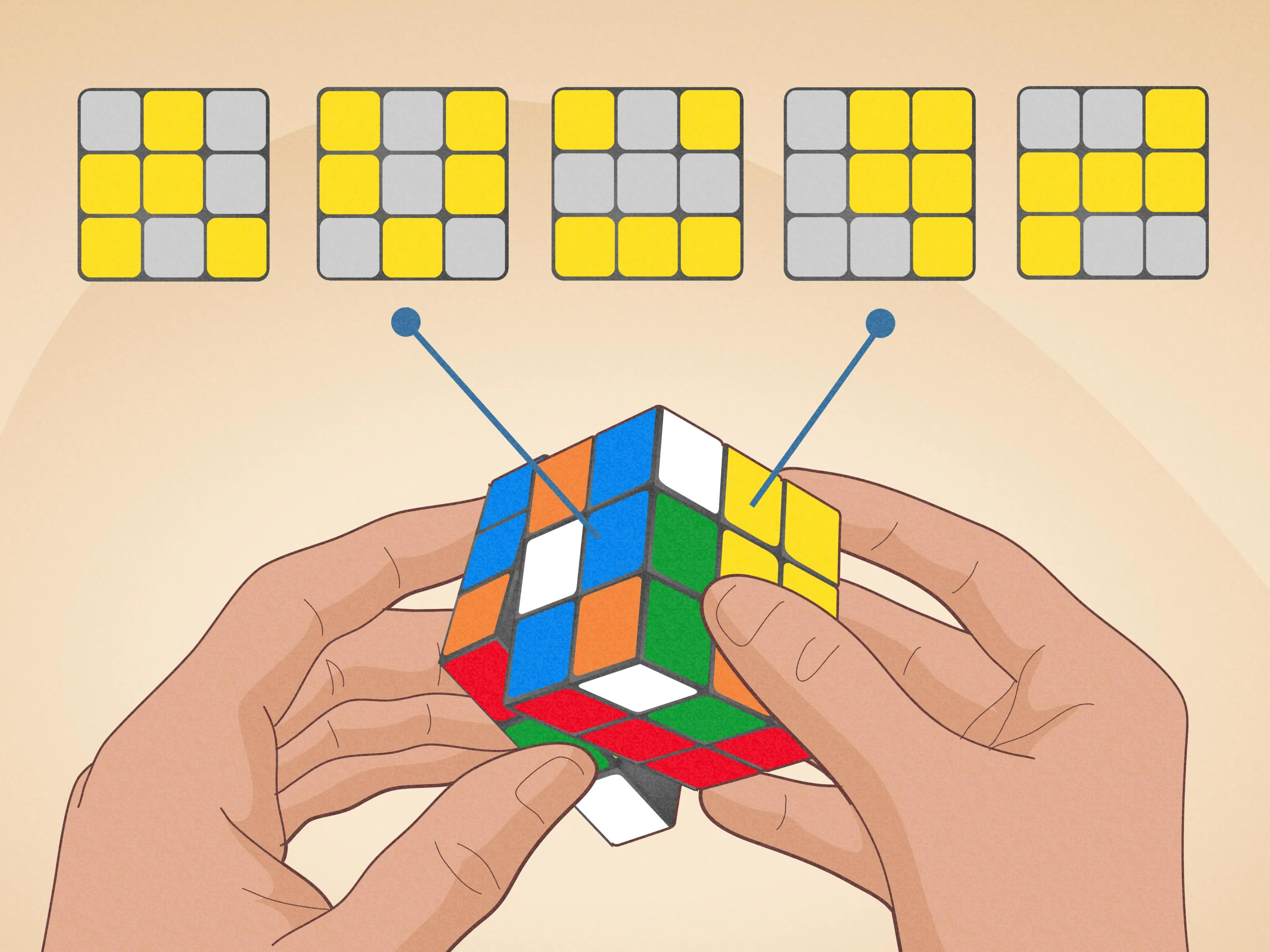
Once your first two layers are securely in place, you face the last layer. The third phase, OLL, focuses entirely on making the entire top face of the cube a solid color, regardless of whether the side colors match yet. There are 57 distinct OLL algorithms in total. Learning all 57 at once is intimidating and unnecessary for most cubers starting out.
To conquer OLL without burning out, you should adopt a phased approach:
- Begin with Two-Look OLL, which breaks the process down into simple shape recognition steps using familiar beginner algorithms.
- Master the edge orientation step to ensure a yellow cross is formed on the top surface.
- Learn the seven standard corner orientation cases to complete the basic Two-Look framework.
- Transition gradually to full OLL by learning high-frequency algorithms in small batches of five to ten per week.
- Focus on smooth execution and hand repositioning to prevent your cube from popping during execution.
- Review advanced speedcubing tactics through guides like How to Solve a Rubik's Cube Faster: Advanced Speedcubing Techniques to optimize your finger mechanics.
Phase Four: Permuting the Last Layer (PLL)
The final hurdle in the CFOP method is PLL, which rearranges the pieces of the last layer into their correct solved positions. Unlike OLL, which only cares about top color, PLL cares about the precise relative positions of all edge and corner pieces on the final layer. There are 21 PLL algorithms to master. Fortunately, many of these algorithms share symmetrical patterns and intuitive finger movements that make them surprisingly easy to memorize.
Mastering PLL effectively requires strict attention to visual recognition triggers:
- Look for 'headlights'—two matching corner blocks on one side of the top layer.
- Identify block structures and bars that indicate specific permutation swaps like T-perms or J-perms.
- Practice recognizing PLL cases from two visible adjacent sides instead of rotating the whole cube.
- Ensure your execution speed for Z-perms and H-perms remains fluid and controlled.
- Double-check that your cube alignment is precise before triggering the final execution move.
- Celebrate your solved state by stopping your timer cleanly without accidental bumps.
Executing Purple-Team Lessons and Advanced Drills
Elite speedcubers do not just solve random cubes all day; they engage in targeted, deliberate practice to eliminate weaknesses. By treating your solve like a red-team security audit, you can isolate where you lose the most time and aggressively patch those inefficiencies. If your F2L takes 10 seconds while your last layer takes 3, you immediately know where to focus your training efforts.
Implement these structured practice routines in your daily schedule:
- Perform untimed F2L solves where your only goal is zero pauses between pairs.
- Use a metronome to gradually increase your algorithm turning speed without sacrificing accuracy.
- Record your solves on video to analyze hidden pauses and inefficient hand movements.
- Practice cross-only blindfolded planning until you can consistently map all four edges in under 12 seconds.
- Drill your weakest PLL algorithms fifty times consecutively before every practice session.
- Review comprehensive beginner resources such as How to Solve a 3x3 Rubik's Cube Step by Step: The Ultimate Beginner Guide if you ever need to reset your foundational mechanics.
Structuring Your Daily Speedcubing Drill Schedule
Consistency beats intensity every single time when learning complex motor skills like CFOP. Spending twenty minutes every day practicing with intention yields vastly superior results compared to grinding for three hours once a week. Your brain needs rest intervals to consolidate muscle memory and algorithmic recognition pathways.
A balanced weekly practice schedule should incorporate diverse training blocks:
- Monday: Focus entirely on cross planning and blindfolded inspection drills.
- Tuesday: Dedicate a full session to slow, frictionless F2L pair creation and insertion.
- Wednesday: Drill Two-Look and Full OLL algorithms until recognition is instantaneous.
- Thursday: Practice all 21 PLL algorithms while focusing on smooth finger trick transitions.
- Friday: Execute fifty timed solves, recording your splits and identifying your worst phase.
- Weekend: Relax with casual solves or explore larger puzzles like the How to Solve a 4x4 Rubik's Cube for Beginners: The Ultimate Guide to challenge your spatial reasoning.
Avoiding Common CFOP Training Pitfalls
Even dedicated cubers fall into traps that stall their progress and cap their speed potential. Recognizing these bad habits early saves hundreds of hours of frustration and unlearning. For instance, relying too heavily on cube rotations during F2L is the number one reason cubers fail to break the twenty-second barrier.
Watch out for these frequent mistakes during your CFOP journey:
- Turning too fast before your brain has actually recognized the next algorithm case.
- Neglecting slow-solve practice in favor of rushing through messy timed attempts.
- Learning all 119 CFOP algorithms at once instead of mastering Two-Look variations first.
- Using low-quality, dry hardware that catches and causes unnecessary lock-ups.
- Ignoring fingertrick efficiency and relying entirely on awkward wrist movements.
- Failing to analyze your average times to find statistical bottlenecks in your solves.
Optimizing Ergonomics and Hardware Maintenance
Your hands and your puzzle form a single integrated system during a speedcube solve. If your cube is poorly tensioned or coated in dust, your physical performance will suffer regardless of your algorithmic knowledge. Regular maintenance ensures your equipment remains as sharp as your reflexes.
Keep your speedcubing setup in peak condition with these maintenance practices:
- Disassemble your speedcube every few months to clean out accumulated dust and debris.
- Apply a few drops of silicone-based lubricant to the internal tracks for optimal glide.
- Adjust corner-cutting tolerances and spring compressions to match your personal turning style.
- Store your cube in a protective case when traveling to prevent accidental drop damage.
- Inspect corner piece caps and core stability to ensure no mechanical components are loose.
- Upgrade your hardware when your current cube begins to limit your maximum turning velocity.
The Psychology of Competition and Mental Resilience
Speedcubing is as much a mental battle as it is a physical dexterity test. When you step up to an official timer or face a personal best scenario, adrenaline spikes, and fine motor skills can degrade rapidly. Maintaining composure under pressure separates casual cubers from podium contenders.
Develop mental toughness through disciplined competition preparation:
- Practice with simulated competition environments, including stackmat timers and official inspection protocols.
- Accept that DNF (Did Not Finish) results happen and use them as diagnostic data rather than emotional setbacks.
- Breathe deeply before starting your inspection to lower your heart rate and sharpen your focus.
- Visualize a clean, fluid solve from cross to PLL before your fingers ever touch the pieces.
- Focus on your own solving consistency rather than comparing your times to elite world records.
- Maintain a positive mindset that embraces continuous learning and incremental improvement.
Tracking Your Progress and Reaching Sub-20
Breaking the sub-20 second barrier is a major milestone for any speedcuber. Reaching this goal requires tracking your progress with statistical rigor rather than just hoping for lucky scrambles. By recording your average of 5 (Ao5) and average of 12 (Ao12) times, you can accurately measure your development over weeks and months.
Use these tracking strategies to push past plateaus:
- Log every session using speedcubing software or dedicated mobile apps to monitor trends.
- Calculate your phase splits to identify whether F2L or Last Layer is holding back your scores.
- Set realistic, incremental milestones rather than demanding massive leaps in overnight speed.
- Celebrate small victories, such as your first clean sub-30 average or a flawless F2L solve.
- Engage with the cubing community to share tips, algorithms, and troubleshooting advice.
- Keep pushing your boundaries and enjoy the satisfying journey of mastery.
Conclusion and Your Immediate Speedcubing Next Step
"Excellence in speedcubing is never an accident; it is always the result of high intention, sincere effort, intelligent direction, and skillful execution." — Speedcubing Proverb
Mastering the CFOP method transforms the Rubik's Cube from a baffling puzzle into an art form of lightning-fast execution and spatial intuition. By breaking the system down into the cross, F2L, OLL, and PLL phases, you build a sturdy foundation that supports continuous improvement. Remember that speed is a byproduct of efficiency, smooth finger tricks, and smart look-ahead practice rather than frantic, uncontrolled turning.