Solving the Rubik's Cube is more than just a party trick; it is a mental workout that has captivated millions of puzzle enthusiasts worldwide. However, for many beginners, the journey from a scrambled mess to a solved masterpiece feels like an insurmountable wall. You might be staring at your cube in frustration after twenty minutes, wondering why others seem to solve it in seconds. The good news is that with the right strategy and consistent practice, you can drastically reduce your solve time. Whether you are in New York, London, or Tokyo, the principles of speedcubing remain universal, but local communities often provide the best support networks for learning these skills.
In this comprehensive guide, updated for 2026, we will dissect exactly how to solve the Rubik's Cube faster. We will move beyond the basic "guess and check" method and introduce proven techniques used by world-class speedcubers. From understanding the anatomy of the cube to mastering advanced algorithms and optimizing your finger movements, every step is designed to help you break through the two-minute barrier. Let's dive into the world of cubing and discover your potential.
Mastering the Foundation: The Layer-by-Layer Method
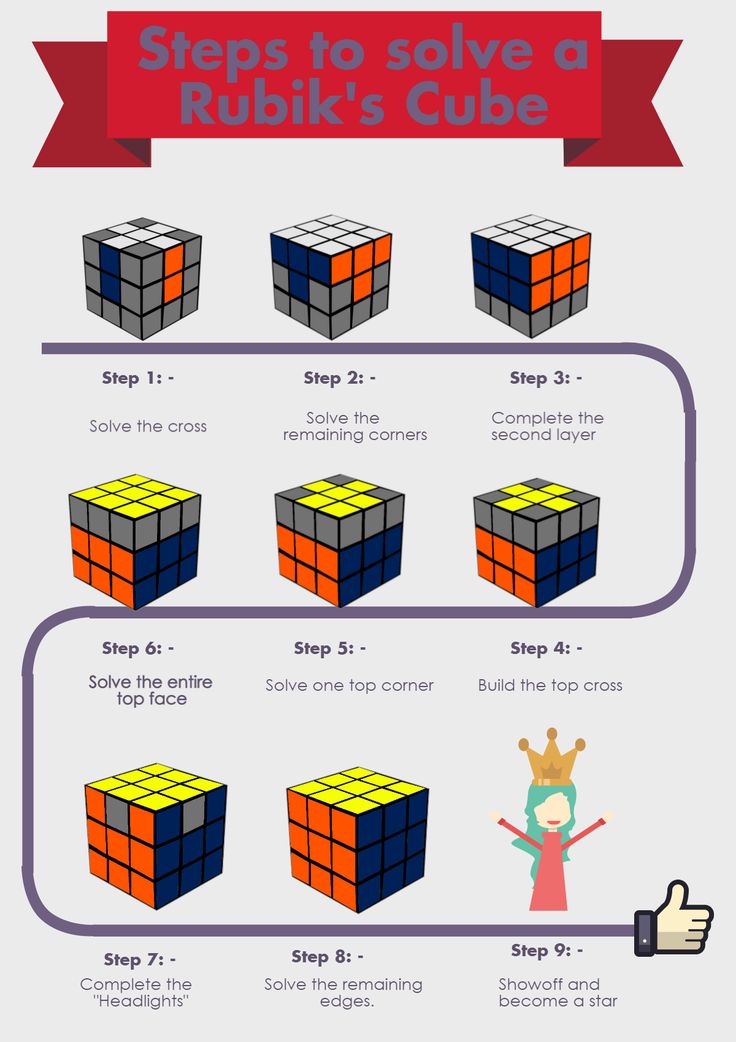
Before you can think about speed, you must understand efficiency. The most effective way for beginners to learn is the Layer-by-Layer (LBL) method. This approach divides the complex 3×3 puzzle into seven manageable stages. Instead of trying to solve one face at a time—which often leads to scrambling previously solved parts—you build the cube upward, layer by layer. This systematic approach ensures that once a layer is complete, it stays intact while you work on the next.
Understanding Cube Notation and Anatomy
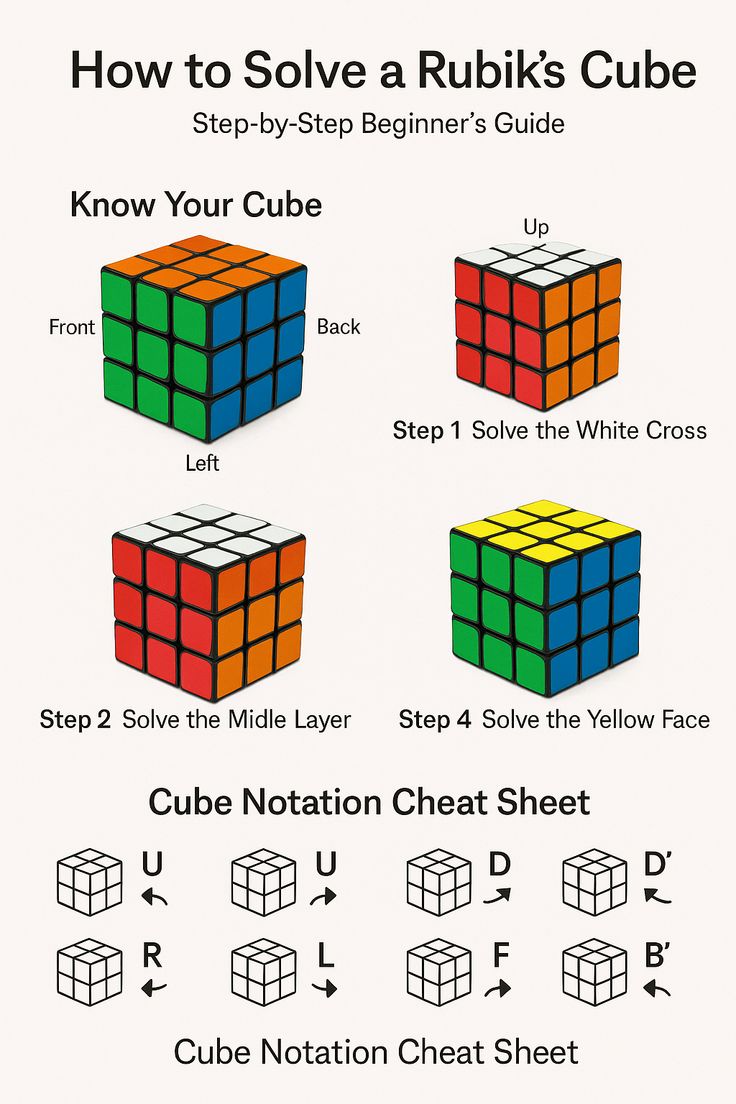
To communicate moves effectively, you need to speak the language of cubing. This is known as Cube Notation. Without this, memorizing algorithms is nearly impossible. The standard notation uses letters to represent the faces of the cube:
- F (Front): The face facing you.
- R (Right): The face on your right.
- U (Up): The top face.
- L (Left): The face on your left.
- D (Down): The bottom face.
- B (Back): The face opposite the front.
Crucially, you must also understand the direction of rotation. A letter alone (e.g., R) means a clockwise turn. An apostrophe (e.g., R') indicates a counter-clockwise turn. A number 2 (e.g., R2) means a 180-degree turn. Mastering this vocabulary is the first step toward solving faster, as it allows you to read tutorials and execute algorithms without hesitation.
The Seven Steps to Your First Solve
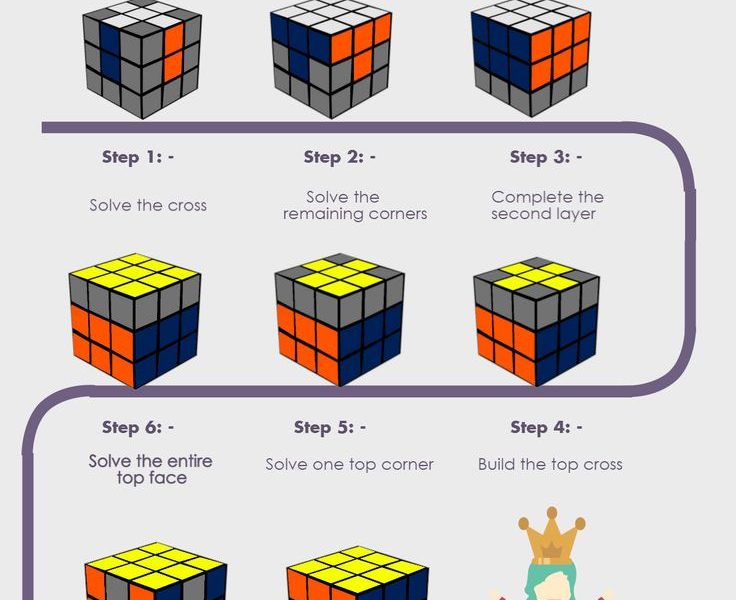
The beginner method follows a strict sequence. While it may seem slow initially, consistency is key. Here is the roadmap to your first successful solve:
- White Cross: Create a cross on the white face, ensuring the edge pieces match the center colors of the adjacent sides. This sets the foundation for the rest of the solve.
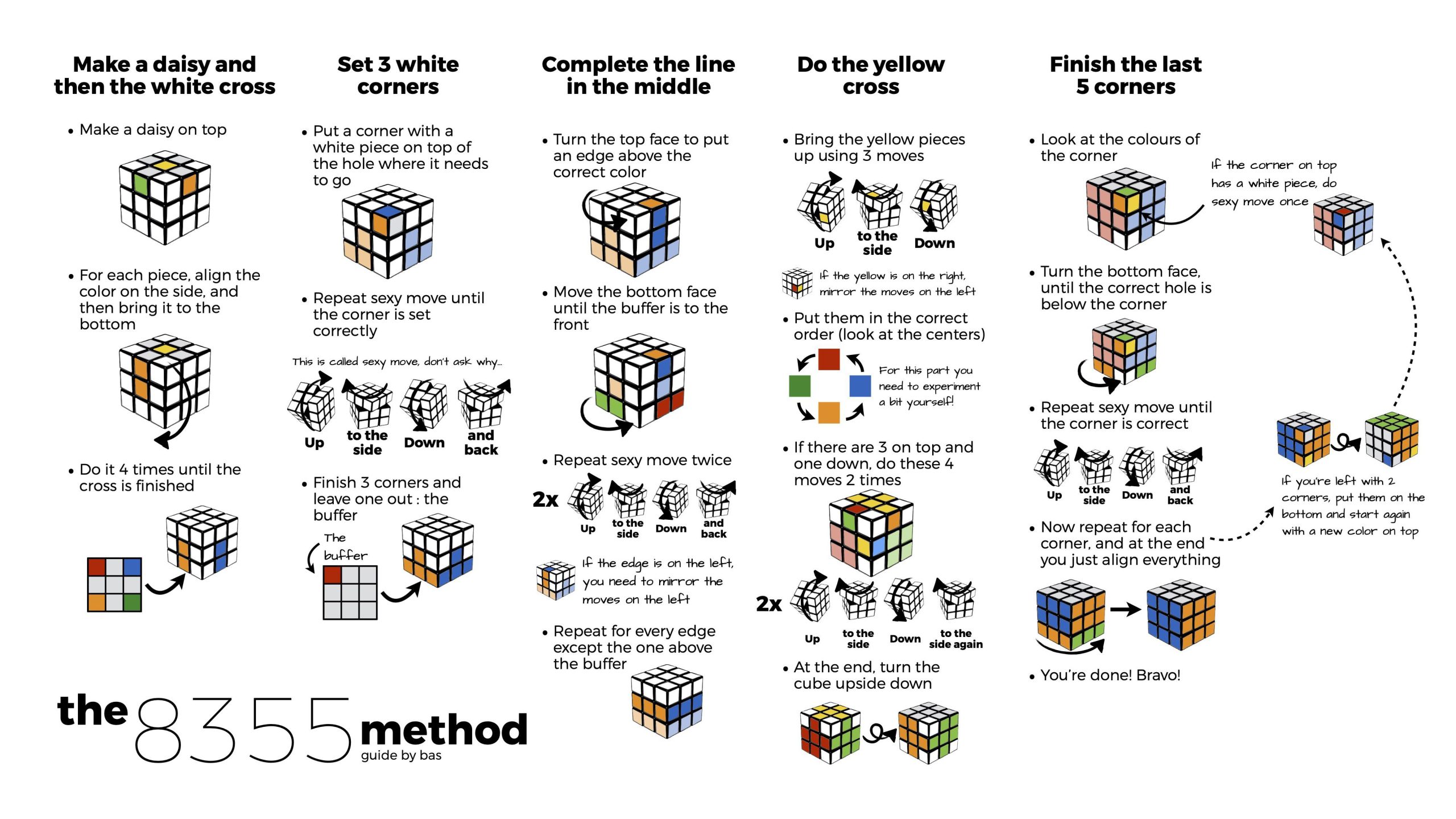
- White Corners: Insert the four corner pieces to complete the entire white face and the first layer. The algorithm here is simple: R U R' U'.
- Middle Layer: Move the four edge pieces from the top layer into their correct positions in the middle layer. Algorithms like U R U' R' and U' L' U L are essential here.
- Yellow Cross: Form a cross on the yellow face. Depending on the pattern (dot, line, or L-shape), different algorithms apply, such as F R U R' U' F'.
- Yellow Edges: Position the yellow edge pieces correctly around the top face.
- Yellow Corners: Move the yellow corners to their correct spots, regardless of orientation.
- Orient Yellow Corners: Twist the yellow corners so the entire top face is solid yellow. Repeat the algorithm R' D' R D until all corners are fixed.
Developing Essential Finger Tricks and Muscle Memory
One of the biggest mistakes beginners make is relying solely on wrist rotation to turn the cube. While this works for a casual solve, it is incredibly slow and causes fatigue. To solve faster, you must develop finger tricks. These are specific finger movements that allow you to rotate layers rapidly without moving the entire cube in your hands.
The Power of Thumb and Index Movement
Imagine turning the Right face (R). Instead of gripping the whole cube and twisting your wrist, use your thumb to push the bottom layer and your index finger to flick the right face up. This creates a fluid motion that looks almost magical to observers. Practicing these isolated movements is vital. Spend 10 minutes a day just practicing single-layer turns until they become second nature.
Avoiding Bad Habits
Speed comes with precision. As you learn new techniques, be wary of developing bad habits. For instance, constantly rotating the whole cube in your hands instead of using finger tricks will cap your speed. Similarly, over-twisting the cube can lead to misalignment and wasted time correcting errors. Focus on smooth, controlled movements rather than frantic spinning. The goal is economy of motion: doing the maximum amount of work with the minimum amount of movement.
Color Neutrality: Breaking Mental Barriers
A subtle but powerful concept in modern cubing is color neutrality. Many beginners only look for white or yellow pieces because those are the traditional starting colors. However, expert speedcubers are color neutral; they can start solving from any face. This flexibility saves precious seconds during competition or practice. Try solving your cube starting with the orange face or the blue face to train your brain to recognize patterns regardless of color orientation.
Transitioning from Beginner to Intermediate Speed
Once you can consistently solve the cube in under two minutes, you have outgrown the basic method. It is time to transition to the CFOP method (Cross, F2L, OLL, PLL), which is the gold standard for speedcubing. This method, popularized by Jessica Fridrich, reduces the number of moves required per solve by approximately 20 moves compared to the beginner method.
Solving the Cross Efficiently
In the beginner method, the cross is usually solved on the top face, requiring a cube flip before proceeding. In CFOP, the cross is solved on the bottom face. This seemingly small change eliminates a full move (flipping the cube) and allows you to start looking for the next piece (F2L) immediately. Aim to solve your cross in under 5 seconds. This requires intuition rather than memorization, allowing you to see the solution instantly.
Intuitive F2L: The Heart of Speed
F2L (First Two Layers) is where the magic happens. Instead of inserting edges and corners separately, you pair them up and insert them simultaneously. This dual-action approach significantly cuts down the total move count. Initially, this feels counter-intuitive, and you might find yourself slower than the beginner method. However, with practice, your muscle memory will take over, and you will solve pairs instinctively. Focus on intuitive F2L, meaning you try to visualize the insertion path rather than relying on long algorithms.
The Last Layer: OLL and PLL
The final stage involves the Orientation of the Last Layer (OLL) and the Permutation of the Last Layer (PLL).
- Beginner OLL (2-Look): Most beginners learn two steps: first orient the edges, then orient the corners. Later, you will learn the full set of 57 algorithms to solve the entire top face in one step.
- Beginner PLL (2-Look): Similarly, start by permuting the corners, then the edges. Progress to the full set of 21 algorithms to cycle the last layer pieces into their perfect positions.
Optimizing Your Gear for Maximum Performance
Your equipment plays a surprisingly significant role in your solving speed. In 2026, the market for speed cubes is saturated with high-quality options, but choosing the wrong one can hinder your progress. A cheap, stiff cube can feel like fighting against gravity, leading to missed turns and frustration.
Choosing the Right Speedcube
Look for a cube labeled specifically as a "speedcube." These are designed with internal mechanisms that allow for faster turning and better stability. Key features to look for include:
- Spring Tension: Adjustable springs allow you to tighten or loosen the cube based on your preference. A looser cube turns faster but may pop; a tighter cube is more stable but slower.
- Stickers vs. Films: Modern cubes often come with PVD films (physical vapor deposition) instead of stickers. Films are smoother, more durable, and provide better grip, which is crucial for executing fast finger tricks.
- Shape Mod: Some cubes have slightly rounded edges or modified shapes that prevent jamming during rapid rotations.
Lubrication: The Secret Weapon
Even the best cube needs maintenance. Applying lubricant (specifically silicone-based cube lube) reduces friction between the plastic pieces. This makes turns smoother and faster. You should lubricate your cube every few months or whenever it starts to feel gritty. Additionally, some cubers use a technique called "decalibration," where they intentionally loosen the tension slightly to achieve higher speeds, though this requires careful adjustment.
Ergonomics and Hand Placement
Your grip affects your speed just as much as your cube does. Experiment with different hand placements to find what feels most natural. Some cubers prefer holding the cube with their thumbs on the bottom and fingers curled around the sides, while others use a pinch grip. The goal is to minimize the distance your hands need to travel between moves. Consistency in your grip ensures that your muscle memory develops correctly.
Building a Effective Practice Routine
Consistency is the bridge between talent and achievement. You don't need to practice for hours every day; in fact, short, focused sessions are often more effective than marathon practices that lead to burnout.
The 15-Minute Daily Habit
Dedicate 15 to 30 minutes daily to cubing. During this time, focus on one specific aspect. For example, spend Monday practicing your cross speed, Tuesday working on F2L pairs, and Wednesday drilling specific OLL algorithms. This targeted approach ensures balanced improvement across all areas of your solve.
Utilizing Timers and Analytics
Don't just guess your times; measure them. Use online timers or dedicated apps to record your solves. Analyze your data to identify bottlenecks. Did you spend too long looking for a piece? Was a specific algorithm causing delays? Tracking your progress motivates you to beat your personal bests (PBs) and provides objective data on your improvement.
Joining Local Communities
There is immense value in connecting with other cubers. Look for local clubs or meetups in your area. Whether you are in a bustling metropolis like Chicago or a smaller town, there is likely a community of enthusiasts ready to share tips, trade cubes, and compete in casual events. Watching experienced cubers solve live can provide insights that videos cannot convey, such as their thought process and hand positioning.
Common Mistakes and How to Overcome Them
Every cuber hits a wall at some point. Recognizing common pitfalls can help you navigate them quickly.
Over-reliance on Algorithms
While algorithms are necessary, relying on them exclusively slows you down. Strive for intuitive solving. When you see a pair of pieces, try to visualize how to insert them without recalling a specific sequence of moves. This cognitive shift is what separates intermediate cubers from beginners.
Ignoring Edge Orientation
Many beginners focus entirely on corners and forget about edges. Incorrectly oriented edges in the last layer will prevent you from completing the cube, forcing you to restart or perform extra moves. Always double-check your edge placement before attempting to solve the final layer.
Frustration and Quitting
The learning curve can be steep. You might go days without improving, or even regress temporarily. This is normal. Take breaks, watch tutorial videos from experts like J Perm or Moyu, and remember that mastery takes time. Celebrate small victories, like solving your first intuitive F2L pair, to keep your motivation high.
Future Trends in Cubing: What's Next?
As we look toward the future of the puzzle community, technology and innovation continue to shape the landscape. In 2026, we see the rise of AI-assisted learning, where apps can analyze your solves in real-time and suggest improvements. Furthermore, the integration of haptic feedback in smart cubes promises to enhance the tactile experience, making practice even more engaging.
Competitions remain a driving force for improvement. Events like the World Championships continue to push the boundaries of human capability, with records dropping below 3.14 seconds. This constant evolution inspires beginners to aim higher, knowing that the sky is the limit. Whether you aspire to compete professionally or simply enjoy the satisfaction of a solved puzzle, the community welcomes you with open arms.
Conclusion
Solving the Rubik's Cube faster is a journey of patience, practice, and persistence. By mastering the beginner's layer-by-layer method, developing finger tricks, upgrading your gear, and transitioning to the CFOP method, you can transform your solving time from minutes to seconds. Remember that every world-record holder started exactly where you are now: holding a scrambled cube, unsure of where to begin.
Start today. Grab a cube, find a community, and commit to your daily practice. The satisfaction of watching a chaotic mess resolve into a perfect, colorful square is unparalleled. With the strategies outlined in this 2026 guide, you are well-equipped to join the ranks of efficient solvers. Keep twisting, keep turning, and soon enough, you'll be solving not just for speed, but for the sheer joy of the challenge.
FAQ: Quick Answers for Aspiring Speedcubers
Q: How long does it take to learn the beginner method?
A: Most beginners can learn the basic method within a few days of practice. However, becoming comfortable enough to solve consistently in under 2 minutes typically takes 2 to 4 weeks of daily practice.
Q: Is it better to learn CFOP immediately or stick to the beginner method?
A: It is highly recommended to master the beginner method first. It teaches you the fundamental concepts of layer building and piece recognition. Jumping straight into CFOP without this foundation can lead to confusion and slower progress.
Q: What is the fastest way to improve my average time?
A: Focus on reducing your lookahead time. This is the ability to see the next move while executing the current one. Also, eliminate unnecessary cube rotations and refine your finger tricks.
Q: Do I need an expensive cube to get faster?
A: While a good speedcube helps, technique is far more important. You can improve significantly with a budget-friendly cube if you focus on your hand movements and algorithms. Upgrade your gear once you have mastered the basics.