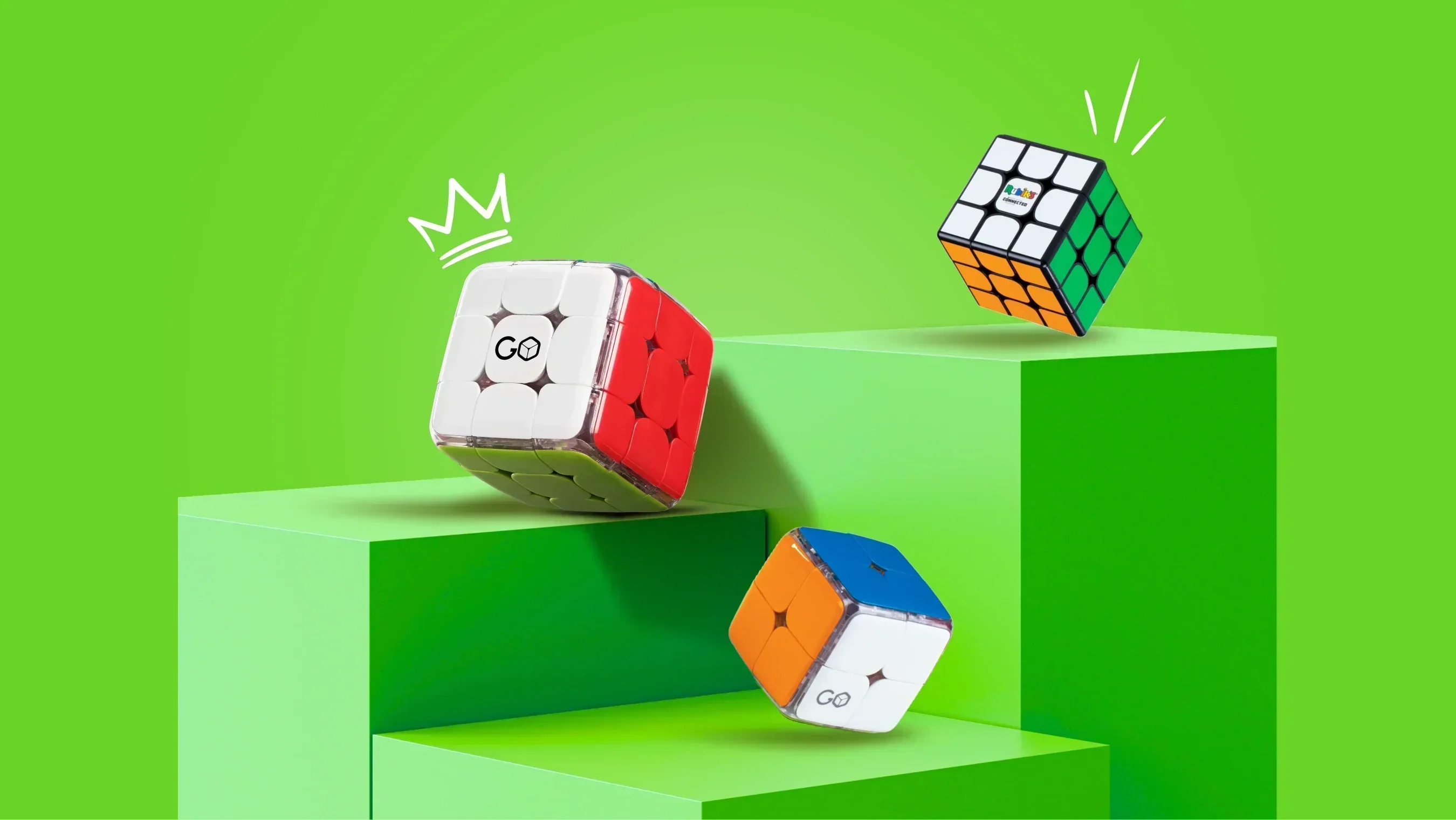
Finding the best rubik's cube for beginners can transform your puzzle-solving journey from a frustrating chore into an enjoyable hobby. If you grew up struggling with the stiff, lock-up-prone official Rubik's brand cubes from toy store shelves, you will be amazed by modern speed cubes. Today's beginner puzzles feature internal magnets, smooth corner-cutting mechanisms, and adjustable tensions that make turning effortless and satisfying.
When you are just starting out, you do not need a hyper-expensive flagship puzzle meant for world-record holders. Instead, you need a reliable, budget-friendly cube that forgives minor turning errors while offering enough performance to grow with your developing skills. This guide walks you through a comprehensive sprint checklist, analyzes top beginner options, and ensures you make an informed purchase without wasting money on obsolete designs.
Your Ultimate Beginner Rubik's Cube Sprint Checklist
- Verify that the cube is a standard 3x3x3 puzzle before purchasing any advanced variations.
- Look for modern stickerless plastic designs that eliminate peeling tiles forever.
- Prioritize budget-friendly speed cubes priced between eight and fifteen dollars.
- Check product descriptions for factory-installed magnetic positioning systems.
- Ensure the mechanism features corner-cutting capabilities of at least 45 degrees.
- Avoid vintage toy-store puzzles that lack internal mechanism adjustments.
- Read customer reviews focusing specifically on turning smoothness and lock-up frequency.
- Confirm the cube allows manual tension adjustments using a screwdriver or dual-adjustment system.
- Choose reputable cubing brands such as MoYu, GAN, or QiYi.
- Inspect packaging upon arrival to ensure no damaged or missing center cap pieces.
- Test dry turns immediately to check for factory lubrication levels and scratchiness.
- Familiarize yourself with basic notation as outlined in Rubik's Cube Notation Explained for Beginners: Master the Language of Cubing to prepare for your learning journey.
Why Modern Speed Cubes Outperform Traditional Toy Store Puzzles
The engineering behind modern 3x3 twisty puzzles has evolved dramatically over the past decade. Traditional puzzles relied entirely on rigid plastic friction, which frequently caused annoying lock-ups and required excessive physical force to complete turns. Modern engineering introduces rounded internal pieces, torpedo anti-pop mechanisms, and microscopic lubricants that keep rotations buttery smooth.
- Internal mechanisms use curved edge and corner stalks to prevent pieces from flying out during fast solves.
- Factory lubrication reduces friction significantly, allowing the layers to glide past each other with minimal finger pressure.
- Stickerless frosted plastic textures resist scratches and fingerprints while providing a secure, non-slip grip.
- Adjustable spring compression systems let you customize the overall feel from loose and fast to tight and controlled.
- Lightweight plastic shells reduce hand fatigue during long practice sessions, letting you practice algorithms comfortably for hours.
Understanding Magnetic Resistance in Entry-Level Puzzles
How Small Magnets Improve Your Solving Accuracy
Magnets embedded inside the edges and corners act as invisible guide rails that snap your turns into alignment. For a beginner, this feature is an absolute game-changer because imperfect turning alignment is the number one cause of frustrating puzzle locks.
- Magnets gently pull the layers into place once you complete roughly 30 degrees of a turn.
- They dramatically reduce overshooting, which happens when your fingers accidentally push a layer past the desired 90-degree stop.
- Magnetic feedback builds crucial muscle memory much faster than traditional non-magnetic puzzles.
- The added stability makes practicing patterns outlined in Beginner Rubik's Cube Algorithms Step by Step: The Ultimate Battle Plan infinitely more productive.
Comparing the Top Three Beginner Cubes on the Market
| Cube Model | Price Range | Magnetic? | Best For |
|---|---|---|---|
| MoYu RS3M 2020 | $9 - $12 | Yes | Best overall value and performance |
| QiYi Warrior S | $5 - $7 | No | Ultra-budget stickerless practice |
| GAN 356 M Lite | $20 - $25 | Yes | Premium feel with adjustable elasticity |
Skip These Outdated Puzzle Types When Starting Out
- Avoid traditional Rubik's brand cubes with glossy paper stickers that peel off after a few weeks of heavy use.
- Skip novelty shaped puzzles like dodecahedrons or giant 5x5 cubes until you can comfortably solve a standard 3x3.
- Do not buy unbranded generic cubes sold in discount dollar stores, as their plastic warps easily and snaps under light pressure.
- Steer clear of Bluetooth smart cubes for day-one learning, as their higher price tag is unnecessary until you build foundational speed.
- Ignore heavily weighted metal-core puzzles that tire out your wrists before you finish a single practice solve.
Executing Your First Fifteen-Minute Setup and Tension Check
- Unbox your new puzzle and wipe down any excess factory grease from the exterior plastic surface.
- Inspect each face to ensure all center caps are firmly snapped into place and secure.
- Perform twenty gentle turns in various directions to distribute the internal lubricant evenly.
- Check the tension on all six sides by attempting to pull adjacent corner pieces slightly apart.
- Adjust tension screws equally if any side feels noticeably looser or tighter than the rest.
- Apply one or two small drops of silicone-based speed cube lube directly onto the track if turns feel scratchy.
- Reassemble the puzzle immediately if a corner piece pops out during setup, following standard edge-first reinsertion methods.
- Begin exploring beginner tutorials such as How to Solve a Rubik's Cube for Beginners: A Step-by-Step Guide to put your new hardware to the test.
- Frosted or matte exterior finishes hide minor scuffs and surface scratches caused by dropping the puzzle on hard floors.
- Textured surfaces provide superior tactile feedback, ensuring your fingertips never slip during rapid algorithm execution.
- Solid-colored plastic means you never have to worry about illegal color marking or peeling decals during casual practice.
- Bright, high-contrast color shades make pattern recognition instantaneous under both natural daylight and indoor lighting.
- Find the sweet spot where layers align automatically without requiring excessive finger force to initiate a turn.
- Adjust all opposing sides by the exact same fractional turn to maintain a balanced, symmetrical feel across the entire puzzle.
- Test your tension settings by attempting a standard 45-degree corner cut to verify mechanical flexibility.
- Consult manufacturer documentation or online video guides before attempting complex core modifications on high-end models.
- Look for internal torpedo designs that prevent pieces from separating when layers are misaligned.
- Test your cube by intentionally misaligning a top layer by 45 degrees and attempting to turn the adjacent face.
- Smooth corner cutting allows you to queue up your next finger movement before your current turn is entirely finished.
- Modern budget speed cubes often match or exceed the corner-cutting performance of older professional cubes from past decades.
- Store your puzzle in a protective carrying pouch or dedicated desk stand when not in use.
- Wipe down the exterior plastic surfaces weekly with a clean, dry microfiber cloth.
- Disassemble and deep-clean your puzzle every six months to remove accumulated dust and debris.
- Use only specialized silicone-based lubricants designed specifically for plastic mechanical puzzles.
- Memorizing algorithms stimulates memory retention and pattern recognition pathways in the brain.
- Overcoming difficult puzzle states teaches resilience and structured problem-solving methodologies.
- The tactile nature of turning physical blocks provides a wonderful screen-free break from digital devices.
- Never purchase vintage-style puzzles from general toy store chains if your goal is smooth, fast turning.
- Avoid spending over thirty dollars on your very first puzzle before knowing if you will stick with the hobby.
- Do not ignore user reviews regarding factory lubrication quality and overall mechanical stability.
- Refrain from modifying core screws immediately out of the box without testing factory settings first.
- Avoid complicated modification puzzles until you have mastered the standard 3x3 mechanism.
- Budget magnetic cubes deliver 95 percent of the performance of flagship models at a fraction of the cost.
- Their robust mechanical design withstands accidental drops and aggressive turning styles with ease.
- Affordable pricing makes it easy to purchase multiple backups or travel cubes for school and work.
- Learn efficient cross-solving habits to minimize rotation moves during your initial inspection phase.
- Explore different silicone lubricant weights to fine-tune the speed and tactile feedback of your puzzle.
- Gradually introduce advanced intermediate algorithms without abandoning the reliable foundation you built on your first cube.
The Crucial Role of Stickerless Frosted Plastic Finishes
In the early days of mechanical puzzle solving, colored paper stickers were the industry standard. These stickers invariably chipped at the edges, faded under sunlight, and sometimes forced competitive solvers to memorize tile positions by tactile wear alone. Modern manufacturers solved this permanently by molding colored plastic directly into the individual pieces.
How Proper Tensioning Prevents Frustrating Pop Accidents
Cube tension refers to how tightly the center screw holds the core assembly together against the internal springs. If your tension is too loose, individual pieces will pop out of the puzzle during vigorous turns. If your tension is too tight, the cube will resist movement and fail to execute corner-cutting smoothly.
Evaluating Corner-Cutting Performance for Smooth Solving
Corner cutting is the mechanical ability of a puzzle to complete a turn even when the layers are slightly misaligned. A poor-quality puzzle will lock up instantly if your turn is off by even a fraction of a millimeter, breaking your rhythm and causing immense frustration.
Essential Maintenance Habits to Extend Your Cube's Lifespan
Taking care of your twisty puzzle ensures it performs like new for years of continuous solving. Dust, pocket lint, and dried lubrication can accumulate inside the mechanism, turning a fast puzzle sluggish and gritty over time.
Recognizing the Psychological Benefits of Regular Puzzle Practice
Working through mechanical puzzles offers far more than simple entertainment. It engages multiple cognitive faculties simultaneously, improving spatial reasoning, finger dexterity, and problem-solving patience in both children and adults.
Common Beginner Buying Mistakes and How to Avoid Them
Why Professional Speedcubers Recommend Budget Magnetic Puzzles
It is a common misconception that you need expensive equipment to achieve fast solving times. Many national and international speedcubing champions regularly praise budget magnetic cubes for their incredible out-of-the-box performance and reliability.
Investing in a quality budget magnetic speed cube removes mechanical frustration entirely, letting you focus 100 percent on learning algorithms and building correct finger tricks.
Transitioning From Your First Puzzle to Intermediate Speedcubing
Once you can comfortably solve your beginner puzzle within two minutes, you will naturally start craving more speed and efficiency. This milestone marks the perfect time to explore advanced cross-building techniques, look into lubricant upgrades, and study intermediate finger tricks to lower your overall solve times.
Choosing the right beginner puzzle sets the stage for your entire cubing journey. By focusing on modern magnetic designs, stickerless durability, and proper tensioning, you ensure every practice session remains smooth, rewarding, and fun.